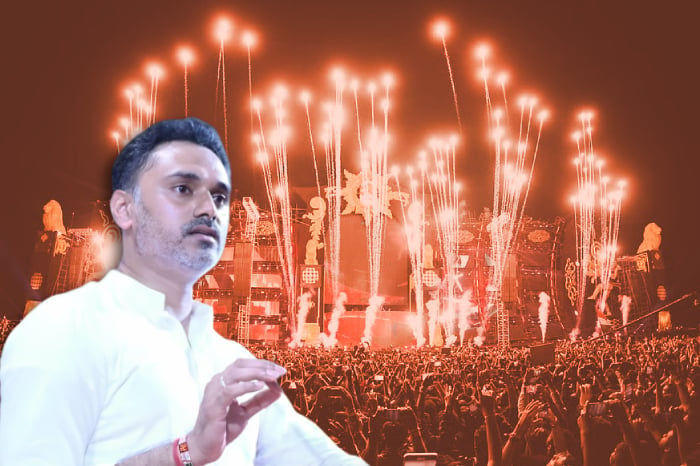
Rihanna participated in a traditional puja ceremony and performed Aarti during a visit to the Ambani residence in Mumbai, creating a widely discussed cultural moment that resonated across India and the global audience. The video of this event drew attention not only for the celebrity presence but also for the gesture of reverence toward a living ritual tradition in Hinduism that welcomes respectful participation from people of all backgrounds.
This moment matters because it models cultural respect in practice. When a globally recognized artist steps into a sacred space with humility and follows guidance from ritual experts, it signals a powerful message: India’s spiritual heritage is accessible, meaningful, and worthy of understanding. It also highlights how contemporary India often hosts cross-cultural encounters in private and community settings where customs such as puja and Aarti are central to daily life and major milestones.
In Hindu worship, puja is an act of conscious offering and adoration. It can be brief or extended and may follow five (Pañcopacāra) or sixteen steps (Ṣoḍaśopacāra), ranging from an initial invitation to the Divine presence (āvāhana) and respectful hospitality (āsana, pādya, arghya, ācamanīya) to symbolic bathing (snāna), clothing (vastra), scent (gandha), flowers (puṣpa), incense (dhūpa), lamp (dīpa), food offerings (naivedya), and, finally, Aarti (ārati) followed by circumambulation (pradakṣiṇa) and prostration (namaskāra). The overarching aim is inner purification, focused attention, and the cultivation of gratitude.
Aartithe ritual Rihanna performedliterally signifies the dispelling of darkness (from terms associated with aratrika). In practice, a lamp or camphor flame is circled before the deity or sacred symbol while devotional hymns are recited or sung. The flame represents the light of knowledge (jñāna) that removes ignorance (avidyā). The fragrance of incense, the ring of a bell (ghaṇṭā), and the rhythm of a hymn synchronize the senses and mind, aligning the participant’s focus with the sacred.
Technically, an Aarti tray (thālī) commonly includes a ghee lamp (dīpa) or a camphor tablet (karpūra), a small bell, flowers, sandalwood paste, kumkum, and sometimes akṣata (uncooked sanctified rice). The lamp’s clockwise circular motion often follows a structured sequencesmaller circles near the face, broader arcs around the torso, and still larger circles encompassing the entire formthough the exact counts (3, 5, 7, 11, or 21) vary across regional and sampradāya traditions. Camphor burns without leaving residue, a metaphor for surrendering egoic residues to the light of wisdom.
Within the fuller arc of puja, Aarti comes after offering fragrance, light, and food to symbolize a reciprocal exchange: humans offer the best of what they have, and in return receive prasāda, the sanctified offering. The flame is then passed among devotees, who place their hands over it and touch their heads, acknowledging the light as a blessing to carry back into daily life. Even outside temple settings, families and communities integrate Aarti into house ceremonies and festive gatherings, reflecting the deep integration of worship and social life.
Participation by guests, including non-Hindus, is both common and meaningful when offered by hosts and guided by ritual practitioners. Observing a few simple etiquettes preserves sanctity: shoes are removed before entering a prayer space; attire is modest; the phone is silenced; hands are washed; palms are often joined (añjali) during prayers; and prasāda is accepted respectfully in the right hand or cupped hands. In many home shrines or private events, a priest or elder will indicate where to stand, when to join in the singing, and how to move the lamp safely during Aarti.
Importantly, Aarti and puja belong to a wider dharmic continuum that embraces diverse ritual languages across Hinduism, Buddhism, Jainism, and Sikhism. In Buddhist traditions, offering lamps and candles is a widely observed practice of reverence and merit. In Jain communities, Aarti may be performed to the Jinas, emphasizing purity, discipline, and the soul’s capacity for liberation. In Sikh tradition, the poetic composition “Aarti” by Guru Nanak conveys that the entire cosmos is the lamp-lit worship of the Divine; while gurdwara maryada centers on Shabad and Ardas without ritual lamp Aarti, the underlying devotional sentiment affirms a shared orientation to reverence and remembrance of the One. Moments like these, therefore, can be read as affirmations of unity in diversity across dharmic paths.
Beyond symbolism, there are practical reasons Aarti feels both intimate and universal. The multisensory designlight, sound, fragrance, touchinvites participants to be present. The disciplined motion of the flame grounds the mind in one-pointed attention. The communal singing dissolves self-consciousness. Together, these elements form a living technology of focus and gratitude, honed over centuries, that can speak to anyone open to the experience.
Public reactions to Rihanna’s Aarti in Mumbai have reflected a blend of appreciation and curiosity. Many viewers recognized the gesture as one of cultural appreciation rather than appropriation, particularly because it occurred in a private sacred setting under the guidance of those for whom the ritual is second nature. When a guest follows local customs with humilitywithout caricature or commercializationthe act strengthens mutual respect and normalizes authentic representations of Hindu rituals in global media.
For those considering respectful participation in puja and Aarti, several best practices are widely applicable. Seek consent from hosts or the priest before handling the lamp or sacred objects. If invited to perform Aarti, keep movements steady, clockwise, and at a safe distance from clothing and hair. If unsure about the number of rotations or sequence, pause and follow the leader’s cue. Refrain from photographing people during prayer unless explicit permission is given. After Aarti, accept prasāda with gratitude, consume it mindfully (if edible), or keep it as a token if it is a flower or thread.
The broader cultural context also merits attention. Indian households and institutions often interweave prayer and hospitality, guided by the ethos Atithi Devo Bhava“the guest is akin to divinity.” This approach coexists with India’s constitutional and social commitment to religious freedom, enabling interfaith participation when invited, while preserving the sanctity of places and practices through respectful boundaries. Private residences and community venues can thus become bridges where guests learn by doing, not merely by observing.
In discussions of cultural diplomacy and soft power, moments like this are instructive. A single, sincere ritual act can do more to challenge stereotypes than hours of scripted messaging. It presents Hinduism not as an abstraction but as lived practicerituals that are coherent, deep, and welcoming. It also reflects contemporary India’s confidence in presenting its civilizational heritage as a living source of meaning, rather than as a relic of the past.
The ethics of cultural appreciation provide a useful framework here. Appreciation is grounded in context, consent, and careparticipation invited by hosts, guided by practitioners, and carried out with fidelity to meaning and method. Appropriation, by contrast, abstracts form from meaning and converts sacred signs into props. Rihanna’s respectful engagement in a family puja and Aarti at a private residence, as depicted in the circulating video, clearly aligns with the former.
For those seeking the ritual’s inner logic, Aarti can be read as a concise meditation on light. The flame is an emblem of consciousness; the circular motion mirrors cyclical time and the cosmic order; the bell signals a transition from ordinary to sacred attention; the fragrance and flowers address the heart’s aesthetic intuition that truth is also beautiful. In combining these elements, Aarti operationalizes a perennial insight: clarity of mind is cultivated, not accidental, and devotion is a disciplined joy.
Finally, this event speaks to a wider aspiration shared across dharmic traditions: to recognize the unity of life beneath its diversity of rituals and languages. Whether through bhakti (devotion), dhyāna (meditation), sevā (service), or śraddhā (trust), the pathways converge on a common horizon of wisdom and compassion. Rihanna’s Aarti in Mumbai will be remembered less as a celebrity novelty and more as a signpost of cultural respect and dharmic unityan instance of Vasudhaiva Kutumbakam, the insight that the world is one family.
Video: http://www.hinduhumanrights.info/wp-content/uploads/2026/04/YTDown_Shorts_Rihanna-Takes-Part-in-Puja-Ceremony-at-A_Media_p9ivMwcq8Os_001_1080p.mp4
Inspired by this post on Hindu Human Rights Blog.