-
Sharpening the Inner Compass: Trusting Intuition on the Dharmic Path with Clarity and Courage

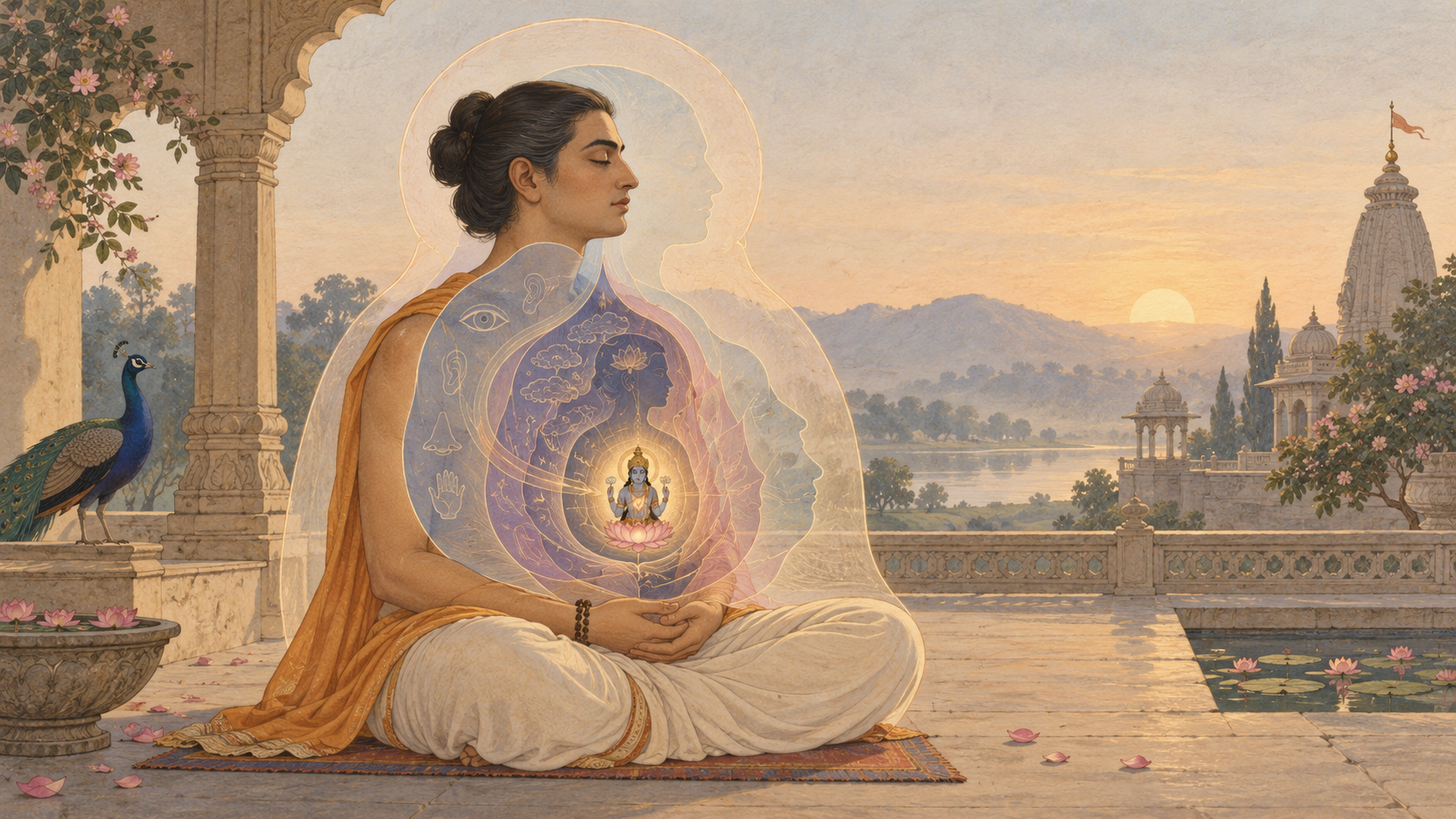
Trustworthy intuition in Hinduism is not impulse but disciplined, dharma-aligned insight that integrates perception, reason, and sacred testimony. This article clarifies how the inner compass relates to Atman, the Upanishads, and the Bhagavad Gita, while showing convergences with prajñā in Buddhism, anekāntavāda in Jainism, and hukam in Sikhism. Readers learn practical tests for discernment—ahiṃsā, satya,…
-
Liberate the Self: Hindu, Buddhist, Jain, and Sikh Insights on Embracing True Nature

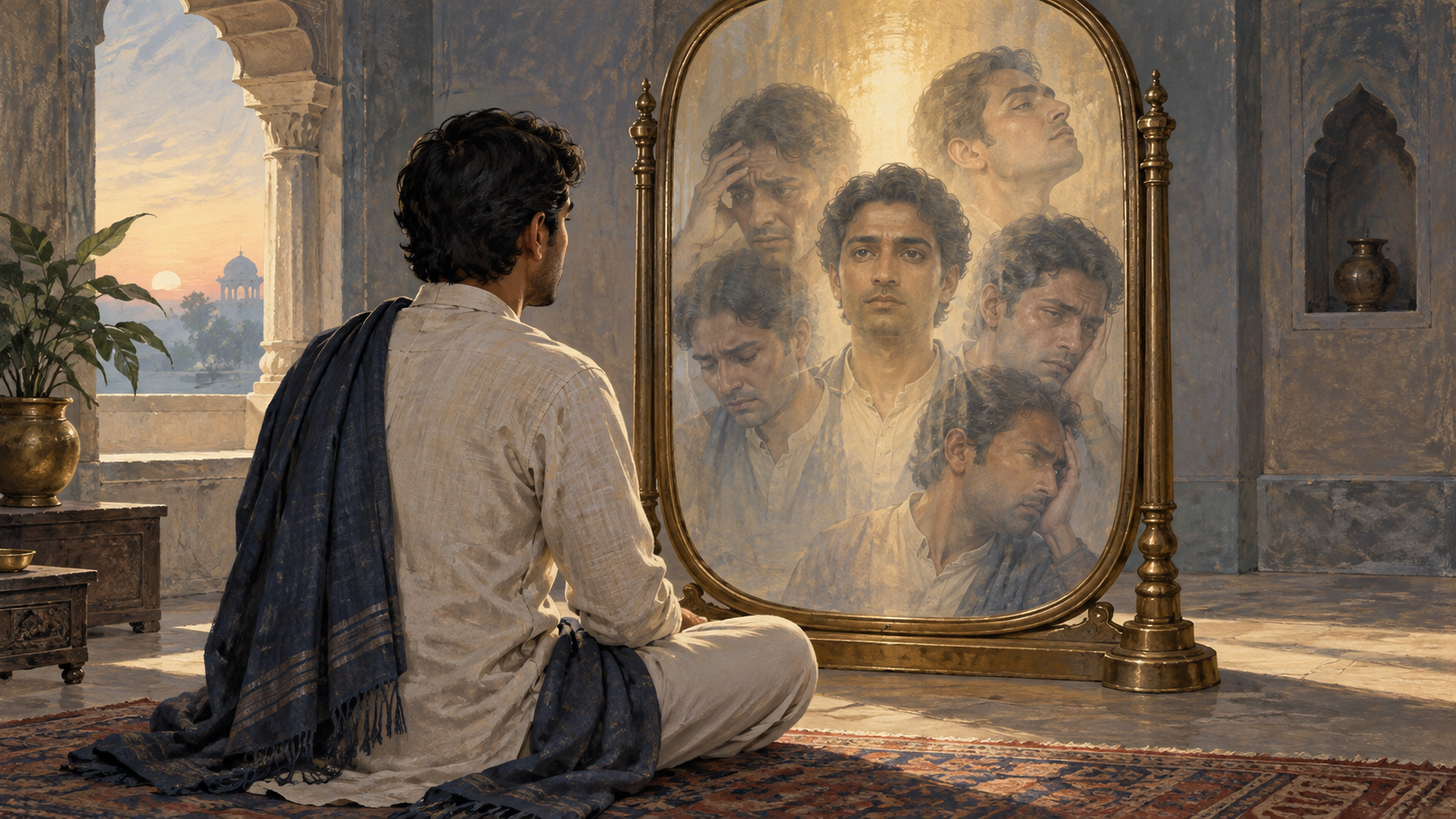
This long-form essay explores how Hinduism, Buddhism, Jainism, and Sikhism converge on a single, practical insight: suffering intensifies when one strives to become someone other than one’s true nature. Drawing on the Upanishads, Bhagavad Gita, Yoga Sutra, Sāṅkhya analysis, Buddhist teachings on craving and anatta, Jain doctrines of aparigraha and anekāntavāda, and Sikh wisdom on…
-
Unlock the Ocean Within: Dharmic Pathways to Atman, Timeless Wisdom, and Resilient Strength

This essay examines the statement “You know little of that which is within you. Within you is the ocean of infinite power” through the shared frameworks of Hinduism, Buddhism, Jainism, and Sikhism. It explains the Upanishadic vision of ātman and Brahman, the yogic map of prāṇa and kundalinī, and the ethical preconditions that make inner…
-
No Destination, Only Awakening: Timeless Hindu Wisdom on the Transformative Spiritual Journey

Hindu wisdom reframes the spiritual path as unveiling rather than arrival: there is nowhere to go, nothing to acquire, and everything to recognize. Drawing on the Upanishads, the Bhagavad Gita, Advaita (advait), and the Yoga Sutra, this exploration clarifies the paradox of “no destination” as a disciplined return to presence. It outlines core methods—Jnana, Bhakti,…
-
The Eternal Joy Within: Dharmic Wisdom on True Happiness, Ananda, and Freedom from Suffering

Modern culture often ties happiness to external milestones, yet Hindu wisdom distinguishes this conditional pleasure from intrinsic ananda—the steady joy of awareness. Drawing on the Upanishads, the Bhagavad Gita, and Yoga philosophy, this essay maps how attention becomes entangled in craving and how disciplined living restores clarity. It outlines four complementary yogas—karma, bhakti, jñāna, and…
-
Already Enough: Dharmic Wisdom on Love, Self-Acceptance, and Living Authentically Today

The post argues that love and acceptance are not earned through perfection but revealed through authentic living, aligning with core insights of Hinduism, Buddhism, Jainism, and Sikhism. It explains Atman, anatta, anekantavada, and Ik Onkar as complementary lenses for intrinsic worth and compassionate action. Drawing on the Bhagavad Gita and Upanishads, it reframes perfectionism as…
-
Who Is the Real Father? Dharmic Wisdom on Body, Soul, Karma, and the Supreme Source

What distinguishes a living person from a lifeless body points directly to the dharmic insight at the heart of the Hare Krishna Movement: the living self (atman) is distinct from matter, and its ultimate source is the Supreme. This article presents a rigorous, compassionate exploration of “Who is the real father?” across ISKCON’s Gaudiya Vaishnava…
-
Beyond the Bodily Concept: SB 10.4.20 on ātmā, family ties, and fearless devotion

This analysis of Śrīmad-Bhāgavatam 10.4.20, as presented in a morning class by HG Bhurijana Prabhu, explains how mistaking the body for the ātmā intensifies attachment and vulnerability to the pains of union and separation within family, society, and nation. It offers a precise Vedic framework (tri-śarīra and pañca-kośa) to clarify identity and reduce suffering. Practical…
-
Unmasking Anavamala in Shaivism: Break the Ego Illusion and Reclaim Shiva-Nature

Anavamala, the primordial contraction in Shaivism, explains how the jiva falsely identifies with the body–mind and forgets its Shiva-nature. This long-form exploration clarifies its etymology, its role within the triad of malas, and how different Shaiva traditions—Shaiva Siddhanta and Kashmir Shaivism—diagnose and remedy this subtle veiling. The discussion distinguishes ontological contraction (mala) from cognitive error…
-
Why Nothing Is Ever Lost: Dharmic Wisdom to Transform Grief into Clarity and Peace

This long-form exploration explains why, across Hinduism, Buddhism, Jainism, and Sikhism, nothing is ever truly lost—forms change while meaning, memory, and value continue. It clarifies Vedanta’s two levels of truth, showing how the atman remains untouched even as prakriti transforms. It integrates Buddhist dependent origination, Jain Anekantavada, and Sikh Hukam to present a unified dharmic…
-
He Is Myself and I Am He: Timeless Vedanta on Atman-Brahman Unity and Liberation

This article unpacks the Vedantic insight behind “He is myself and I am He,” explaining how the Upanishads reveal the identity of atman and Brahman. It surveys Advaita Vedanta alongside Vishishtadvaita, Dvaita, Gaudiya Vaishnavism, and Kashmir Shaivism to show complementary ways of understanding unity and difference. It bridges Hindu philosophy with related aims in Buddhism,…
-
Unveiling the Soul’s Journey: Life After Death in Hinduism—Karma, Yama, Moksha

Hinduism presents life after death as a just, compassionate, and educative journey governed by karma and oriented toward moksha. Foundational texts—the Upanishads, Bhagavad Gita, and Puranas—affirm that the immortal ātman continues through realms (lokas) or returns via reincarnation according to ethical causality. Lord Yama Dharma embodies impartial moral order, while rites such as antyeṣṭi, śrāddha,…
-
Pranavopasana: Mastering Om for Self‑Realization, Inner Calm, and Dharmic Unity

Pranavopasana—meditation on the Pranava (ॐ)—is a disciplined path in Hinduism and Advaita Vedanta that moves attention from sound to silence and from symbol to the Ultimate Reality. Drawing on the Upanishads, Bhagavad Gita, and Patanjali, it unites devotion, meditation, and inquiry into a coherent practice for Self-realization. The article explains the A–U–M arc, the turiya…
-
Beyond Ego (Ahamkara): Atman, Attachment, and Liberation across Hindu, Buddhist, Jain, Sikh Paths

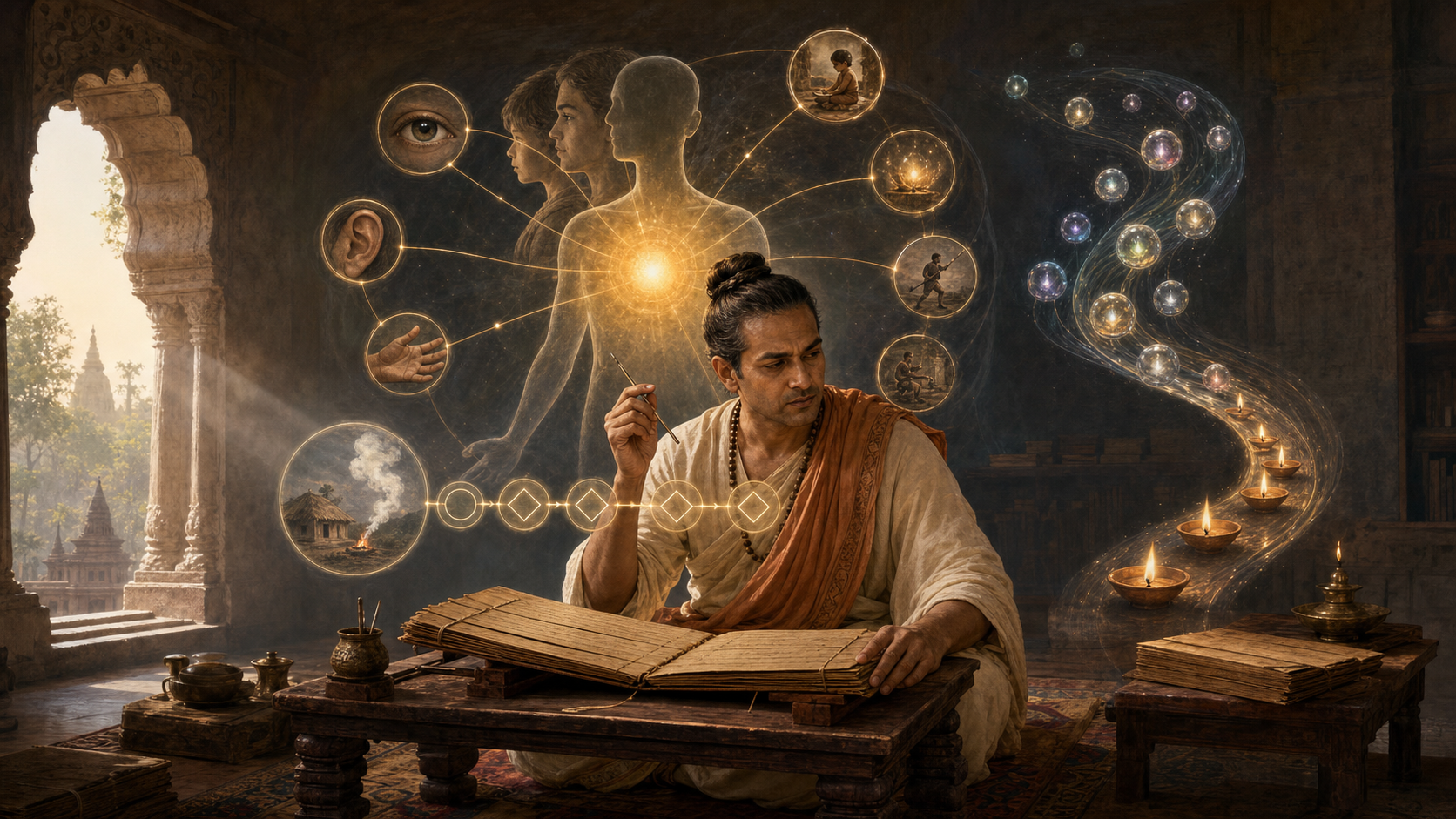
This comprehensive analysis explains how Hinduism, aligned with Buddhism, Jainism, and Sikhism, understands internal attachment as self-identification with ego (ahamkara/asmita). It clarifies core doctrines—Atman–Brahman, avidya–adhyasa, and the Yoga kleshas—while mapping practical methods in Karma Yoga, Bhakti, Jnana, and Raja Yoga. Readers gain a technical yet accessible framework using Pancha Kosha Viveka, samskara theory, and Gita-based…
-
Nirupadhika in Advaita Vedanta: Adjunct-Free Brahman, Practice Insights, and Dharmic Parallels

Nirupadhika—“without the upadhis”—names Advaita Vedanta’s insight that Brahman is never altered by limiting adjuncts such as body, mind, maya, or avidya. The article maps how nirupadhika contrasts with sopadhika, clarifies tri-level reality, and shows how Upanishadic hermeneutics (neti neti, tat tvam asi via bhaga-tyaga-lakshana) reveal the adjunct-free Self. It unpacks core methods—adhyaropa-apavada, Drig-Drishya Viveka, and…
-
When Nothing Remains, Fear Ends: A Dharmic Science of Abhaya beyond Ego and Identity

This essay maps a dharmic science of fearlessness (Abhaya) grounded in Hindu philosophy and harmonized with Buddhism, Jainism, and Sikhism. It clarifies how fear originates in avidya and duality, then outlines practical paths—Jnana, Karma, Bhakti, and Raja Yoga—to dissolve misidentification and regulate reactivity. Readers gain scriptural anchors from the Upanishads, the Bhagavad Gita, and the…
-
Maitrayaniya (Maitri) Upanishad: Origins, Structure, Sixfold Yoga, and Transformative Wisdom

The Maitrayaniya (Maitri) Upanishad of the Krishna Yajurveda blends Vedanta and early Yoga with unusual precision, making it a key late-Upanishadic text. It analyzes time and the timeless, the mind’s role in bondage and freedom, and the threefold nature of suffering, while culminating in a concise sixfold Yoga. Readers gain a clear map from inquiry…
-
Ultimate Reality Cannot Be Taught: Profound, Experiential Wisdom in Hinduism and Dharmic Paths

This long-form exploration clarifies why Ultimate Reality in Hindu philosophy cannot be taught as a mere concept and must be realized through direct experience. It maps the classical triad of śravaṇa–manana–nididhyāsana and the role of Guru–Shishya Tradition, highlighting how scripture and guidance remove ignorance rather than transfer realization. Readers gain a technically sound overview of…
-
Shattering the Illusion of Chains: Advaita Vedanta’s Guide to the Ever‑Free Self
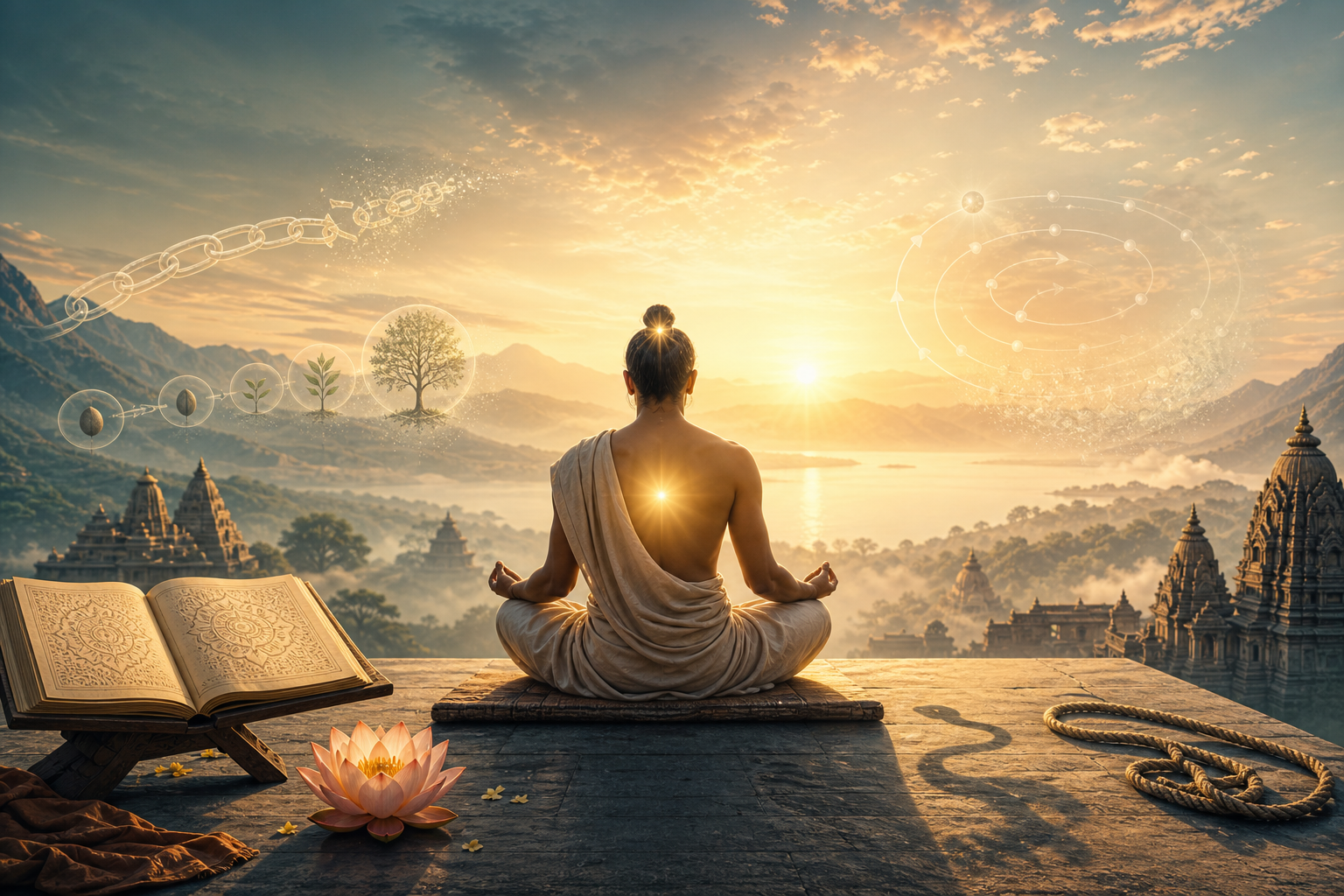
Advaita Vedanta proposes a radical clarity: in ultimate truth there is neither bondage nor liberation; the Self (Atman) is ever-free, and only ignorance creates the sense of captivity. This article explains the logic of avidya and adhyasa, distinguishes empirical from absolute perspectives, and shows how moksha functions as recognition rather than attainment. Drawing on the…