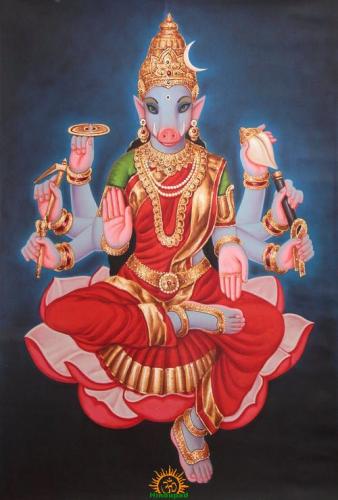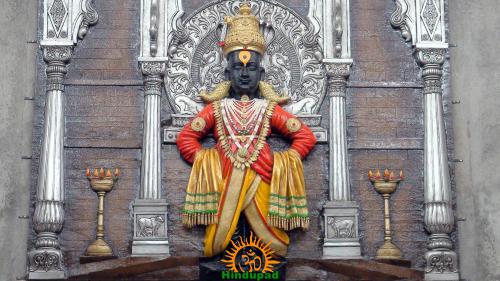
Dama occupies a distinctive place in Hindu iconography as a primary neck ornament characterized by linear simplicity and measured elegance. In temple sculpture and bronze casting, this sacred neck chain is positioned at the base of the throat or upper chest, visually stabilizing the composition of the torso while signaling dignity, protection, and spiritual restraint. Unlike the elaborate, multi-tiered hara that cascades toward the solar plexus, the dama remains contained and architectonic, functioning as a refined collar that anchors the countenance of the deity.
Etymologically, Sanskrit distinguishes between dāma (a cord or band) and dama (self-restraint, a cardinal virtue). In visual culture these resonances intersect: as a band encircling the neck, the dama metaphorically evokes mastery over impulses and containment of divine potency. The collar’s quiet geometry thus becomes an iconographic shorthand for composed sovereigntyauthority disciplined by inner control (dama).
Within the taxonomy of Hindu jewelry in the Śilpaśāstras and related iconographic manuals, the dama aligns closely with the short, structured neck chain often glossed as graiveyaka (neck-ornament), and is distinct from other canonical types: kanthikā (tight choker closely hugging the throat), muktāvalī (single or multiple strings of pearls), and hara (long necklace descending over the sternum). The dama/graiveyaka generally sits below the kanthikā yet above the hara, creating a rhythmic tiering that guides the eye from face to chest in classical mūrti-lakṣaṇa design.
Prescriptive sourcesincluding the Viṣṇudharmottara Purāṇa (iconography sections), Śilparatna, Manasāra, and Aparājitapṛcchāenumerate and position neck ornaments with attention to proportion, material, and sequence of adornment. Although precise nomenclature varies by region and period, these treatises converge on a system in which a shorter, linear collar near the base of the neck balances a longer, more voluminous hara. Agamic liturgical texts used for alaṅkāra similarly preserve the principle of tiered ornamentation, ensuring that the dama harmonizes with other ritual insignia such as the yajñopavīta (sacred thread) and chest emblems.
Formally, the dama is executed as a single, well-articulated strandsometimes braided, sometimes beadedrarely projecting far from the neck. In stone sculpture, artisans achieve the effect through shallow relief carving that follows the clavicular arc; in bronzes, the cire perdue (lost-wax) process permits crisp, rounded profiles with minute beading. Typical materials for the real-world prototypes referenced by sculptors include gold, pearls, crystal, carnelian, or seed-beads; in sculptural renderings, the suggestion of these materials appears through beading rhythms, kirtimukha clasps, or small median pendants that stop above the sternum.
Deity iconography leverages the dama to refine theological messaging. Vaiṣṇava images may combine a short dama/graiveyaka with a prominent hara bearing the Kaustubha gem; Śaiva images sometimes let the serpent-ornament (nāga-bhūṣaṇa) function equivalently to a dama, visually connoting both ornament and cosmic energy. Devī forms often display a dignified collar that modulates the profusion of other ornamentstiaras, armlets (keyūra), and girdles (meḍhi or udarabandha)thereby sustaining compositional order.
Stylistic evolution across regions clarifies the dama’s role. Gupta-period sculpture favors restrained collars with soft, continuous contours; Pallava reliefs at Mamallapuram introduce crisp bead-chains; Chola bronzes refine the collar into impeccably regular beading or a slender, plain torc; Hoysala carvings complicate the motif with filigreed granulation; and Vijayanagara works amplify the collar’s scale to orchestrate the increased density of ornament. In the Pāla-Sena milieu, both Hindu and Buddhist images employ short collars to frame the upper torso, while Khmer sculpture at Angkor adapts the Indian graiveyaka idiom into beaded collars that hug the base of the neck.
Ritual practice dovetails with sculptural convention. In daily and festival alaṅkāra, priests often begin with foundational collars before layering longer garlands and gemmed necklaces, preserving the visual logic that iconographic texts recommend. The short neck chain serves not only as ornament but as a ritual boundary marking the kanṭha-deśa (throat region), a locus of breath, voice, and mantrasubtly aligning the dama with protected speech and consecrated sound.
Cross-dharmic continuities reinforce this reading. In Buddhist imagery, Bodhisattvas frequently wear short collars paired with longer ornaments, articulating compassion governed by wisdom. Jain Yakṣa and Yakṣiṇī figures, though distinct from the typically unadorned Tīrthaṅkara images, also feature disciplined neck-chains that temper opulence with order. Even in Sikh painting traditions (as opposed to sculptural liturgy), portraits of Gurus and nobles occasionally depict restrained collars, expressing dignity rather than excess. Such convergences across Hindu, Buddhist, Jain, and Sikh visual cultures affirm a shared subcontinental aesthetics of sacred restraint, complementing each tradition’s doctrinal nuances while sustaining a unifying dharmic sensibility.
Symbolically, the dama communicates three interlinked ideas: restraint, protection, and presence. As restraint (dama), the encircling band signifies sovereign self-mastery. As protection (rakṣā), amuletic beads and subtle locks secure the prāṇa-charged throat, the seat of sacred utterance. As presence, its visible, measured line holds the viewer’s gaze near the face and heart, guiding devotion and meditation in darśana. Through this triad, the collar’s minimalism becomes the very medium of theological depth.
For field observation in temples and museums, practical cues assist identification: a kanthikā sits tightly at the highest point of the throat; a dama/graiveyaka rests just below, typically above the clavicle; a muktāvalī presents as slender pearl strings; and a hara extends to the sternum or lower, often bearing pendants or gems. The yajñopavīta cuts diagonally across the torso and should not be confused with any neck ornament. Reading these layers clarifies both deity identity and workshop style.
From a materials perspective, conservation protocols emphasize non-invasive cleaning to preserve historic polychromy and wax patinas on bronzes, and to protect pigment residues in stone recesses that outline beading. Misguided polishing that rounds beading or erases tool marks compromises the legibility of the dama and its art-historical value. Documentation of bead counts, clasp forms, and pendant motifs supports attribution, dating, and regional linkage in collections care.
Taken together, textual canons (Śilpaśāstra prescriptions), sculptural practice, and ritual alaṅkāra establish the dama as more than decoration. It is a structural device that composes the torso, a theological sign of self-control and safeguarded speech, and a cross-dharmic aesthetic that unites the sacred arts of Hinduism, Buddhism, Jainism, and Sikhism. Recognizing the dama in temple sculpturestone or bronzeopens a disciplined way of seeing: one that perceives how a quiet, measured line embodies restraint, protection, and grace in the living traditions of South Asian sacred art.
Inspired by this post on Hindu Blog.