-
Under the Naga’s Canopy: The Powerful, Timeless Meaning of Serpent Hoods in Hindu Icons

Hooded serpents above Hindu deities are not mere ornaments but condensed philosophies. The motif announces protection and sovereignty, like a living royal canopy (chatra), while symbolizing time’s cycles and awakened energy. In Vaiṣṇava art, Ananta-Śeṣa frames Vishnu as the still center of an infinite cosmos; in Śaiva icons, Vāsuki’s presence proclaims mastery over fear, poison,…
-
Kamantaka Murti of Shiva: Awe-Inspiring Iconography, Third-Eye Fire, and Mastering Desire

This in-depth study decodes Kamantaka (Madana Dahana), the powerful murti of Shiva who burns Kama with the third eye’s jñāna-agni, as a visual pedagogy on mastering desire. It explains field-ready markers—Kama’s sugarcane bow, bee-string, five flower-arrows, and Rati—so readers can confidently identify the scene in temples and sculpture. It situates the form in Purāṇic, Āgamic,…
-
Unlocking Tripurantaka: Shiva’s Cosmic Archer—Iconography, Temple Art, and Inner Alchemy

Tripurantaka, Shiva’s cosmic archer, unites myth, philosophy, and temple art into a single visual theology. This long-form exploration traces the Puranic narrative of Tripura Samhara, decodes canonical iconography from bow to chariot, and surveys major temple depictions from Ellora to the Chola heartland. Readers learn how to identify Tripurantaka murtis, understand Agamic design rules, and…
-
Revealing the Sacred Beauty of Imperfection: Why Authentic Hindu Bronzes Aren’t Flawless

Authentic Hindu bronze sculptures are often misjudged by a modern expectation of machine-like perfection. This essay explains, in academic yet accessible terms, how lost-wax casting and panchaloha metallurgy naturally produce subtle surface variations that signal authenticity. It decodes sprue scars, chasing marks, porosity pinholes, and asymmetry as the normal fingerprints of traditional workmanship rather than…
-
Dama in Hindu Iconography: Unveiling the Sacred Neck Chain of Restraint, Grace, and Power

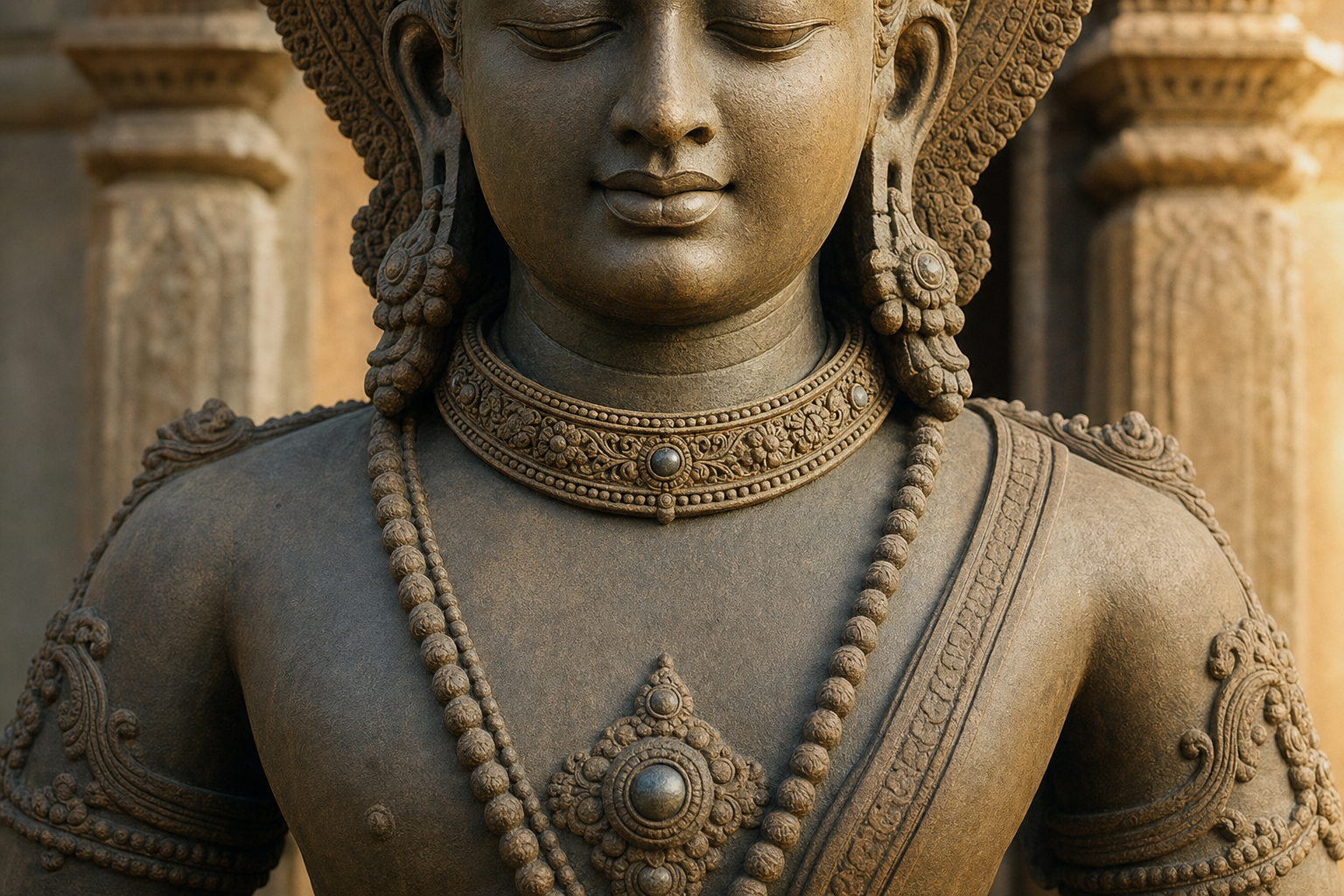
This article decodes the dama—the sacred neck chain—in Hindu iconography as a short, structured collar that balances longer necklaces while signaling restraint, protection, and grace. It clearly distinguishes dama/graiveyaka from kanthika (choker), muktavali (pearl strings), and hara (long necklace) using the taxonomy preserved in Shilpa Shastras. Readers learn how major treatises (Vishnudharmottara Purana, Shilparatna, Manasara,…
-
Antariya Unveiled: The Sacred Lower Garment Shaping Hindu Sculpture and Symbolism

Antariya—the unstitched lower garment secured by a mekhala—is the foundational drape of Hindu sculpture and iconography, predating later dhoti forms. This long-form guide explains how to identify antariya in stone and bronze through pleat geometry, knots, and belt types, and how these features assist in dating and attributing works from Bharhut and Sanchi to Gupta…
-
Pana Patra in Hindu Sculptures: A Powerful Symbol of Abundance, Compassion, and Divine Grace

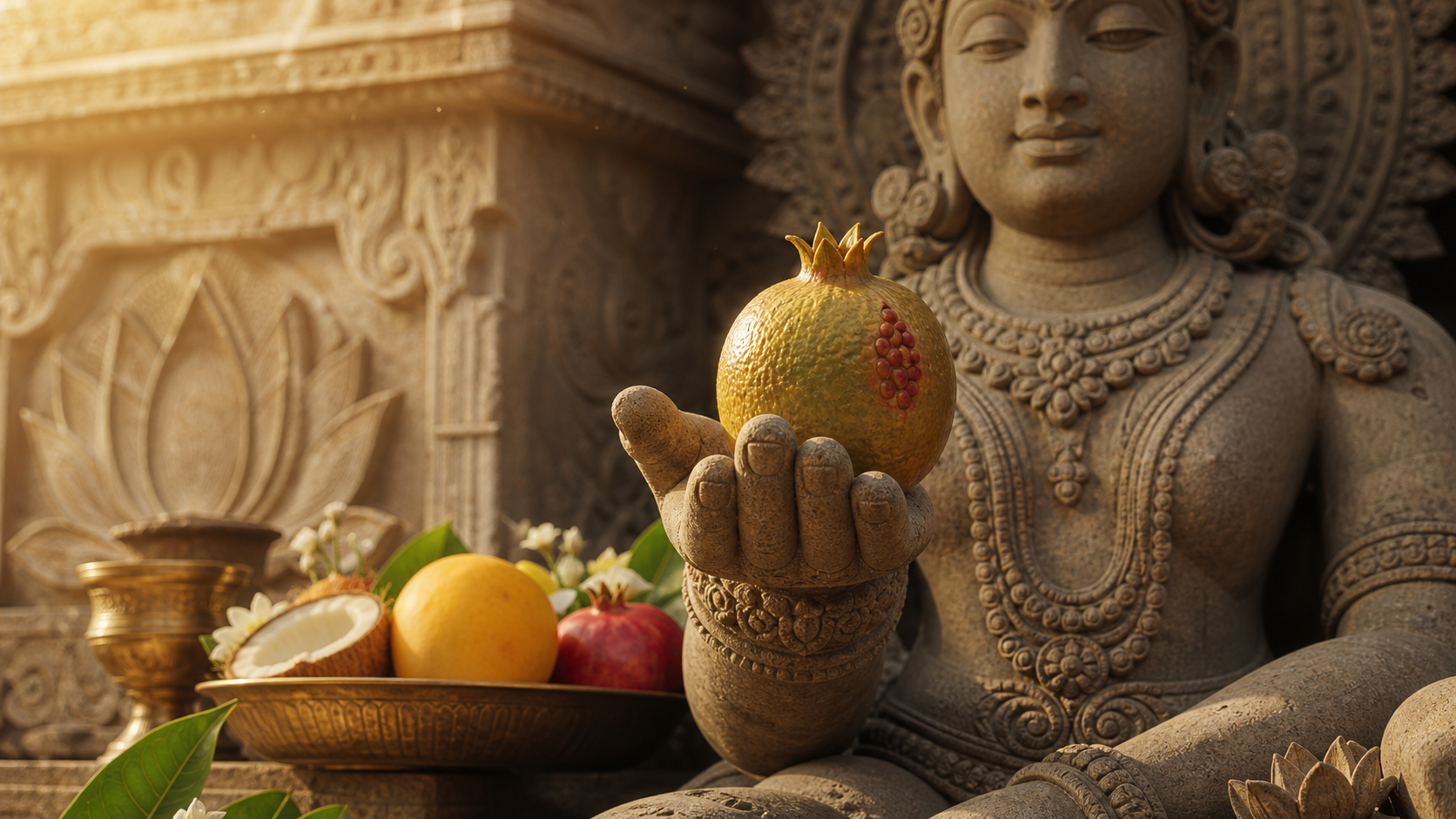
The pana patra—the ritual bowl seen across Hindu sculptures—serves as a compact key to decode abundance, renunciation, immortality, and grace in temple art. Grounded in Shilpa Shastra logic and Agamic practice, this guide clarifies how Annapūrṇā’s food bowl, Bhairava’s skull-cup, Kubera’s jewel vessel, and cups in Samudra Manthana scenes each signal distinct theological roles. It…
-
Divine Fury, Compassionate Shelter: Nakhayudha—Sacred Claws of Narasimha in Hindu Iconography

Nakhayudha—the sacred claws of Narasimha—embodies a unique class of natural, non-forged weaponry in Hindu iconography, expressing spontaneous divine protection without reliance on manufactured arms. This long-form exploration clarifies the mythic logic behind Hiranyakashipu’s boon and shows how Narasimha’s claws resolve each clause through liminality. It decodes the visual grammar defined by Shilpa Shastra and Vaishnava…
-
Unveiling the Musala of Balarama: Agrarian Power, Sacred Iconography, and Divine Strength

The musala—Balarama’s sacred pestle—embodies agrarian power transformed into protective, ethical strength. This long-form analysis clarifies how its cylindrical form differs from the gadā, why Vaishnava texts hail Balarama as Hala-muṣala-dhara, and how the Mausala Parva frames the musala as a moral instrument entwined with dharma and time. Readers learn practical iconographic cues for identifying the…
-
Chudamani: Radiant Crest Jewel of Hindu Deities and the Apex of Sacred Iconography

This article explores the chudamani — the crest jewel at the summit of a deity’s crown — as the apex of Hindu iconography and meaning. Readers learn the term’s etymology and literary memory in the Ramayana, its precise placement on mukuta types, and its codification in Shilpa Shastra and Agamic texts. The discussion unpacks symbolism…
-
Lakshmana in Sacred Art: Powerful Iconography, Proportion Rules, and Spiritual Meaning

Lakshmana’s sacred form in Hindu sculptures fuses epic narrative with precise Shilpa Shastra proportion rules to communicate seva, discipline, and fraternal loyalty. Typically positioned to Sri Rama’s left (viewer’s right) with bow, arrows, and quiver, Lakshmana’s slightly reduced scale expresses devoted service rather than sovereignty. Regional schools—from Chola bronzes to Hoysala stone and Vijayanagara ensembles—retain…
-
Channa Vira Unveiled: The Cross‑Body Ornament of Valor, Protection, and Dharma in Hindu Art

Channa Vira is a defining vaksha-ābharaṇa—a cross-body chest ornament—in Hindu iconography that signals protection, valor, and sacred duty. Unlike the yajnopavita, it forms an X-shaped harness across the torso, often centered by a jewel or rosette. Appearing on Śaiva, Vaiṣṇava, and Śākta images—and on guardians such as dvārapālas—it evolved across Pallava, Chola, Hoysala, and Vijayanagara…
-
TTD Tirupati Architecture & Sculpture Admissions 2026–27: Train to Preserve Sacred Heritage

TTD-run Sri Venkateswara Traditional Temple Architecture & Sculpture College, Tirupati, is accepting applications from May 04 to June 20 for its 2026–2027 intake. Eligible Class 10 (SSC) pass candidates can apply for a four-year Diploma or a two-year Certificate. The college provides free accommodation to selected students, reflecting TTD’s heritage-service mandate. Training integrates Sthapatya Veda…