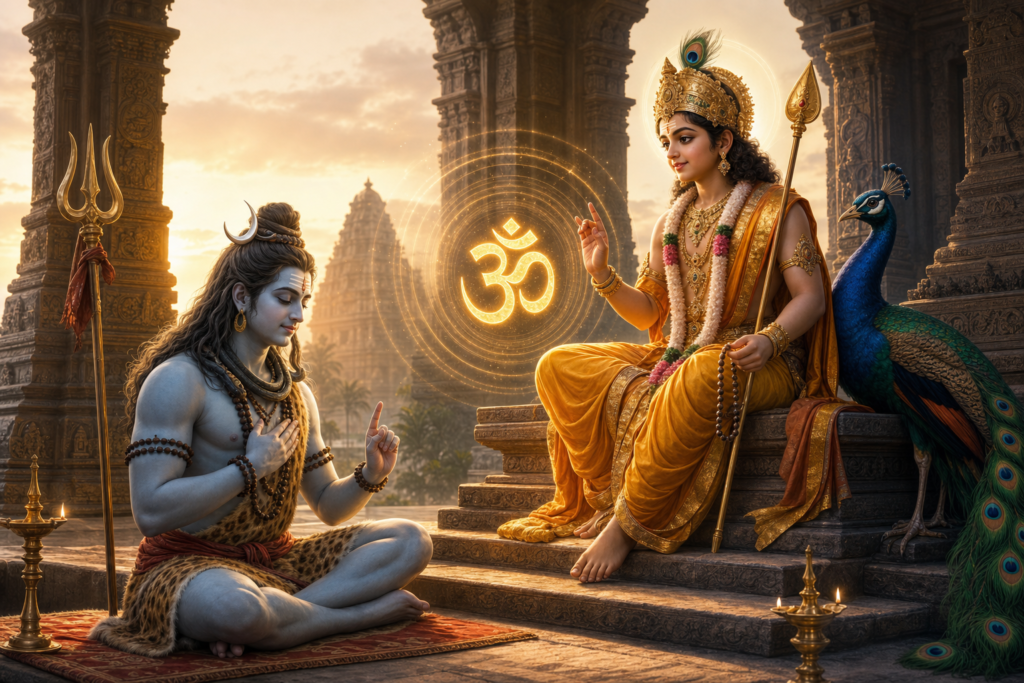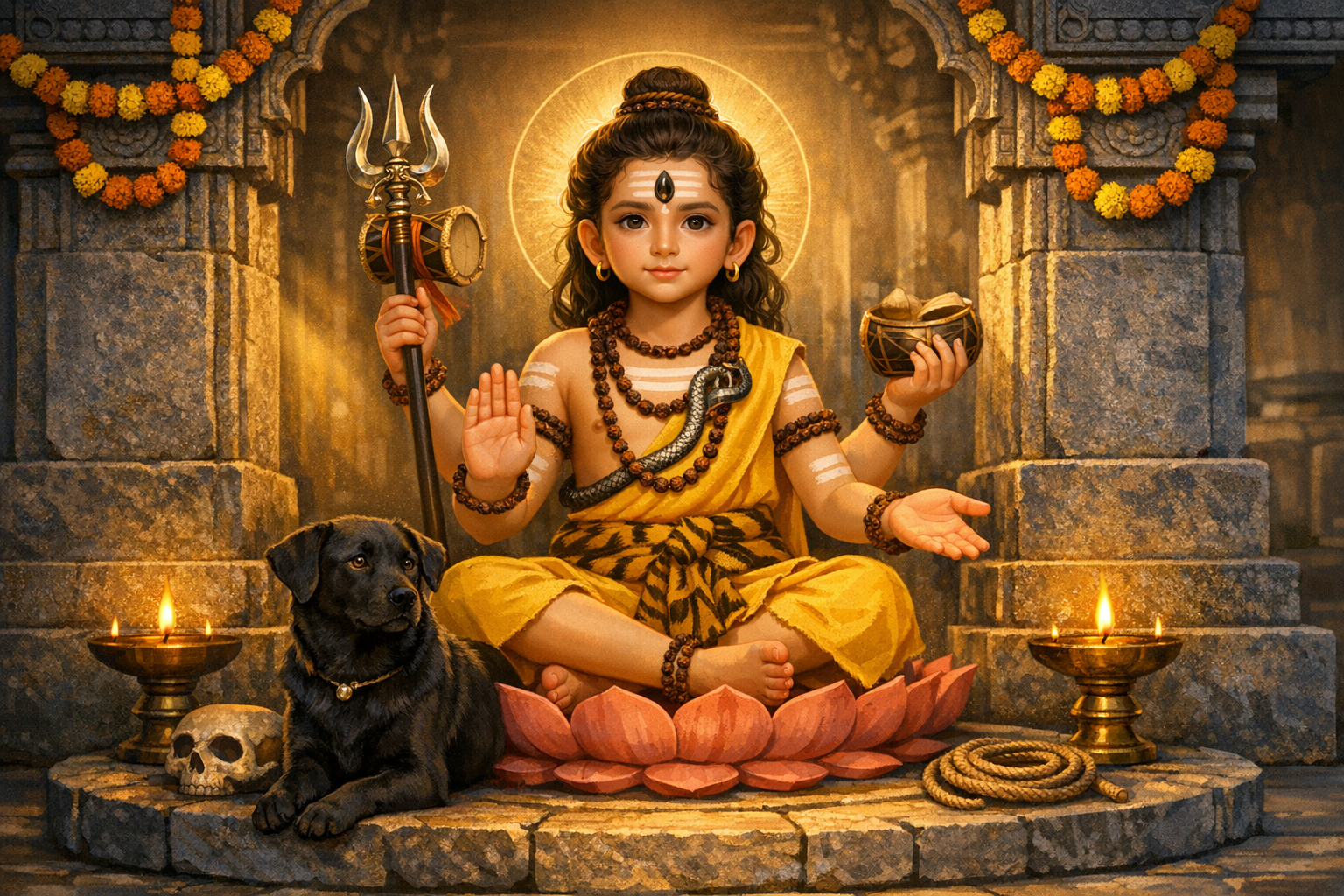
Within the vast canvas of Shaiva worship, Bhairava signifies the fierce, time-dissolving energy of Lord Shiva. Among the numerous manifestations, Batuk Bhairav (also spelled Batauk/Bāṭuka Bhairava) is distinctive: he embodies the same cosmic vigilance and authority in the tender, auspicious appearance of a divine boy. This iconographic choiceyouthful form sheltering primordial powerexplains why Batuk Bhairav is both approachable to householders and indispensable to temple guardianship.
Etymologically, batuka (Sanskrit: बटुक) denotes “boy” or “youth,” and in several regional usages refers to a novice or young brāhmaṇa. The name Batuk Bhairav therefore encodes the paradox of Shiva’s raudra (terrible) aspect expressed through saumya (gentle) innocence. Theologically, Batuk Bhairav is read as the protecting onset of time and intentionalertness at the very threshold of action.
In Shaiva Tantra and the Āgamas, Bhairava appears as the kṣetrapāla (guardian of sacred space), custodian of crossroads, thresholds, cremation grounds, and the liminal zones where transformation occurs. Batuk Bhairav is the kṣetrapāla made friendly to the home and heart: the same ultimate protector, but in a form that invites intimacy, trust, and daily remembrance.
Textual memory for Bhairava broadly occurs in sources such as the Skanda Purana (notably in the Kāśī- and Avantikā-māhātmyas concerning Kālabhairava), various Śaiva Āgamas, and medieval Tantric paddhatis. Art-historically, the Batuk form crystallizes in the early second millennium, particularly in regions with robust Tantric currents (e.g., the Pāla–Sena sphere in eastern India and the Kathmandu Valley), with later diffusion across North and South Indian temple ecologies.
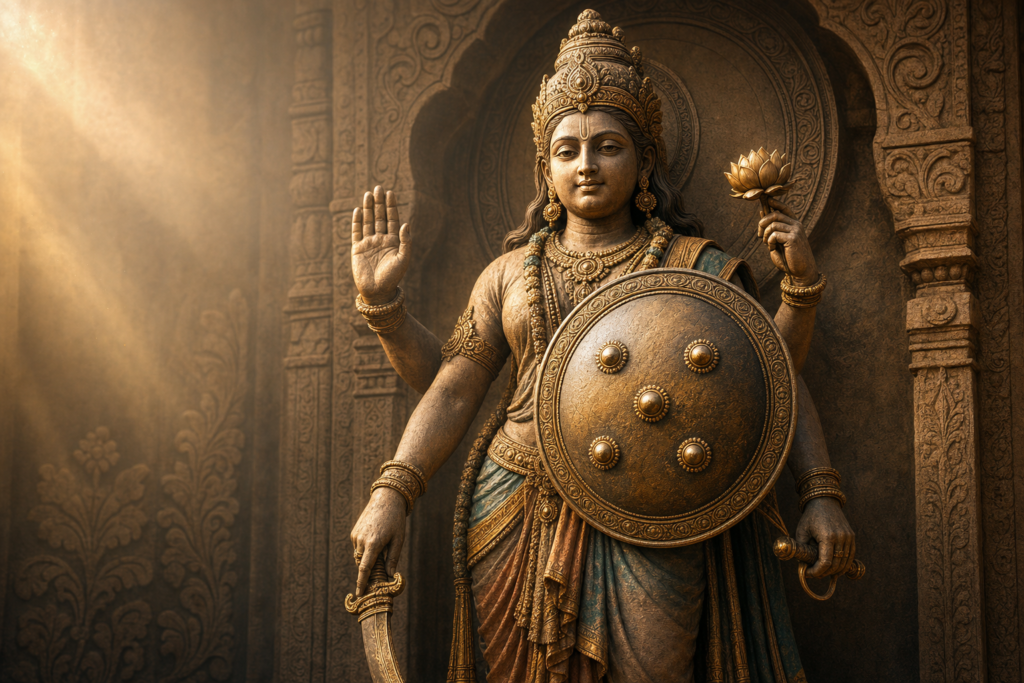
Core iconographic schema identifies Batuk Bhairav as a bright-faced boyoften eight years of age (aṣṭa-varṣīya)with three eyes (trinetra) and a calm-yet-alert expression. He may be shown standing (sthānaka) or seated (āsīna), generally without the macabre exaggerations typical of ugratā (extreme fierceness) in other Bhairava forms. The count of arms varies by regional tradition; two-armed and four-armed forms are most common for Batuk, while multi-armed proliferations are rarer and usually reserved for more explicitly terrible Bhairavas.
Common attributes include the triśūla (trident), ḍamaru (hourglass drum), kapāla (skull-bowl), and pāśa (noose); alternates such as khaḍga (sword), khaṭvāṅga (skull-topped staff), and ḍhakkā (drum variant) appear in specific schools. The trident symbolizes the unity of icchā-śakti (will), jñāna-śakti (knowledge), and kriyā-śakti (action). The ḍamaru signals spandathe primordial vibratory pulse issuing creationwhile the kapāla teaches acceptance of impermanence and fearless transmutation of experience.
Attire and ornaments tend toward auspicious restraint in Batuk images: tiger skin (vyāghracarma) or pīta-vastra (yellow garments), bhasma (ash) anointment, rudrākṣa mālā, nāga-yajñopavīta (serpent sacred thread), and simple earrings (kuṇḍala). A garland of skulls (muṇḍa-mālā) belongs more to ferocious Bhairavas; where present in Batuk iconography, it is usually stylized and subordinate to his youthful serenity.
The vahana is the dog (śvāna), typically black or dark, seated faithfully at the feet or shown as an attendant motif. In Dharma symbolism, the dog signifies vigilant loyalty, edge-of-boundary awareness, and the courage to confront the liminalqualities central to Bhairava as guardian. Many household observances of Batuk Bhairav therefore include compassionate feeding of dogs, aligning worship with living dharma.
Mudrās in Batuk iconography frequently include abhaya (fear-dispelling) and varada (boon-granting), reflecting his role as apaduddhāraṇaremover of distress. This is a notable departure from the overtly fearsome gestures of other Bhairava depictions and underscores why the Batuk form is welcomed into household shrines.
Pedestals and grounds vary by school. While cremation-ground (śmaśānabhūmi) settings belong to Bhairava lore, Batuk Bhairav is often seated on a padma-pīṭha (lotus pedestal) or a simple platform near temple thresholds. As kṣetrapāla, he frequently occupies liminal positionsnear gateways, prākāra corners, or the northern quadrantswhere protective sightlines matter architecturally and ritually.
Regional visual grammars adapt these fundamentals. In Varanasi, the famous Batauk Bhairav Mandir presents an accessible image that householders across North India recognize as a friendly guardian. In Ujjain, broader Bhairava devotion flourishes (e.g., Kālabhairava), providing a backdrop to understand Batuk’s gentler code. In Bengal and Nepal, medieval stone and gilt-copper traditions preserved compact Batuk-like Bhairavas with refined ornament, while in Tamil Nadu “Bhairavar” shrines at Śiva temples often adopt a protective, approachable stance resonant with the Batuk ethos.
Material and style assist dating and identification. Pāla–Sena stone Batuk/Bhairava images bear elegant linearity, poised symmetry, and delicately carved attributes. Chola and later South Indian bronzesin cases where Batuk features are adoptedshow supple modeling and luminous metal polish. Nepalese gilt-copper works emphasize exquisite jewelry and softly animated features, marrying luminosity with watchful calm.
Symbolism clarifies the form’s appeal. Youth indicates navatāfreshness of awareness at the beginning of any endeavor. The triśūla aligns intention, insight, and execution; the ḍamaru entrains the practitioner to cosmic rhythm; the kapāla integrates mortality into wisdom. The dog grounds vigilance in compassion; ash and rudrākṣa recall renunciation and remembrance of Rudra’s grace. Together, Batuk Bhairav’s iconography teaches fearless clarity blended with childlike openness.
Ritual practice is typically orthodox and non-esoteric for home worship. Devotees employ the ṣoḍaśopacāra (sixteen-offering) sequence, abhiṣeka with pañcāmṛta (milk, curd, ghee, honey, sugar), sandal and bhasma anointment, incense, deepa (lamp), and naivedya such as kheer or seasonal sweets. Mustard-oil lamps are common in Bhairava worship, and feeding dogs is widely observed as an expression of seva consistent with the deity’s vahana.
Mantras vary by lineage. Simple invocations like “Om Batuk Bhairavaya Namah” are common; Tantric lineages preserve mantras such as “Om Hrim Batukaya Apaduddharanaya Kuru Kuru Batukaya Hrim.” As with all mantras of Bhairava, teachers emphasize initiation and guidance for advanced sādhana, while recommending accessible, sattvic daily japa for householders.
Observance days include Kālāshtami (the Krishna Paksha Aṣṭamī each lunar month) and Kālabhairava Jayanti (traditionally in the Krishna Paksha of Mārgaśīrṣa). On these tithis, devotees perform extended pūjā, light lamps at thresholds, and meditate on protection and truthful speech. The intention is to cultivate a vigilant, compassionate conscience that guards both home and mind.
In many homes, a small Batuk Bhairav murti is placed near the entrance or in a side alcove. Lighting a mustard-oil lamp at dusk becomes a gentle ritual of reassurance; countless devotees describe a felt sense of safety and clarity as the flame steadies. The boy-form makes the ideal of fearlessness relatable to children and elders alike, integrating devotion with daily life.
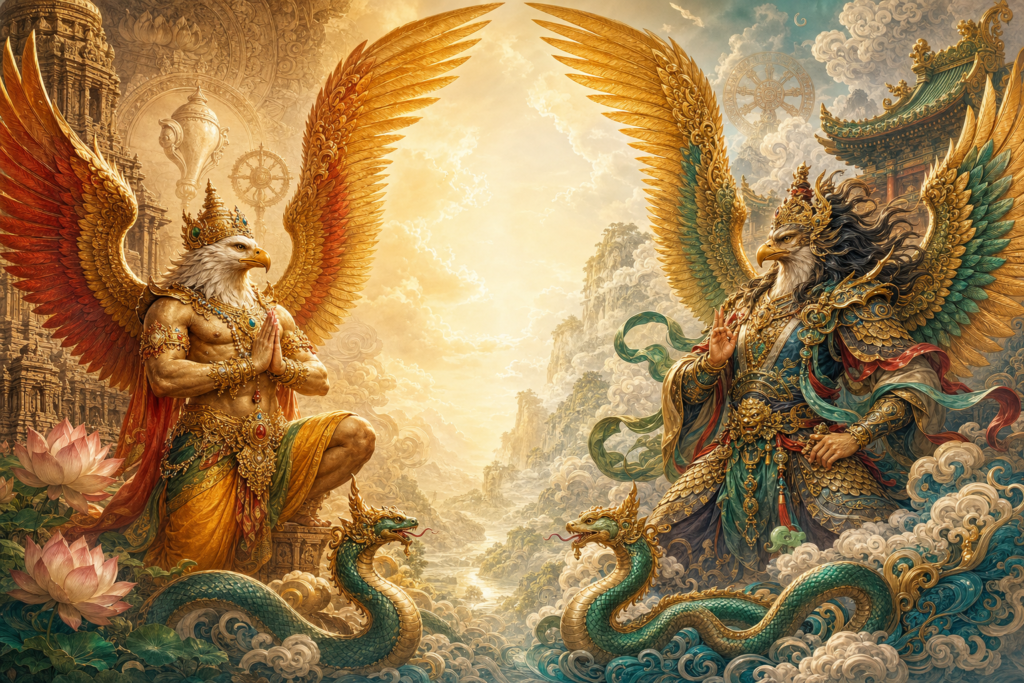
Comparative Dharmic perspective enriches understanding. Vajrayāna Buddhism venerates Vajrabhairava/Yamāntakaanother guardian form addressing fear and death’s delusion; Śaiva–Vajrayāna artistic dialogues are evident in medieval Himalayan art. In Jain traditions, protective yakṣas and kṣetrapālas likewise guard sanctums and pilgrim paths, illustrating a shared Dharmic emphasis on righteous guardianship. Sikh teachings elevate the ideal of nirbhau (fearlessness) and steadfast moral courage. Read together, these streams affirm a civilizational ethic: protection of the sacred with compassion and clarity.
For temple-goers and connoisseurs, a practical iconographic checklist aids identification of Batuk Bhairav: youthful proportion and expression; restrained ornaments with rudrākṣa; triśūla and ḍamaru prominence; dog vahana; abhaya/varada mudrās; and placement near thresholds or cardinal corners. When skull motifs appear, they are typically minimized relative to the serene child-aspect.
Philosophically, Batuk Bhairav signifies the first moment of responsible awarenesswhere new beginnings are guarded by insight. He invites practitioners to hold the child’s candor alongside Shiva’s discernment, to step across thresholds with steadiness, and to transmute anxiety into alert compassion.
In contemporary practice, Batuk Bhairav offers a unifying symbol: rigorous in guarding dharma, gentle in welcoming seekers. His youth reassures, his attributes instruct, and his guardianship binds community to placehome to temple, pilgrim to path. In this balance of innocence and sovereignty, the “Divine Boy who guards the universe” continues to watch over thresholds both seen and unseen.
Inspired by this post on Hindu Blog.