-
Modi Meets Giampaolo Tomassetti (Jnananjana Dasa) in Rome: Kashi Art and Civilizational Bridges

Prime Minister Narendra Modi’s Rome meeting with Italian artist Giampaolo Tomassetti (Jnananjana Dasa) spotlighted cultural diplomacy through the gifting of a Varanasi painting. The exchange linked India–Italy ties with the soft power of sacred art, situating Kashi’s iconic ghats and the Ganga river within a broader civilizational conversation. This analysis decodes the artwork’s symbolism, technique,…
-
Batuk Bhairav Iconography Decoded: Symbols, Rituals, and the Guardian Child of Shiva

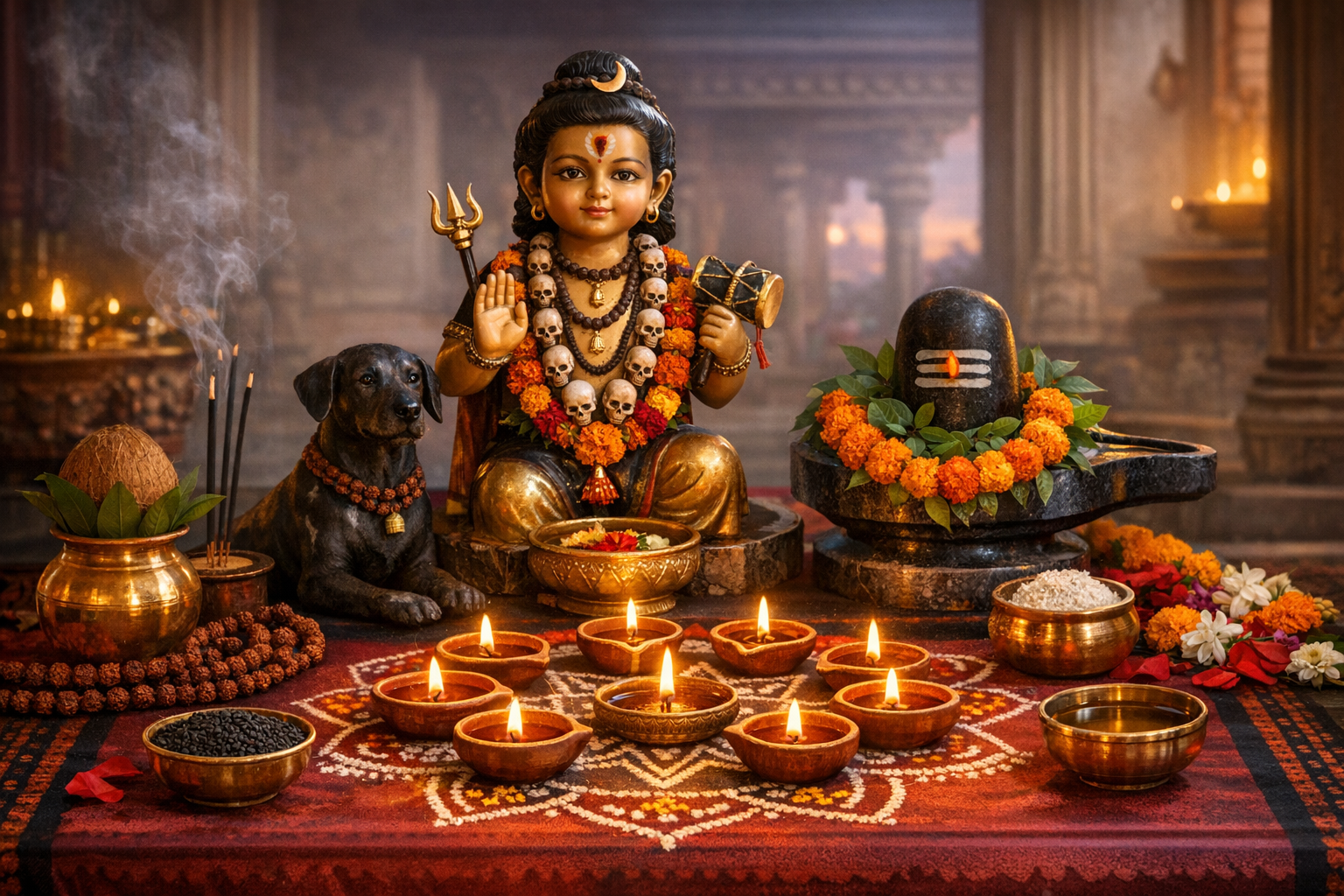
Batuk Bhairav, the youthful guardian form of Shiva, unites fierce protection with approachable grace. This iconography guide decodes his attributes—trident, drum, skull-bowl, dog vahana—and explains how each symbol teaches fearless clarity and compassionate vigilance. Readers learn how to identify Batuk Bhairav in temples, where to look for threshold shrines, and how regional styles (Varanasi, Bengal–Nepal,…
-
Rethinking Diplomatic Symbolism: Why Rubio’s Kolkata Stop Should Honor India’s Civilizational Depth

This analysis examines why Marco Rubio’s Kolkata stop at the Missionaries of Charity drew criticism in India and what it reveals about diplomatic symbolism. It explains how itinerary choices function as soft-power signals that can strengthen or weaken trust in U.S.–India relations. Readers will find a concise overview of India’s civilizational continuity and dharmic plurality…
-
Bhuridakshinaya Bhairava: Guardian of Dharma, Southern Direction, and Sacred Abundance

Bhuridakshinaya Bhairava unites fierce guardianship with ethical generosity, drawing on the multiple meanings of dakshina as offering, right-hand propriety, and the southern direction. The epithet’s Vedic resonance with bhuri-dakshina illuminates a moral economy in which right giving completes right worship. In Shaiva Tantra, Bhairava’s role as Kshetrapala aligns with directional theology, temple architecture, and observances…
-
Swaswas Bhairava: Fierce Protector of Dharma, Lord of Time, and the Sacred Bond with Dogs

Bhairava’s Swaswas form illuminates a profound synthesis of guardianship, time, and compassion through the sacred bond with dogs—especially black dogs. As kṣetrapāla, Bhairava protects thresholds while the dog symbolizes fidelity, vigilance, and the courage to dwell at liminal edges. Vedic memory of Yama’s four‑eyed dogs and Puranic narratives from the Skanda Purana reinforce the dog’s…
-
Kashi’s Tilbhandeshwar Mahadev: The Shivling Said to Grow a Sesame Each Year and Its Meaning

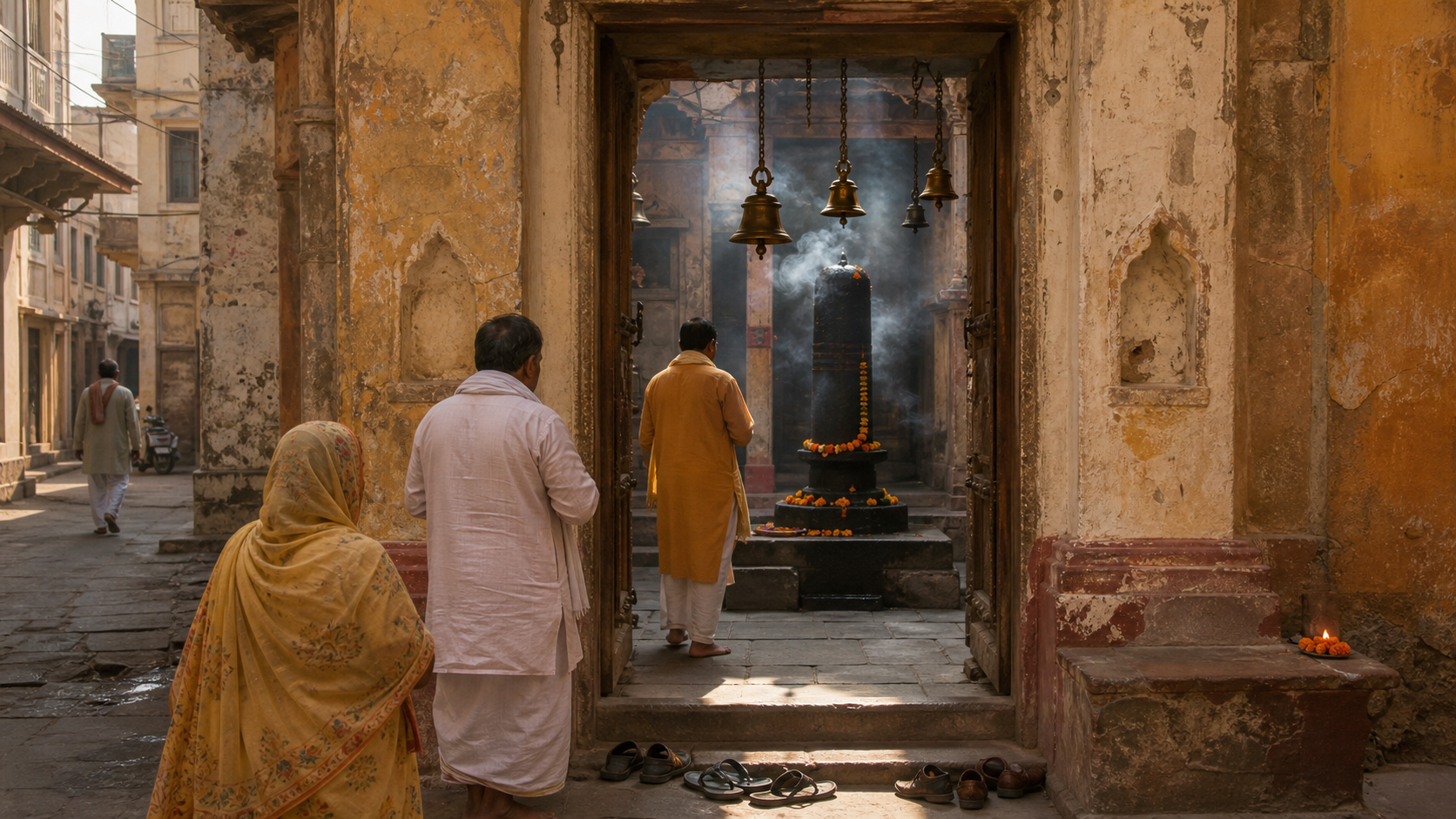
In Varanasi’s Tilbhandeshwar Mahadev Temple, devotion, memory, and material processes meet around a unique tradition: the Shivalinga is said to grow by a sesame seed each year. The temple’s name, lore, and ritual life together illustrate how communities preserve sacred knowledge through practice. Technical factors—mineral accretion from abhishekam and subtle structural shifts—offer plausible mechanisms for…
-
Kaudi Mata of Varanasi: The Sacred Sister South Indians Visit to Complete the Kashi Yatra

Kaudi Mata of Varanasi is venerated in living tradition as a compassionate “divine sister” whose modest shrine teaches universal equality in Kashi. Many South Indian pilgrims include her darshan to feel their Kashi Yatra is truly complete, complementing visits to Kashi Vishvanath, Annapurna, Vishalakshi, and Kalabhairava. The shrine’s simplicity — a brief archana with kumkum,…
-
Bhutapataye Bhairava: Timeless Protector of the Five Elements and Pathway to Fearlessness

Bhutapataye Bhairava signifies the protective sovereignty of Bhairava over the five elements and subtle realms, uniting cosmology, ethics, and practice. The name encodes sacred stewardship of panchabhuta and compassionate guardianship of space, aligning with Tantric and Shaiva insights. Practitioners consistently describe greater grounding, clarity, and fearlessness through mantra, japa, and vrata. Iconography—dog, kapala, and trishula—teaches…
-
Amavasya on 17 Feb 2026: Sacred No‑Moon Night, Significance and Ritual Guide

Amavasya in February 2026 occurs on Tuesday, 17 February—Phalgun Amavasya in North Indian Hindi calendars and Magha Amavasya in Marathi, Gujarati, Telugu, and Kannada traditions. The no‑moon night invites fasting, meditation, sesame‑lamp offerings, and pitṛ tarpaṇa where customary. Pilgrims observe punya snāna at Prayagraj’s Triveni Sangam, Haridwar, and the ghats of Varanasi, often combining sacred…
-
Sacred Rivers, Timeless Bonds: Why Tarpan with Flowing Water Deepens Ancestral Grace

Tarpan, central to Shradh, is traditionally performed with river water because flowing, living waters embody purity, movement, and sacred continuity. Scriptural traditions praise tirthas and link the efficacy of libations to water that carries offerings forward without stagnation. Riverbank rites also cultivate community memory, transmitting values of gratitude and filial duty across generations. Shared reverence…
-
Kashi–Varanasi as Moksha Sthala: Uncover the Sacred City Within and the Path to Liberation

Kashi (Varanasi) is honored as a Moksha Sthala not only for its sacred geography at the confluence of Varuna and Asi, but for the inner journey it reflects. The city’s sanctity points to the Ajna chakra, the inner seat of clarity central to Yoga and contemplative practice. Pilgrimage (Tirtha-Yatra) thus becomes a dual movement—toward the…
-
Kalabhairava Unveiled: Decoding Shiva’s Fierce Iconography of Time, Justice, and Protection
Kalabhairava, Shiva’s fierce manifestation, embodies time and its dissolution while upholding uncompromising truth and justice. This post decodes his iconography—trident, drum, sword, skull-bowl, and dog vahana—showing how each symbol guides ethical living and fearless clarity. Drawing on Agamas, Tantras, Shilpa traditions, and the Skanda Purana, it situates Kalabhairava as Kshetrapala, the guardian of sacred boundaries,…
-
Kashi and Mathura in Focus: Yogi Adityanath Hints Temple Campaigns, Heritage Unity Push

Public remarks by Uttar Pradesh Chief Minister Yogi Adityanath in December 2025 appeared to hint at potential temple-related campaigns in Kashi and Mathura. The cities’ layered heritage—Hindu, Buddhist, Jain, and Sikh—demands measured, conservation-led approaches grounded in law and community dialogue. Framing heritage as inclusive stewardship can lower friction, enhance pilgrim amenities, and deepen interfaith respect.…
-
Historic Revival in Kashi: 19-year-old Vedic scholar completes 50-day Dandakrama Parayana

A 19-year-old Vedic scholar, Shri. Devavrat Mahesh Rekhe, has completed a 50-day Dandakrama Parayana in Kashi, reviving a rare Vedic tradition after nearly two centuries. The accomplishment showcases exemplary svādhyāya, discipline, and mastery of Sanskrit recitation. Held in Varanasi, it reinforces the city’s status as a living center of Vedic traditions and temple culture. The…
-
Laat Bhairav Temple, Varanasi: A Timeless Sanctuary of Kapal Bhairav in Alaipur

Laat Bhairav Temple in Varanasi, also known as Kapal Bhairav, stands in Alaipur as a quietly powerful testament to Kashi’s ancient temple heritage. Identified in the Puranas with a fierce, protective form of Shiva, the shrine emphasizes courage, vigilance, and inner discipline. Its modest setting on the city’s outskirts offers a contemplative counterpoint to crowded…
-
Decoding Śūnya, Bhakti, and Avatāra: Profound Insights from Kashi’s ‘Mad Monk’

A rare Kashi dialogue with the so-called “Mad Monk” maps creation from Bhāvākāśa to bindu, rekhā, and vṛtta, framing śūnya as a luminous interval rather than mere emptiness. The Sadhu links kāma and prema to two textures of creation, explains how inner blossoming at sahasrāra, anāhata, maṇipūra, or mūlādhāra colours experience, and outlines a tenfold…
-
Piercing Shunya: Kashi’s ‘Pagal Baba’ on Effulgent Truth and the Infinite Void

This rigorously documented Kashi encounter presents the profound teachings of the saint known as the “Pagal Baba,” framed within a careful, comparative dharmic lens. It maps a structured ascent through Jagat-Surya, Praṇava, Bindu, and luminous Jyotis toward the elusive Nirañjana Jyoti. The discussion of Shunya—layered, vast, and culminating in Ananta Shunya—offers rare clarity on the…
-
Bhairava and Shiva’s Fierce Compassion: Trimurti Legend, Ego-Cutting Symbolism, Inner Protection

Bhairava represents the raudra, or fierce, aspect of Shiva—not unrestrained anger, but disciplined power that protects dharma and cuts through ego. Puranic narratives describe Shiva manifesting as Kala Bhairava to humble Brahma’s pride, symbolically severing the fifth head that represents arrogance. The legend culminates in Varanasi, where Bhairava becomes the guardian of Kāśī, affirming the…