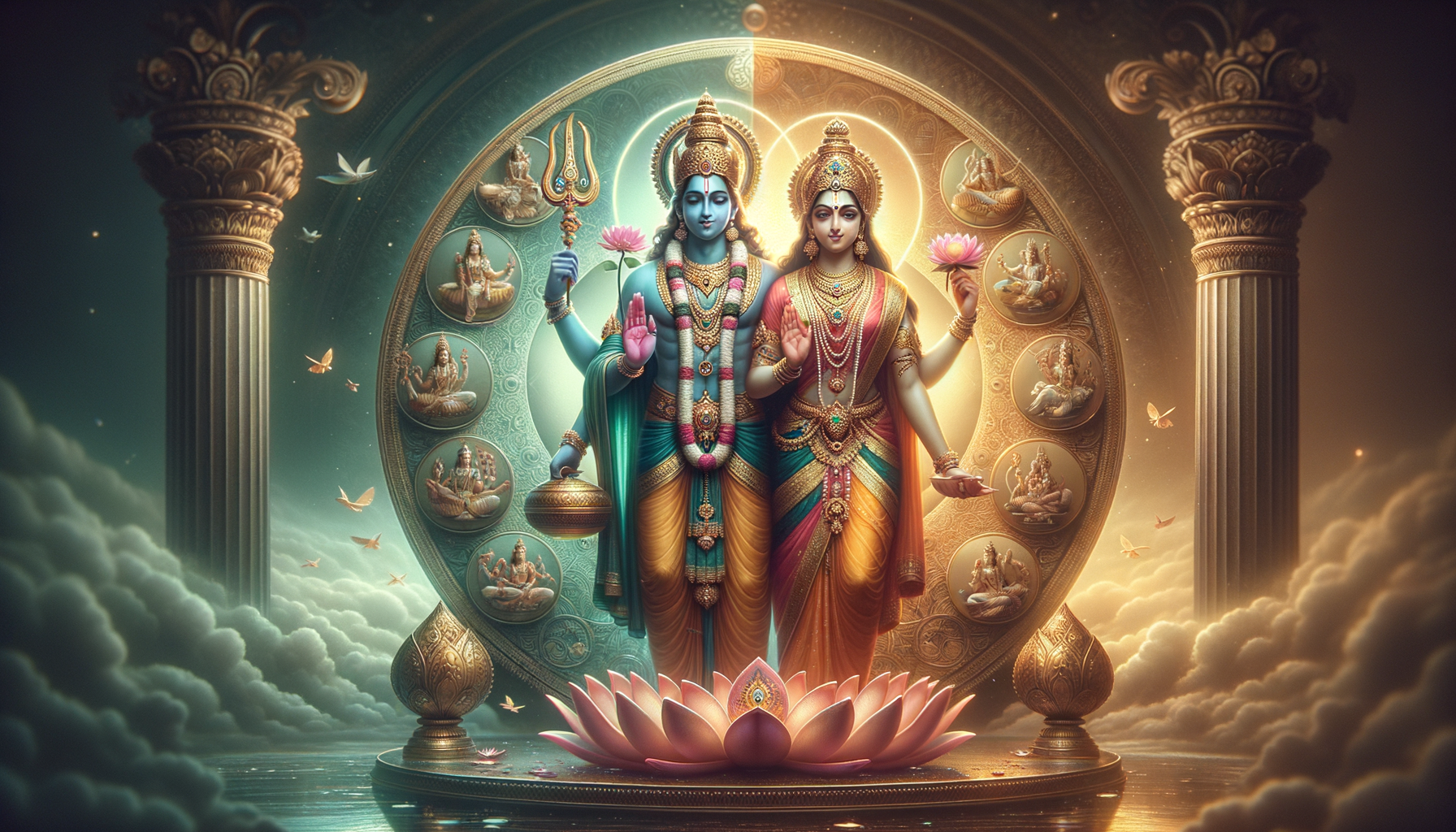
Vaikuntha Kamalaja is a revered composite form that unites Lord Vishnu and Ma Lakshmi in a single icon, conveying the inseparability of preservation and prosperity. Often described as Vishnu’s Ardhanarishvara, this form parallels the well-known synthesis of Shiva and Pārvatī, while remaining distinctly Vaishnava in its theology. In many traditions, it is affectionately recognized as Lakshmi-Narayana in a shared embodiment, emphasizing harmony rather than hierarchy between the divine masculine and feminine.
Iconographically, Vaikuntha Kamalaja is commonly depicted with a vertical division: Vishnu on one side, Lakshmi on the other. The Vishnu half is frequently shown with attributes such as the śaṅkha and chakra, and the Lakshmi half with the lotus, signifying auspiciousness, abundance, and grace. Artistic representations in temple sculpture and devotional painting highlight elegant symmetry, underscoring the message that cosmic preservation (Vishnu) and the flow of fortune and wellbeing (Lakshmi) radiate from a single, unified source.
Philosophically, the form communicates a profound Vedantic insight: Shri (Lakshmi) and Narayana (Vishnu) function together as Purusha and Prakriti, presence and power, principle and expression. The image invites contemplation on balancedharma upheld with compassion, wealth guided by wisdom, and material life harmonized with spiritual purpose. As with Ardhanarishvara in Shaiva traditions, Vaikuntha Kamalaja offers a Vaishnava articulation of non-duality through complementarity, affirming that wholeness emerges when seemingly distinct energies are experienced as one.
In lived practice, many devotees describe a sense of serenity and fullness when meditating on Vaikuntha Kamalaja. Households that honor Lakshmi-Narayana often reflect on this icon to cultivate gratitude, responsible stewardship of resources, and loving care for family and community. The devotional mood (bhāva) naturally turns toward humility and service, as prosperity is recognized as a sacred trust aligned to the sustaining will of Vishnu.
Historically and regionally, this composite form is cherished within select Vaishnava lineages and appears in temple art across parts of South Asia. While not ubiquitous, its presence is notable where theological emphasis rests on the conjoint activity of Vishnu and Lakshmi in safeguarding both cosmic order and everyday wellbeing. For pilgrims and practitioners alike, the form stands as a contemplative bridge between metaphysical insight and daily devotion.
The inclusive vision embodied in Vaikuntha Kamalaja resonates across dharmic traditionsHinduism, Buddhism, Jainism, and Sikhismeach honoring, in its own way, balance, compassion, ethical living, and service (seva). By honoring divine complementarity, the image encourages mutual respect among diverse paths and affirms unity in spiritual diversity. This harmonizing perspective strengthens inter-dharmic understanding and supports a shared culture of reverence and coexistence.
For contemporary seekers, engaging with Vaikuntha Kamalaja can be as simple as reflecting on its symbolism during daily worship, practicing generosity with discernment, and aligning prosperity with purposeful action. In festive observances of Lakshmi-Narayana, the form serves as a luminous reminder to cultivate inner balance, extend care to community, and uphold dharma through steady, compassionate effort.
Ultimately, Vaikuntha Kamalaja conveys an elegant spiritual thesis: the divine feminine and masculine are not rivals but reflections of a deeper unity. As a focus for meditation and devotion, the form invites practitioners to experience the sacred as integrative and inclusivean insight that nurtures personal wellbeing, social harmony, and the larger ethos of unity within the dharmic family.
Inspired by this post on Hindu Pad.