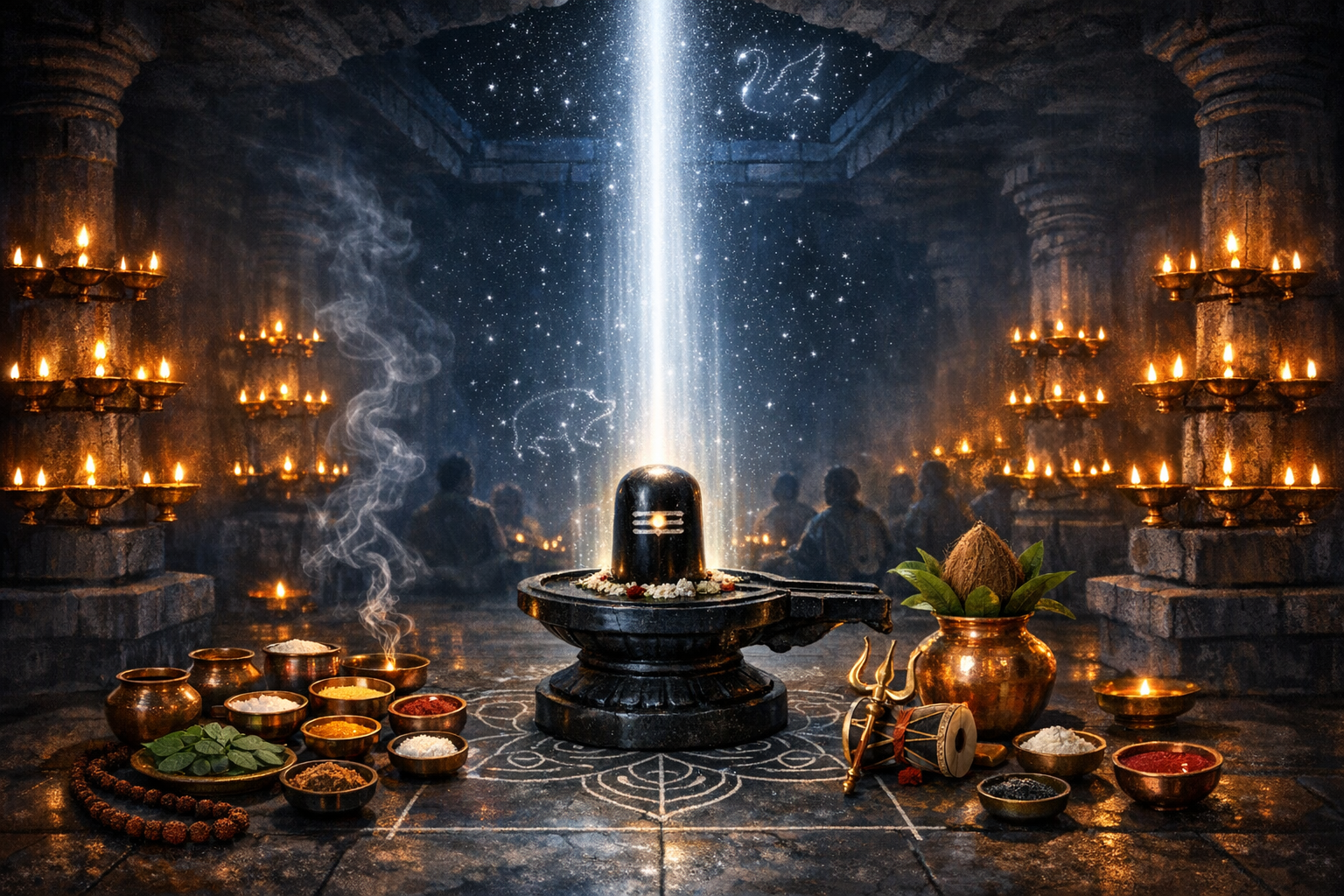
Shivaratri Jagran (or Jagarana) stands at the heart of the Shivaratri Vrata, aligning vigil, austerity, and concentrated devotion into a single transformative observance. Across regions such as Andhra Pradesh and Tamil Nadu, Shivaratri Jagran is kept through the day and night, culminating at the midnight juncture associated with Lingodhbhavam. Rooted in the Shiva Purana and the Linga Purana, this vigil is not a mere custom of wakefulness; it is a disciplined, scripturally sanctioned practice designed to steady the senses, refine attention, and awaken a direct awareness of Shiva’s unbounded presence.
In classical terms, Jagarana means intentional wakefulness supported by tapas (austerity), japa (mantra recitation), and dhyana (meditative absorption). Rather than defying the body’s rhythms, the night is ordered into praharas (quarters) of worship, abhishekam, and mantra. The vow (vrata) transforms each hour of darkness into a luminous discipline where tamas (inertia) is transmuted into sattva (clarity). For devotees, Shivaratri Jagran becomes both an offering and a method—an offering of time, attention, and rest, and a method that heightens prana (vital energy) and inward focus through sacred sound, ritual procedures, and scriptural contemplation.
The scriptural foundations of the vigil are emphatic. The Shiva Purana elucidates the sanctity of Mahashivaratri as a night when vrata, puja, and japa yield compounded merit due to the auspicious convergence of time (kala), vow (vrata), and divine remembrance (Ishvara-smarana). The Linga Purana narrates the Lingodhbhavam event—the immeasurable column of light (jyotir-stambha) from which Shiva manifests, establishing the linga as a symbol of the infinite axis around which creation, preservation, and dissolution turn. The vigil thus becomes a ritualized re-entry into primordial time, particularly at nishita-kala (around midnight), when Lingodhbhavam is commemorated with great solemnity in temples and homes alike.
Lingodhbhavam (often transliterated as Lingodbhava) is among the most profound episodes in the puranic corpus. When Vishnu and Brahma disputed primacy, an infinite pillar of light appeared; Vishnu assumed the form of a boar (varaha) to seek its base, while Brahma took the form of a swan (hamsa) to find its summit. Neither discovered an end. The realization that the source was formless and boundless dissolved the contest, revealing Shiva as the supreme foundation beyond measure or attribute. Because Brahma’s testimony proved false in some versions of the tale, the Ketaki flower was proscribed from Shiva’s worship—an etiological detail preserved in ritual tradition. The linga henceforth signified the aniconic, all-pervading reality, with Lingodhbhavam remembered as the moment that makes the infinite graspable through symbol and rite.
Temple iconography encodes this theology with precision. The Lingodhbhavam murti, especially prevalent in South Indian temples, depicts Shiva emerging through the linga, with Brahma and Vishnu shown in their respective search forms, anchoring the myth to accessible visual theology. Epigraphic and sculptural programs from the Chola period onward portray the intimacy between cosmology and worship: what is recounted by the Linga Purana is visualized in stone, and what is visualized in stone is ritually re-enacted during the Shivaratri night.
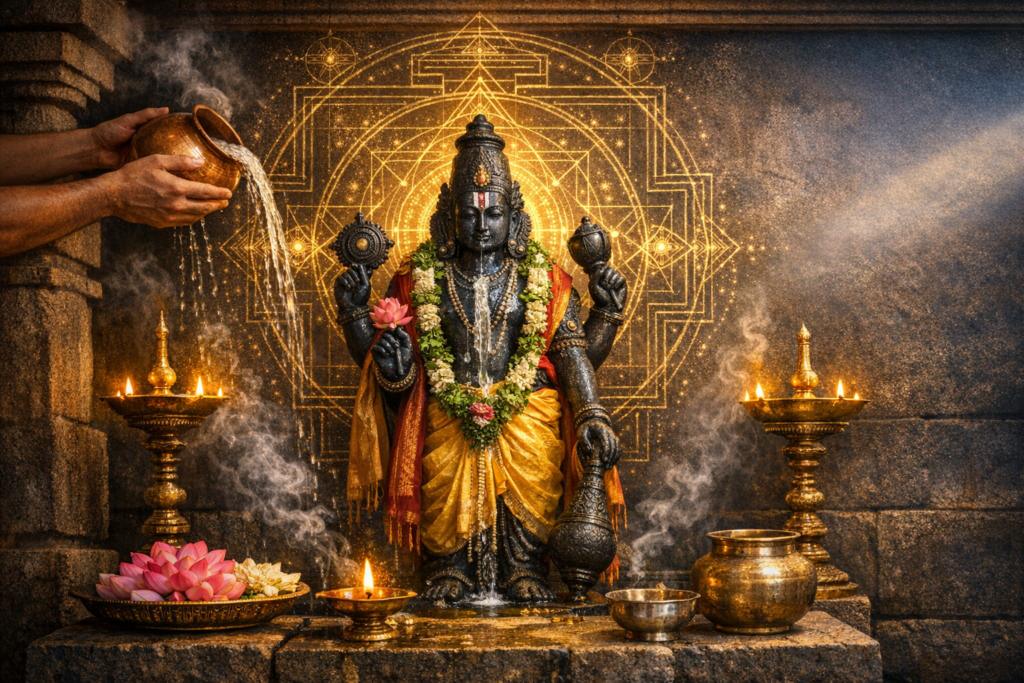
The vigil’s experiential core is the Lingodhbhava Kalam, the sacred midnight moment recognized in many temples. Rites intensify at this time: the linga receives abhishekam with panchamrita (milk, curd, ghee, honey, and sugar), followed by water sanctified with Vedic mantras. The fragrance of bilva patra (Aegle marmelos leaves) and the application of bhasma (sacred ash) complement the sonorous cadence of Om Namah Shivaya and the Mahamrityunjaya mantra. This is not spectacle but concentrated sadhana—an alignment of sound, substance, time, and intention intended to mirror the emergence of the boundless within the heart’s shrine.
Observing the Shivaratri vrata traditionally includes upavasa (fasting) carefully adapted to one’s health and responsibilities. Classical options range from nirjala (abstaining from food and water) for the most austere practitioners, to phalahara (fruits) or sattvika meals taken once or twice. Hydration, simplicity, and moderation govern the day so that the mind remains lucid for jagrana. Many householders prepare for the vigil by reducing heavy foods, increasing water and herbal infusions, and observing mauna (periods of silence) to preserve prana for the night’s worship and meditation.
Ritually, the night is structured into four praharas, each marked by specific offerings and mantra-japa. A common discipline involves conducting abhishekam in each quarter with varying dravyas (substances)—water in the first, panchamrita in the second, fragrant substances (sandal, rose water) in the third, and bhasma-water or pure water again in the fourth—while offering bilva leaves and lighting steady lamps. Some follow the Shodashopachara (sixteenfold) or Panchopachara (fivefold) puja protocols, harmonizing each upachara with the recitation of Vedic hymns, Rudra namaka-chamaka, or the Shiva Sahasranama, depending on lineage and capacity.
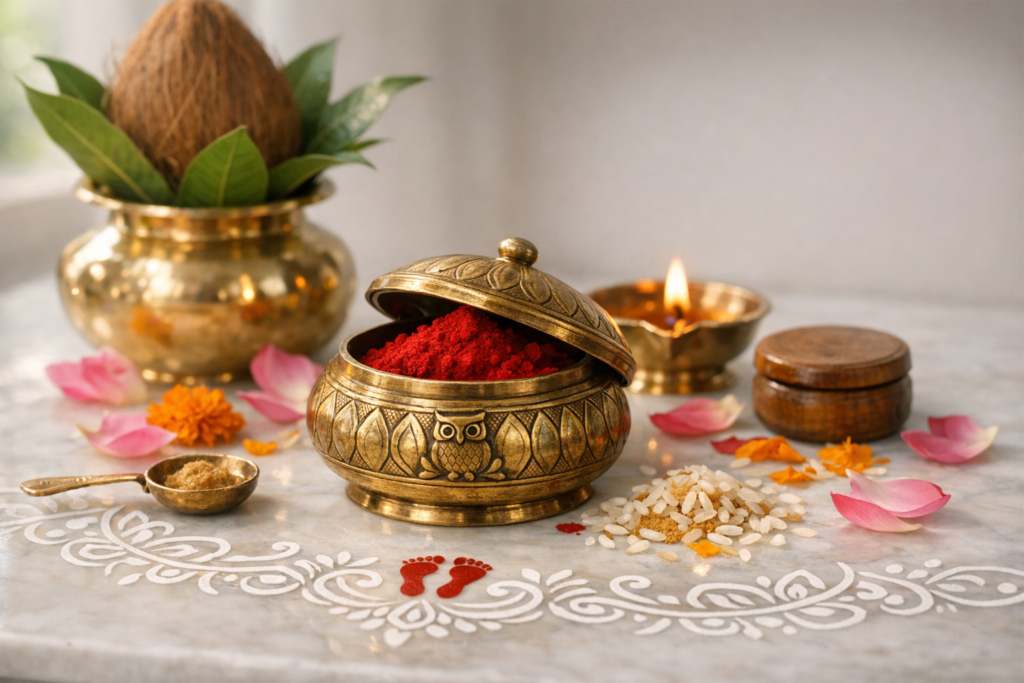
For those observing at home, a simple, methodical sequence yields depth without complexity: prepare a clean altar with a Shiva linga or Shiva image, keep water for abhishekam, bilva leaves, flowers, lamps, incense, and a mala for japa. Begin each prahara with sankalpa (statement of intent), maintain steady breath during mantra recitation, and conclude with arati. If health or age limits a full-night vigil, a partial jagrana centered on the Lingodhbhava Kalam is consonant with the vrata’s spirit—sincerity, steadiness, and remembrance are the core measures of observance.
Regional forms add texture without altering the essence. In Andhra Pradesh and Tamil Nadu, for example, the midnight worship is often announced as Lingodhbhava Darisanam or Lingodhbhava Kalam, drawing large congregations for the sanctified moment. Priests perform elaborate abhishekam and Rudra-japam, while congregational kirtan, bhajans, and readings from the Shiva Purana sustain the vigil. This living continuity across regions highlights the festival’s unifying character: while melodies, languages, and local offerings differ, the underlying grammar of devotion remains shared and intelligible across Bharata-varsha.
The spiritual rationale of jagrana is subtle and precise. Wakefulness, when organized around mantra and meditation, re-educates attention away from distraction and toward eka-agrata (one-pointedness). Through the night, senses (indriyas) that typically wander become instruments of inwardness. Threads of restlessness dissolve into mantra-rhythm; the mind that prefers the outward gaze is persuaded, without force, toward its own luminous ground. In this light, the vigil is not an ascetic denial of sleep; it is a carefully scaffolded redirection of the mind’s habitual energies toward Shiva-tattva, the substratum of experience.
Shivaratri’s disciplines also harmonize with the shared contemplative spirit of dharmic traditions. Buddhism’s Uposatha observances cultivate mindful restraint and prolonged recollection; Jain practice emphasizes fasting, pratikraman (introspective confession), and vigilant awareness; the Sikh tradition of nitnem and simran sustains remembrance through the night and dawn. These convergences affirm a deep civilizational insight: intentional wakefulness, ethical austerity, and collective remembrance are cohesive forces that nurture compassion, clarity, and unity in spiritual diversity. In this sense, Shivaratri Jagran participates in a pan-dharmic ethos of elevating consciousness for the benefit of all.
From a practical standpoint, the vigil may be enriched by alternating cycles of mantra-japa and silent sitting, keeping the spine steady and the breath unforced. Gentle stretches at intervals protect from fatigue, and a quiet reading from the Shiva Purana or selections such as the Vedic hymns to Rudra (Sri Rudram) can anchor attention. Communities often organize collective kirtan or group recitations, which help derive steadiness from shared rhythm and intention. The guiding principle is balance: preserve ardor while avoiding strain, maintain focus without harshness, and let devotion refine the night into a lamp of awareness.
The ethical dimension of Shivaratri Vrata accompanies its ritual grammar. Cultivating ahimsa (non-injury), truthfulness, and generosity through the day and night fortifies the inner state that ritual seeks to manifest. Acts of seva (service), even when modest, become extensions of worship, while forgiveness and reconciliation align the heart with the festival’s purifying current. The vrata thus touches every stratum of life: body through fasting and vigil, speech through mantra and truthfulness, mind through meditation and remembrance, and society through service and goodwill.
A note on health and adaptation underscores the tradition’s maturity. Scriptural injunctions recommend suitability (yogyata): those with medical conditions or elders may choose a moderated fast and partial vigil, centering practice at the Lingodhbhava Kalam and early dawn. The integrity of intent matters more than extremes of austerity; attention that is sincere and sustainable is spiritually superior to effort that is severe but short-lived.
At dawn, closing the vigil with a final abhishekam, arati, and distribution of sattvika prasad gathers the night’s disciplines into gratitude. As the first light arises, devotees carry forward the imprint of the vigil—quieter speech, steadier attention, and a more generous heart. The narrative of Lingodhbhavam then ceases to be only a cosmological account; it becomes a lived symbol, pointing to an axis of unbounded awareness discoverable within. In this way, Shivaratri Jagran and Lingodhbhavam link myth, mantra, and method, inviting the seeker to witness—again and again—the emergence of the infinite within the finite temple of life.
Inspired by this post on Hindu Pad.