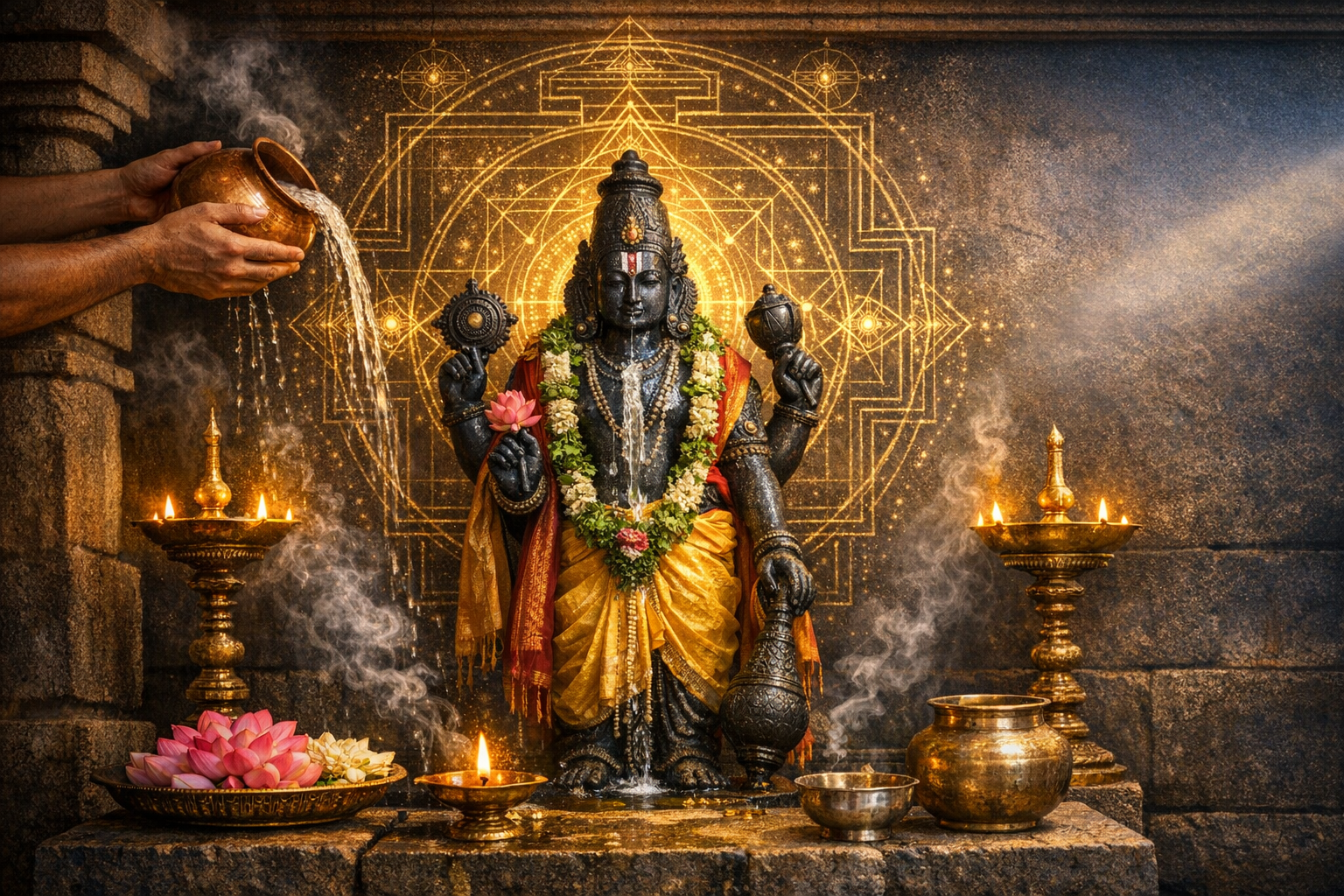
Padma Samhita, a luminous work of the Pañcarātra tradition, offers a complete synthesis of temple ritual, devotional worship, and contemplative theology across thirty-one adhyāyas (chapters). It belongs to the ancient corpus of Vaiṣṇava Āgamas that guided the construction of temples, the consecration of images, the training of priests, and the rhythms of daily and festival worship. Read as a living manual rather than a relic, this Saṁhitā continues to shape Hindu Dharma in homes and temples while speaking with surprising clarity to contemporary seekers aiming to cultivate focused devotion, ethical discipline, and mindful presence.
Situated within the broader Pañcarātra tradition, Padma Samhita stands alongside Jayākhyasaṁhitā, Pāñcarātrika texts such as Ahirbudhnyasaṁhitā and Pārameśvarasaṁhitā, and theological works like Lakṣmī Tantra. Historically, the Pañcarātra developed as a satvika current of Vaiṣṇava Āgama, integrating Vedic allegiance with a ritual-technical precision characteristic of the Āgamic stream. Śrī Rāmānuja, in the Śrī-bhāṣya, defends core Pañcarātra doctrines as compatible with śruti, and the Nārāyaṇīya section of the Mahābhārata bears witness to their authority, placing Padma Samhita within a lineage that is both devotional and philosophically rigorous.
At the heart of the Pañcarātra lies the doctrine of the vyūhas: Vāsudeva, Saṅkarṣaṇa, Pradyumna, and Aniruddha. These emanations articulate the plurality of the One without compromising divine unity. Vāsudeva embodies sovereignty and presence; Saṅkarṣaṇa is linked to the principle of the individual self and the domain of knowledge; Pradyumna is associated with mind and creative intent; Aniruddha with order, protection, and regulation. Within this framework, Padma Samhita elaborates how arcādivine presence in consecrated mūrtibecomes a legitimate and profound locus for upāsanā (worship), transforming metal, stone, or wood into a medium of encounter with Nārāyaṇa.
The text repeatedly affirms the sanctity of mantras central to Vaiṣṇava practice. Foremost are the aṣṭākṣarī, Om Namo Nārāyaṇāya, and the dvādaśākṣarī, Om Namo Bhagavate Vāsudevāya. Within the Śrī Vaiṣṇava fold, the dvaya-mantraSriman Narayana charanau sharanam prapadye / Srimate Narayanaya namahbecomes a succinct theology of surrender and service. Padma Samhita situates these utterances within a disciplined regimen that includes japa, nyāsa (ritual placement of mantras on the body), prāṇāyāma for mental steadiness, and contemplative visualization.
Structurally, the thirty-one chapters can be grouped around several axes of practice. They treat qualifications of the practitioner and teacher, the science of temple architecture and mūrti-lakṣaṇa (iconographic canons), the liturgy of nitya and naimittika pūjās, the protocols for abhiṣekam and homa, procedures for prāṇa-pratiṣṭhā (life-infusing consecration), guidelines for utsava processions, vows and expiations, and the ethical-aesthetic formation expected of an archaka (priest). In this way, Padma Samhita presents an integrated mapfrom metaphysical vision to the smallest gesture of offeringof how bhakti becomes embodied.
As a manual of construction and consecration, the text’s attention to Temple Architecture and sacred space is exacting. Orientation, proportions, mandala logic, garbhagṛha sanctity, bali-pīṭha positioning, dhvaja-stambha alignment, and the sequencing of circumambulatory paths are specified to turn built form into a vessel of presence and sound. The mūrti-lakṣaṇa sections encode theological meanings into every attributeconch (Pañcajanya), discus (Sudarśana), mace (Kaumodakī), and lotuslinking visible iconography to invisible metaphysics.
Padma Samhita’s ritual grammar centers on the upacāras, the acts of loving service extended to the Deity. In the pañcopacāra and śoḍaśopacāra sequences, the arcaka offers āvāhana (invocation), āsana, pādya, arghya, ācamanīya, snāna or abhiṣekam, vastra, alaṅkāra with flowers and tulasī, dhūpa, dīpa, naivedya, and nīrājana, culminating in praṇāma and visarjana where appropriate. Far from perfunctory, these gestures evoke an intimate hospitality that teaches devotees how reverence can saturate ordinary acts of care, cleanliness, and attention.
Abhiṣekam receives particular emphasis. The text explains how pañcāmṛta (milk, curd, ghee, honey, and sugar) and sanctified waters become not just substances but carriers of mantra and intention. The rhythm of each pour, the cadence of recitation, and the disciplined stillness of the officiant align to re-pattern attention. In modern settings, weekly or monthly abhiṣekam observed at home with simplicityclean water, a few flowers, and heartfelt japaretains the essence while respecting contemporary constraints and sustainability.
Prāṇa-pratiṣṭhā forms the pivot between crafted form and living presence. Padma Samhita prescribes bhūta-śuddhi (subtle purification), kara- and aṅga-nyāsa with mantras, the enlivening of the image’s inner channels, and invocatory homas led by aṣṭākṣarī and dvādaśākṣarī recitations. Consecration culminates in the conviction, supported by disciplined rite, that the Deity is here, approachable, and worthy of continuous care. For home altars, a scaled ritewith clear sankalpa, nyāsa, and japaconfers a steady rhythm of sanctity without the need for elaborate paraphernalia.
Dīkṣā, or entry into the discipline, is defined with special clarity through the pañca-saṁskāra (samāśrayaṇa) of the Śrī Vaiṣṇava tradition, which the Saṁhitā undergirds in principle. These five are tāpa (the seal of śaṅkha-cakra, historically by branding and now often symbolically), puṇḍra (the wearing of ūrdhva-puṇḍra), nāma (receiving a name expressing dāsya to Nārāyaṇa), mantra (transmission of the aṣṭākṣarī and related mantras), and yāga (training in arcana). The emphasis falls not on external marks alone but on a durable inner transformationclarity of allegiance, steadiness of practice, and ethical congruence.
Padma Samhita also codifies the qualifications of an archaka beyond lineage. Inner and outer cleanliness, steadiness of gaze and breath, command of mantra and mudrā, non-violence, truthfulness, and freedom from greed are required. While traditional communities emphasized Archaka’s lineage for continuity and accountability, the text’s deeper criterion is unambiguous: competence, purity of conduct, and pedagogical care. Many contemporary temples reflect this emphasis by combining hereditary knowledge with structured training and transparent service standards.
The ethical spine of the Saṁhitā is unmistakable. Satya (truth), ahiṁsā (non-violence), dāna (generosity), and dayā (compassion) are not appendices but prerequisites for ritual efficacy. Offerings are expected to be satvika, cruelty-free, and procured with integrity. The devotional aesthetics of music, incense, color, and ornament stand on ethical sourcing and restraint; sensory richness is never license for excess but an instrument for deepened attention and gratitude.
Festival cycles are embedded in the ritual calendar. Vaikuṇṭha Ekādaśī, Brahmotsavam, and deity-specific utsavas enact the theology of divine movement: the Deity emerges from the garbhagṛha to bless streets and squares, integrating sacred and civic life. Padma Samhita’s procession protocolsvahana choices, route sanctification, nāgasvaram and drum patterns, the choreography of lampsturn the city into a shared mandala of memory, devotion, and moral aspiration.
The Saṁhitā maintains a careful distinction between nitya (daily), naimittika (occasional), and kāmya (desire-motivated) rites. This taxonomy prevents overload and aligns discipline with human capacity and station. For modern householders, a sustainable rhythm may involve a concise morning arcana (pañcopacāra), evening japa of the aṣṭākṣarī on a tulasī-mālā, weekly abhiṣekam, and participation in temple festivals as time allows. The key is nairantarya abhyāsesteady continuity that gently reshapes attention and desire.
Padma Samhita’s ritual technology is precise but not mechanical. Mudrās focus embodied intention; nyāsa sacralizes the body as a liturgical instrument; prāṇāyāma stabilizes the mind for mantra. Even sankalpanaming place, time, lineage, and intentiontrains memory and fosters accountability. The result is not mere performance but an integrated pedagogy of body, breath, speech, and mind that leads to bhakti’s natural flowering into jñāna and selfless karma.
In theological terms, the Saṁhitā keeps return to first principles. Nārāyaṇa is supreme, Śrī is the compassionate mediatrix, and the world is real, purposeful, and redeemable. Arcā avatāra is not a concession to ignorance but a merciful adaptation: the Infinite consenting to be approached through form, word, and rite. Devotees, formed by this encounter, are tasked with lokasaṁgrahaholding together the social fabric through truth, service, and restraint.
A common confusion between Padma Samhita and Padma Purāṇa warrants clarification. The former is a Pañcarātra Āgamic Saṁhitā focused on liturgy and temple praxis; the latter is a Purāṇa with narrative and didactic aims spanning cosmology, pilgrimage, and dharma. Although both are ancient texts venerating Viṣṇu, their genres, purposes, and compositional logics differ. Reading each within its own frame avoids conflation and enhances practical comprehension.
The Saṁhitā’s practical spirit makes it a natural companion for modern seekers navigating work, family, and civic responsibilities. Many report that a 15-minute morning sequenceācāmana, brief prāṇāyāma, nyāsa, aṣṭākṣarī japa, pañcopacāra with a lamp and water, and gratitude contemplationimproves focus and softens reactivity throughout the day. Others integrate weekly satsaṅga, seva at the local temple, or scriptural study to maintain balance. These adaptations remain faithful to the text’s intent while meeting contemporary rhythms.
Parallels across dharmic traditions affirm a shared civilizational grammar. Buddhist mindfulness and mantra recitation resonate with the Saṁhitā’s emphasis on breath-regulated japa and attentive presence. Jain pratikraman and vow-taking mirror the text’s stress on periodic purification and ethical inventory. Sikh simran and seva align with remembrance and community service that Padma Samhita encourages as extensions of worship. Without flattening differences, these affinities nourish mutual respect and unity.
In the training of priests and teachers, the Saṁhitā anticipates several best practices relevant today: apprenticeship under a qualified ācārya; staged competencefrom assisting roles to independent officiation; periodic review of mantra accuracy; and community accountability. Documentation and clear pedagogy prevent ritual drift while enabling responsible adaptation for diverse communities and diasporic contexts. Integrity, not mere inheritance, becomes the durable foundation of Archaka’s lineage.
Padma Samhita treats offerings as ethical acts. Satvika naivedya avoids cruelty and ostentation, reflecting mindful sourcing and gratitude. Water becomes a sacrament when fetched and offered attentively; flowers embody beauty without waste; food shared with visitors enacts dāna. These choices carry ecological intelligence, reminding practitioners that worship touches supply chains, labor dignity, and care for the more-than-human world.
Musical and poetic dimensions are integral rather than ornamental. Ragā-anchored kīrtan, conch-blowing, and rhythmic lamps convey theological themes to hearts and bodies without discursive strain. The Saṁhitā’s sensitivity to sound underlines a broader point: in Pañcarātra, knowledge is embodied. Learning mantras, timing breath, and aligning movement are knowledge practices as substantial as discursive study.
For students and researchers, the manuscript history of Padma Samhita reveals regional recensions and commentarial footprints. The text circulated in Sanskrit with local ritual digests (paddhatis) that adapted instructions to temple ecosystems. Comparative study with Jayākhyasaṁhitā, Ahirbudhnyasaṁhitā, and Lakṣmī Tantra clarifies both continuities and innovations in iconography, initiation protocols, and festival design. This philological attention grounds practice in historical literacy.
A distinctive contribution of the Saṁhitā is its pedagogy of interiorization. Kāraṇa-śarīra (causal), sūkṣma (subtle), and sthūla (gross) dimensions of the self are acknowledged, and ritual is designed to harmonize them. Nyāsa sacralizes the subtle body; japa refines speech and mind; arcana disciplines the senses through patterned service; reflection anchors discernment. The path thus becomes not an escape from embodiment but a transfiguration of it.
Doctrine and devotion converge in a distinctive anthropology. Human facultiesmemory, attention, affection, discernmentare not obstacles but instruments awaiting tuning. The Saṁhitā’s incremental ecology of practice leverages small, repeatable actions to build large, stable transformations. In this spirit, brief but regular worship often yields more than sporadic elaboration, confirming the primacy of constancy over intensity.
Padma Samhita also frames ritual as relational ethics. Family worship forms intergenerational bonds; festivals cultivate neighborhood cohesion; shared seva knits disparate skill sets into common purpose. In settings marked by pluralism, the text’s emphasis on hospitable presence and civic-minded celebration offers a model for faith that is confident without being exclusionary and rooted without being rigid.
Contemporary temple management can draw from the Saṁhitā’s implicit governance cues: transparent roles, training standards for officiants, clear maintenance schedules for mūrtis and textiles, and inclusive pedagogy for devotees new to arcana. When combined with modern safety and accessibility norms, these cues preserve sanctity while widening participation. Tradition retains its brilliance when it can be taught, learned, and joyfully replicated.
For those beginning at home, a simple, faithful adaptation may be articulated as follows. Establish a clean altar with a Viṣṇu, Nārāyaṇa, or preferred arcā; begin with ācāmana, brief breath regulation, and mental śuddhi; perform nyāsa with Om Namo Nārāyaṇāya; offer pañcopacāra with a flower, lamp, water, incense (or fragrant soapstone), and satvika food; complete with quiet japa of the aṣṭākṣarī or dvādaśākṣarī. On one day weekly, add a modest abhiṣekam with clean water and a verse from the Purusha Sūkta or Viṣṇu Sahasranāma. This cadence, taught gently, serves both beginners and those returning to practice after long intervals.
From a philosophical vantage, the Saṁhitā’s arcā theology dissolves the false dichotomy between form and formlessness. Form is a compassionate pedagogue; formlessness is the horizon toward which pedagogy points. The yogic disciplines embedded in ritualattention, breath, posture, steadinesscarry practitioners across that horizon without abandoning reverence for form. In this way, devotion and non-dual insight grow as complements, not rivals.
Practitioners frequently observe a psychological arc that confirms the text’s design. In the first weeks, outer order stabilizes inner clutter; by the second month, mantra rhythm softens reactivity; in the following seasons, the festival calendar contrasts impermanence with enduring presence, refining priorities. Rather than promising sudden ecstasy, Padma Samhita cultivates durable clarity, kindness, and couragequalities that travel well into family life, professional work, and civic service.
Because Pañcarātra is a living tradition, local ācāryas and temple authorities remain the primary guides for adaptation. Their paddhatis encode generations of testingwhat sustains focus, what confuses, what uplifts. The Saṁhitā’s genius is its balance of universals and particulars: mantras revered everywhere, gestures recognizable across regions, and room for the textures of language, music, and cuisine that make each community’s worship feel like home.
Care for the mūrti is mirrored by care for the practitioner. The Saṁhitā’s insistence on measured speech, vegetarian satvika diet for officiants when prescribed, rest, and clean clothing is not mere aesthetics but nervous system hygiene. When combined with prāṇāyāma and japa, these choices cultivate a baseline of calm from which insight and compassion can reliably arise.
In scholarly dialogue, Padma Samhita clarifies how Pañcarātra negotiates Veda and Āgama. Rather than displacing śruti, it elaborates practical pathways by which the Upaniṣadic purport becomes inhabitable for communities. Its acceptance by authorities like Śrī Rāmānuja, its intertextuality with the Mahābhārata’s Nārāyaṇīya, and its close kinship with other Saṁhitās anchor it firmly within the mainstream of Hindu philosophy and practice.
The Saṁhitā’s pedagogical utility extends to comparative religion classrooms and interfaith dialogue. Its account of consecration, sacred time, and ethical aesthetics offers a robust counterexample to caricatures of ritual as empty formalism. When presented alongside Buddhist, Jain, and Sikh practices of remembrance and service, Padma Samhita helps illuminate a shared dharmic commitment to non-violence, truthfulness, and communal care.
Practically, the text encourages gentle evaluation of outcomes. Does worship increase kindness at home, integrity at work, and patience in disagreement. Are offerings mindful and waste-conscious. Are festivals welcoming to neighbors across caste, class, and creed. When the answers trend positive, the Saṁhitā’s deeper aimlokasaṁgrahacomes into view.
Padma Samhita finally invites a re-enchantment that is sober, ethical, and intelligent. It teaches how to build, bless, and serve; how to speak, sing, and share; how to center life around presence that neither competes with reason nor collapses into sentimentality. In an age quick to fragment attention, its calm, exacting wisdom restores wholeness by aligning thought, word, and deed around the simple practice of loving service to Viṣṇu.
Read this Saṁhitā as instruction and mirror. Instruction, because it details mantras, mudrās, timings, and sequences; mirror, because it reflects how each practitioner meets the Divine in the small fidelities of daily life. When communities receive its guidance with humility and creativity, the result is not antiquarian revival but a poised, contemporary spiritualityrooted in Vedic Traditions, animated by living temples, and harmonized with the broader family of dharmic paths.
Inspired by this post on Hindu Blog.