Savarkar Jayanti in Kolkata: Debating ‘Hinduize the Politics and Militarize the Hindudom’

Illustrated banner for Savarkar Jayanti — Kolkata 2026: students read together by the Howrah Bridge. In front, an open book with a glowing chakra and diya, marigolds, safety gear, and faith symbols.

On 28 May 2026, in Kolkata, the Hindu Samaj Kalyan Samiti (HSKS) observed Savarkar Jayanti, marking the 143rd birth anniversary of V D Savarkar. The commemoration, covered under the theme Savarkar Jayanti in Kolkata, revisited the maxim ‘Hinduize the Politics and Militarize the Hindudom’ and examined its contemporary meaning within Bengal’s plural, dharmic heritage and India’s constitutional order.

Event communications referenced a call for ideological solidarity among Bengali Hindu youth. In on-the-ground discussions, however, the frame broadened to a shared civic responsibility across Hindu, Buddhist, Jain, and Sikh communities—consistent with the blog’s objective of dharmic unity. The emphasis moved from partisan mobilization toward ethical citizenship, knowledge cultivation, and service-oriented capacity building aligned with constitutional norms and the rule of law.

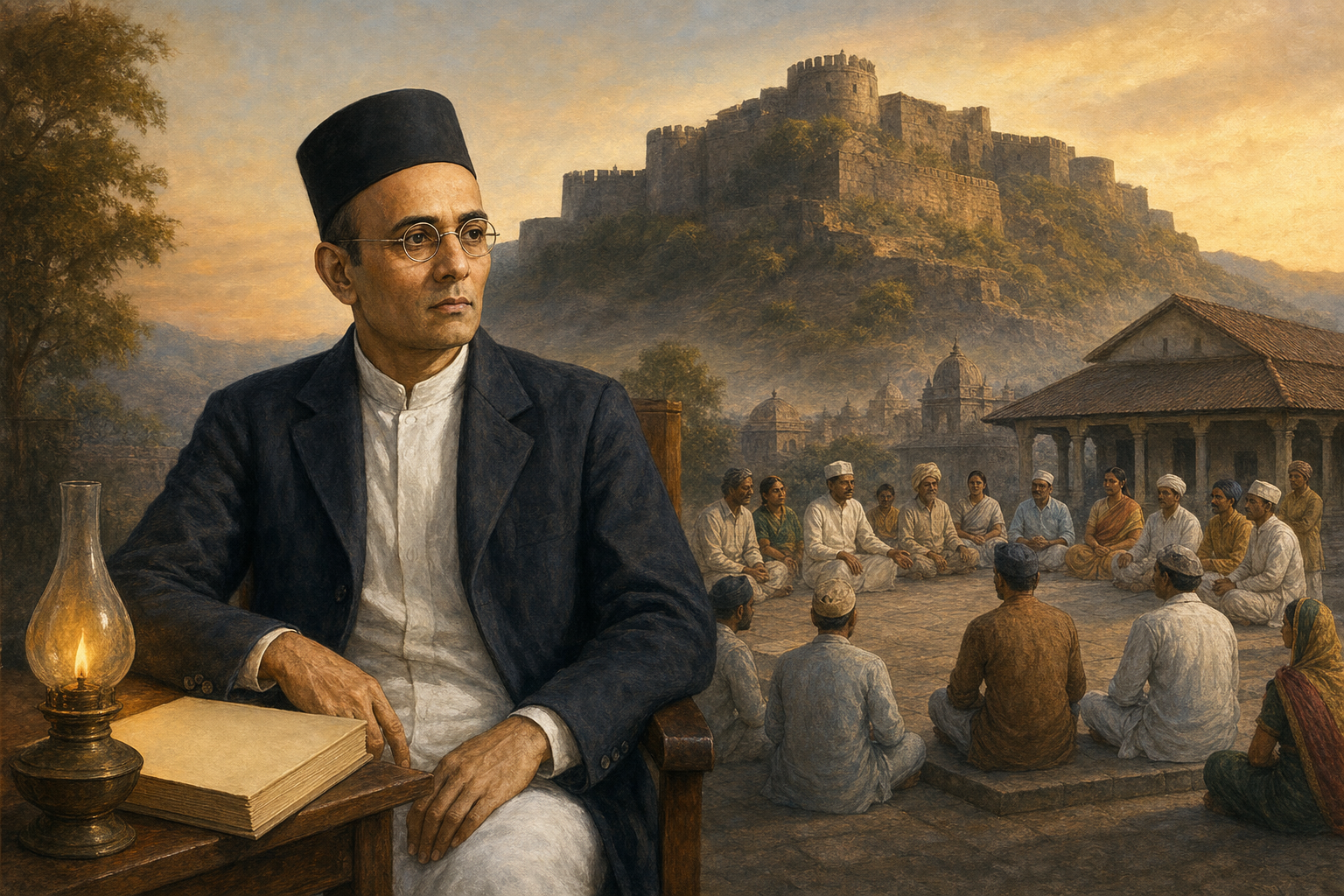
Historically, the maxim emerged from Savarkar’s interwar reflections, shaped by incarceration in the Cellular Jail and anti-colonial debates. In scholarly interpretation, Hinduize the Politics is most coherently read as ethicize the politics—infusing public life with civilizational virtues such as dharma, probity, and equal dignity—rather than as sectarian capture of the state. Likewise, Militarize the Hindudom can be reinterpreted as build protective capacity in a lawful, civilian, and non-aggressive sense, resonating with kshatra (discipline, courage, and responsibility) within a democratic framework.

Situating Savarkar’s political thought historically is essential for analytical clarity. Born in 1883, Savarkar engaged revolutionary networks, endured long incarceration, and later authored works including Hindutva: Who Is a Hindu? and Six Glorious Epochs of Indian History. His corpus remains influential and contested; rigorous Hindutva research demands source criticism, attention to historical context, and comparative readings across Indian intellectual traditions to avoid reductive or anachronistic claims.

Read in today’s Bengal, Hinduize the Politics is best interpreted as embedding public ethics—probity, equality before law, transparent institutions, and seva—into governance and civic conduct. This aligns with the region’s renaissance legacies of Bankimchandra Chattopadhyay, Swami Vivekananda, and Sri Aurobindo, who balanced spiritual vision with concrete social reform. Such an ethicized politics integrates with Articles 14, 19, 21, and 25 of the Constitution and with the civic duties articulated in Article 51A.

Reframing Militarize the Hindudom as lawful, nonviolent resilience clarifies boundaries between preparedness and militancy. In a dharmic unity perspective, protective kshatra finds parallels in Sikh sant-sipahi ideals (service with courage), Buddhist notions of dharmapala (guardianship of compassion), and Jain disciplines of ahimsa and self-restraint. The unifying thread is non-aggressive resilience: physical fitness, first response skills, legal awareness, and community coordination under civilian oversight.

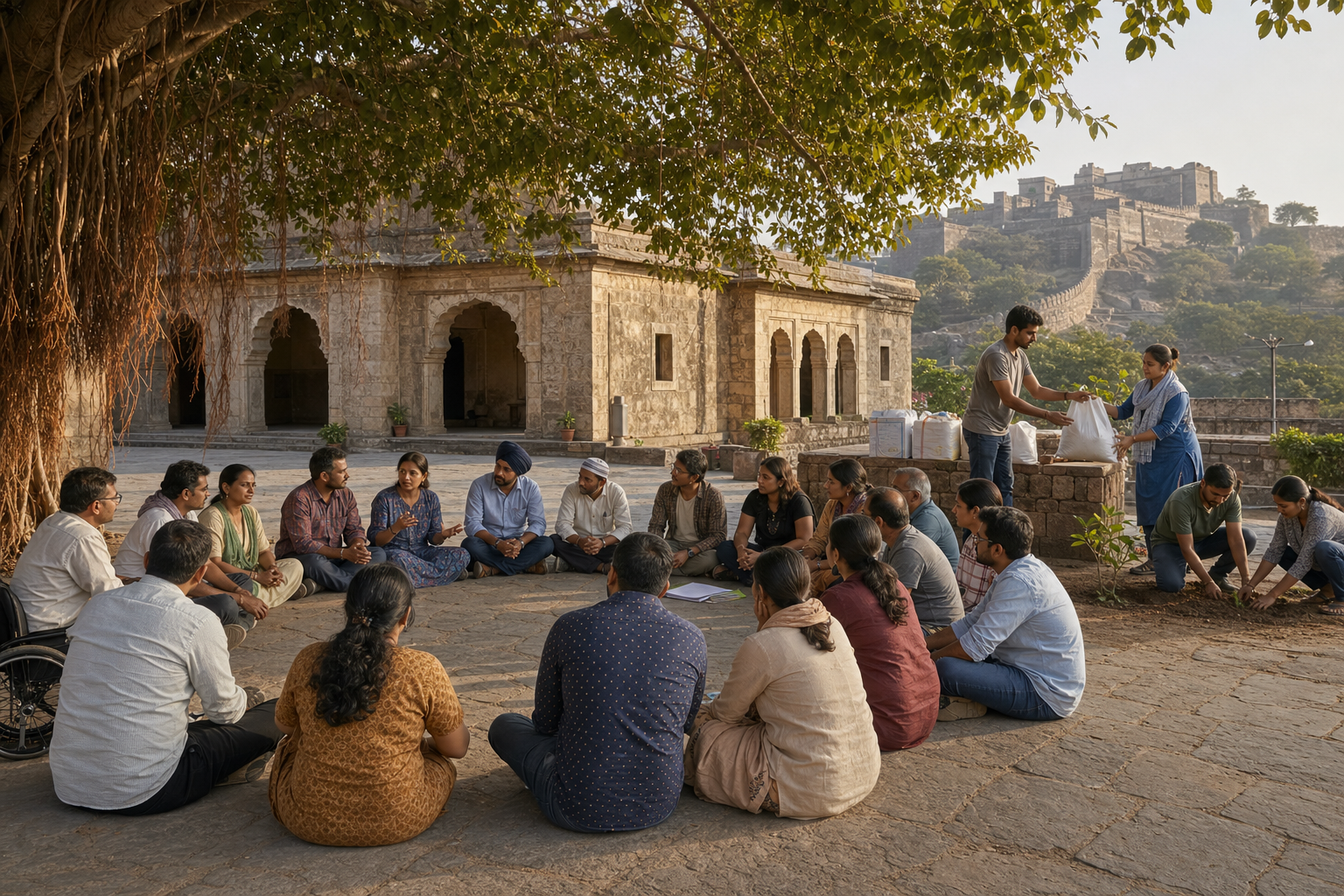
West Bengal’s social fabric and risk profile make civic preparedness both nonpartisan and necessary. Institutional pathways such as the National Service Scheme (NSS), National Cadet Corps (NCC), civil defence programmes, and community-based disaster risk reduction provide constructive avenues through which youth can cultivate discipline, teamwork, and public-spiritedness. Positioning Savarkar Jayanti in Kolkata within these frameworks keeps the conversation constitutional, inclusive, and solution-focused.

From a governance standpoint, ethics-driven politics prioritizes transparent delivery of public services, fair access to opportunities, and trust-building institutional design. Empirical lessons from community development in Bengal suggest that social trust rises when cultural associations channel energy into education support, heritage conservation, and health camps—seva over sloganeering. These priorities reduce the space for sectarian misinterpretations of historically charged phrases.

Information integrity is another pillar of responsible engagement. In the age of rapid amplification, triangulating claims, privileging primary sources, and resisting inflammatory frames are essential. Methodologically careful Hindutva research—accurate dates, reliable editions, and attention to translation variance—improves scholarship and sustains a climate conducive to inter-dharmic dialogue and unity.

The Kolkata commemoration also connects with lived memory. Attendees often speak of grandparents’ recollections of the freedom struggle, migration, or the quiet dignity of placing flowers before a portrait. Such narratives humanize abstract debates and remind communities that ethical courage and compassion are learned in households, schools, libraries, akharas, and gurdwaras alike.

Read with care, ‘Hinduize the Politics and Militarize the Hindudom’ can be positioned as a call to elevate ethics in public life and to build lawful, nonviolent resilience across dharmic communities. Grounded in India’s constitutional morality and Bengal’s culture of debate and synthesis, the maxim becomes less a slogan and more a program for unity: character before combativeness, service before spectacle, and guardianship before grievance.

In this light, the HSKS observance in Kolkata is best understood as a civic moment that catalyzes discussion rather than division. It highlights the responsibility to translate historical idioms into inclusive, 21st-century institutions that protect rights, expand opportunities, and strengthen social harmony across Hindus, Buddhists, Jains, and Sikhs—thereby aligning remembrance with practical steps toward dharmic unity.


Inspired by this post on Struggle for Hindu Existence.


Graphic with an orange DONATE button and heart icons on a dark mandala background. Overlay text asks to support dharma-renaissance.org in reviving and sharing dharmic wisdom. Cultural Insights, Personal Reflections.

What event does the post discuss?

The post discusses Hindu Samaj Kalyan Samiti’s Savarkar Jayanti observance in Kolkata on 28 May 2026. It reexamines the maxim ‘Hinduize the Politics and Militarize the Hindudom’ in light of Bengal’s plural dharmic heritage and India’s constitutional order.

How does the article reinterpret the slogan?

It interprets Hinduize the Politics as ‘ethicize the politics,’ infusing public life with dharma, probity, and equal dignity. It reinterprets Militarize the Hindudom as lawful, civilian, nonviolent resilience and protective kshatra within a democratic framework.

Which communities are highlighted for dharmic unity?

The piece frames dharmic unity across Hindu, Buddhist, Jain, and Sikh communities, emphasizing inclusive public life. It notes that youth should engage through civic education and service.

What constitutional provisions are referenced?

The article anchors ethics-driven politics in India’s constitutional morality and mentions Articles 14, 19, 21, 25, and Article 51A. It connects these provisions to rights protection and civic duties.

What pathways for youth engagement are described?

It cites NSS, NCC, civil defence programs, and community-based disaster risk reduction as constructive avenues for youth to develop discipline, teamwork, and public-spiritedness. These pathways align with constitutional norms and nonpartisan civic engagement.