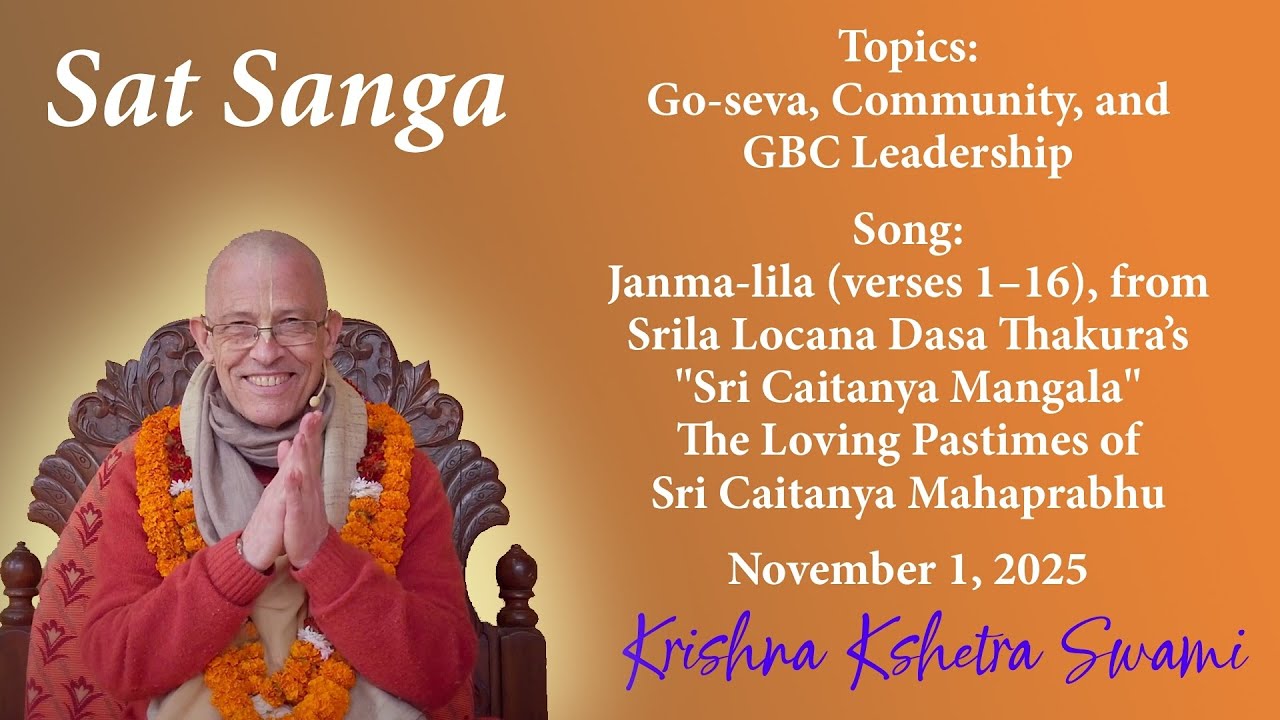
On November 1, 2025, in Dubai, UAE, a Sat Sanga with HH Krishna Kshetra Swami explored three interwoven themes vital to contemporary devotional life and community resilience: Go-seva, community building, and GBC leadership. The gathering engaged the ISKCON community and well-wishers with a grounded, practice-oriented discussion that balanced devotion, ethics, and governance.
The devotional mood of the session was framed by the song Janma-lila (verses 1–16), from Srila Locana Dasa Thakura’s Sri Caitanya Mangala The Loving Pastimes of Sri Caitanya Mahaprabhu. This kirtan-centered meditation offered participants a contemplative anchor, reinforcing bhakti as the heart of service and leadership, and allowing listeners to connect emotionally with the compassionate and inclusive spirit of Sri Caitanya Mahaprabhu.
Go-seva was presented as both a sacred duty and a community practice that nurtures compassion, ecological care, and food ethics. Thoughtful care for cows strengthens bonds of seva and ahimsa, values that resonate across dharmic traditions of Hinduism, Buddhism, Jainism, and Sikhism. Attendees often find that supporting gaushalas, emphasizing plant-forward prasada, and educating youth about compassionate stewardship cultivate a sense of belonging and shared purpose while aligning with sustainable living.
Community building in a diverse, global city like Dubai benefits from consistent satsanga, service teams, and intergenerational learning. Inclusive festivals, study circles, and family-centered volunteering create a supportive social fabric, especially for diaspora communities seeking cultural continuity. Participants frequently report that such practices reduce isolation, deepen spiritual identity, and foster unity in spiritual diversity.
The discussion on GBC leadership highlighted servant-leadership and transparent governance as pillars of trust within ISKCON (International Society For Krishna Consciousness). Emphasis on accountability, distributed decision-making, and local participation was presented as essential for spiritual integrity and effective community management. These principles harmonize with best practices in nonprofit governance while remaining rooted in dharma-centered ethics.
Participants described relatable experiencessharing kirtan, preparing prasada, or organizing seva initiativesthat translate lofty ideals into lived action. Small, steady practices were identified as catalysts for cohesion: regular reading groups, coordinated outreach, and collaborative temple-community projects build momentum and invite sustained engagement.
Overall, the Sat Sanga underscored a unifying message: devotion inspires service, service strengthens community, and ethical leadership sustains the whole. By aligning Go-seva, community engagement, and GBC leadership with the inclusive, compassionate ethos shared across dharmic paths, practitioners can cultivate harmony, deepen faith, and contribute meaningfully to the well-being of society.
Inspired by this post on Dandavats.