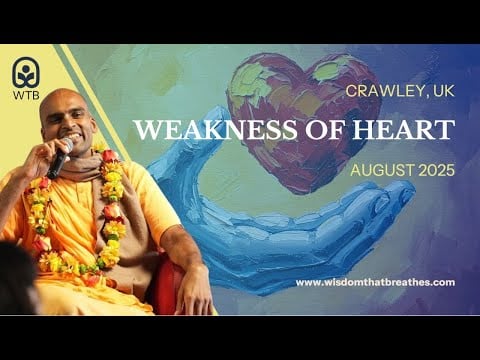
In Crawley, UK, HH Svayam Bhagavan Keshava Maharaja examined the nature of spiritual weakness with clarity and compassion, highlighting how lapses in determination, consistency, and clarity often undermine progress on the path. Drawing on scriptural insights and lived experience, the talk presented a sober, practical map for recognizing patterns that surface most strongly when one is alone or facing adversity.
The analysis situated spiritual weakness as a universal human challenge rather than a personal failing. Listeners were guided to notice how indecision, irregular practice, and blurred priorities quietly erode resolve. This framing invited reflection across dharmic traditionsHinduism, Buddhism, Jainism, and Sikhismwhere the cultivation of steadiness, mindful discipline, and purpose-driven action forms a shared foundation for growth.
Scriptural teachings were presented as frameworks for practical transformation rather than abstract ideals. Through accessible examples and personal anecdotes, the talk demonstrated how consistent practicewhether through meditation, japa, seva, study, or silent contemplationrebuilds inner strength. Regularity aligns intention with action, while clarity of purpose protects attention from distraction and doubt.
Strength, therefore, emerged as a disciplined synthesis of determination, consistency, and clarity. Determination directs energy toward a worthy aim; consistency stabilizes momentum through daily rhythm; clarity organizes thought and safeguards values. When applied together, these qualities create resilience that holds firm in solitude and during life’s inevitable tests.
Importantly, the message emphasized unity in spiritual diversity. It affirmed that inner strength can be cultivated through many authentic methodsdevotional, contemplative, ethical, or service-basedso long as practice is sincere and sustained. This inclusive perspective aligns with the dharmic ethos that honors multiple paths while encouraging shared virtues such as compassion, truthfulness, and self-mastery.
Concluding with practical guidance, the talk encouraged listeners to establish steady habits, seek uplifting company, and periodically reassess goals to maintain clarity. In doing so, it offered a grounded, integrative approach to overcoming spiritual weaknessone that respects diverse traditions while equipping practitioners with proven tools for inner transformation.
Inspired by this post on Dandavats.