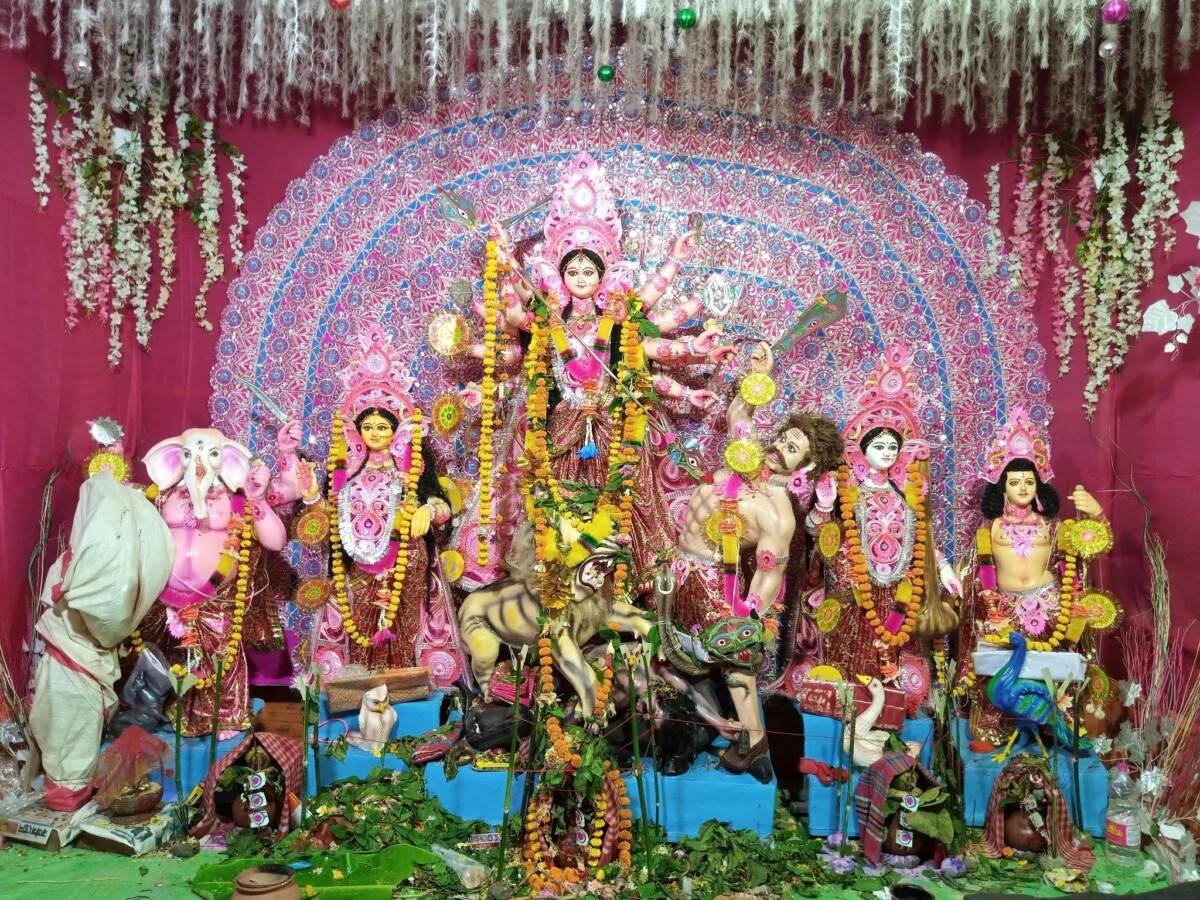
Across India’s diverse cultural landscape, Durga Puja in Ranchi offers a vivid tableau where sound, scent, and symbolism converge. Amid the resonant beats of the dhak, the piercing ulludhwani, and the aroma of fried luchis and bhog khichuri, a striking image frequently appears near the pandal: a banana plant draped in a red-bordered saree standing beside the icon of Ganesha. This figure, known as Kola Bou, arrests attention and invites inquiry.
Curiosity about Kola Bou often begins early. A thirteen-year-old in Ranchi, for instance, might ask why a banana plant is dressed like a bride. Responses within the community vary: some explain that she is Ganesha’s wife, others underscore a metaphysical readingShakti manifest as natureand still others point to the plant’s remarkable utility for food and ritual. These layered explanations reveal the interplay of folk belief, philosophical insight, and practical wisdom that undergirds Durga Puja.
In the scholarly understanding preserved through śāstra, Kola Bou is central to the Navapatrikā Praveśa/Nobopotrika Probesh, the ceremonial commencement of Durga Puja in Bengal. Here, nine auspicious plants are assembled as the Navapatrikā: the Banana plant (Kola, representing Brahmani Devi), Turmeric (Holud, symbolizing Durga Devi), Arum (Kachu, representing Chamunda Devi), Pomegranate (Dalim, symbolizing Raktadantika Devi), Ashoka (Ashoka, representing Shokarahita Devi), Wood apple (Bel, representing Bhagavan Shiva), Rice (Dhan, standing for Lakshmi Devi), Jayanti (Jayanti, representing Kartiki Devi), and Kanchu or Kachi (symbolizing the Vedas and the nourishment of life). These are ritually tied at the base to the Banana plant, which is then bathed and clothed in a saree.
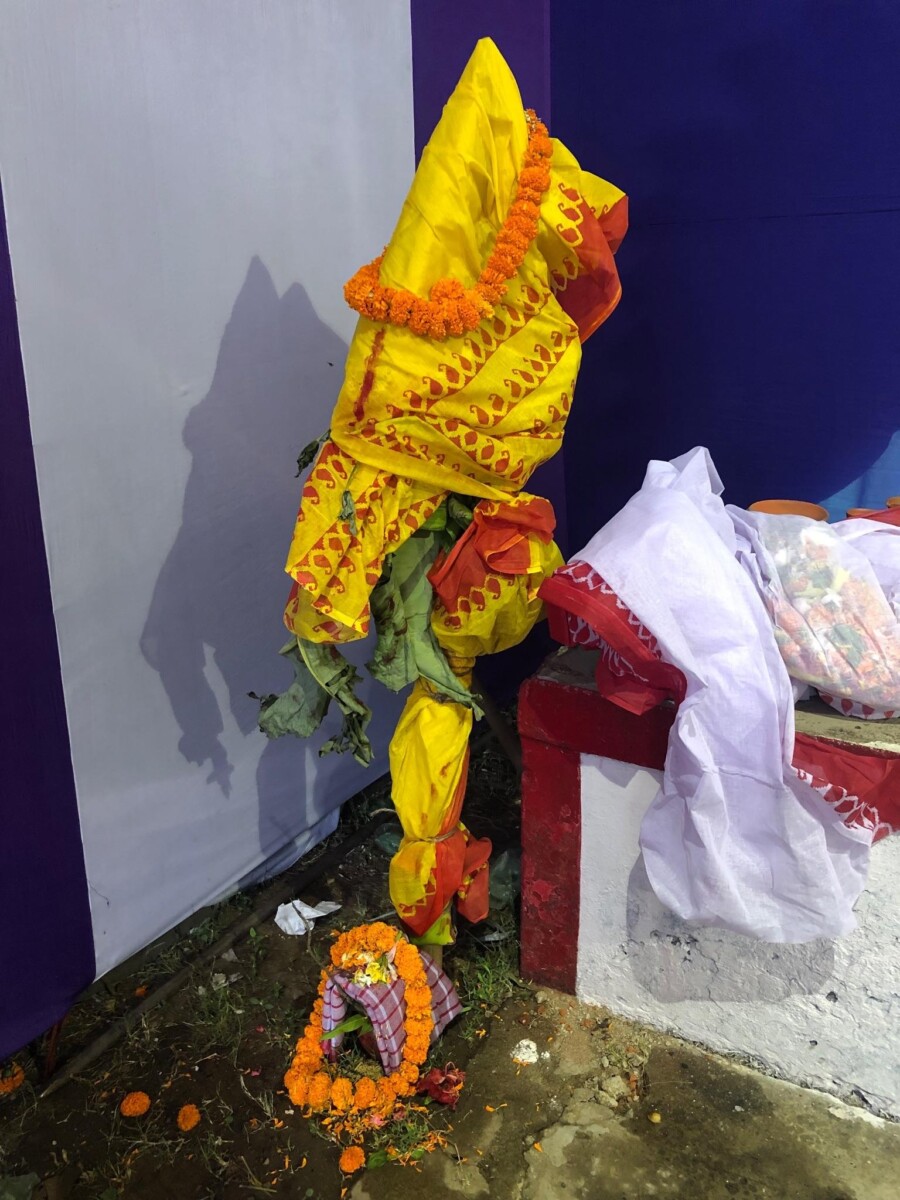
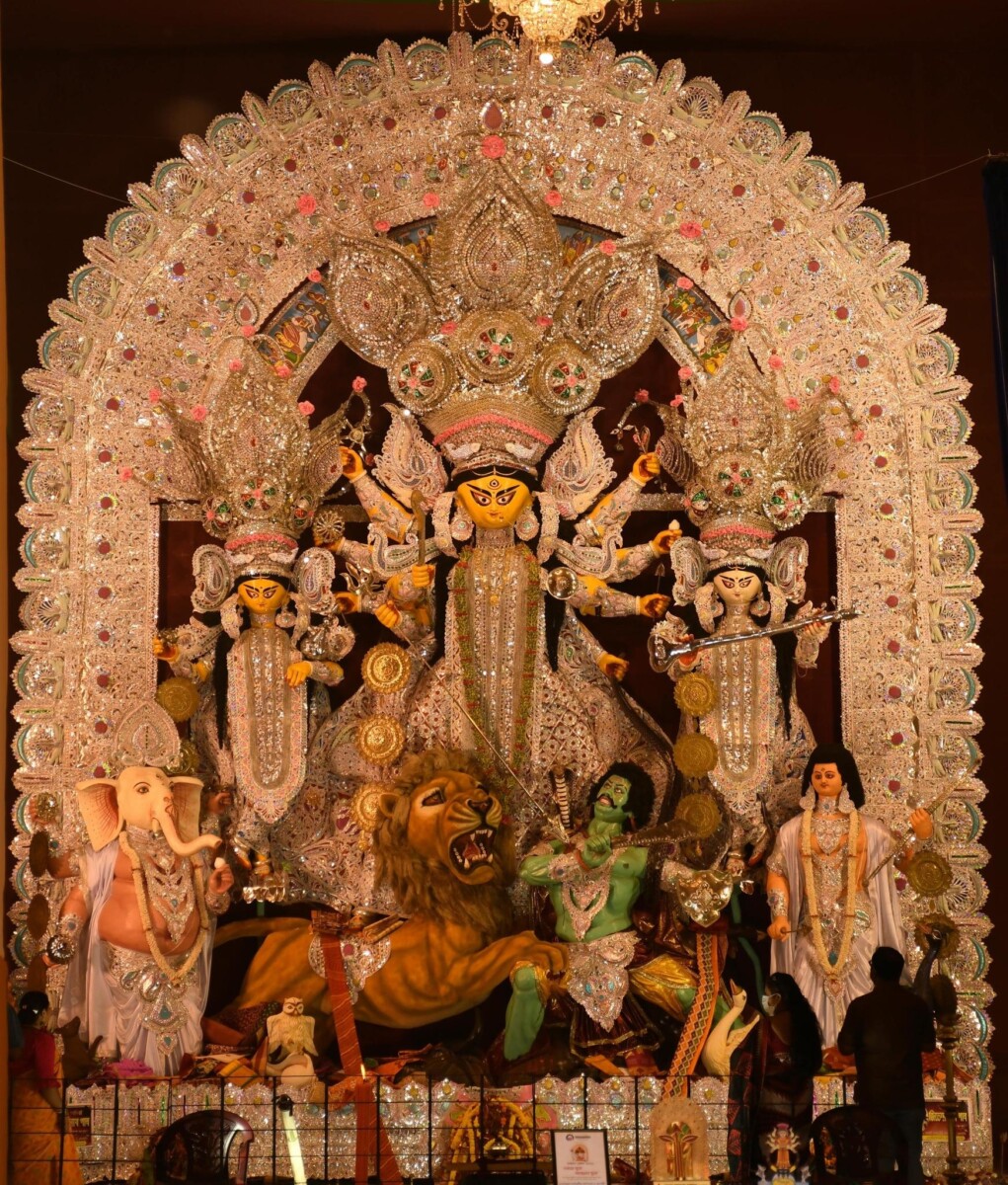
Because the Banana plant is visually prominent, the entire Navapatrikā ensemble is affectionately addressed as Kola Bou. In ritual terms, Kola Bou is honored first, functioning as a powerful conduit of Shakti through which the energy of these nine natural sources of vitality is invited and then ceremonially transferred to the icon of Durga Devi and her divine householdMaha Lakshmi, Maha Saraswati, Ganesha, and Kartikeya. The sequence reflects an older synthesis of Vedic and regional/tribal traditions, affirming that the nourishment, protection, and organization of life derive fundamentally from nature’s generative power.
Symbolically, this ritual juxtaposes two complementary portrayals of the feminine. On one side stands Durgathe unconquerable Shakti who overcomes Mahishasura and represents unambiguous strength, protection, and agency. On the other, Kola Bou appears as a demure bride, carried to the water for ablutions and returned in silence. Read together, these forms illuminate a cycle well recognized in social experience: endurance, restraint, and quiet service can transform under pressure into decisive power and moral clarity. The continuum from softness to strength is not contradiction but completion.
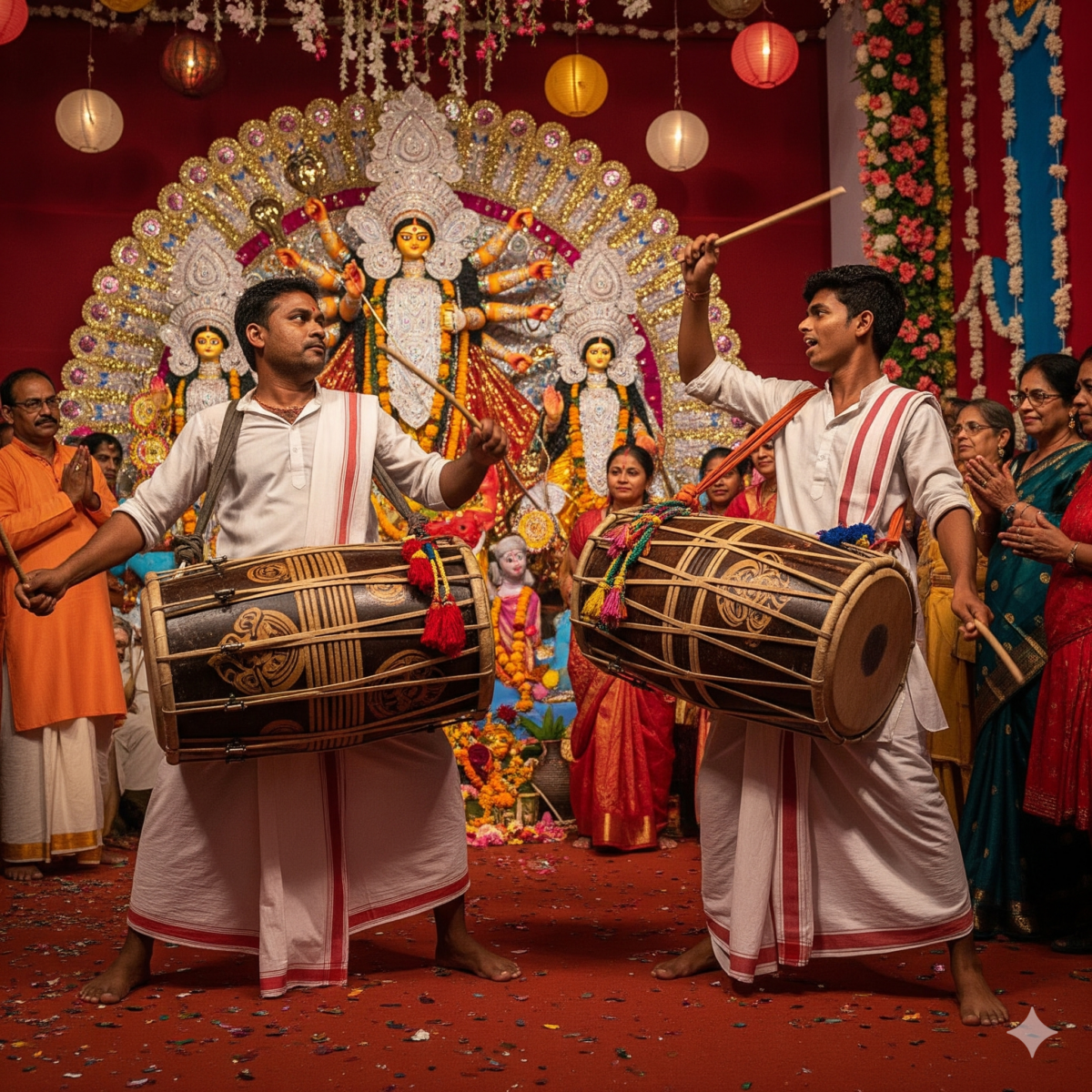
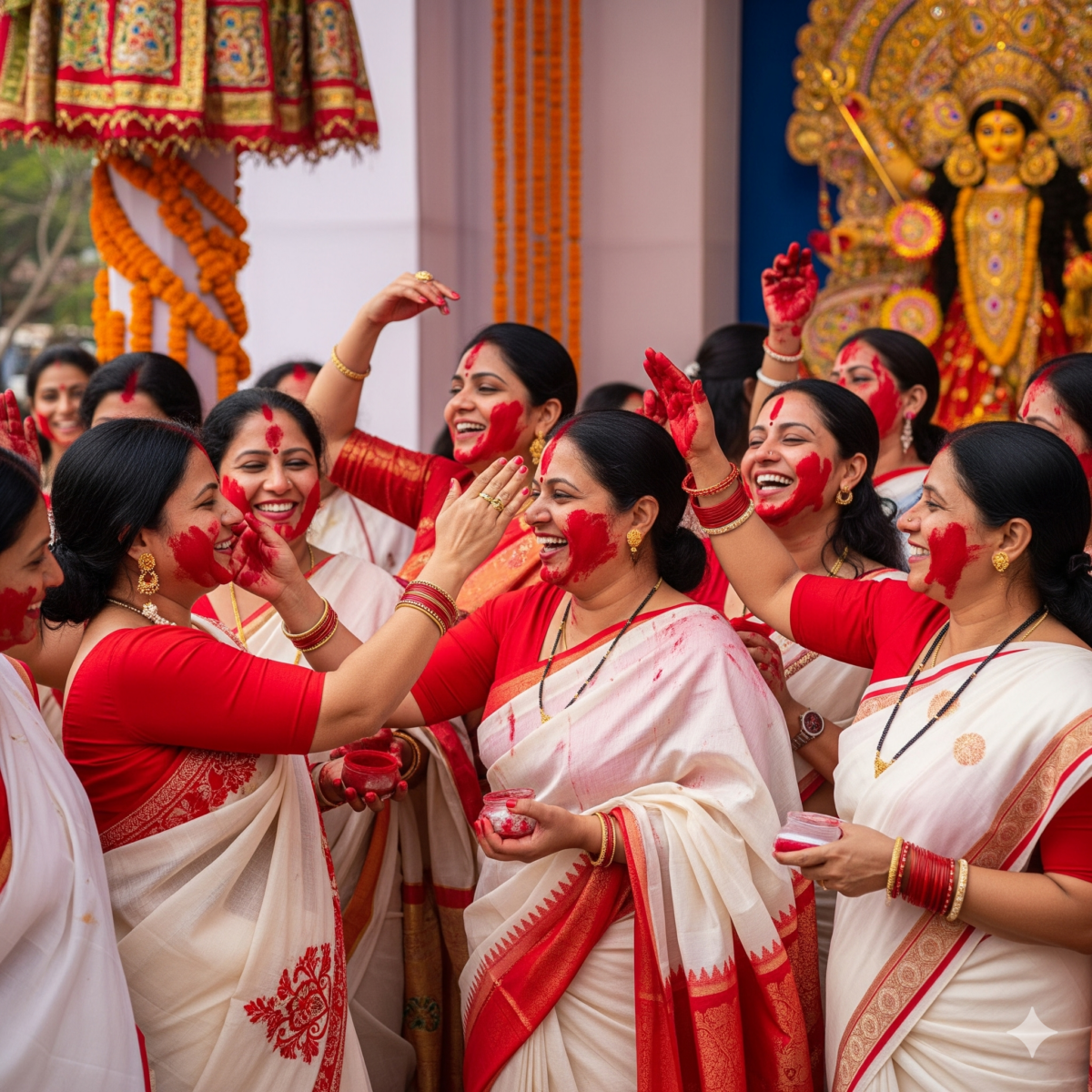
Festival practice reinforces this insight through embodied experience. The thunder of the dhak vibrates through the chest; the ululation of ulludhwani pierces the air; and the joy and shared emotion of Sindoor Khela make community devotion palpable. Within this sensory field, Kola Bou’s presence operates as a pedagogical symbol: Prakritithe nurturing matrix of lifeappears as a bride to disclose that everyday nature is sacred and that the feminine principle is at once sustaining, protective, and transformative.
From a comparative dharmic perspective, this reverence for living nature and the ethical elevation of non-harm and service resonate broadly. Hinduism’s veneration of Shakti as the energy of life aligns with Buddhism’s compassion-centered ethics, Jainism’s ahimsa and ecological restraint, and Sikhism’s seva and stewardship. The Navapatrikā, therefore, can be appreciated as part of a shared civilizational ethos that regards the natural world as a locus of moral responsibility and spiritual insight.
Understanding Kola Bou through the lens of Navapatrikā clarifies misconceptions while preserving the beauty of folk narrative. While the popular notion that Kola Bou is Ganesha’s wife reflects affectionate storytelling, the śāstric framework emphasizes a more expansive vision: Shakti made visible through plants that sustain, heal, and nourish. The ritual reminds practitioners that empowerment is not solely expressed in epic victories; it also abides in quiet resilience and communal harmony.
In the end, the so-called “banana bride” serves as an accessible gateway to a deeper teaching. Shakti is not confined to temples or texts; it is present in the fields that yield rice, in the turmeric that heals, in the wood apple leaves offered with devotion, and in the communities that gather to remember. To encounter Kola Bou is to discover an elegant, integrative pedagogyone that situates Divinity in nature, locates strength in tenderness, and invites all to recognize the sacred embedded in everyday life.
In many pandals, one will notice Kola Bou placed to the right of Ganesha, a visual cue that the household of the Goddess is complete when nature’s energy is acknowledged first. This arrangement reflects a ritual logic with social implications: honoring the sources of sustenance before celebrating achievement and might. Such choreography, repeated annually during Navaratri and Durga Puja, cultivates a durable cultural memory of balance, interdependence, and reverence.
Inspired by this post on Hindu America.