-
Bel Tala and Akal Bodhan: Durga’s Sacred Awakening That Empowered Lord Rama

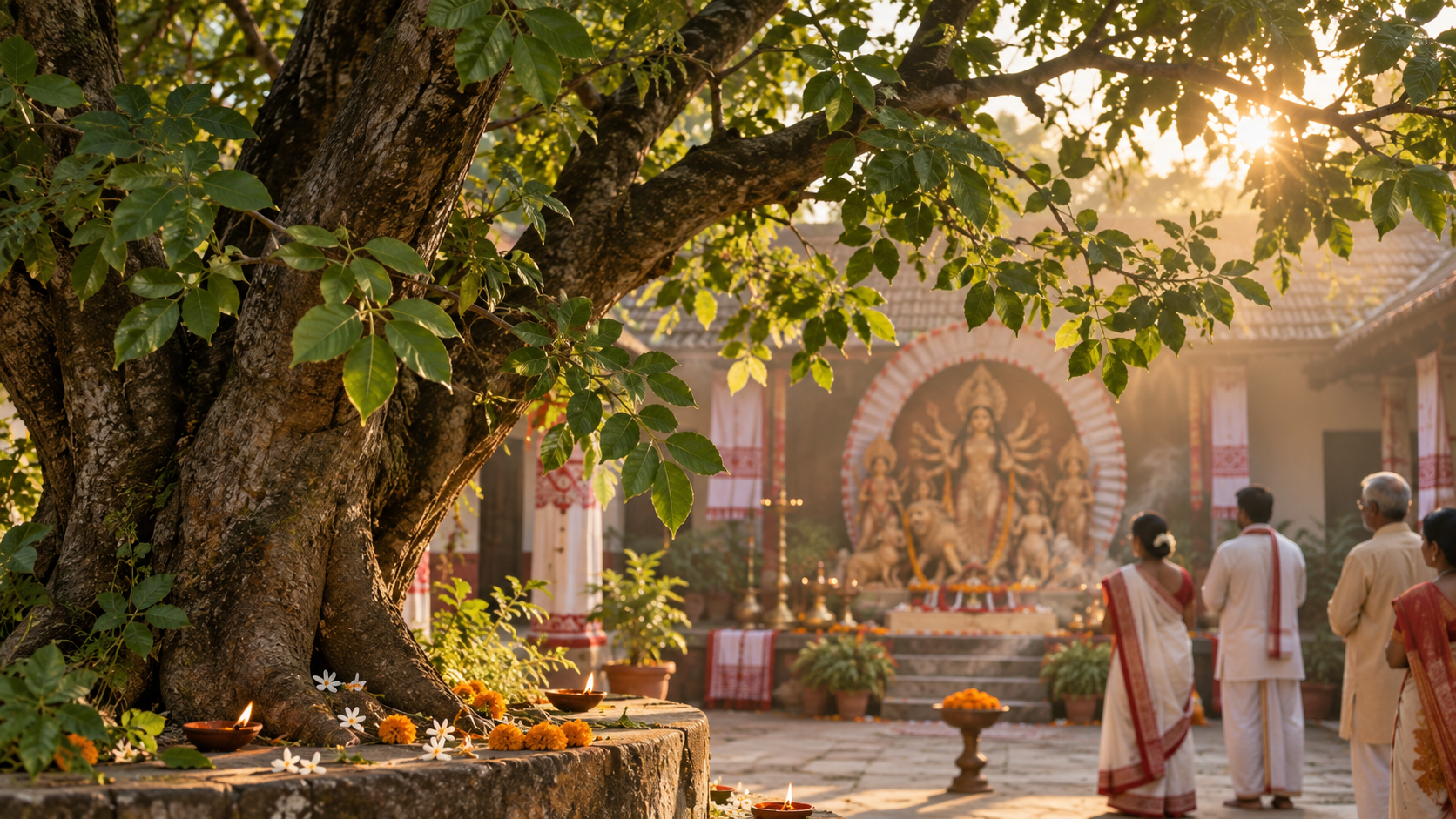
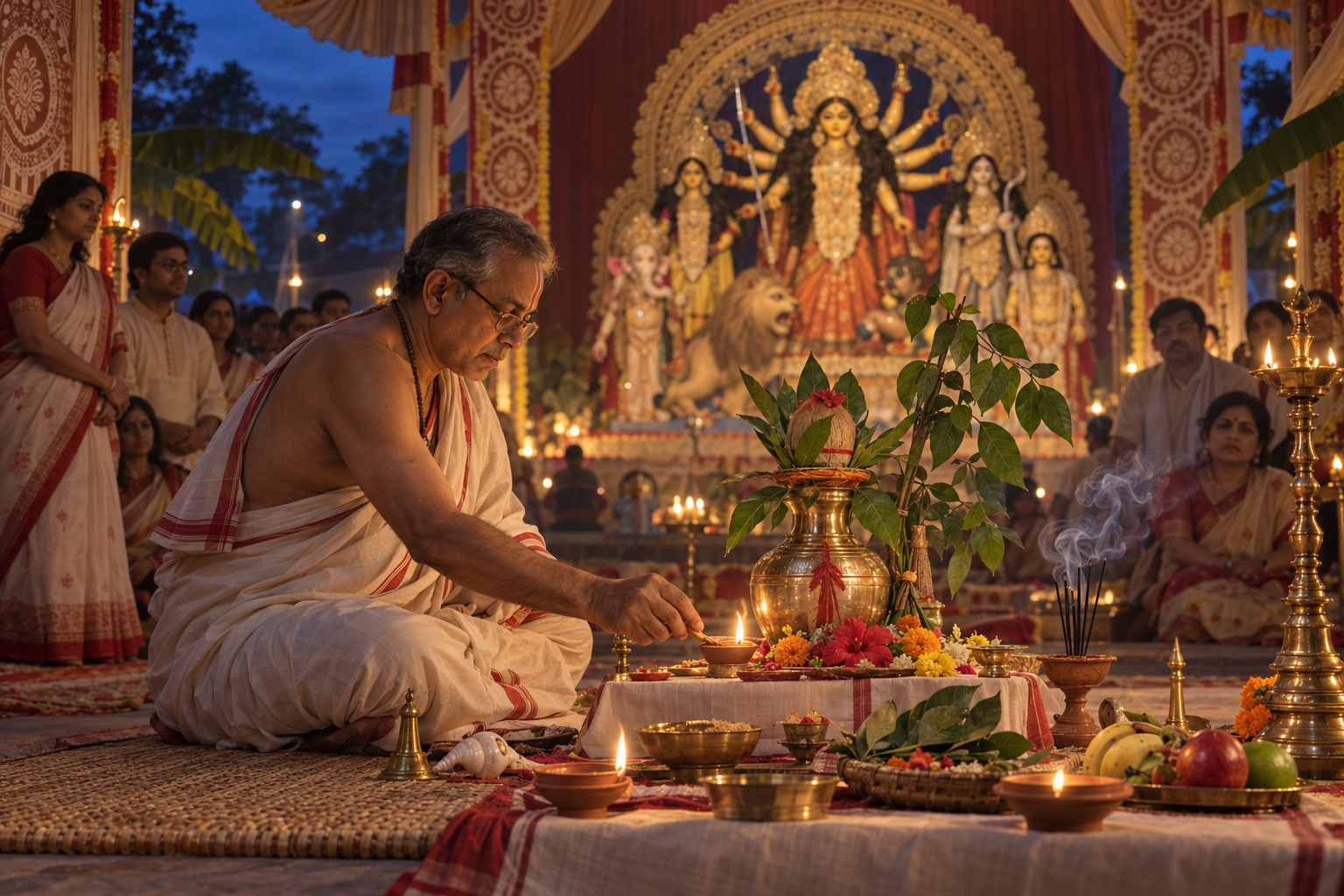
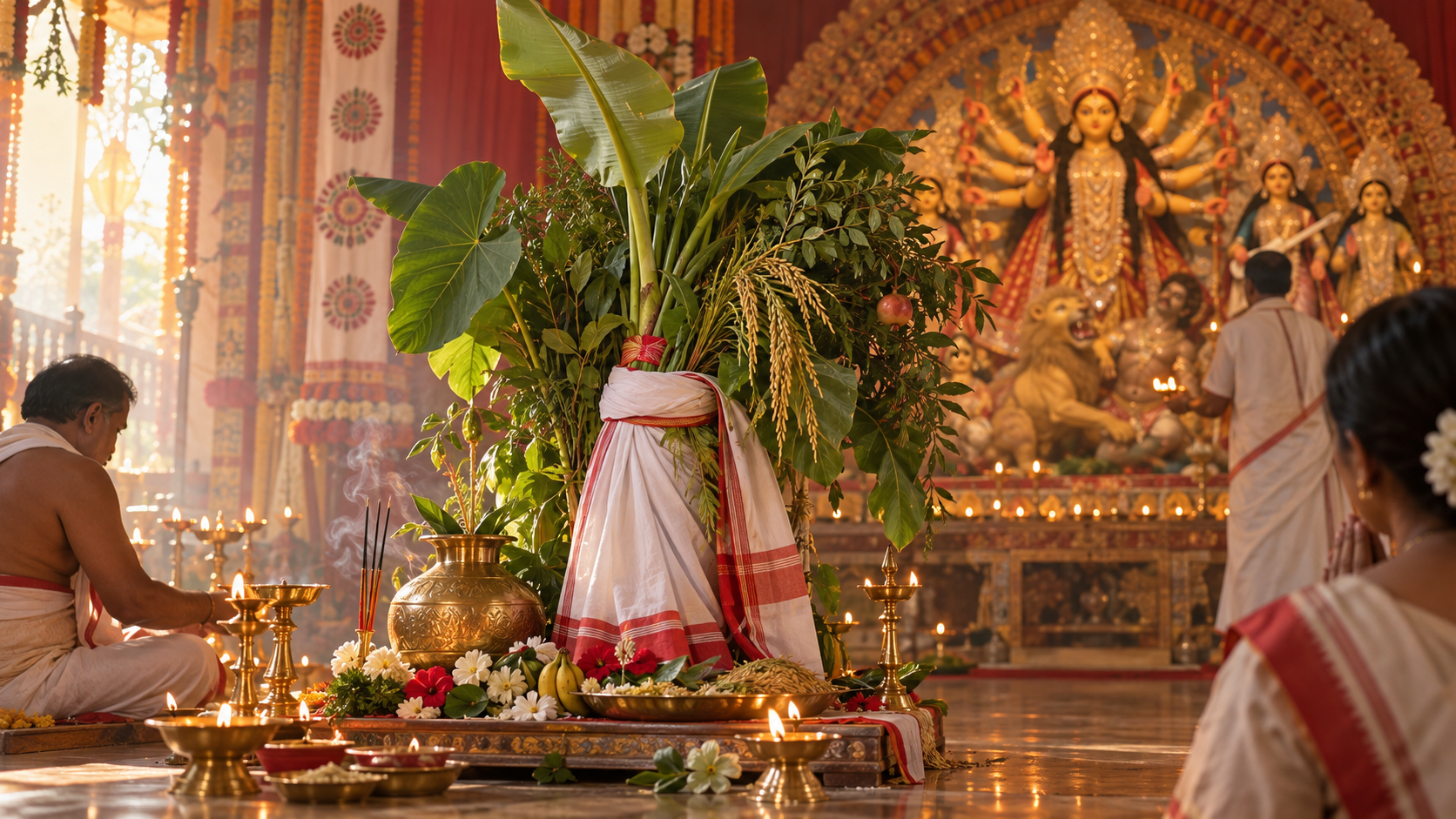
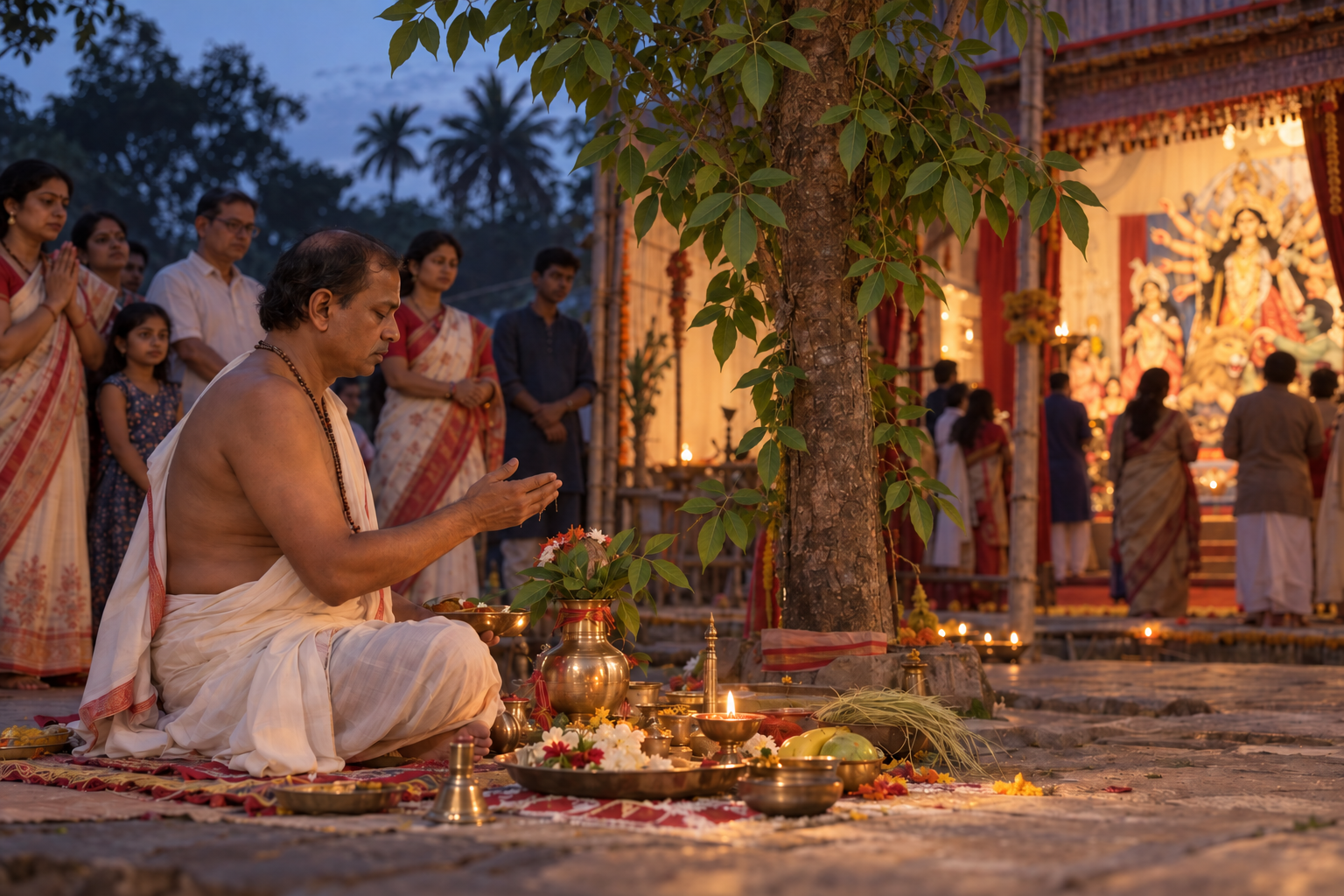
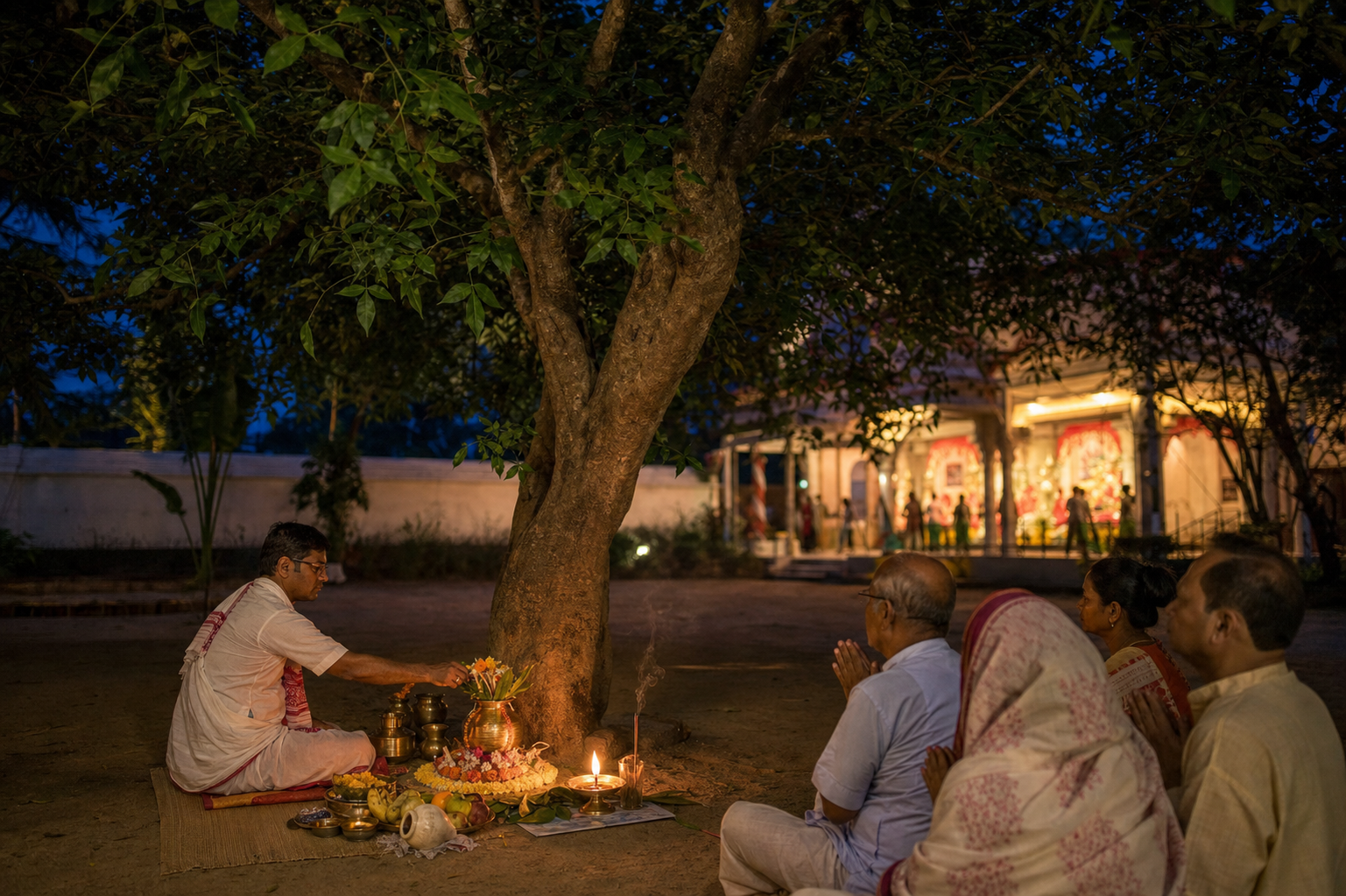
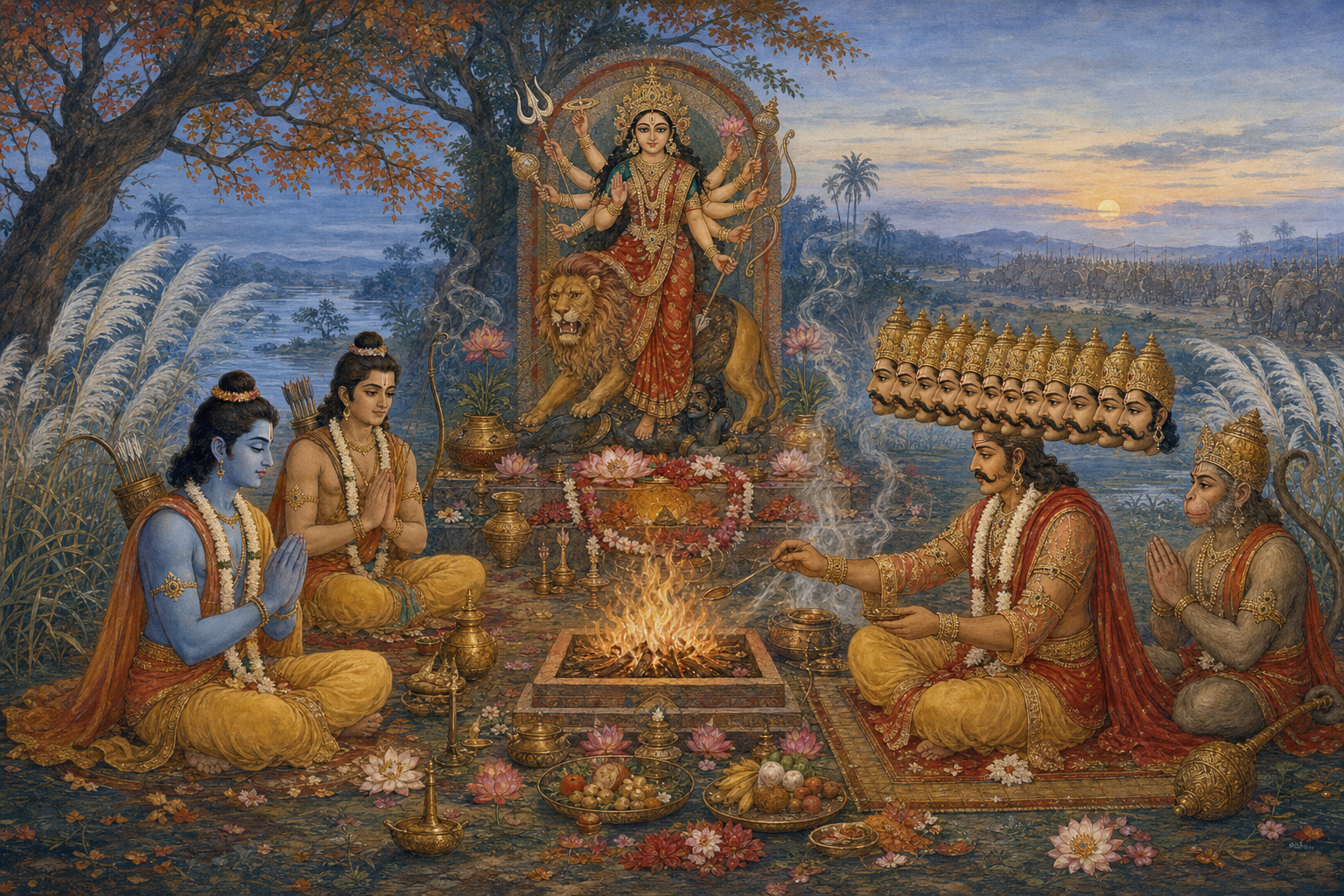
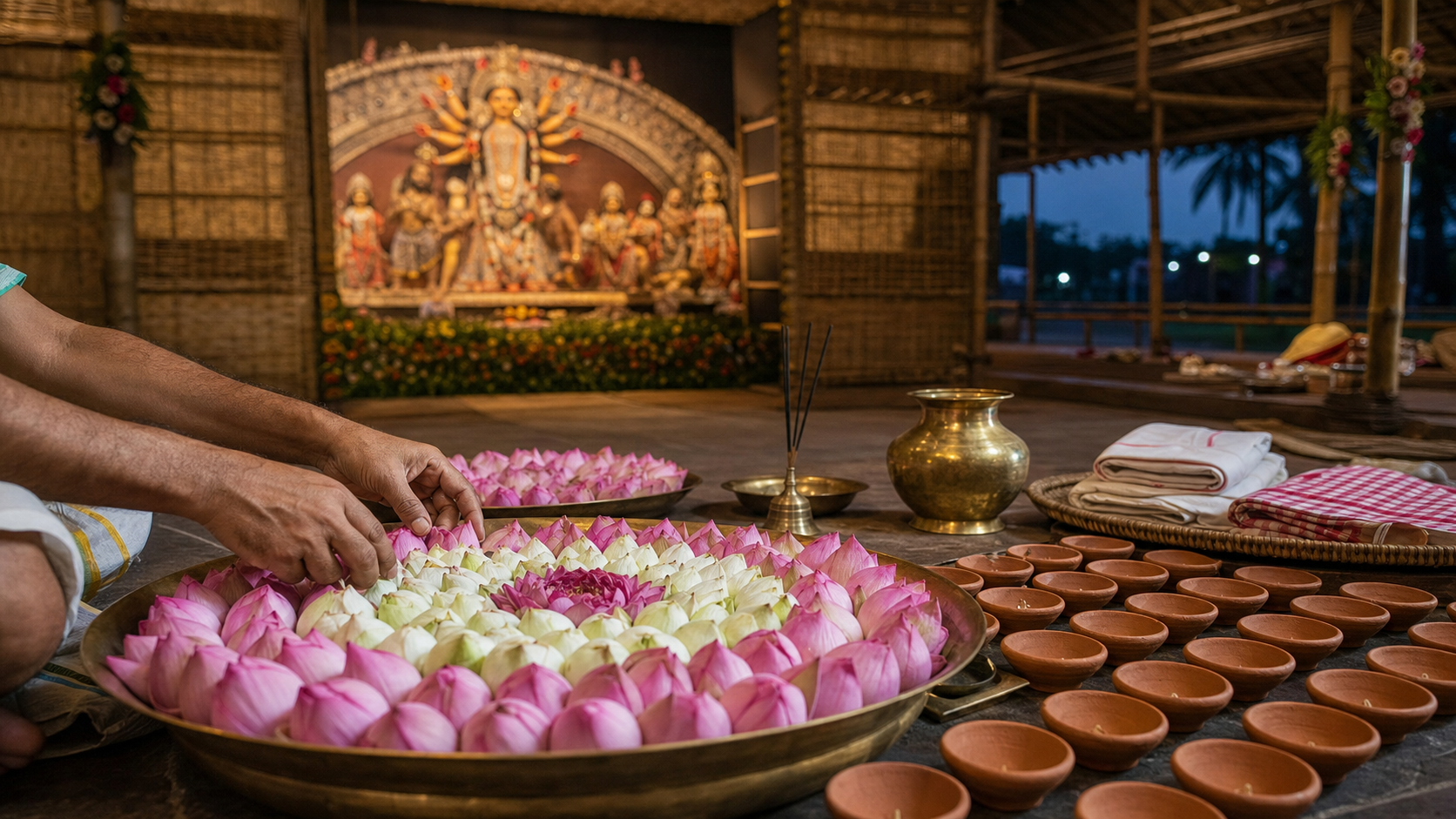
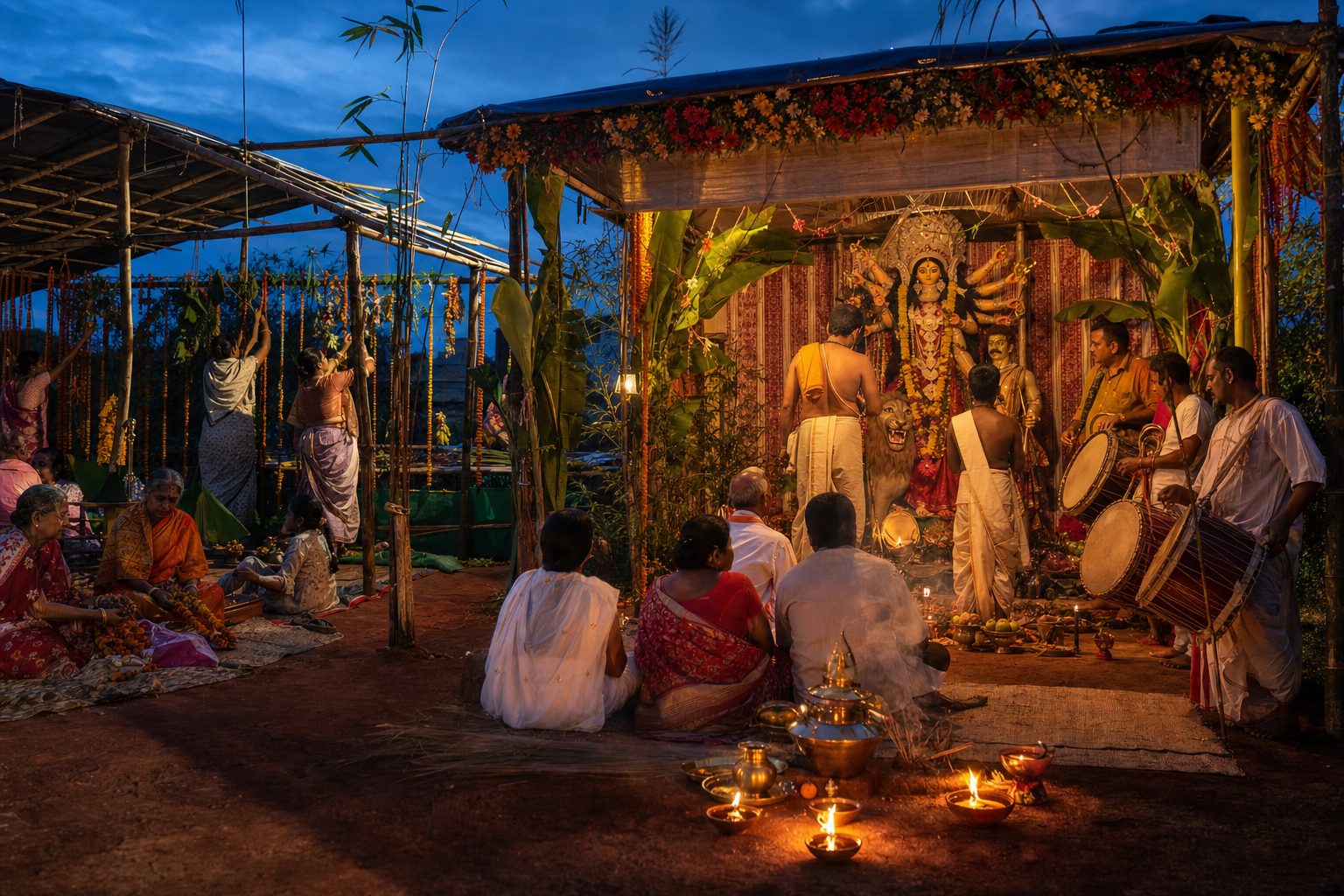
Bel Tala—the sacred space beneath the bel (wood-apple) tree—anchors the Bodhan, the ceremonial awakening of Goddess Durga that inaugurates Sharadiya worship. Rooted in Bengal’s “Akal Bodhan” narrative linking Lord Rama’s victory to Durga’s boon, this rite integrates Vaishnava and Shakta currents while honoring nature as a living altar. The bel tree (Aegle marmelos) contributes both…
-
Hargauri Durga in Bengal: Uma’s Tender Homecoming and Her Sacred Union with Shiva

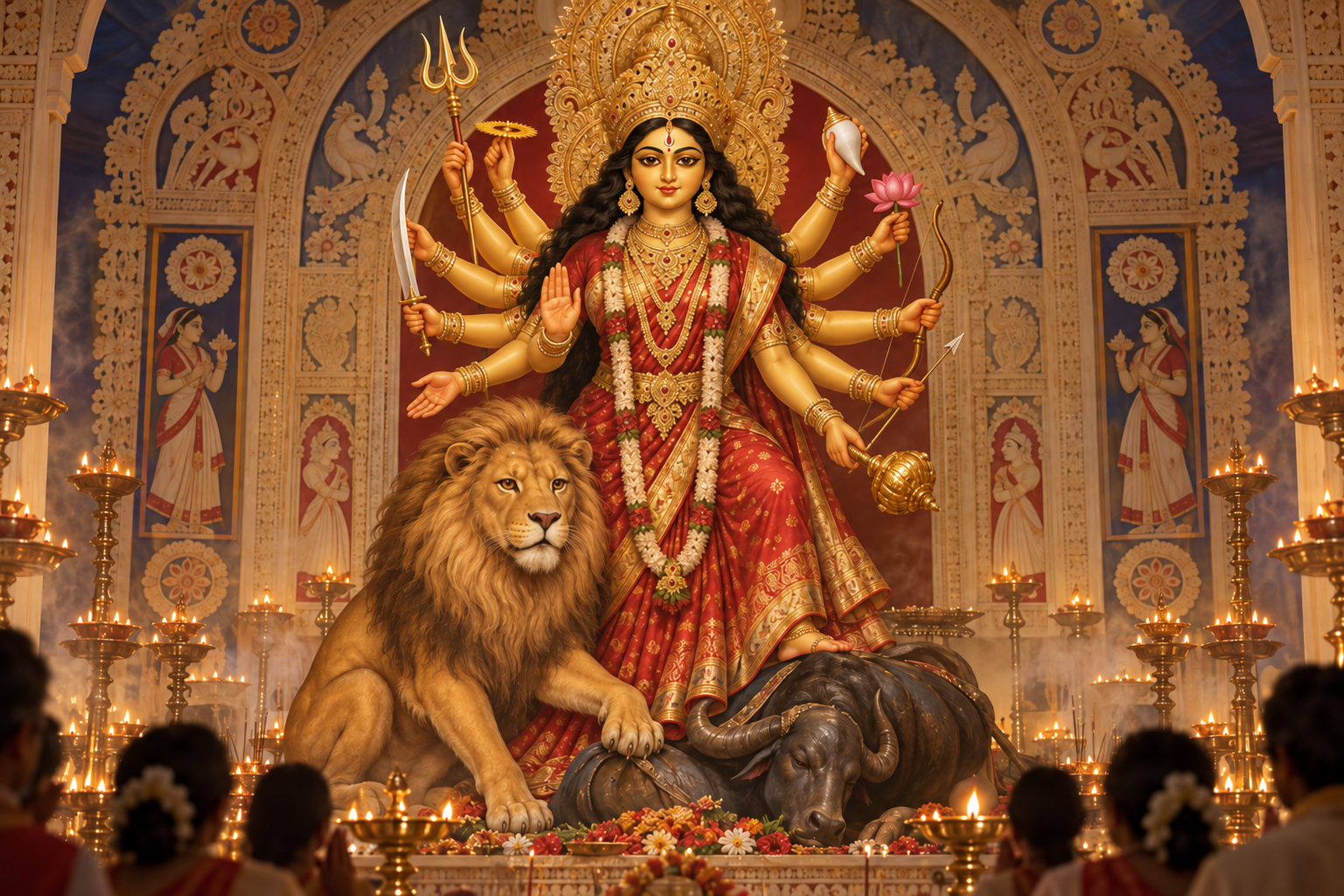
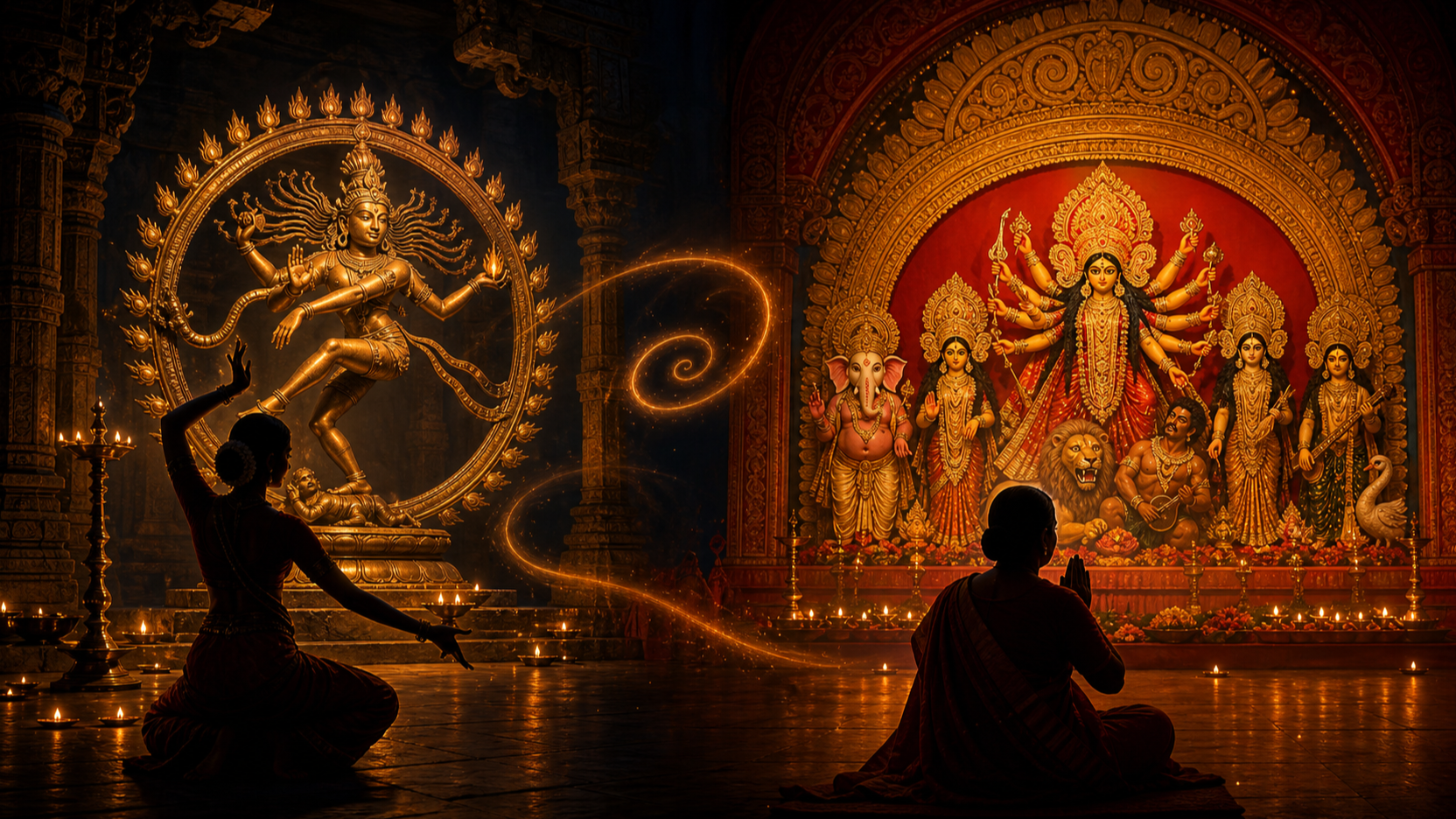
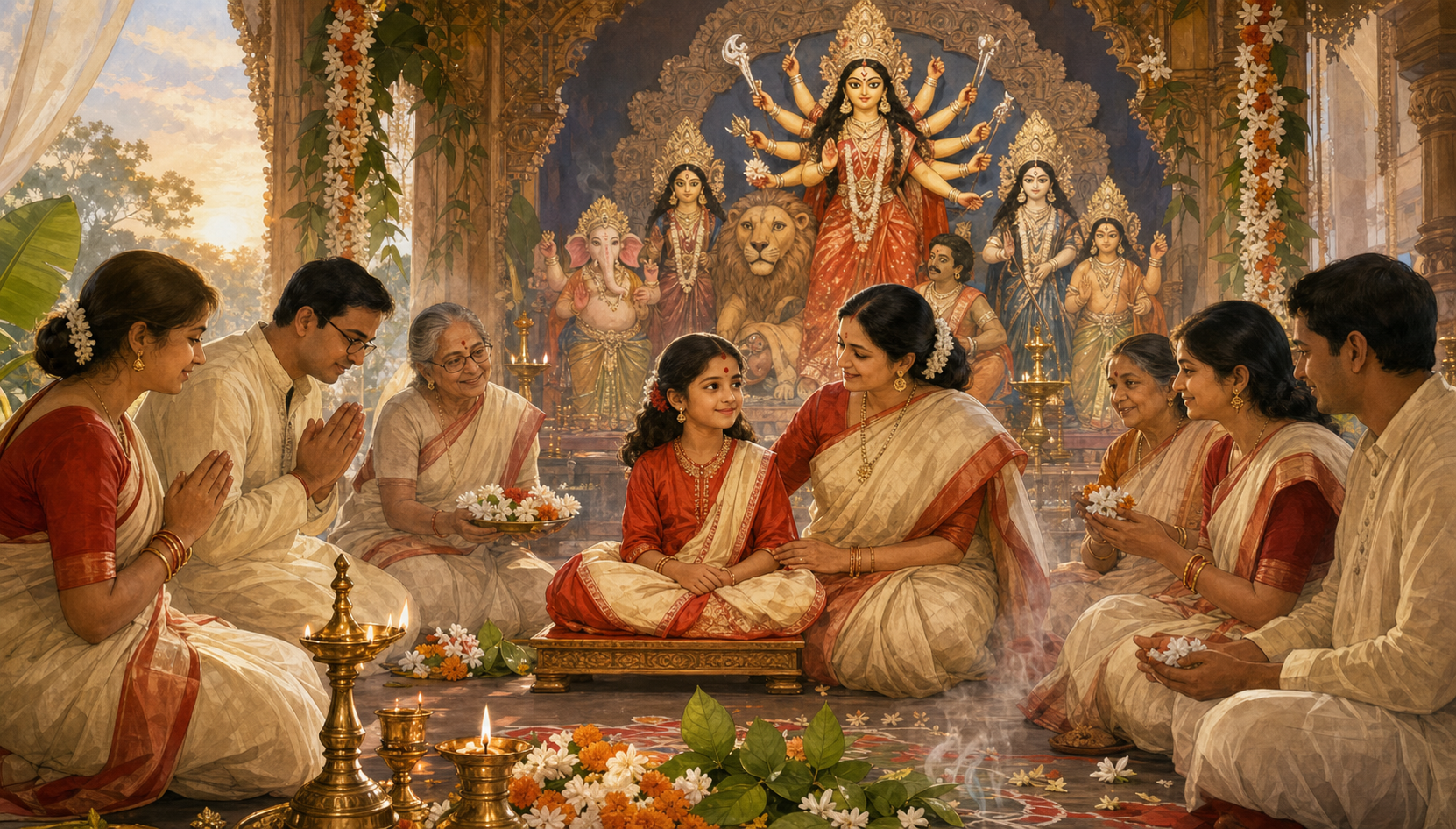
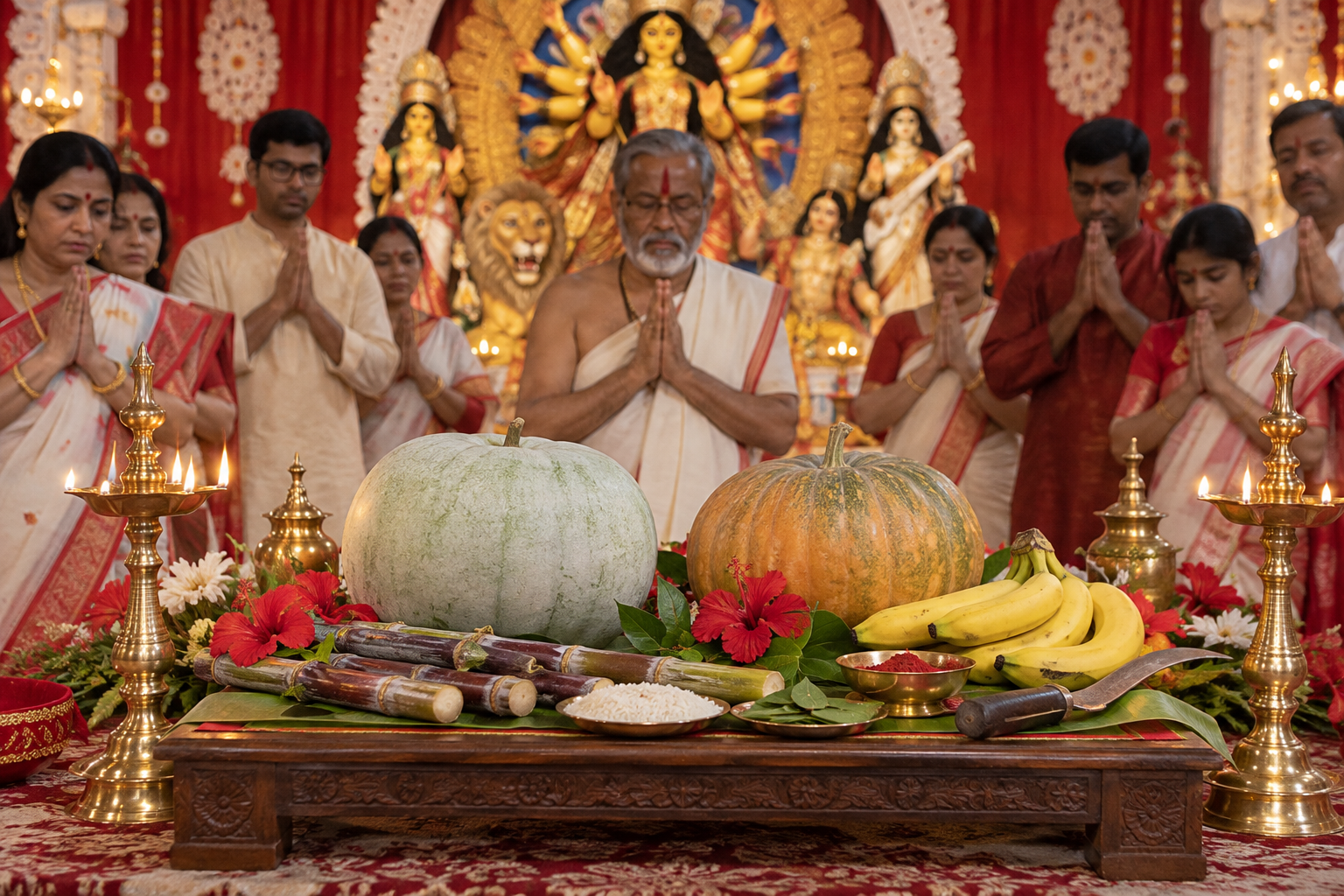
Hargauri Durga reframes Bengal’s Sharadiya devotion as Uma’s tender homecoming, with Shiva’s serene presence completing the sacred tableau. The piece decodes the Hara–Gauri archetype, clarifies its relationship to Mahishasura Mardini, and situates the tradition within Devi Paksha, from Mahalaya to Vijayadashami. It explains core rites—bodhana, nabapatrika, Sandhi Puja, Kumari Puja, and visarjan—while interpreting how they…
-
Navratri 2026: Dates, Rituals, Regional Traditions, and the Transformative Power of Shakti

Navratri—“nine nights”—honors Adi Shakti as both nurturing and protective, culminating in Vijaya Dashami’s affirmation of righteous victory. In 2026, Shardiya Navratri runs from October 11 to October 20, with regional panchang differences guiding precise tithis. The festival’s lunisolar timing, Navadurga symbolism, and the three-guna framework invite a progressive inner discipline from vigor to wisdom. Core…
-
Kumari Puja Unveiled: Encounter the Living Goddess of Navratri with Sacred Ritual Precision

Kumari Puja venerates the Divine Mother as a living presence in pre‑pubescent girls during Navratri and Durga Puja, translating Shakta philosophy into compassionate, ethical practice. This comprehensive guide explains historical lineages, scriptural foundations in the Devi Mahatmya and Vedanta, and the symbolism of honoring the Navadurga through Kanya Puja. It details a clear, respectful puja…
-
Chaitra Navratri Colours 2026: Definitive Day-Wise Guide to Auspicious Saree and Dress Shades

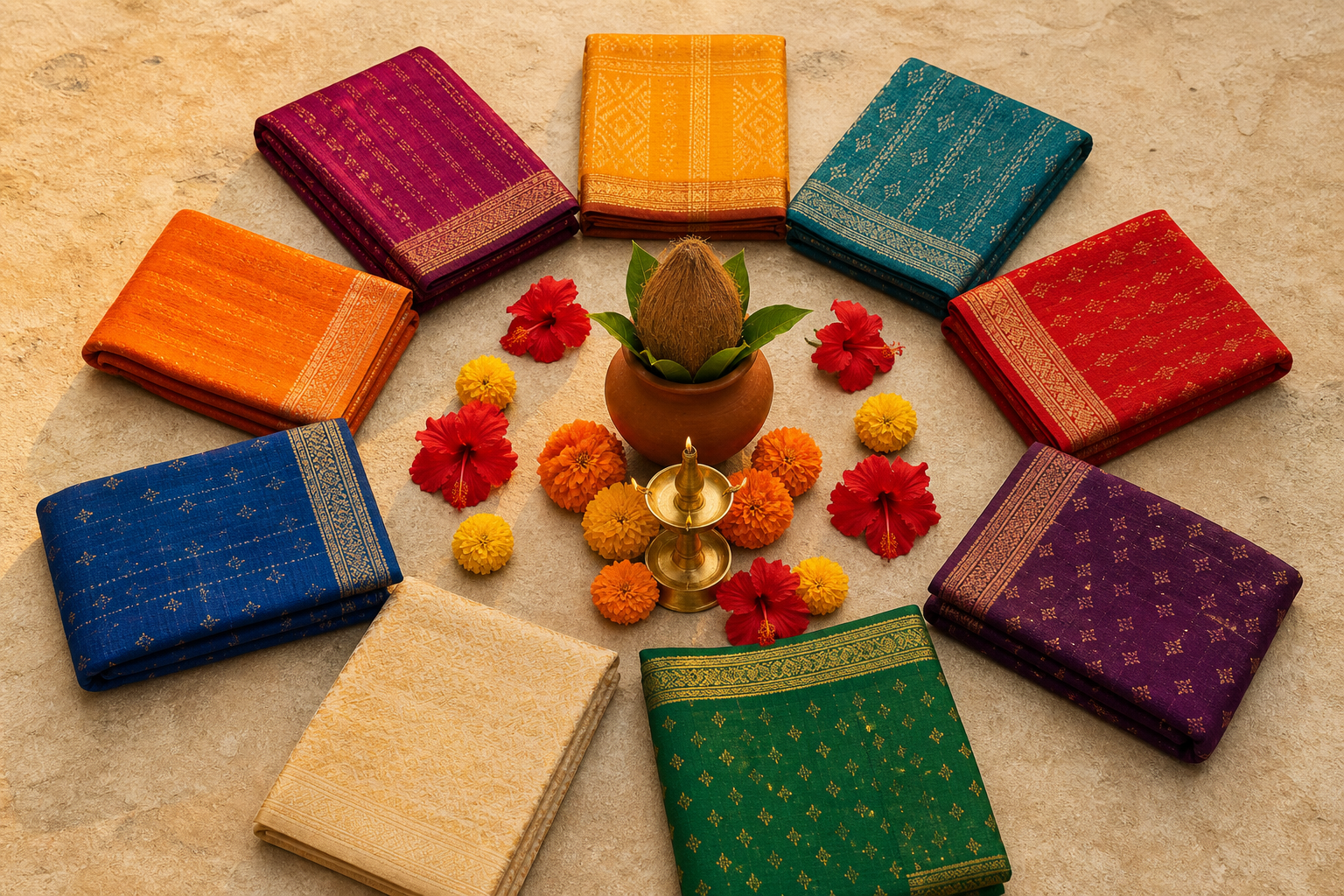
This authoritative, day-wise guide to Chaitra Navratri Colours 2026 explains how the nine auspicious shades are determined and presents the complete sequence most widely followed in Maharashtra and Gujarat. Drawing on the Friday start for Śukla Pratipadā on 20 March 2026 for many locations, it lists each day’s colour along with the corresponding Navadurga, dates,…
-
Kanya Puja 2026: Ultimate Kumari Pooja on Ashtami/Navami—Dates, Vidhi, Meaning, Dharmic Unity

Kanya Puja (Kumari Pooja/Kanjak Puja) is a central Navratri rite that honors the living presence of Devi in young girls through hospitality, nourishment, and gifts. In 2026, the puja aligns with Durgashtami on October 18, with many also observing on Mahanavami, October 19; during Chaitra Navaratri it falls on March 26 (Thursday). This comprehensive guide…
-
Goddess Jogadya Durga of Bengal: Unveiling Adya Shakti, Yoga, and a Timeless Shakta Legacy

Goddess Jogadya (Yogadya) is Bengal’s intimate manifestation of Durga, uniting the yogic discipline of attention with the primordial Adya Shakti. This in-depth guide explains her theology, iconography, and ritual grammar, situating Jogadya within Bengal’s sacred geography and festival calendar—from Charak Sankranti in Chaitra to Sharadiya Navaratri in Ashwin. Readers learn how daily worship follows Panchopachara…
-
Navratri 2026 Day 2: Brahmacharini Puja, Preethi Dwitiya, and Dashain Rituals (20 Mar & 12 Oct)

This guide clarifies that the 2nd day of Navratri 2026 occurs twice—on 20 March (Chaitra Shukla Dwitiya) and 12 October (Ashwin Shukla Dwitiya). It explains why the day is dedicated to Brahmacharini, including color symbolism, appropriate offerings, and the disciplines associated with tapas. Regional observances such as Preethi Dwitiya, Sthana Vriddhi Gauri Vrata, and Sindhara…
-
Kanya Puja 2026: Exact Dates, Ritual Steps, and Deep Significance for Navratri & Durga Puja

Kanya Puja, also called Kumari Pooja or Kanjak Pooja, is a central rite of Navratri Durga Puja in which prepubescent girls are honored as embodiments of Devi. In 2026, the principal date is October 18 (Durgashtami), with many traditions also observing it on October 19 (Mahanavami); during Chaitra Navaratri, it falls on Thursday, March 26.…
-
Devi Damanotsav 2026: Damana Leaf Adornment, Durga Navami Rites, and Deeper Meanings

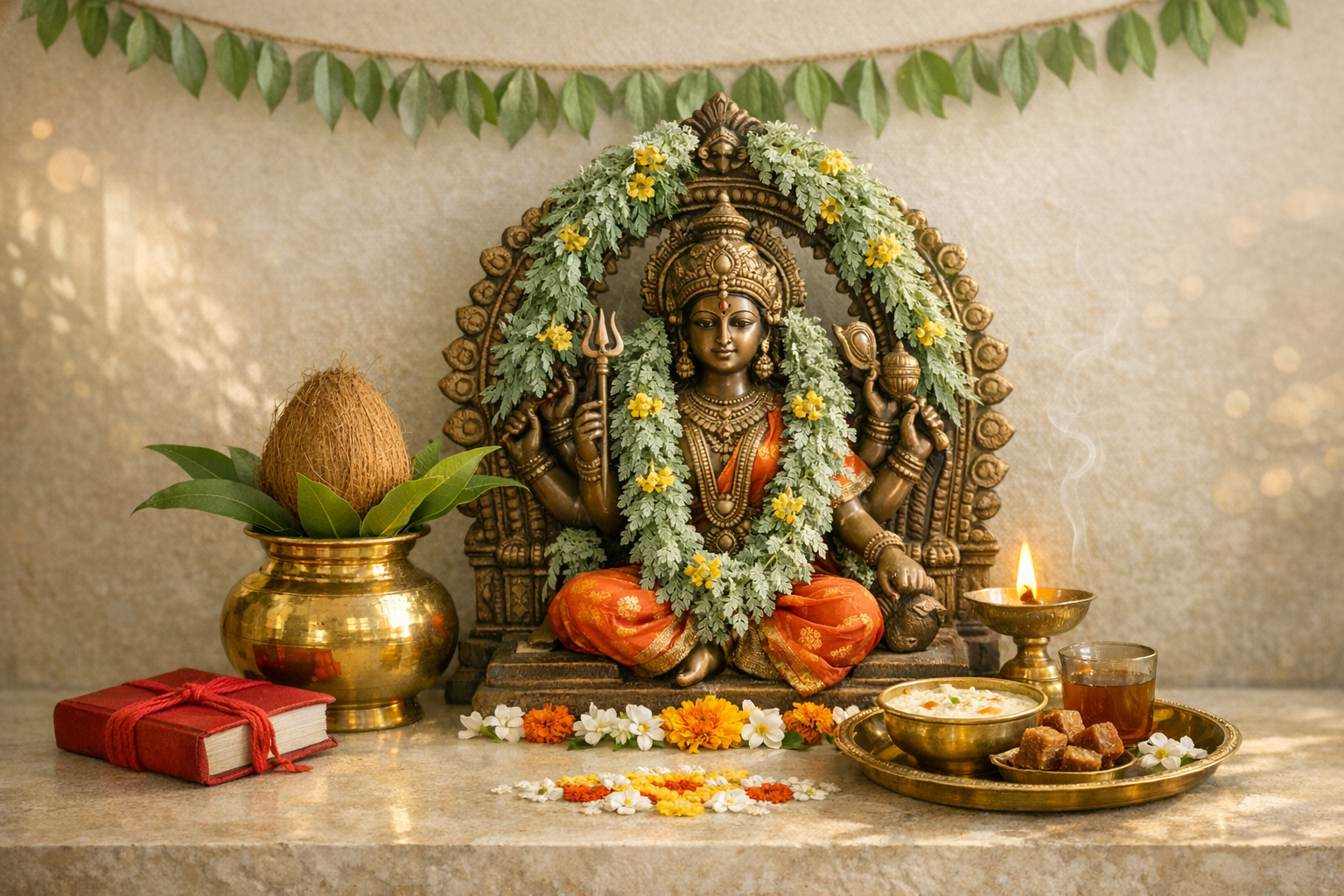
Devi Damanotsav (Durga Damanaropanam) is observed on Chaitra Shukla Navami and, in 2026, falls on March 27. The festival marks the culmination of Vasant Navratri by adorning the Goddess with fragrant damana (dhavanam) leaves, a practice that unites botanical symbolism with Shakta devotion. This long-form guide explains the festival’s names, dates, calendrical nuances, and regional…
-
Chaitra Navratri 2026 Begins 19 March: Dates, Puja Vidhi, Muhurat, and Dharmic Significance

Chaitra Navratri 2026 begins on 19 March and concludes on 27 March, aligning with Shukla Paksha Pratipada in the lunar month of Chaitra. This guide explains dates, puja vidhi, and practical muhurat principles for Ghatasthapana, along with day-wise observances of the Navadurga. It highlights the significance of Durga Ashtami, Sandhi Puja, Kanya Puja, and the…
-
Navaratri Vrata Mahatmyam: Scriptural Roots and Seasonal Science Behind Chaitra & Ashwin Fasts

Navaratri Vrata Mahatmyam explains why the sacred nine-night fast centers on Chaitra and Ashwin: both occur at powerful seasonal junctions near the equinoxes, making them ideal for renewal and inner rebalancing. Scriptural foundations in the Devi Mahatmya and traditions attributed to Veda Vyasa affirm the efficacy of the vow when aligned with Shukla Pratipada to…
-
Ravana as Rama’s Priest: Akalbodhan in Krittibas’s Bengali Ramayana and Dharmic Unity

This essay examines the Krittibas Ojha Bengali Ramayana episode in which Ravana, despite being Rama’s adversary, officiates as priest for Rama’s Durga Puja. It contextualizes the scene within Akalbodhan, the autumnal invocation of Durga that anchors Bengal’s Sharadiya Durga Puja. Contrasting Krittibas with Valmiki’s Aditya Hridayam, it shows how regional retellings adapt epic theology without…
-
Durga’s Sacred Mace (Gada): A Powerful Emblem of Strength, Justice, and Living Dharma

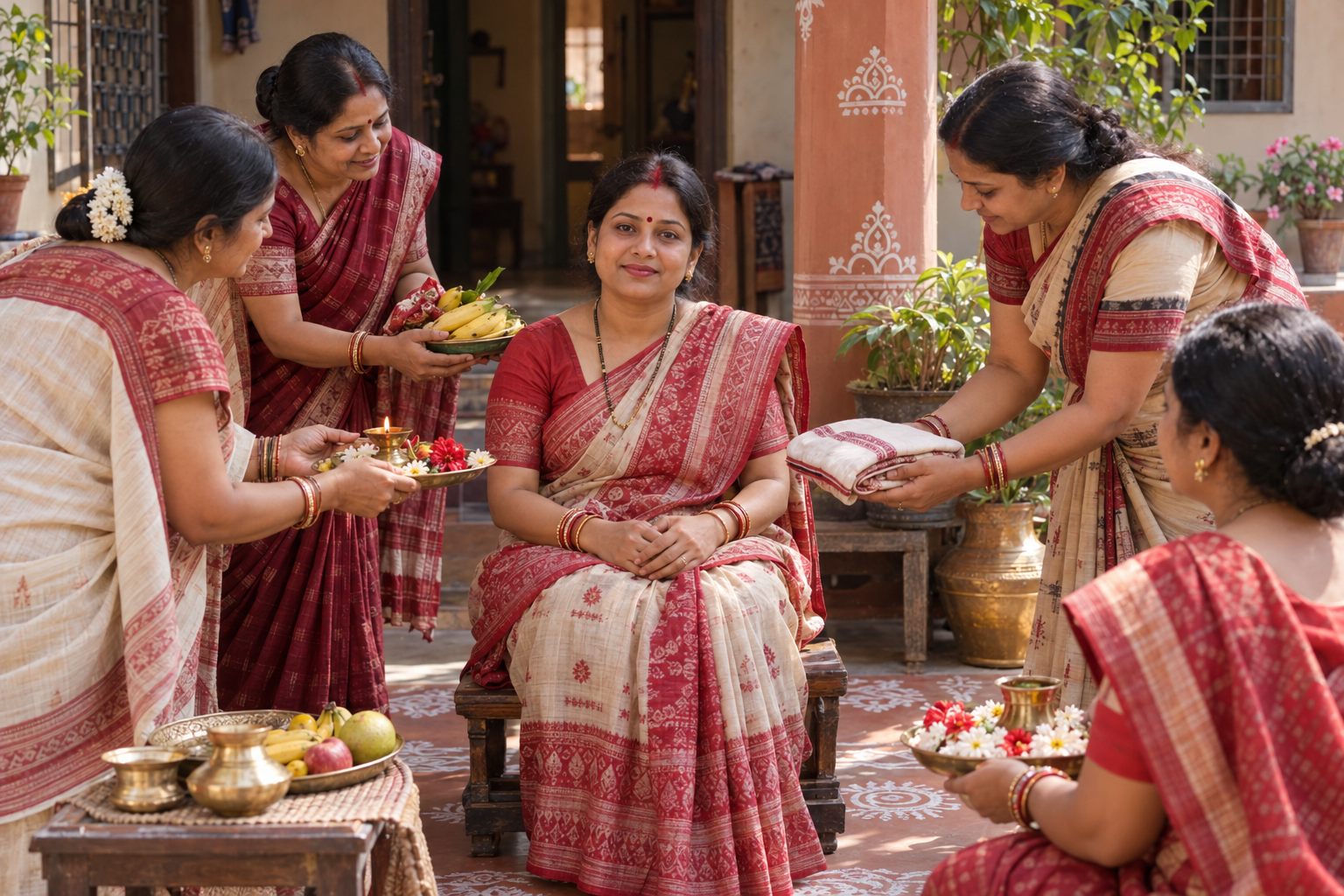
The gada (mace) in Goddess Durga’s hands signifies ethical strength guided by justice and compassion. Rooted in the Devi Mahatmya, it recalls how Yama endowed Durga with the power to restore order against adharma. The mace symbolizes grounded resolve, impartial accountability, and the stabilizing force of dharma in public and personal life. Beyond martial imagery,…
-
Durga’s Bow and Arrow: Unveiling the Power of Universal Will and Spiritual Discipline

Goddess Durga’s bow and arrow symbolize the union of universal will and disciplined focus. The bow represents restrained power aligned to dharma, while the arrow embodies one-pointed concentration and purposeful action. Read through yoga, they mirror pratyāhāra, dhāraṇā, and dhyāna culminating in right action. During Navaratri and Durga Puja, this iconography becomes a practical guide…
-
Sarapot, Kolabou, and Clay Idols: A Deep Dive into Bengal’s Living Lakshmi Traditions

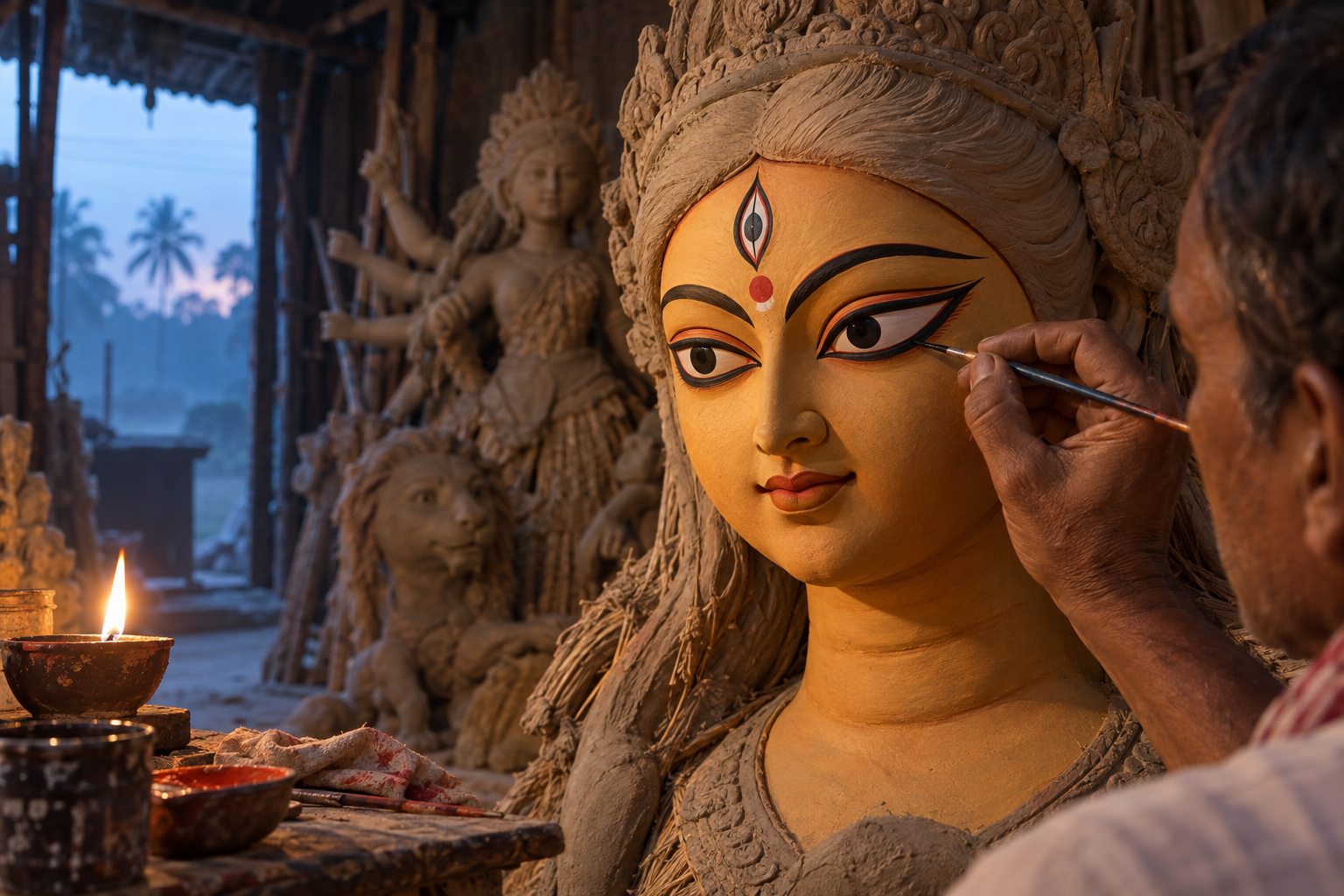
Bengal’s Lakshmi Puja unfolds through three living forms—Sarapot, Kolabou, and clay idols—each illuminating prosperity as an ethical relationship with home, community, and ecology. Sarapot Lakshmi preserves a compact, household-centered tradition rooted in local clay craft and simple offerings. Kolabou, the banana plant honored in Nabapatrika, embodies a vegetal form many households revere as Lakshmi, linking…