Padmanabhaformed from the Sanskrit padma (lotus) and nabha (navel)signifies “He whose navel is the source of the lotus.” Within Hindu symbolism and Puranic cosmology, this epithet of Vishnu conveys a vision of creation arising serenely from a still, sacred center. Far from a mere poetic image, the lotus emerging from Vishnu’s navel articulates a metaphysical template in which purity, order, and life unfold from an inexhaustible, compassionate ground.
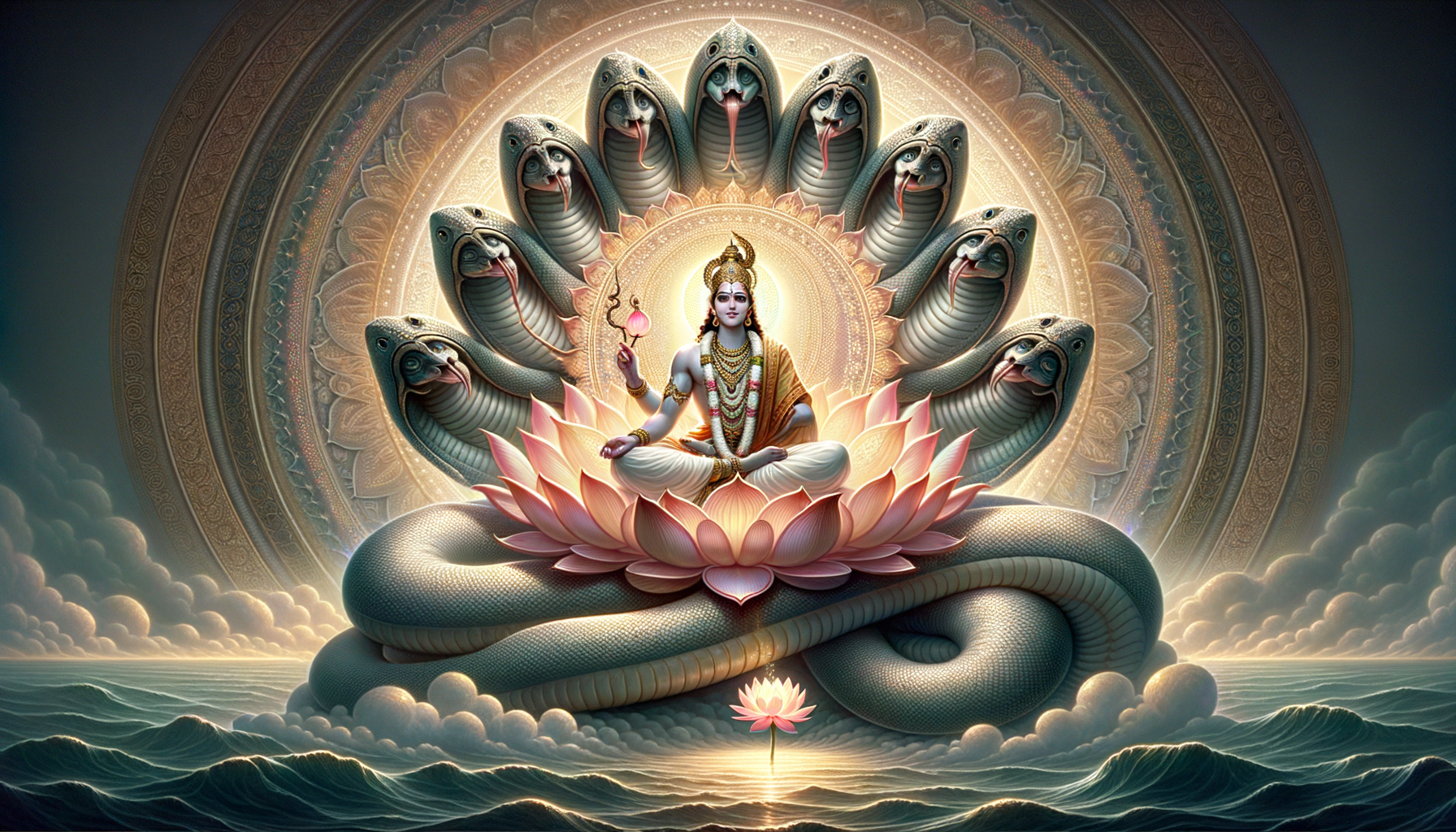
Puranic narratives, notably in the Bhagavata Purana and Padma Purana, describe Vishnu reclining upon the cosmic ocean on Ananta Shesha while a lotus issues from His navel, bearing Brahma, the creator. The lotus symbolizes purity and self-arising wisdom; the navel (nābhi) marks the axis, the ever-present center from which the cosmos manifests. This scene integrates ontology and iconography: creation, preservation, and dissolution are not random events but harmonized rhythms anchored in Vishnu’s sustaining presence.
In Vishnu iconography, Padmanabha illuminates how form communicates philosophy. The lotusuntouched by the waters in which it growsexpresses detachment and clarity. The navel, both anatomical and symbolic, connotes origin, nourishment, and equilibrium. Together they express a core teaching of Sanatana Dharma: profound order (ṛta) emerges from an unfathomable yet intimate ground. The Vishnu Sahasranama and classical commentaries further preserve this insight, ensuring its continuity across devotional and philosophical traditions.
Practitioners often attest that contemplating Padmanabha refines inner balance. In yoga philosophy, attention to the navel region aligns with the manipura center, associated with steadiness, vitality, and discernment. Meditative visualization of the lotus at the navel becomes a practical exercise in centeredness, helping the mind remain clear “in the world yet not of it,” much like the lotus itself. Such contemplations naturally translate into ethical presencegentleness, responsibility, and resilience in daily life.
Living traditions make this symbolism tangible. At the Sree Padmanabhaswamy Temple in Thiruvananthapuram, darśana of the reclining Vishnu evokes a felt sense of cosmic order and compassion. Devotees frequently describe the experience as both humbling and uplifting, a reminder that the source of creation is at once transcendent and deeply intimate. Rituals, hymns, and festivals collectively nurture this vision in the community, connecting individual practice with cultural memory.
The lotus also serves as a shared bridge across dharmic traditions. In Buddhism, the padma often signifies awakening arising unstained from the “mud” of ignorance. Jain traditions associate the lotus with purity and the serene presence of Tirthankaras, including Padmaprabha. Sikh scripture employs the lotus metaphor to teach how one may live amid worldly currents without attachment. This cross-traditional resonance highlights a unifying spiritual vocabulary, strengthening mutual respect and unity in spiritual diversity.
From a philological perspective, the name Padmanabha preserves a compact theology: padma conveys luminous purity and wisdom, while nabha/nābhi signifies the life-giving center. Scriptural sourcesranging from the Puranas to stotrasinterlace this imagery with cosmology and devotion. Through such texts, students of Hindu philosophy engage both narrative and symbol, gaining insight into how metaphysical truths are embedded in sacred names and forms.
In contemporary practice, Padmanabha offers more than mythic memory; it offers a method. Visualizing a lotus at the navel during japa or dhyāna focuses attention, calms reactivity, and recalls the ideal of spotless clarity amid complexity. This contemplative center becomes the ground for compassionate action, nurturing social harmony and interfaith goodwill while remaining rooted in the timeless wisdom of Vishnu’s iconography.
Ultimately, Padmanabha discloses a simple yet profound insight: creation unfolds from a serene center that is never exhausted by what it sustains. To reflect upon this name is to be invited into balancemind steady, heart open, and conduct aligned with dharmawhile recognizing shared symbols that bind Hinduism, Buddhism, Jainism, and Sikhism in a common quest for truth and liberation.
Inspired by this post on Hindu Blog.