-
Padma Samhita Unveiled: Timeless Pancharatra Rituals to Elevate Modern Spiritual Life

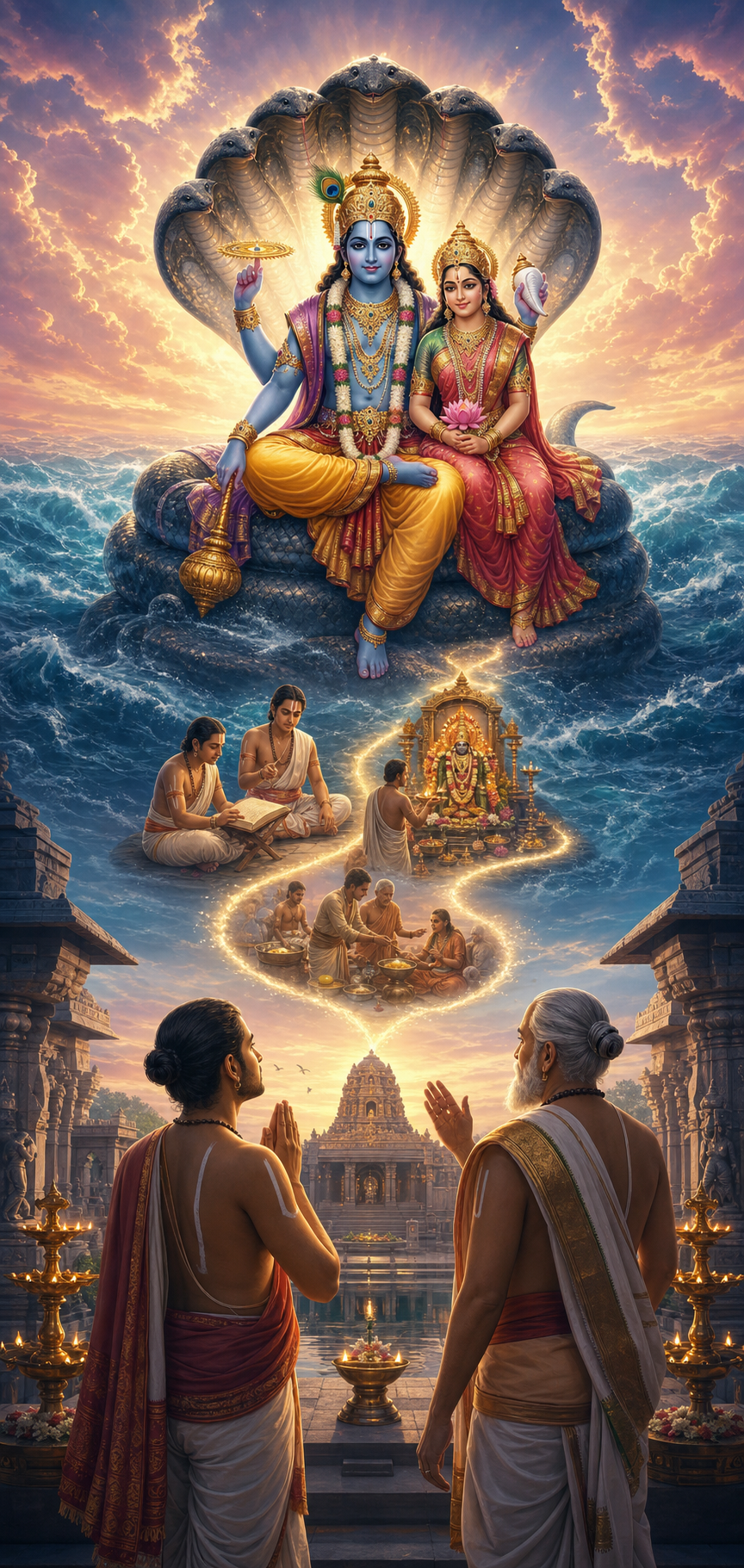
Padma Samhita is a cornerstone of the Pañcarātra tradition, detailing thirty-one chapters that integrate temple construction, mūrti consecration, daily worship, and ethical formation. This overview explains its core theology—the vyūha doctrine and arcā avatāra—and shows how mantras such as Om Namo Nārāyaṇāya and Om Namo Bhagavate Vāsudevāya shape steady household practice. Readers gain a practical…
-
Jnana–Karma Samuccaya Vada in Vedanta: Unifying Knowledge and Action on the Path to Moksha

Jnana Karma Samuccaya Vada explains how knowledge (jnana) and action (karma) can operate together on the path to moksha without diluting the distinctive role of each. Drawing on the Bhagavad Gita, Brahma Sutra, and classical Vedanta, it clarifies why Advaita treats karma as preparatory, how Bhedabheda argues for a robust synthesis, and how Vishishtadvaita and…
-
Azhwars and Ramanujacharya: Timeless Bhakti, Living Vedanta, and the Path of Grace

This comparative study explores how the Azhwars and Ramanujacharya jointly shape the Sri Vaishnava tradition by uniting ecstatic devotion with systematic Vedanta. It situates the Azhwars’ Divya Prabandham and Ramanuja’s Viśiṣṭādvaita within one inclusive, Ubhaya Vedanta canon that values both Tamil and Sanskrit revelation. Readers gain a clear map of similarities—Vishnu’s supremacy, Sri’s compassion, bhakti…
-
Neo‑Vedanta Unveiled: A Powerful Modern Synthesis Bridging Dharmic Wisdom and Pluralism

This article examines Neo‑Vedanta as a rigorous, modern synthesis of Vedāntic wisdom grounded in the Prasthanatraya (Upanishads, Bhagavad Gita, Brahmasutras). It traces historical catalysts in nineteenth‑century India and explains how Sri Ramakrishna and Swami Vivekananda anchored a plural, practice‑oriented vision. Readers gain a clear understanding of Ishta as a principle of respectful diversity and see…
-
Why Ramanujacharya Asked ‘Have You Loved?’—Bhakti, Emotional Maturity, and Divine Grace

A classic teaching story about Sri Ramanujacharya turns on a simple question: “Have you ever loved anybody?” Rather than prescribing abstract doctrine, he points to love (prema) as the formative ground of bhakti. In Vishishtadvaita Vedanta, devotion matures through lived relationship, culminating in prapatti (surrender) supported by divine grace. The distinction between kama (desire) and…
-
Dvaita vs Advaita in Hinduism: A Clear, Compassionate, Research‑Backed Guide to Vedanta

This research-backed guide clarifies the real differences between Dvaita and Advaita without reducing either system to caricature. It explains Advaita’s non-dual Brahman, Dvaita’s theistic realism, and why both accept the same core scriptures yet read them through distinct hermeneutics. Readers learn how Advaita’s three levels of reality and Dvaita’s Panchabheda lead to different, but equally…
-
Nyayamrita of Vyasatirtha: A Dvaita Masterpiece of Logic, Metaphysics, and Pluralist Dialogue

Nyayamrita by Vyasatirtha is a landmark of Dvaita Vedanta that combines rigorous logic, careful scriptural exegesis, and a living devotional ethos. Composed in the Vijayanagara milieu, it clarifies Madhvacharya’s realism—affirming the fivefold difference and the integrity of bhakti—while engaging Advaita Vedanta with analytical precision. The work challenges the anirvachaniya status of the world, probes the…
-
Experience Sri Ramanujacharya Avatara Mahotsavams 2026: TTD’s 3-Day Spiritual Immersion in Tirupati

TTD will conduct the Sri Bhagavad Ramanujacharya Avatara Mahotsavams in Tirupati from 20 to 22 April 2026 at Annamacharya Kalamandiram, with daily literary sessions and devotional music from 6:00 PM to 8:30 PM. The programme situates Sri Ramanujacharya’s Viśiṣṭādvaita Vedānta in dialogue with the Nālāyira Divya Prabandham, reflecting the synthesis of scholarship and bhakti at…
-
Sri Ramanujacharya Jayanti 2026: Date, Puja Guide, and the Timeless Vishishtadvaita Legacy

Sri Ramanujacharya Jayanti 2026 will be observed on 22 April 2026, honoring the birth anniversary of the foremost exponent of Vishishtadvaita Vedanta. The guide explains how the date arises from the Hindu calendar and why regional observances may track either the Chaitra Shukla Paksha tithi or Thiruvadirai (Ardra) nakshatra in Chithirai Masam. It outlines temple…