-
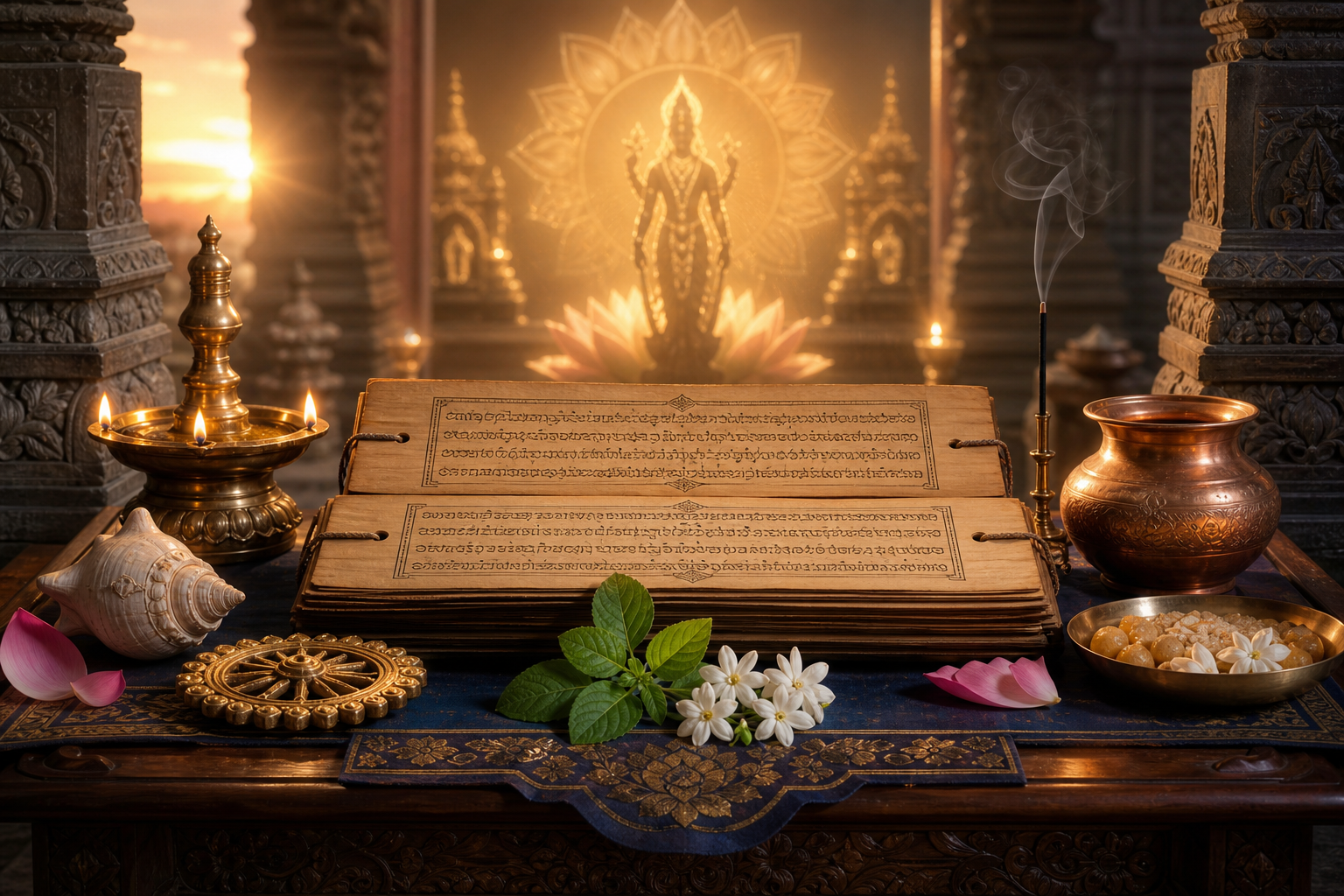
Padma Samhita Unveiled: Timeless Pancharatra Rituals to Elevate Modern Spiritual Life

Padma Samhita is a cornerstone of the Pañcarātra tradition, detailing thirty-one chapters that integrate temple construction, mūrti consecration, daily worship, and ethical formation. This overview explains its core theology—the vyūha doctrine and arcā avatāra—and shows how mantras such as Om Namo Nārāyaṇāya and Om Namo Bhagavate Vāsudevāya shape steady household practice. Readers gain a practical…
-
Azhwars and Ramanujacharya: Timeless Bhakti, Living Vedanta, and the Path of Grace

This comparative study explores how the Azhwars and Ramanujacharya jointly shape the Sri Vaishnava tradition by uniting ecstatic devotion with systematic Vedanta. It situates the Azhwars’ Divya Prabandham and Ramanuja’s Viśiṣṭādvaita within one inclusive, Ubhaya Vedanta canon that values both Tamil and Sanskrit revelation. Readers gain a clear map of similarities—Vishnu’s supremacy, Sri’s compassion, bhakti…
-
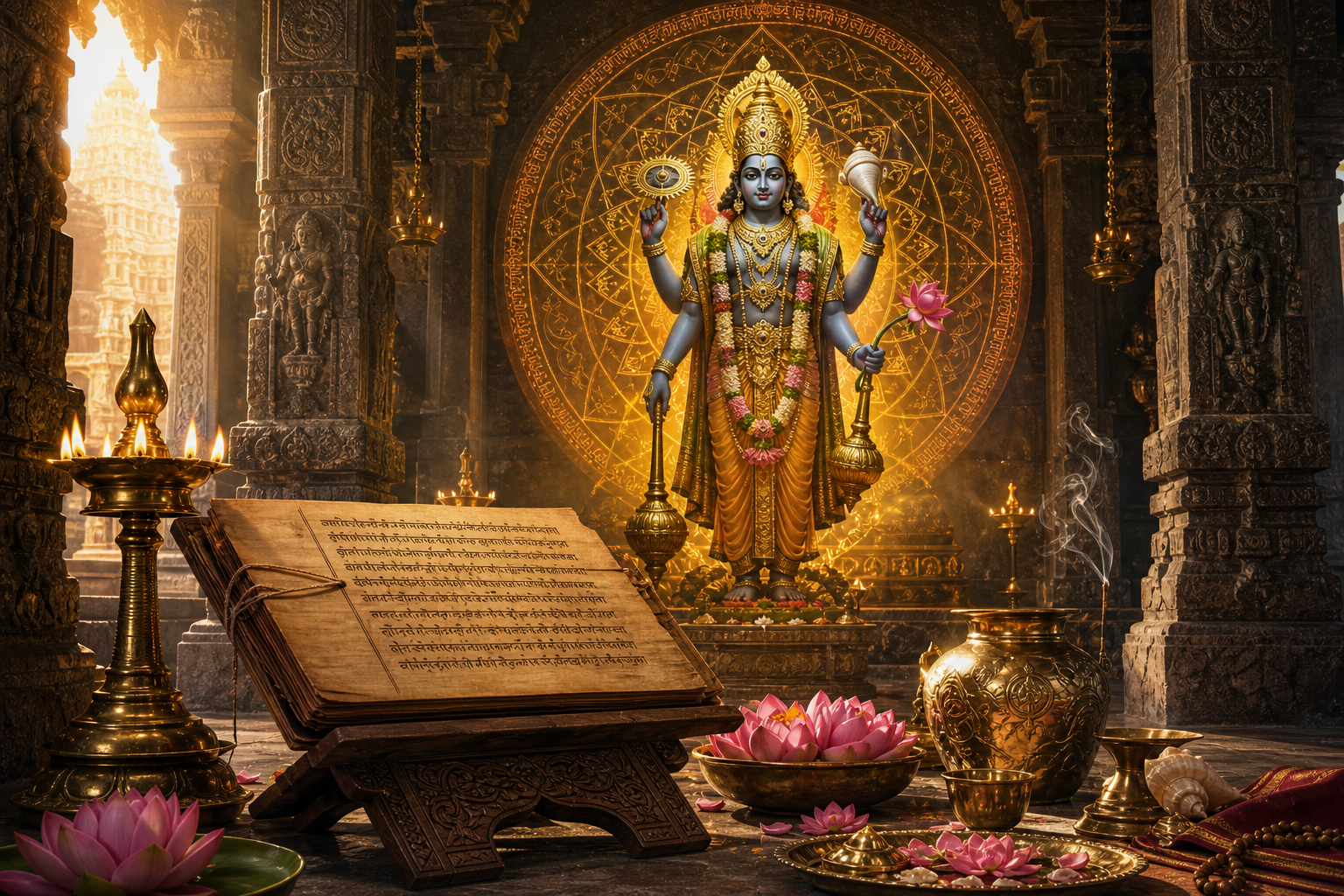
Decoding Vishnudharmottara Purana: The Awe-Inspiring Vyuha Manifestations of Vishnu

This article decodes the Vyuha doctrine of Vaishnava theology through the lens of the Vishnudharmottara Purana and the Pancharatra–Vaikhanasa traditions. It explains the fourfold emanations—Vasudeva, Sankarshana, Pradyumna, and Aniruddha—and the classical distribution of the six divine excellences across them. It shows how the Purana’s image-making canons turn metaphysics into clear, teachable iconography, especially in Caturvyuha…
-
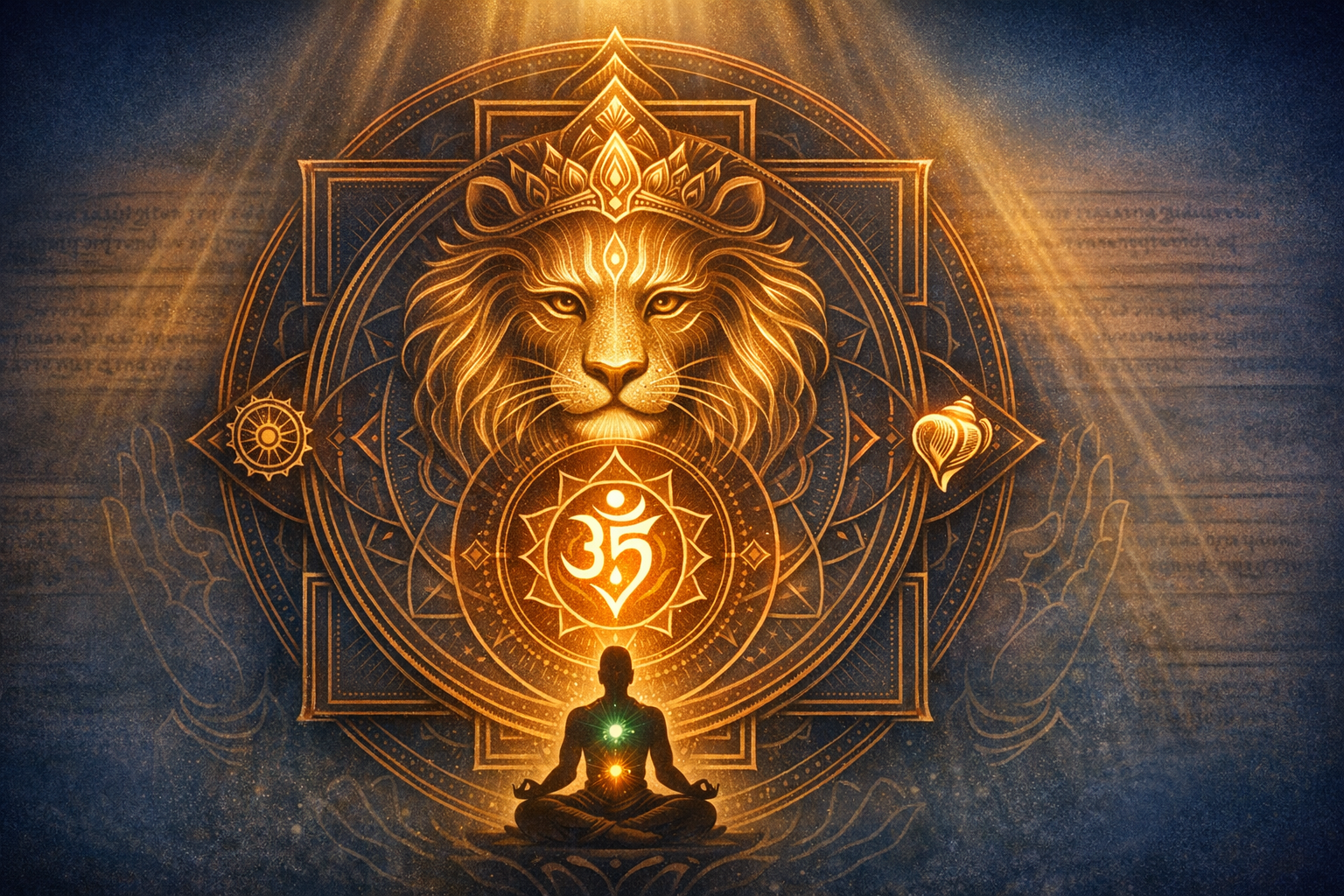
Decoding the Fiery Compassion: A Deep Dive into the Third Chapter of Nrisimha Tapaniya Upanishad

The third chapter of the Nrisimha Tapaniya Upanishad unifies mantra, meditation, and Vedanta into a coherent path of fierce compassion and fearless insight. This deep dive decodes the Nrisimha mantraraja, explicates the bija kṣrauṁ, and clarifies how nyasa sacralizes the body as a field of realization. Readers gain a rigorous yet accessible guide to practice…
-
Decoding Nrisimha Tapaniya Upanishad: The Transformative Power of the Second Khanda Mantra

The second khanda of the Nrisimha Tapaniya Upanishad offers a rigorous account of mantra potency in the Tantric Vaishnava tradition. It presents the Nrisimha bija kṣrauṁ as the energetic heart of protective wisdom and details how dhyana, nyasa, and japa integrate to transform attention and behavior. Readers gain historical and philological context for the Upanishad’s…
-
Narasimha Iconography Decoded: Forms, Symbols, and Sacred Meanings in Hindu Temple Art

This long-form guide decodes the iconography of Narasimha—Hinduism’s half-lion, half-man avatar of Vishnu—across textual sources, temple sculpture, and living ritual. It details the major forms (Ugra/Kevala, Lakshmi-Narasimha, Yoga-Narasimha, Jvala/Krodha), their attributes and mudras, and how Shilpa Shastras and Agamas govern measurements and aesthetics. Readers learn to recognize narrative panels (pillar-theophany, twilight justice) and to interpret…
-
Pancharatra Demystified: Vishnu’s Chaturvyuha and the Four Divine Manifestations Explained

The Pancharatra–Bhagavata tradition presents a clear fourfold framework for how Vishnu–Narayana manifests: Para (transcendent Supreme), Vyuha (emanational expansions), Vibhava (incarnations), and Antaryāmin (indwelling presence). Within Vyuha, the famed Chaturvyuha—Vāsudeva, Saṅkarṣaṇa, Pradyumna, and Aniruddha—organizes divine functions, qualities, and cosmology with remarkable precision. This guide explains how the six perfections (jñāna, aiśvarya, śakti, bala, vīrya, tejas) are…
-
Decoding the Horse-Faced Sama Veda: Iconography, Sacred Sound, and Hayagriva

In Hindu iconography, the Vedas appear as living Veda Purushas; in select programs the Sama Veda is rendered horse-faced, signaling a fusion of sacred sound and Hayagriva theology. The article explains how this equine imagery coheres with the Sama Veda’s musicological core—udgītha, svara, and sāman structures—while linking it to Hayagriva, Viṣṇu’s horse-headed form who rescues…
-
Beyond Temples: Experiencing Vishnu’s All‑Pervading Presence in Nature, Mind, and Cosmos

This essay explores how Vaishnava scriptures and practice reveal Vishnu as all-pervading in elements, ecosystems, and consciousness, expanding devotion beyond temple walls. Drawing on the Upanishads, Bhagavad Gita, Pancharatra tradition, and living ritual, it outlines how daily acts—drinking water, mindful breath, lamp-lighting, and service—become universal worship. The discussion situates iconic and aniconic forms (including Śāligrāma)…
-
Symbolism of Kalachakra’s Five Wheels: Timeless Hindu Cosmology, Panchakritya, and Unity

Kalachakra, the wheel of time, reveals a fivefold grammar of creation, preservation, dissolution, veiling, and grace that unites Hindu cosmology, ritual, and yogic practice. This article explains how the five wheels, grounded in the classical doctrine of Pañcakṛtya, operate across cosmic cycles, daily rhythms, and inner transformation. Readers gain a technical yet accessible framework that…
-
Agamas in Hinduism: A Definitive Guide to Temple Science across Shaiva, Vaishnava, Shakta Paths

Agamas in Hinduism are authoritative temple sciences that unite theology, meditation, ritual, architecture, and iconography into a single living system. This article clarifies what “Āgama” means, how it relates to Veda and Smṛti, and why Shaiva, Vaishnava (Pañcarātra and Vaikhānasa), and Shakta lineages each preserve distinct yet harmonious Agamic corpora. Readers gain a technical overview…
-
Beyond Chanting Alone: How Pancaratrika-vidhi Powers Bhagavad-vidhi in Kali-yuga

Many devotees wonder whether chanting alone suffices in Kali-yuga or whether the formal Pancharatra tradition remains essential. This analysis clarifies the complementary roles of Pancaratrika-vidhi (regulated Deity worship) and Bhagavad-vidhi (the Bhagavata’s path of hearing and chanting) as taught in ISKCON and Gaudiya Vaishnavism. It explains how Pancharatra codes purify and qualify the practitioner so…
-
Timeless Tirumala Tirupati: History, Architecture, Ritual Science, and Venkateswara’s Grace

Tirumala’s Sri Venkateswara Temple is revered as Kaliyuga Vaikuntha and celebrated for its unbroken lineage of worship in Andhra Pradesh’s Seshachalam Hills. Historical inscriptions document centuries of royal patronage by Pallava, Chola, Pandya, and Vijayanagara rulers, including queens, who endowed land, lamps, and resources for ritual continuity. Architecturally Dravidian, the temple centers on the gold-crowned…
-
Ugra Narasimha of Maddur: Fierce Divinity, Temple History and Arjuna’s Living Legend

Maddur’s ancient Ugra Narasimha Murty in Karnataka presents Vishnu’s half-man, half-lion avatar at the very instant of protecting Prahlada and ending Hiranyakashipu’s tyranny. This in-depth study situates the shrine within regional temple history, explains the murti’s technical iconography through Puranic and Pancharatra lenses, and evaluates the local oral tradition linking Arjuna of the Mahabharata to…
-
Decoding Lakshmi’s Sacred Iconography: Why the Owl Vanishes in South Indian Temples
Goddess Lakshmi’s iconography differs across regions, and South Indian temples rarely depict an owl as her vahana because Agamic traditions prioritize lotus and elephant symbolism. Drawing on the Pancharatra and Vaikhanasa frameworks, South Indian sanctums present Lakshmi as Shri on the lotus or as Gaja Lakshmi, emphasizing auspiciousness, rainfall, fertility, and ethical prosperity. In contrast,…
-
Narada Pancharatra: Timeless Vaishnava Wisdom and Inclusive Paths to Devotion

The Narada Pancharatra is a key Vaishnava Agama that blends rigorous theology with accessible devotion to Lord Vishnu. It guides temple worship and household puja through detailed procedures such as archana, prāṇa-pratiṣṭhā, and mantra practice. Readers benefit from a clear bridge between Hindu philosophy and daily spiritual discipline. The text affirms bhakti as a path…