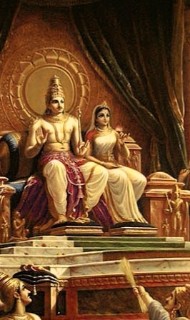
Srimad-Bhagavatam recounts a luminous episode in Vedic literature: King Prthu and Queen Arci ascend to the spiritual world, Vaikuntha, in spiritual airplanes. Having relinquished material bodies on the funeral pyre, they continue in spiritual forms, exemplifying the Puranic ideal that righteous leadership and steadfast devotion culminate in transcendence. This narrative, framed by the sage Maitreya, stands as a classical testament within Hindu scriptures to the transformative potency of virtuous conduct and unwavering bhakti toward Vishnu.
As narrated: “Any person who describes the great characteristics of King Prthu with faith and determination whether he reads of them himself or helps others to hear of them is certain to attain the very planet Maharaja Prthu attained. In other words, such a person also returns home to the Vaikuntha planets, back to Godhead.”
In academic terms, this assertion highlights a central principle in Puranas and wider Hindu scriptures: the act of hearing and describing (śravaṇa and kīrtana) saintly virtues functions as a devotional practice with soteriological promise. By encouraging readers to recount the exemplary life of King Prthu, the text democratizes spiritual access, suggesting that sincere narration and attentive listening can foster spiritual ascent and inner transformation along one’s Spiritual Journey.
Readers often find this episode emotionally resonant because it connects ethical leadership with spiritual destiny. In everyday reflection, recounting lives of exemplars invites moral clarity, gratitude, and purpose. Such narrative remembrance is not unique to a single path; across the dharmic traditionsHinduism, Buddhism, Jainism, and Sikhismhonoring enlightened exemplars through katha, charitra, or kirtan nurtures compassion, discipline, and unity in spiritual diversity.
Practical application follows naturally. Individuals and families can incorporate short readings from Srimad-Bhagavatam, share reflections in satsang, or observe a quiet period for meditative study aligned with personal rhythms (for instance, on Ekadashi or other sacred days). Chanting divine namessuch as Hare Krishnaor engaging with whichever sacred mantra resonates with one’s tradition amplifies mindful attention and devotional steadiness, while remaining inclusive and respectful of diverse dharmic practices.
From a philosophical perspective, King Prthu’s narrative exemplifies rāja-dharma harmonized with devotion: governance rooted in responsibility, compassion, and self-restraint converges with an unwavering orientation toward the ultimate. As a result, the account operates both as spiritual instruction and as a model of ethical leadership, reinforcing the enduring relevance of Vedic literature for contemporary seekers.
Viewed through the lens of shared dharmic values, this teaching encourages solidarity rather than sectarianism. Whether approached as a theological promise, a meditative contemplation, or a moral exemplar, the story guides readers toward inner elevation and communal harmonyqualities essential for flourishing in a plural, interrelated world.
Inspired by this post on Dandavats.