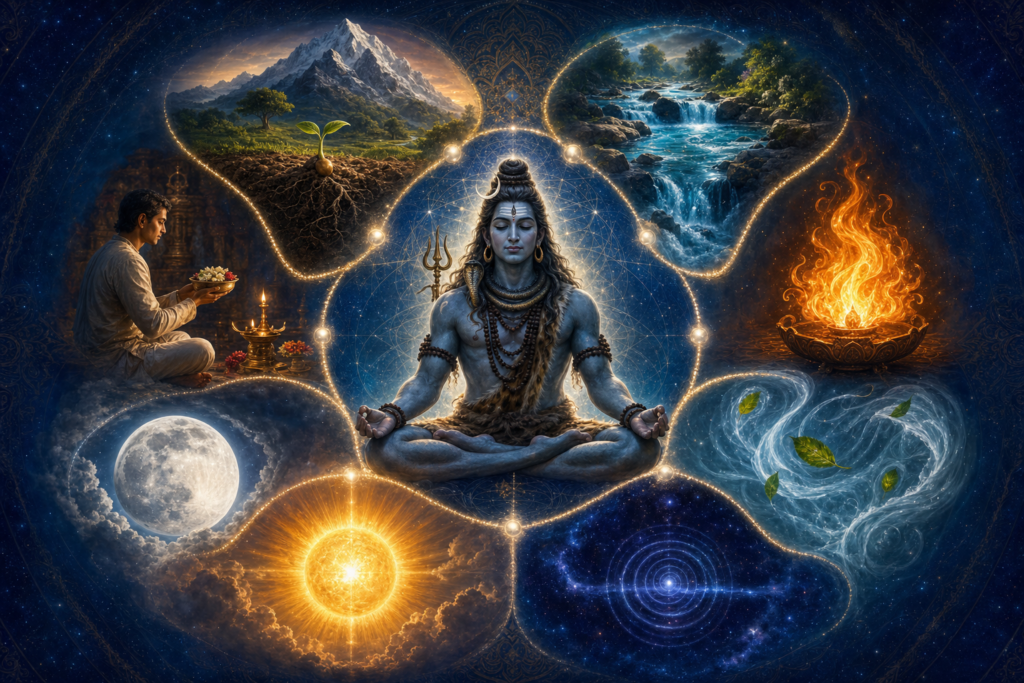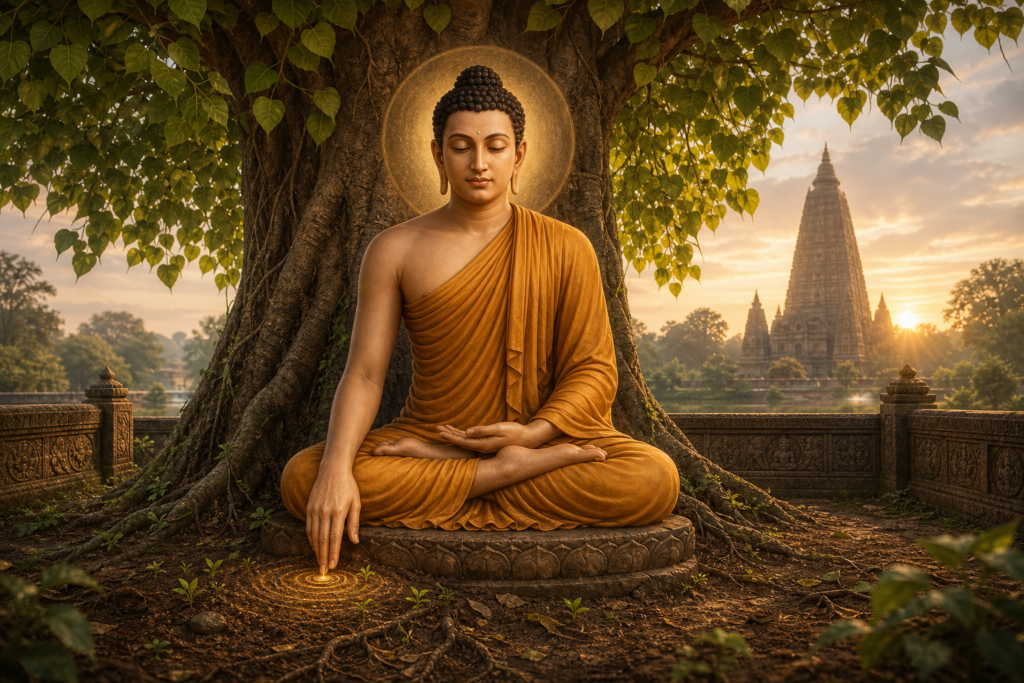
The Katha Rudra Upanishad, a minor yet influential text of the Krishna Yajurveda, distills the essence of sannyasa as an inner renunciation aimed at Brahma-jnana. Comprising 47 mantras in a blend of prose and shloka, it serves as a concise yet profound guide to disentangling the self from worldly identifications and realizing the non-dual truth that underlies all experience.
Structurally, the Upanishad bridges ritual and realization: it acknowledges Vedic observances while directing the seeker beyond formalism toward abiding wisdom. Its economy of language masks layered instructionsethical, contemplative, and metaphysicalso that each mantra functions as both injunction and illumination for the path of liberation (moksha).
In this text, sannyasa is not defined merely by ochre robes or withdrawal from social life; it is the disciplined relinquishment of clinging, guided by viveka (discernment) and vairagya (dispassion). The goal is Brahma-jnanadirect knowledge of the identity of ātman and Brahmanarticulated through the Upanishadic movement from name and form to the formless, often captured by the via negativa of neti, neti.
The ethical framework is rigorous and inclusive. Yamas and niyamasespecially ahiṁsā and aparigrahaform a shared foundation recognizable across dharmic traditions. The Upanishad emphasizes steadiness of mind, restraint of the senses (indriyas), truthfulness, and compassion as non-negotiable prerequisites for insight, reaffirming that inner purity and disciplined conduct are not peripheral but central to Vedānta.
While it outlines the external passage from ritual obligation to the life of renunciation, the Upanishad consistently privileges inner transformation over outward symbols such as daṇḍa, kamaṇḍalu, or matted hair. The relinquishment of sacrifice and social markers is meaningful only when accompanied by the deeper sacrifice of egoic appropriation and craving.
As for practice, the Upanishad directs attention to Om as an all-encompassing support for contemplation, alongside nididhyāsana on mahāvākyas such as tat tvam asi and aham brahmāsmi. Silence (mauna), introspective inquiry (ātma-vichāra), and equanimity in prāṇa and thought-currents stabilize the seeker in non-dual awareness, making knowledge living rather than conceptual.
The Rudra dimension evokes the fierce-to-gracious arc of inner transformation: what is initially experienced as the fiery deconstruction of attachments resolves into the serenity of integral vision. The Katha lineage echo highlights a pedagogy of fearless questioning and precise guidance, aligning the text with the Upanishadic ethos of dialogic inquiry and experiential verification.
Read through the lens of dharmic unity, the Upanishad’s message resonates beyond sectarian confines. Its call to simplicity, non-attachment, and fearless truth-telling aligns with Buddhism’s renunciant ideal, Jainism’s aparigraha and ahiṁsā, and Sikh teachings on inner detachment amidst service. Rather than prescribe a single route, it affirms complementary paths converging on shared ethical and contemplative foundations.
Contemporary readers often find the text most practical when interpreted as “inner sannyasa” for householders: simplifying consumption, moderating speech, practicing daily japa of Om, honoring truth, and serving community. Such application transforms duty (dharma) into a vehicle of clarity rather than constraint, demonstrating that renunciation and responsibility can mature together.
Many practitioners report that a steady rhythm of svādhyāya (study), self-inquiry, and ethical vigilance yields notable resultsgreater calm, sharper discernment, and a gentle loosening of reactive patterns. The Upanishad’s realism warns against spiritual escapism; its guidance integrates insight with compassion, contemplation with courage, and knowledge with conduct.
Textually, the Katha Rudra Upanishad is often grouped among the Sannyasa Upanishads of the Krishna Yajurveda. Variations in recension do not alter its central thrust: qualifications for renunciation, the primacy of direct knowledge, and the supremacy of inner transformation over ritual form. Advaita Vedānta lineages in particular have preserved and taught its vision as a compact map from dispassion to liberation.
Enduring in brevity and depth, the Katha Rudra Upanishad offers a clear promise: by aligning conduct, contemplation, and insight, the seeker moves from fragmentation to freedom. Its synthesis of ethics, meditation, and non-dual knowledge keeps it perennially relevantan Upanishadic guide for living with steadiness, serving with compassion, and realizing Brahma-jnana in the midst of a changing world.
Inspired by this post on Hindu Blog.