
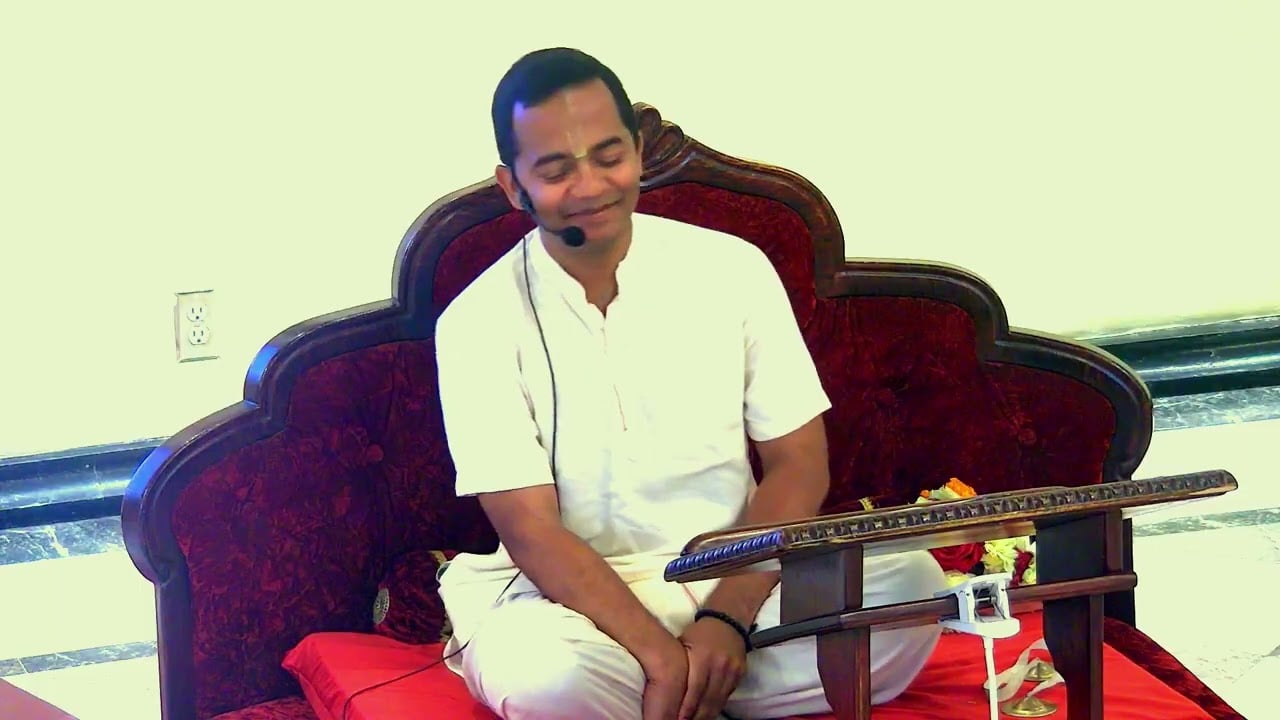
Śrīmad-Bhāgavatam 4.8.65, discussed by Shyamcandra Prabhu for ISKCON Los Angeles, belongs to the deeply human episode in which King Uttānapāda confronts the consequences of neglecting Dhruva Mahārāja and Sunīti. The verse is brief, but its theological and ethical force is considerable: a king, father, and householder recognizes that attachment, favoritism, and loss of compassion have led him to abandon a five-year-old child who is already described as a great soul and devotee.
The Sanskrit verse reads: rājovāca suto me bālako brahman straiṇenākaruṇātmanā nirvāsitaḥ pañca-varṣaḥ saha mātrā mahān kaviḥ. In the narrative, King Uttānapāda replies to Nārada Muni and admits that his young son has been driven away with his mother. The confession is not presented as political rhetoric or sentimental excess; it is a moral diagnosis. The king sees that his attachment to one relationship distorted his responsibilities toward another, and this distortion became adharma within the family and the kingdom.
The central theological point is that dharma begins with truthful self-recognition. King Uttānapāda does not blame fate, court politics, Suruci, or the child. He recognizes his own failure: he was hard-hearted, without mercy, and compromised by partial affection. In the Bhāgavata tradition, this moment matters because repentance is not merely regret over emotional discomfort. It is the awakening of moral clarity after illusion has produced harm.
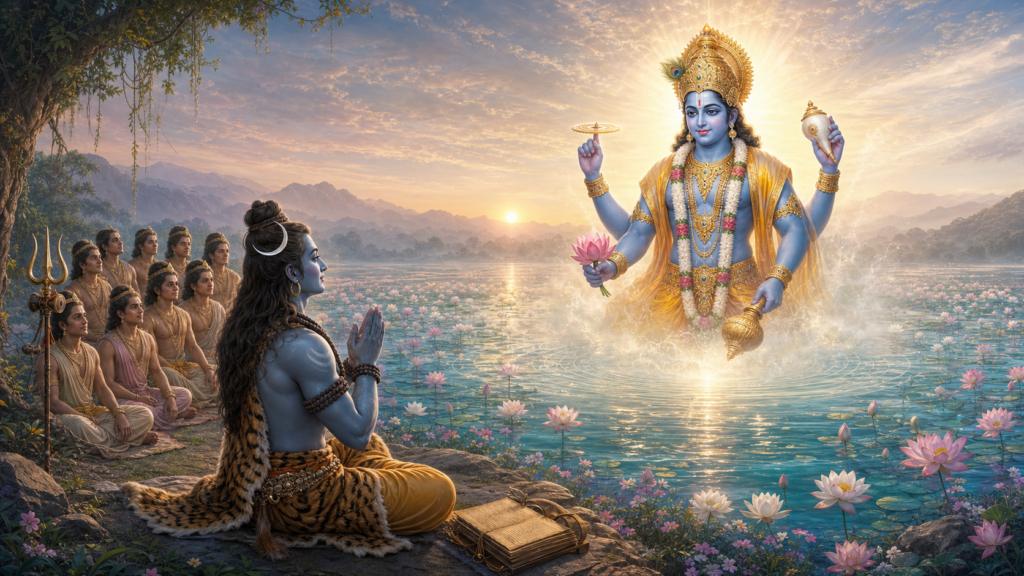
Dhruva Mahārāja’s suffering is therefore not treated as an isolated childhood injury. It becomes the turning point in a larger spiritual drama. A child wounded by rejection does not collapse into bitterness; guided by Sunīti’s wisdom and later by Nārada Muni’s instruction, he transforms pain into tapas, discipline, mantra meditation, and unwavering devotion to Lord Vishnu. This is why Dhruva remains one of the most powerful figures in Hindu scriptures: his story does not romanticize suffering, but it shows that suffering can become spiritually catalytic when directed toward Krishna consciousness and self-realization.
The ethical dimension of SB 4.8.65 is especially relevant to household life. Vedic culture does not regard family duty as a secondary concern beneath ritual piety. A father, ruler, spouse, or elder who performs public dharma while neglecting dependents has misunderstood the structure of responsibility. The home is not separate from dharma; it is often the first field in which compassion, restraint, fairness, and accountability are tested.
King Uttānapāda’s failure also illustrates the danger of ungoverned attachment. The issue is not affection itself, since affection is natural and necessary in family life. The problem is attachment that becomes unjust, selective, and morally blinding. When love loses its relationship with dharma, it can become favoritism. When authority loses compassion, it can become violence without appearing violent. The exile of Dhruva and Sunīti is thus a study in how emotional imbalance can become social and spiritual disorder.
The phrase mahān kaviḥ is significant. Dhruva is not merely a wronged child; he is recognized as spiritually substantial. In the Bhāgavata worldview, greatness is not measured by age, power, inheritance, or social position. A five-year-old can possess spiritual seriousness that surpasses the maturity of adults. This insight protects the dignity of the young, the vulnerable, and the overlooked. It also reminds readers that divine grace may appear in unexpected persons and circumstances.
Nārada Muni’s role in the surrounding passage is equally important. He does not approach the king with flattery. He observes the king’s withered face and asks why he is disturbed. This is the work of a true guru and saintly guide: to reveal the condition of the heart without hatred. The guru’s presence makes hidden disorder visible, not to humiliate the person, but to open the possibility of purification, responsibility, and spiritual progress.
From a technical standpoint, the verse operates through layered categories central to Hindu philosophy: kāma, dharma, artha, mercy, household duty, and devotional qualification. In the previous verse, Nārada asks whether the king’s pursuits of religious order, prosperity, and regulated enjoyment have been obstructed. The king’s answer reveals a deeper truth: the obstruction is not external. His inner disorder has damaged his outer responsibilities. The Bhāgavata therefore connects personal consciousness with social ethics.
Śrīla Prabhupāda’s purport emphasizes that a father should not neglect wife and children, especially when they are innocent, obedient, and devoted. This point should be read with care and maturity. The teaching is not a weapon for blame; it is a standard for responsibility. Dharma asks those with power to protect those entrusted to them. In family, community, temple, and society, authority must be joined with compassion, otherwise it becomes spiritually defective.
This passage also speaks to a common human experience: the pain of being unseen by those who should have protected one’s dignity. Many readers recognize Dhruva’s wound because rejection within intimate relationships leaves a mark that public success cannot easily erase. Yet the Bhāgavata does not leave the listener in injury. It points toward transformation through remembrance of Bhagavān, disciplined practice, guidance from a guru, and the refusal to let injustice define the soul’s ultimate identity.
In a broader dharmic context, the lesson harmonizes with the shared ethical concerns of Hindu, Buddhist, Jain, and Sikh traditions: self-mastery, compassion, responsibility, humility, and the purification of ego. Each tradition has its own metaphysical language and spiritual methods, yet all recognize that unrestrained desire and self-centered attachment cause suffering. SB 4.8.65 contributes to this wider dharmic conversation by showing how inner imbalance becomes relational harm, and how honest repentance begins restoration.
The greatness of Dhruva Mahārāja’s journey lies in the movement from wounded identity to spiritual steadiness. His name itself evokes firmness. He does not remain merely the rejected son of a distracted king; he becomes the devotee whose determination is remembered across generations. The narrative invites readers to examine their own lives: where attachment has weakened fairness, where regret should become correction, and where pain can be redirected toward sadhana rather than resentment.
For contemporary readers and listeners, Shyamcandra Prabhu’s class on this verse can be approached as more than a scriptural lecture. It is a mirror for leadership, parenting, emotional discipline, and devotional life. The king’s confession teaches that spiritual maturity includes the courage to say, in effect, “harm has occurred because judgment failed.” Such honesty is rare, but it is indispensable for dharma.
SB 4.8.65 ultimately presents repentance as a sacred doorway. King Uttānapāda’s sorrow does not erase the suffering caused to Dhruva and Sunīti, but it marks the beginning of moral awakening. Dhruva’s response shows the higher possibility: when pain is guided by śāstra, guru, and devotion, it can become a path toward the Supreme. The verse therefore remains enduringly relevant for anyone seeking Krishna consciousness, family integrity, and a compassionate understanding of dharma in daily life.
Inspired by this post on Dandavats.





Leave a Reply
You must be logged in to post a comment.