
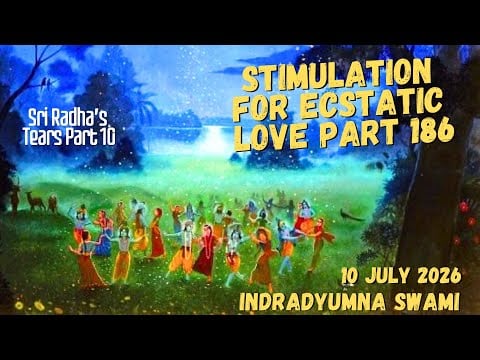

A meditation on tears as the language of sacred love
Presented as part of Indradyumna Swami’s Spiritual Journey – Inspiring Videos, “Stimulation for Ecstatic Love Part 186 – Sri Radha’s Tears Part 10” directs attention toward one of the most refined themes in the Gaudiya Vaishnava understanding of devotion. Sri Radha’s tears are not interpreted simply as signs of sadness, fragility, or uncontrolled emotion. Within this theological tradition, they disclose the extraordinary intensity of prema, or pure divine love, when inward devotion becomes so concentrated that it appears through the body itself.
The subject requires careful interpretation because familiar words such as “love,” “emotion,” and “ecstasy” carry meanings that are often narrower than their use in bhakti theology. Ecstatic love does not denote excitement, romantic fantasy, or a temporary emotional high. It refers to consciousness transformed through devotion, remembrance, disciplined spiritual practice, and complete orientation toward the Divine. Sri Radha’s tears consequently become a theological language through which longing, tenderness, surrender, remembrance, and selfless love are made visible.
The supplied source presents the featured video and its series title rather than a transcript. The discussion that follows therefore serves as a researched companion to the episode, explaining the established concepts that surround its subject without attributing unverified statements to the speaker. This distinction preserves accuracy while giving viewers the vocabulary needed to approach the lecture with greater depth.
What “stimulation for ecstatic love” means
The phrase “stimulation for ecstatic love” corresponds closely to the technical devotional framework presented in Śrīla Rūpa Gosvāmī’s Bhakti-rasāmṛta-sindhu and its English presentation in The Nectar of Devotion. In this framework, devotion is examined with the precision of a spiritual psychology. Love of Kṛṣṇa possesses an enduring foundation, but particular names, sounds, places, objects, gestures, seasons, and memories can awaken or intensify it. These are not understood as mechanical triggers that manufacture realization. They are relational signs that become spiritually potent when received by a heart already oriented toward devotion.
The Nectar of Devotion, Chapter Twenty-Six, identifies Kṛṣṇa’s qualities, activities, smile, clothing, garlands, flute, conch, footprints, places of pastimes, tulasī, devotees, and sacred occasions as impetuses for remembrance. The Sanskrit technical term commonly associated with such stimulants is uddīpana-vibhāva. A flute melody, the dust of Vṛndāvana, the sight of a peacock feather, or the arrival of Janmāṣṭamī may therefore carry more than aesthetic or historical significance. For the devotee, each can become a doorway through which awareness turns toward Kṛṣṇa.
This principle is immediately relatable. A familiar melody can restore a forgotten memory; a fragrance can make a distant place seem present; a name can awaken affection before deliberate analysis begins. Bhakti applies this human capacity for associative remembrance to a disciplined relationship with the Divine. The comparison is helpful, although the tradition does not equate ordinary memory with realized spiritual rasa. It teaches that devotional practice purifies attention until reminders of Kṛṣṇa no longer reinforce possessiveness or nostalgia but deepen service, humility, and loving absorption.
The technical architecture of bhakti-rasa
Rasa is sometimes translated as “taste,” “mellow,” or “relish,” yet none of these words fully communicates its technical range. In classical Indian aesthetics, rasa concerns the distilled experience produced when emotional and dramatic elements are brought into a coherent relationship. Gaudiya Vaishnava theology develops this vocabulary into an account of devotional relationship. Bhakti-rasa is not merely an emotion observed from outside; it is the spiritually relished relationship between the devotee and Kṛṣṇa when its constituent elements reach mature integration.
The framework includes several interconnected components. Vibhāva supplies the causes or supports of devotional emotion and is commonly discussed in terms of ālambana and uddīpana. Ālambana identifies the principal persons who support the relationship, especially Kṛṣṇa as the object of love and the devotee as its bearer. Uddīpana encompasses the features that stimulate remembrance of that relationship. Anubhāvas are expressive responses such as singing, dancing, bowing, or other actions through which inner devotion becomes perceptible. Vyabhicāri-bhāvas, also called transitory or accompanying states, move through the dominant emotion and enrich it without replacing its foundation.
At the center stands the sthāyi-bhāva, the durable devotional disposition that remains while other states arise and subside. When this enduring love is nourished by its supports, stimulants, expressions, involuntary transformations, and accompanying emotions, it becomes relishable as rasa. This layered analysis explains why a tear cannot be interpreted in isolation. Its meaning depends upon the consciousness, relationship, stimulus, and enduring devotional orientation from which it arises.
Aśru and the involuntary transformations of devotion
The Sanskrit word aśru means a tear or tears. In the literature of bhakti-rasa, tears are included among the sāttvika-bhāvas, the involuntary bodily transformations associated with intense spiritual emotion. The traditional group of eight includes stambha or becoming stunned, sveda or perspiration, romāñca or the standing of bodily hair, svara-bheda or alteration of the voice, kampa or trembling, vaivarṇya or change of complexion, aśru or tears, and pralaya or a fainting-like loss of ordinary external activity.
These manifestations are called involuntary because they are not treated as performances deliberately produced for an audience. Their theological value lies in their connection to transformed consciousness, not in their visual intensity. The Nectar of Devotion repeatedly associates tears and other bodily changes with devotion while also emphasizing faithful service. One example describes a servant who regards ecstatic bodily manifestations as potential interruptions because attention to service remains more important than displaying emotion. The principle is decisive: authentic bhakti is measured by the quality of devotion and character, not by theatrical symptoms.
This warning protects practitioners from two opposite errors. The first is emotional reductionism, in which every tear is dismissed as sentimentality or weakness. The second is spiritual inflation, in which an ordinary emotional response is immediately declared evidence of advanced realization. Bhakti theology permits a more discriminating approach. Tears may arise from grief, empathy, beauty, exhaustion, memory, relief, or devotion; their appearance alone does not establish their spiritual status. Discernment considers their source, their durability, and the life they help produce.
Sri Radha as the embodiment of mahābhāva
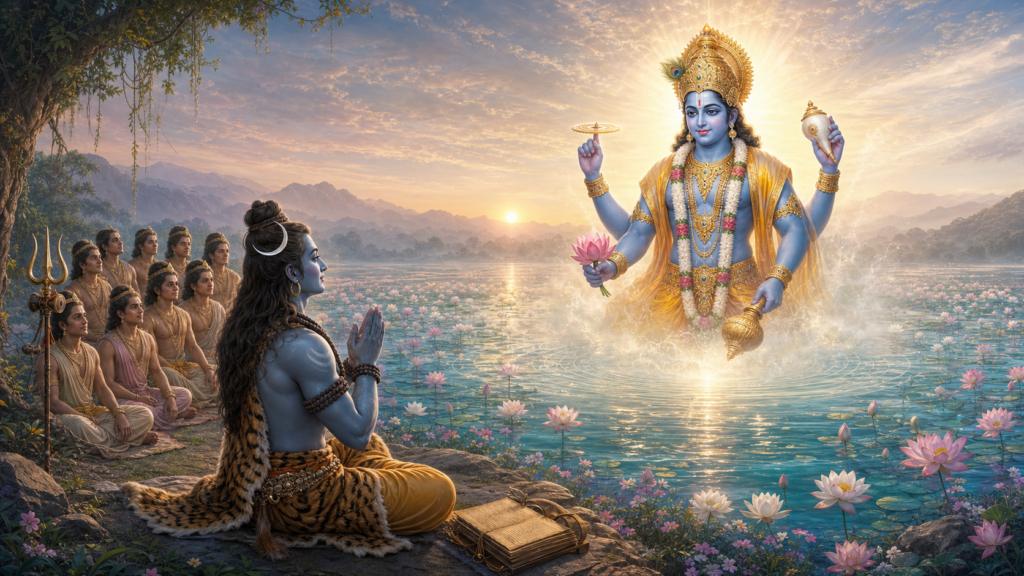
Within Gaudiya Vaishnava theology, Sri Radha is not merely one exemplary devotee among many. She represents the fullest imaginable intensity of love for Sri Krishna. Śrī Caitanya-caritāmṛta, Madhya-līlā, Chapter Eight, describes prema as the essential expression of the Divine pleasure potency, identifies mahābhāva as the highest concentration of that love, and presents Śrīmatī Rādhārāṇī as its embodiment. These are tradition-specific theological claims and should be understood within their Gaudiya Vaishnava setting rather than generalized carelessly across every school of Hindu thought.
The term hlādinī-śakti refers to the Divine potency of bliss. In this theological account, Sri Radha embodies that potency in its most complete personal expression. Her love does not seek independent gratification, ownership, or dominance. Its identity lies in Kṛṣṇa’s happiness. This radical freedom from self-centeredness is why her devotion becomes the tradition’s supreme measure of prema. Her tears signify not a collapse of agency but the overwhelming force of a love emptied of selfish calculation.
Sri Radha’s sacred importance also brings the feminine dimension of bhakti into the center of theology. Tenderness, receptivity, longing, emotional intelligence, and loving service are not treated as secondary to abstract knowledge or institutional authority. They become modes through which the highest reality is understood. Her tears challenge the assumption that spiritual strength must always appear as emotional hardness. In this vision, vulnerability purified of ego becomes an extraordinary form of courage.
Viraha: when separation intensifies presence
Sri Radha’s tears are frequently interpreted through viraha, the experience of separation from Kṛṣṇa. The developed vocabulary of devotional aesthetics also uses vipralambha for love in separation and sambhoga for love in meeting or union. These are not simply opposite emotional conditions. In the literature of Radha and Krishna, separation can intensify remembrance so completely that the absent beloved fills every movement of consciousness.
Śrīmad-Bhāgavatam, Tenth Canto, Chapter Thirty, describes the gopīs searching through the forests for Kṛṣṇa after his disappearance from the rāsa dance. Trees, flowering plants, footprints, the banks of the Yamunā, remembered gestures, and earlier conversations all become signs that direct awareness toward him. The landscape is no longer a neutral background. It participates in remembrance. This episode illustrates how uddīpana and viraha interact: the surroundings stimulate love precisely when direct sight of the beloved is unavailable.
The following chapter presents the gopīs singing Kṛṣṇa’s glories in separation. Śrīmad-Bhāgavatam, Tenth Canto, Chapter Thirty-One, frames their crying as more than ordinary misery. From within the tradition, apparent pain and transcendental bliss can coexist because longing preserves uninterrupted absorption in Kṛṣṇa. The paradox is central to the theology: separation hurts, yet the intensity of remembrance can make the relationship more inwardly present than ordinary proximity would permit.
Many viewers can recognize a faint human analogy without claiming equivalence. A person who has deeply loved another may find that absence sharpens awareness: a room, a song, or an unfinished conversation suddenly carries unusual emotional force. Bhakti-rasa directs this recognizable structure away from possessiveness and toward selfless Divine remembrance. Sri Radha’s viraha is therefore not ordinary loneliness projected onto theology. It is presented as the highest devotional absorption, beyond the ego’s demand to possess what it loves.
Why sacred emotion must remain joined to discipline
A mature reading of Sri Radha’s tears cannot separate emotion from sādhanā. Gaudiya Vaishnava practice cultivates remembrance through śravaṇa, hearing about the Divine; kīrtana, chanting or singing sacred names and narratives; smaraṇa, remembrance; worship; prayer; service; study; and respectful association with devotees. These practices do not force prema into existence. They train attention, reduce distraction, challenge self-centered habits, and make the practitioner receptive to grace.
The relationship between practice and grace is important. If spiritual emotion could be manufactured by technique alone, it would become another possession of the ego. If discipline were considered unnecessary, devotion could dissolve into mood and self-deception. The bhakti tradition holds the two together: disciplined practice prepares the heart, while prema is received rather than conquered. Tears may come or may not come; neither condition defines success by itself.
The more reliable signs of devotional maturation are ethical and relational. Humility becomes deeper, service becomes steadier, envy loses force, speech becomes more truthful, and compassion becomes less selective. A person absorbed in sacred emotion but increasingly proud, harsh, or manipulative contradicts the very love being claimed. Sri Radha’s tears matter because they express complete self-offering, not because tears confer spiritual prestige.
This perspective is especially relevant in an age of public performance. Digital culture often encourages private feeling to become immediate display, with intensity mistaken for authenticity. Bhakti offers a different discipline of emotion. Feeling can be honored without being exploited, and vulnerability can remain sacred without becoming a spectacle. The inner question shifts from “How powerful did the experience appear?” to “How did the experience transform attention, conduct, and service?”
Emotion as embodied knowledge
The theology of tears also complicates any sharp division between body and spirit. The body is neither worshipped as an end in itself nor dismissed as spiritually irrelevant. It can become an instrument through which inward devotion is expressed: eyes release tears, the voice falters, hands fold in reverence, the body bows, and breath supports the chanting of sacred names. Bhakti is consequently embodied without being reducible to bodily sensation.
This embodied dimension helps explain the enduring importance of poetry, music, kīrtana, pilgrimage, sacred images, flowers, fragrance, food offerings, and festival calendars. Such forms engage memory and the senses in a structured spiritual environment. The senses are not simply indulged, nor are they treated only as enemies. They are educated and redirected. The sound of Kṛṣṇa’s name, the sight of a sacred place, or the fragrance of tulasī can become an uddīpana when linked to knowledge, reverence, and service.
The process may be described as the consecration of attention. Ordinary experience fragments awareness among countless competing objects, while sādhanā repeatedly gathers it around a sacred center. Over time, reminders of the Divine acquire greater depth. The title “Stimulation for Ecstatic Love” can therefore be understood as an invitation to study how attention matures into remembrance, remembrance into attachment, and purified attachment into love.
Respectful parallels across dharmic traditions
Sri Radha’s tears belong to a distinct Vaishnava theological world, and their meaning should not be flattened into a vague universal spirituality. Hinduism, Buddhism, Jainism, and Sikhism preserve significant differences concerning the self, God, liberation, scripture, and spiritual authority. Unity among dharmic traditions is strongest when those differences are studied honestly rather than erased.
At the same time, constructive parallels can be recognized. Vaishnava bhakti emphasizes the purification of love and selfless service; Buddhist traditions cultivate compassion, careful attention, and freedom from clinging; Jain traditions place exceptional weight on ahiṃsā, self-restraint, and non-possession; Sikh teachings join remembrance of Naam with seva, humility, and justice. Each tradition provides its own disciplined answer to the problem of ego-centered living. Sri Radha’s tears can participate in this wider dharmic conversation as a particularly tender vision of self-transcending devotion.
Such comparison also prevents sectarian triumphalism. The purpose of contemplating exalted devotion is not to turn spiritual intimacy into a claim of social superiority. Genuine reverence should enlarge respect for sincere spiritual striving, encourage ethical conduct, and strengthen the ability to serve others. A theology of Divine Love betrays itself when it becomes a justification for contempt.
How to approach the featured video
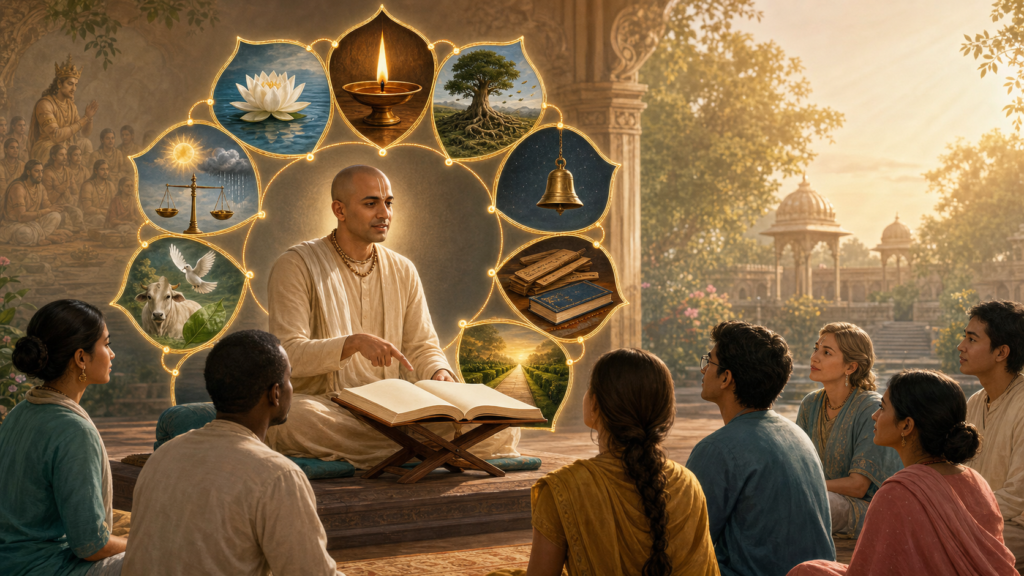
The video can be approached as contemplative study rather than passive consumption. A first viewing may focus on the narrative and devotional mood. A second can attend to the technical distinctions among prema, bhāva, rasa, uddīpana, aśru, and viraha. Notes can be organized around three questions: what stimulates remembrance, how inward love becomes outwardly perceptible, and which ethical qualities distinguish spiritual emotion from performance.
Viewers may also notice their own responses without treating those responses as the measure of the teaching. Some may feel immediate tenderness, while others may engage through theology, literature, philosophy, or comparative religion. Bhakti does not require every person to begin with the same temperament. Serious hearing itself can be a form of participation when it is joined to humility and a willingness to learn.
The episode’s placement as Part 186 of “Stimulation for Ecstatic Love” and Part 10 of the Sri Radha’s Tears sequence suggests sustained attention to a subject that resists hurried explanation. That extended format is appropriate. The theology of rasa developed through centuries of scripture, commentary, poetry, music, ritual, and lived practice. A single image such as a tear may look simple, yet it can hold a complex relationship among remembrance, embodiment, separation, grace, and Divine Love.
The enduring lesson of Sri Radha’s tears
Sri Radha’s tears restore seriousness to the language of love. They present love not as appetite, ownership, or passing sentiment but as a power that reorganizes the whole person. Thought, memory, body, speech, and action become centered on the well-being and presence of the beloved Divine. In this state, tenderness is not opposed to strength, and longing is not opposed to realization.
The deepest lesson is therefore not that tears should be sought. It is that the heart can be educated until love becomes truthful. The practical path remains hearing, chanting, remembrance, service, ethical restraint, scriptural study, and humility. If tears arise, they remain subordinate to devotion; if they do not arise, sincere practice still retains its value.
“Sri Radha’s Tears Part 10” invites viewers into this disciplined interior world. Her tears become a sacred language of mahābhāva, her separation reveals the intensity of remembrance, and her selfless orientation toward Krishna provides a demanding model of Divine Love. Approached with intellectual care and devotional respect, the subject offers more than an emotional story. It offers a profound account of how attention may be purified, how emotion may become wisdom, and how love may mature into service.
Inspired by this post on Dandavats.



Leave a Reply
You must be logged in to post a comment.