
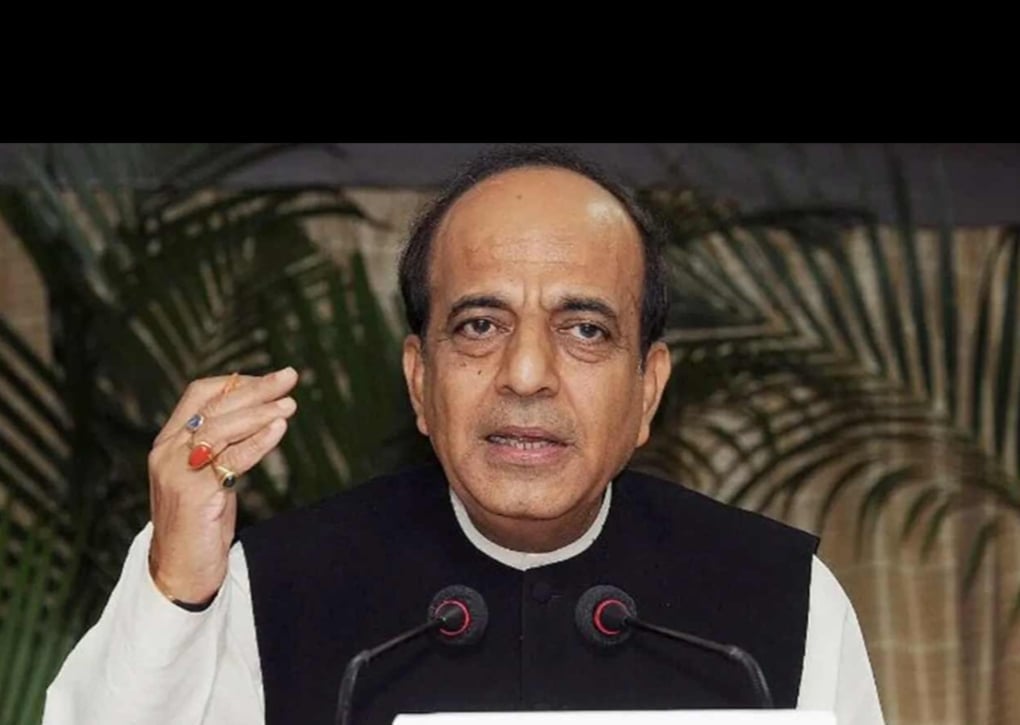
Dinesh Trivedi’s appointment as India’s High Commissioner to Bangladesh deserves to be examined as more than an administrative change at the head of a diplomatic mission. New Delhi has placed a former Union railway minister, veteran parliamentarian and senior Bharatiya Janata Party politician in Dhaka at a moment when India–Bangladesh relations require both political repair and practical problem-solving. His unusual route into Bangladesh, ceremonial standing, early public language and visa announcement collectively suggest an attempt to restore confidence while giving India’s mission greater political reach.
The appointment should not, however, be interpreted as proof that a comprehensive policy reset has already occurred. Diplomatic symbolism can establish tone, open access and reduce public anxiety, but it cannot by itself settle border disputes, improve customs procedures, allocate river water or rebuild trust. Trivedi’s mission is therefore best understood as a high-level signal whose significance will ultimately depend on measurable outcomes.
The essential timeline
India’s Ministry of External Affairs announced Trivedi’s appointment on 27 April 2026. The decision was notable because he came from national politics rather than the Indian Foreign Service, the professional cadre from which India ordinarily selects ambassadors and high commissioners. His public record includes service as Union Minister for Railways, Minister of State for Health and Family Welfare, and a representative of West Bengal in both houses of Parliament. These details were also recorded when India’s public broadcaster reported the official appointment.
Trivedi entered Bangladesh through the Petrapole–Benapole land crossing on 12 June 2026 and travelled onward to Dhaka by road. This date is important because some early accounts incorrectly placed the crossing on 5 June. Contemporary reporting from Benapole documented his arrival on 12 June, his reception by Bangladeshi and Indian officials, and his remarks concerning the combined potential of the two countries.
After reaching Dhaka, he undertook the customary preparatory stages of accreditation. He submitted copies of his credentials to Chief of Protocol A.F.M. Zahidul Islam at Bangladesh’s Ministry of Foreign Affairs and met Foreign Secretary Asad Alam Siam at the state guest house Padma. On 25 June, he presented his Letter of Credence to President Mohammed Shahabuddin at Bangabhaban and formally assumed office.
Why a land-border arrival carried unusual meaning
Chiefs of diplomatic missions generally arrive in national capitals by air. Trivedi’s decision to cross from West Bengal into Bangladesh by road placed the border itself at the centre of his first public act. Petrapole and Benapole are not abstract points on a map. They are gateways through which goods, passengers, patients, families and officials experience the India–Bangladesh relationship in its most immediate form.
The route also highlighted the physical interdependence that distinguishes this bilateral relationship from many conventional diplomatic partnerships. Bangladesh is almost entirely surrounded by India, while several Indian states share linguistic, commercial, ecological and family connections with communities across the boundary. The border separates sovereign jurisdictions, but it does not erase the historical networks that preceded it.
At Benapole, Trivedi described the relationship in language intended to reduce psychological distance: “India and Bangladesh share the same sky and we will take steps in the future that are beneficial for both countries.” He also framed cooperation in terms of the combined welfare of approximately 160 crore people. The remarks, reported in detail by The Business Standard, linked statecraft to the daily interests of citizens rather than to government prestige alone.
For an applicant waiting at a visa centre, a trader facing delays at a land port or a family divided by the border, bilateral relations are experienced through queues, documents, transport costs and uncertainty. The emotional force of the land crossing arose from this ordinary reality. It suggested that diplomacy would be evaluated not only in conference rooms but also at the points where public policy directly touches human lives.
Yet symbolism has two edges. A carefully selected route can communicate cultural familiarity and political intent, but it may also create expectations that the mission cannot quickly satisfy. The border crossing will retain meaning only if it is followed by safer movement, more predictable rules, respectful treatment of travellers and efficient trade facilitation.
A difficult political inheritance
Trivedi assumed his responsibilities after an unsettled period in Bangladesh–India relations. Ties deteriorated following the removal of Sheikh Hasina’s government in August 2024 and remained strained during the interim administration led by Muhammad Yunus. The formation of a Bangladesh Nationalist Party government under Prime Minister Tarique Rahman in 2026 created a new political setting, but it did not automatically eliminate the accumulated distrust.
The disagreements are diverse. They include allegations concerning cross-border “push-ins,” deaths and violent incidents near the boundary, restrictions on travel, tariff and non-tariff barriers, trade imbalances, water-sharing disputes, security concerns and competing domestic narratives about the neighbour. Each issue has its own institutional history, and none can be resolved by rhetorical warmth alone.
Public opinion has consequently become a central variable in the relationship. A technical agreement may fail politically if citizens regard it as unequal, opaque or insensitive to sovereignty. Conversely, a modest administrative improvement can acquire strategic value when it reduces uncertainty for large numbers of people. Effective diplomacy must therefore operate simultaneously at governmental, institutional and public levels.
The trust deficit is especially consequential because India and Bangladesh cannot avoid sustained engagement. Their interests intersect in border security, river management, energy, transport, commerce, migration, disaster response and regional connectivity. Geography makes disengagement expensive, while history makes every disagreement politically sensitive.
Why New Delhi selected a politician
India’s diplomatic system normally relies on Indian Foreign Service officers trained in negotiation, international law, protocol, languages and the administration of overseas missions. Their professional continuity allows foreign policy to be implemented across changes of government. Selecting a politician for Dhaka therefore represents a deliberate departure from the recent institutional pattern.
Trivedi offers a different set of assets. Long experience in Parliament and the Union government can provide an understanding of how foreign-policy commitments interact with ministries, political parties, state governments and public opinion. His familiarity with West Bengal’s politics and Bengali cultural life may also help him interpret the sensitivities that connect, and sometimes divide, Dhaka, Kolkata and New Delhi.
Political access is likely to be the appointment’s most important potential advantage. A senior political envoy may be able to convey concerns to influential decision-makers more directly, identify the domestic constraints surrounding a negotiation and obtain attention for problems that would otherwise move slowly through bureaucratic channels. In a relationship requiring reassurance at the highest level, that access can be strategically useful.
The distinction between a politician and a professional diplomat should nevertheless not be exaggerated. A high commission is a large institution staffed by specialists in political affairs, commerce, security, development, culture and consular work. Trivedi’s effectiveness will depend on combining political judgement with this institutional expertise. Personal access cannot substitute for technical preparation, and professional procedure cannot substitute for political authority when a difficult decision must be made.
His appointment was widely reported as the first political appointment to India’s top diplomatic post in Dhaka. That makes the mission an institutional experiment as well as a bilateral initiative. Success could demonstrate the value of placing politically experienced figures in exceptionally sensitive missions; failure could reinforce arguments for preserving such posts primarily for career diplomats.
What Cabinet-equivalent protocol status does—and does not—mean
The political importance attached to the posting became clearer when India accorded Trivedi status equivalent to that of a Union Cabinet Minister in the Table of Precedence. The government order described the arrangement as a measure personal to him and limited it to ceremonial functions. It did not amend India’s permanent Table of Precedence.
This distinction is technically important. Ceremonial rank determines placement and honours at official functions; it does not make Trivedi a member of the Union Cabinet, grant him authority over Indian ministries or enlarge the legal powers of a high commissioner. The arrangement enhances protocol standing and political visibility without rewriting the constitutional or administrative structure of government.
The measure is unusual in the present context but not without precedent. India has previously granted Cabinet-equivalent standing to distinguished political envoys, including L.M. Singhvi during his service as High Commissioner to the United Kingdom and I.K. Gujral during his ambassadorship to the Soviet Union. Reporting on the 2026 protocol order therefore supports a balanced interpretation: the status is exceptional enough to convey political weight, but it is not an unprecedented constitutional innovation.
The most credible inference is that New Delhi wants Bangladeshi officials to regard Trivedi as an envoy with strong political backing. That perception may improve access and accelerate communication. It will matter only if the authority implied by protocol is translated into timely inter-ministerial coordination and realistic proposals.
From credential copies to Bangabhaban
The accreditation process may appear ceremonial, but it performs a precise diplomatic function. A Letter of Credence identifies the envoy as the accredited representative of the sending state. Submission of a copy to the host foreign ministry allows preliminary verification and administrative preparation; formal presentation to the head of state completes the process through which the envoy assumes full representative standing.
India and Bangladesh use the title “high commissioner” because both are Commonwealth states. In practical diplomatic terms, a high commissioner performs the same core functions as an ambassador: representing the sending government, negotiating with the host government, reporting on developments, protecting lawful national interests and encouraging cooperative relations.
Trivedi’s meetings with Bangladesh’s chief of protocol and foreign secretary therefore belonged to the institutional sequence that preceded his 25 June ceremony with President Mohammed Shahabuddin. Bangabhaban marked the formal transition from envoy-designate to accredited high commissioner. The ceremony was standard; the political attention surrounding it was not.
The visa announcement as an early confidence-building measure
Trivedi’s first widely noticed policy announcement came immediately after he presented his credentials. During a visit to the Indian Visa Application Centre in Dhaka, he stated that normal tourist-visa applications from Bangladeshi nationals would be accepted from 28 June 2026. This was more precise than a general restoration of every visa category: it specifically concerned the resumption of tourist-visa applications after a prolonged restriction.
The announced service covered five centres—Dhaka, Rajshahi, Chattogram, Sylhet and Khulna—with the possibility of later expansion. Urgent medical visas had continued to be issued on humanitarian grounds. India’s public broadcaster confirmed the credential ceremony, the visa-centre visit and the 28 June start date in its contemporaneous report.
The decision had significance beyond tourism. Visa restrictions affect family visits, cultural exchange, commercial relationships and confidence in the wider bilateral environment. Even when separate visa categories are involved, the restoration of a predictable application channel indicates that administrative normalisation is possible.
For citizens, however, the announcement is only the beginning of the test. Effective restoration requires transparent eligibility rules, functional appointment systems, manageable waiting periods, adequate staffing, consistent document requirements and clear appeal or inquiry channels. The number of applications accepted, processing time, refusal patterns and geographic availability will reveal whether the policy has produced substantive access.
Trivedi’s decision to meet applicants and visa-centre staff added a useful element of public diplomacy. Listening can help an envoy identify administrative failures that are invisible in formal briefing papers. Yet public engagement must feed into operational correction; otherwise, it risks becoming ceremonial empathy rather than accountable service delivery.
Border governance will be the first major test
The India–Bangladesh boundary is simultaneously a security line, a commercial corridor and a densely inhabited social landscape. This combination makes border management technically difficult. States must address smuggling, trafficking, irregular movement and security threats while protecting lawful travel, trade and the dignity of residents.
Allegations of forced “push-ins,” disputed nationality and violent incidents require procedures grounded in evidence and bilateral coordination. Identity should be verified, consular access should be available where appropriate, and transfers should occur through recognised legal mechanisms. Informal practices may appear expedient, but they deepen mistrust and increase the risk of humanitarian harm.
A practical agenda would strengthen communication between border forces, establish rapid channels for investigating incidents, improve joint verification of disputed cases and publish clearer data on outcomes. Local commanders need mechanisms to de-escalate immediate confrontations, while national authorities need a structured process for addressing recurring patterns.
Success should be measured through reductions in fatalities and violent encounters, faster resolution of detained-person cases, more predictable passenger processing and improved handling of complaints. A symbolic arrival at Benapole will gain lasting credibility if the border becomes safer and more orderly for the people who cross it.
Water diplomacy requires scientific and political discipline
India and Bangladesh share an interconnected river system in which decisions upstream can affect agriculture, fisheries, navigation, erosion, salinity and drinking-water security downstream. Water disputes therefore combine hydrology, federal politics, climate variability and questions of fairness. The Teesta remains the most politically visible unresolved issue, but durable cooperation must extend beyond a single river.
Effective water diplomacy requires jointly trusted flow data, transparent measurement methods, seasonal forecasting and clear assumptions about dry-season availability. Negotiators must distinguish total annual flow from the far more difficult problem of allocating scarce water during critical months. Climate change adds uncertainty by intensifying both floods and periods of low flow.
A politically connected high commissioner may help keep negotiations active across ministries and state-level stakeholders, particularly where Indian federal considerations are relevant. Nevertheless, no personal relationship can replace hydrological evidence, formal consultation or an enforceable institutional framework. Progress should be judged by data-sharing arrangements, technical meetings, interim risk-reduction measures and movement toward equitable agreements.
Trade and connectivity must become easier to use
Petrapole–Benapole is an appropriate symbol for another reason: the promise of bilateral commerce often depends on the performance of land ports. Congestion, inconsistent documentation, limited operating capacity, inspection delays and differences between customs systems can raise costs even when political leaders support greater trade.
A serious economic agenda would pursue interoperable digital documentation, advance processing of cargo information, coordinated working hours, risk-based inspections and transparent standards. Infrastructure investment matters, but institutional compatibility is equally important. A modern terminal cannot deliver its full value if forms, approvals and inspection practices remain fragmented.
Bangladeshi concerns about trade imbalance and market access also require substantive engagement. Reducing non-tariff barriers, clarifying product standards, improving dispute-resolution channels and supporting diversified exports would make integration more politically sustainable. India, in turn, has an interest in dependable transit, connected supply chains and stable access to its northeastern region.
Rail, road, inland-waterway and energy connections should be evaluated as parts of a single regional network rather than as isolated projects. The appropriate benchmark is not the number of agreements announced but the reduction in travel time, logistics costs and uncertainty for users. Connectivity becomes strategic only when it is reliable.
Shared culture should support an inclusive civic relationship
The cultural relationship between India and Bangladesh is neither superficial nor uniform. Bengali language and literature, the memory of the 1971 Liberation War, music, pilgrimage, family histories and regional traditions create strong connections. At the same time, each country possesses its own sovereign identity and diverse internal communities. Cultural diplomacy works best when it respects both intimacy and difference.
The borderlands carry Hindu, Muslim, Buddhist and other religious and philosophical inheritances, alongside wider South Asian connections involving Sikh and Jain traditions. Protecting places of worship, cultural heritage and the rights of minorities should be treated as a shared civic responsibility rather than as an instrument of competitive politics. An inclusive approach strengthens social trust and prevents cultural ties from being reduced to a single partisan narrative.
Student exchanges, academic research, language programmes, artistic collaboration and heritage conservation can sustain contact during periods of political disagreement. These activities cannot resolve security or water disputes, but they preserve channels of understanding that make official negotiations less brittle.
The wider strategic setting
Bangladesh occupies an important position between South Asia and the Bay of Bengal and is central to India’s engagement with its northeastern states. Maritime security, energy networks, disaster response and regional transport all give the relationship significance beyond the bilateral level. Dhaka also pursues relationships with several major powers, as any sovereign state is entitled to do.
India’s most sustainable strategy is therefore likely to be based on the quality of what it offers rather than on pressure for exclusivity. Reliable project delivery, respectful consultation, commercially sound connectivity and responsiveness to Bangladeshi priorities can provide stronger influence than anxious geopolitical competition.
Trivedi’s political standing may help align India’s diplomatic message with decisions taken in New Delhi. His challenge will be to show that strategic importance produces practical attentiveness rather than merely elevated rhetoric. Bangladesh will judge the relationship through reciprocity, sovereignty and tangible benefit.
How the mission should be evaluated
The first benchmark is visa implementation. Applications must translate into predictable processing and genuine mobility. The second is border conduct, including fewer violent incidents and clearer handling of disputed crossings. The third is economic facilitation, measured through reduced delays and improved market access rather than ceremonial project launches.
A fourth benchmark is the restoration of structured dialogue on shared rivers. A fifth is the frequency and quality of political communication during disagreements. A sixth is whether public diplomacy reaches students, traders, border communities, religious minorities, cultural organisations and civil society rather than remaining confined to elite events.
Progress will not be linear. Domestic politics in both countries can amplify isolated incidents, while misinformation can rapidly turn an administrative dispute into a nationalist controversy. The high commission will need rapid factual communication, disciplined crisis management and the willingness to acknowledge legitimate concerns without accepting unverified claims.
Expectations must also remain proportionate. A high commissioner can facilitate access, diagnose obstacles, negotiate, report and advocate. He cannot independently determine water allocation, command border forces, remove trade barriers or settle domestic political disputes. Durable improvement requires coordinated decisions by governments, agencies and subnational authorities on both sides.
A powerful signal—and a demanding test
From Benapole to Bangabhaban, Trivedi’s opening sequence was carefully constructed. The land-border arrival stressed geography and human connection; the credential ceremony established formal authority; Cabinet-equivalent ceremonial status conveyed political backing; and the tourist-visa decision supplied an immediate, practical gesture.
Together, these actions indicate that Delhi wants its Dhaka mission to carry unusual political weight during a period of attempted normalisation. They do not yet demonstrate that the underlying disputes have been resolved or that policy has fundamentally changed. The difference between a signal and a reset lies in implementation.
The appointment will ultimately be judged at the border gate, the visa counter, the customs terminal, the negotiating table and the shared river. If citizens encounter safer movement, clearer rules, faster services and more respectful cooperation, the symbolism will have acquired substance. If those conditions remain unchanged, the journey from Benapole to Bangabhaban will be remembered as accomplished political theatre rather than the beginning of a durable transformation.
Inspired by this post on Hindu Post.






Leave a Reply
You must be logged in to post a comment.