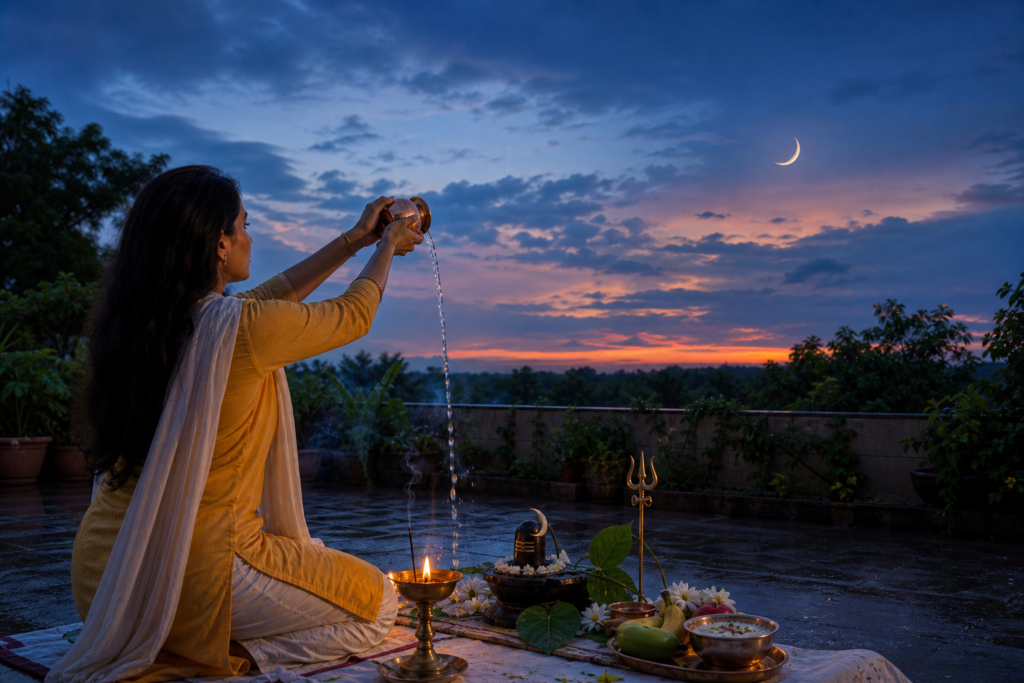
In Hindu wisdom, jnana is celebrated as the eternal light that illumines existencean insight that frames knowledge not as information, but as a sacred, animating principle. Classical Vedic knowledge describes this luminous jnana as permeating every facet of creation, bridging the finite and the infinite, and opening a way to perceive reality as a seamless whole. Such understanding aligns with the Upanishadic vision in which awareness reveals the ground of being as one, indivisible, and ever-present.
Jnana in this sense is transformative rather than merely intellectual. It clarifies how atman is not separate from Brahman, guiding seekers from conceptual thought toward direct realization. The Bhagavad Gita presents jnana-yoga as a disciplined path of discernment, where steady inquiry, ethical living, and contemplative insight refine perception until truth stands self-evident. This vision portrays knowledge as a living light that dissolves ignorance and reveals the cosmos as saturated with meaning.
Across dharmic traditions, this luminous principle finds resonant expressions that invite unity in spiritual diversity. In Buddhism, prajna signifies liberating wisdom that cuts through delusion; in Jainism, kevala-jnana denotes complete knowledge arising from purification and non-violence; in Sikhism, gyaan flows from remembrance of Ik Onkar and truthful living. These pathways differ in methods and emphasis, yet converge in affirming that authentic knowledge liberates, harmonizes, and serves life.
As a sacred foundation, jnana nurtures compassion, responsibility, and dharma in everyday conduct. It encourages humility before the vastness of reality, respect for multiple methods of worship and inquiry, and a commitment to coexistence grounded in mutual dignity. Far from encouraging uniformity, this wisdom supports pluralismhonoring the diversity of practices within Hinduism while affirming kinship with Buddhism, Jainism, and Sikhism through shared ethical and contemplative aspirations.
Many seekers observe that the most relatable doorway to jnana opens in ordinary moments: attentive listening, honest self-reflection, and the willingness to learn from experience. A chapter from the Bhagavad Gita revisited with fresh attention, a verse from the Upanishads contemplated in stillness, mindfulness cultivated in daily routines, or simran practiced with sincerityeach can kindle clarity, calm, and a widening sense of belonging to the whole.
Practical disciplines reinforce this clarity. Svadhyaya deepens understanding through sustained study; dhyana stabilizes awareness; seva translates insight into compassionate action; and satsanga supports integrity by keeping wise company. Cultivating viveka (discernment) and vairagya (non-clinging) helps one see through fleeting compulsions, while shraddha (trust in truth) sustains the long arc of inquiry. Together, these practices refine attention so that knowledge becomes embodied, ethical, and liberating.
In the broader philosophical landscape, jnana serves as a unifying thread that ties individual purpose to collective wellbeing. It guides decisions with clarity rather than impulse, harmonizes reason with devotion, and fosters resilience in the face of uncertainty. By revealing interconnectedness, it invites responsibility toward community, culture, and ecologyan applied wisdom that is both contemplative and practical.
Ultimately, to say “Knowledge Is The Soul Of The Whole Universe” is to affirm that reality is intelligible, luminous, and accessible through sincere seeking. In honoring jnana as eternal light, the dharmic traditions offer complementary paths that illuminate a shared horizon: a life oriented to truth, compassion, and unity in spiritual plurality. This is the sacred foundationwhere study, meditation, and service meetthrough which knowledge fulfills its highest promise.
Inspired by this post on Hindu Blog.