Hinduism presents a holistic way of life in which spirituality, ethics, and practicality cohere into a single, lived framework. Its integrative vision is articulated through two foundational matrices: the Purusharthas (the four aims of human life) and the Ashramas (the four stages of life). Together, these guideposts demonstrate the depth and pragmatism of the Hindu way of life, showing how Sanatana Dharma harmonizes inner aspiration with outer responsibility.
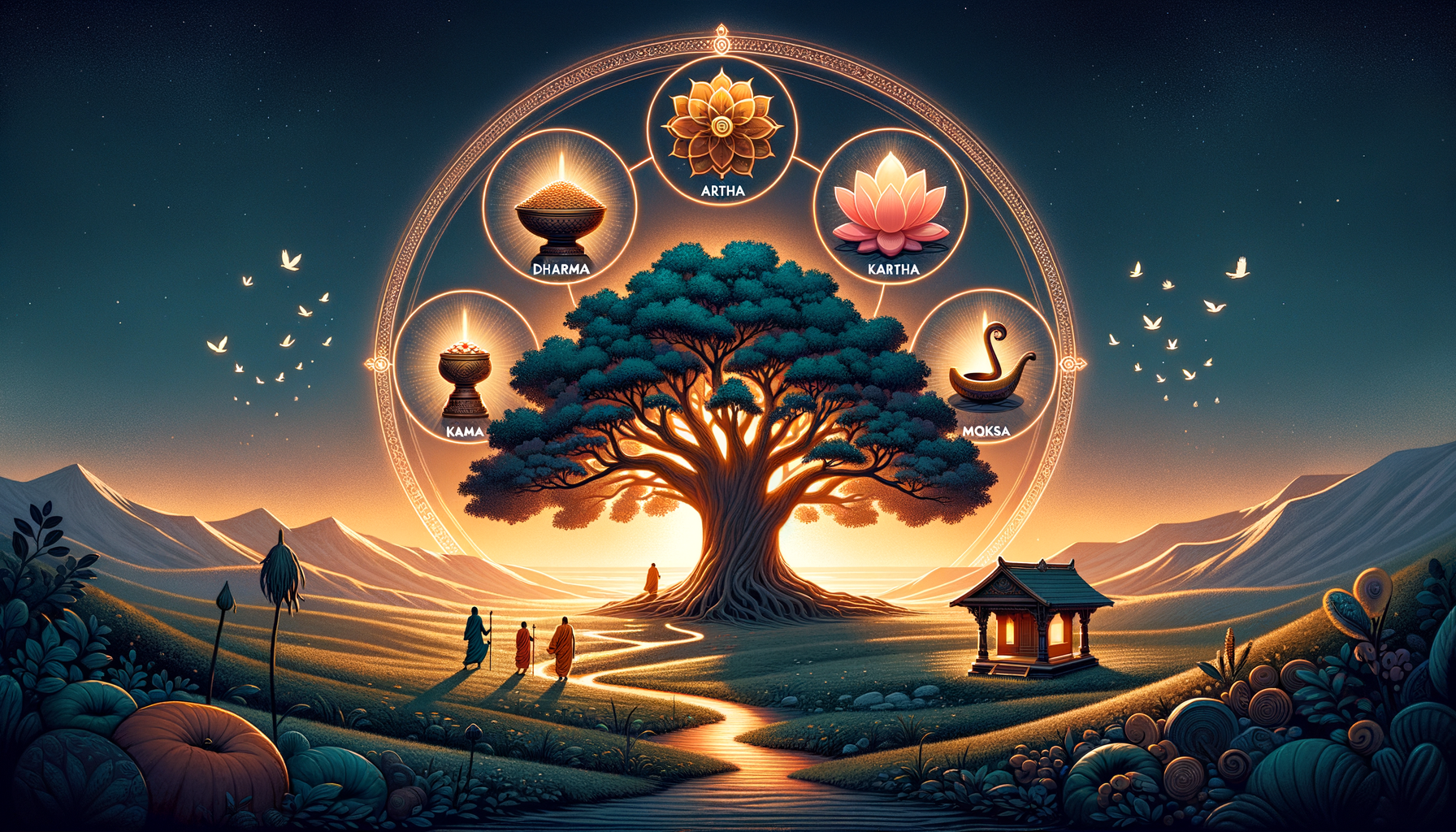
The Purusharthasdharma (ethical order), artha (material well-being), kama (aesthetically attuned enjoyment), and moksha (liberation)offer a nuanced blueprint for human flourishing. Rather than prioritizing one aim to the exclusion of others, this framework emphasizes dynamic balance. Dharma provides moral clarity, artha ensures material stability, kama enriches life with meaning and beauty, and moksha directs consciousness toward ultimate truth. This synthesis avoids extremes, enabling a life that is at once principled, prosperous, joyful, and spiritually anchored.
The AshramasBrahmacharya (learning), Grihastha (household stewardship), Vanaprastha (gradual withdrawal), and Sannyasa (renunciation)map a life course in which duties evolve with time. Each stage deepens responsibility to self, family, society, and, ultimately, to transcendent reality. In this way, the Ashrama system aligns personal development with social ethics, affirming that inner growth and civic contribution are mutually reinforcing, not competing priorities.
Together, the Purusharthas and Ashramas underscore the comprehensive character of Hinduism, allowing individuals to embrace all aspects of existence without fragmentation or denial. Decision-makingwhether professional, familial, or contemplativecan be evaluated against these principles to foster coherence between values and actions. The result is a life that integrates duty, prosperity, enjoyment, and liberation into a purposeful whole.
This holistic philosophy naturally supports unity in diversity across dharmic traditions. Principles such as ahimsa, dharma, and seva resonate not only within Hinduism but also across Buddhism, Jainism, and Sikhism. The acceptance of multiple valid paths to the sacredreflected in ideas akin to Ishtaencourages respectful coexistence and shared ethical commitments. Such spiritual inclusivity cultivates social harmony while honoring the distinct insights of each tradition.
In contemporary life, many navigate intense work demands, family responsibilities, and a need for inner renewal. The Purusharthas offer a practical compass: artha pursued within dharma fosters sustainable prosperity; kama refined by responsibility nurtures meaningful relationships; and regular contemplative practices orient life toward moksha. Similarly, the Ashramas provide a realistic rhythm for learning, contribution, reflection, and renunciationhelping individuals sequence priorities without losing sight of long-term purpose.
By integrating these time-tested frameworks, Hinduism articulates an academic yet accessible model for a balanced, ethical life. Its holistic approach strengthens personal well-being, supports resilient families and communities, and advances a culture of unity in spiritual plurality. Ultimately, this vision invites steady alignment between inner conviction and outer actionan enduring pathway to both individual fulfillment and collective flourishing.
Inspired by this post on Hindu Blog.