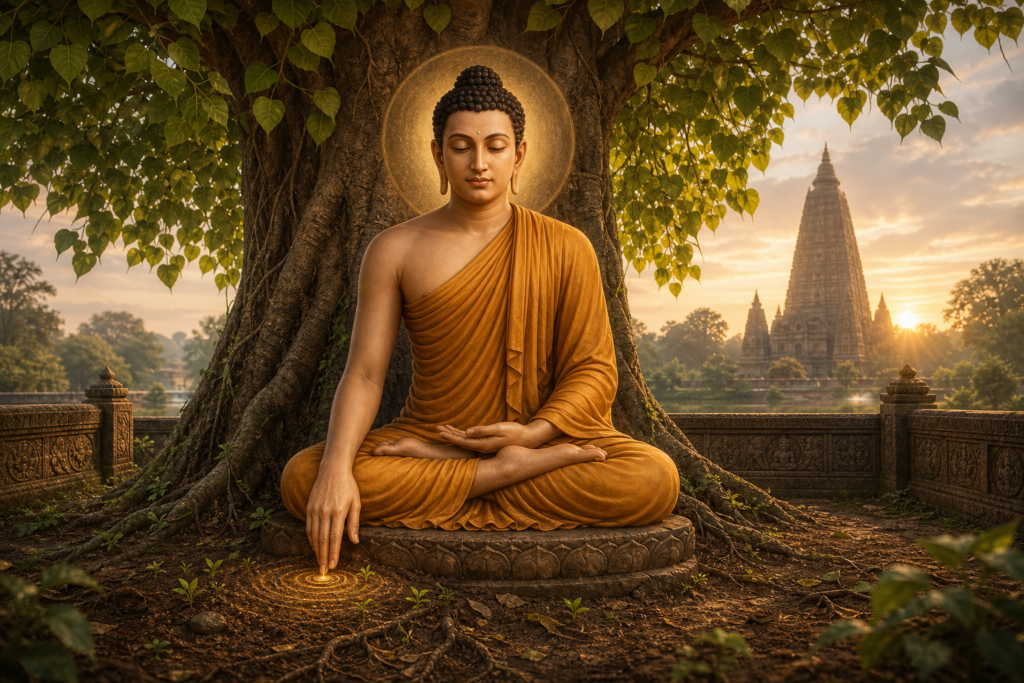
Happiness, in the Hindu philosophical tradition, is not defined by the absence of problems but by the presence of inner equilibrium. This perspective reframes life’s inevitable challenges as opportunities to cultivate steadiness, clarity, and compassion, rather than as obstacles to be eliminated. Within this view, contentment emerges from a disciplined mind and a grounded heart, sustained by practices that align thought, intention, and action.
Texts such as the Bhagavad Gita articulate equanimity (samatva) as the essence of Yoga, praising the person who remains steady in success and setback, praise and blame. This equanimity does not dull emotion; it refines discernment. By recognizing that circumstances shift while deeper awareness remains, individuals can reduce reactivity and maintain balance in the flow of experience.
Dharma-oriented living further anchors this insight. Through Karma Yogaacting with full dedication yet without clinging to outcomesanxiety around results is softened, and ethical clarity is strengthened. This disciplined non-attachment fosters resilience, because well-being no longer depends exclusively on external validation or control.
Practical disciplines consolidate this inner stability. Meditation and breathwork (pranayama) calm the nervous system and steady attention; mindfulness strengthens present-moment awareness; and Yoga integrates body, breath, and mind into cohesive awareness. Patanjali’s emphasis on dhyana (meditative absorption) and pratyahara (sensory regulation) offers a structured pathway to quiet mental turbulence and deepen insight.
Emotional resilience grows when sattvaclarity, harmony, and lightnessis intentionally cultivated. Simple daily disciplines such as mindful japa, reflective self-inquiry, gratitude, and seva (selfless service) reduce rumination and increase compassion. Over time, these practices transform stress responses, making composure and empathy more accessible even in complex situations.
In everyday life, this wisdom proves tangible. Consider high-pressure work, family conflict, or personal loss: when attention returns to the breath, posture stabilizes, and the mind acknowledgesrather than resistsarising emotions, reactivity subsides. From that quiet center, choices become wiser, communication gentler, and solutions more creative. This is happiness understood as inner steadiness, not as problem-free living.
Dharmic traditions converge on this insight. Buddhism highlights upekkhā (equanimity) as a pillar of compassion; Jainism emphasizes aparigraha (non-attachment) and anekāntavāda (many-sided understanding), which temper rigid judgments; Sikh thought cherishes sehaj (natural ease) and nām simran (contemplative remembrance), cultivating poise amid change. Across these paths, the shared ethos is clear: inner peace and ethical action reinforce each other.
In a fast-paced, digitally saturated world, this integrated perspective offers a practical antidote to chronic stress. By locating the center of well-being withinthrough Hindu philosophy, the Upanishadic search for the Self (ātman), and allied dharmic practicesindividuals strengthen an internal locus of control. The result is calmer decision-making, healthier relationships, and a compassionate presence that supports social harmony.
Ultimately, happiness is the cultivation of a steady mind and open heart in the midst of change. Through Yoga, mindfulness, meditation, and Dharma-grounded action, problems become teachers, not threats. This is the enduring promise of Hindu wisdomsupported and enriched by the wider dharmic familythat resilience and inner peace can be learned, practiced, and lived.
Inspired by this post on Hindu Blog.