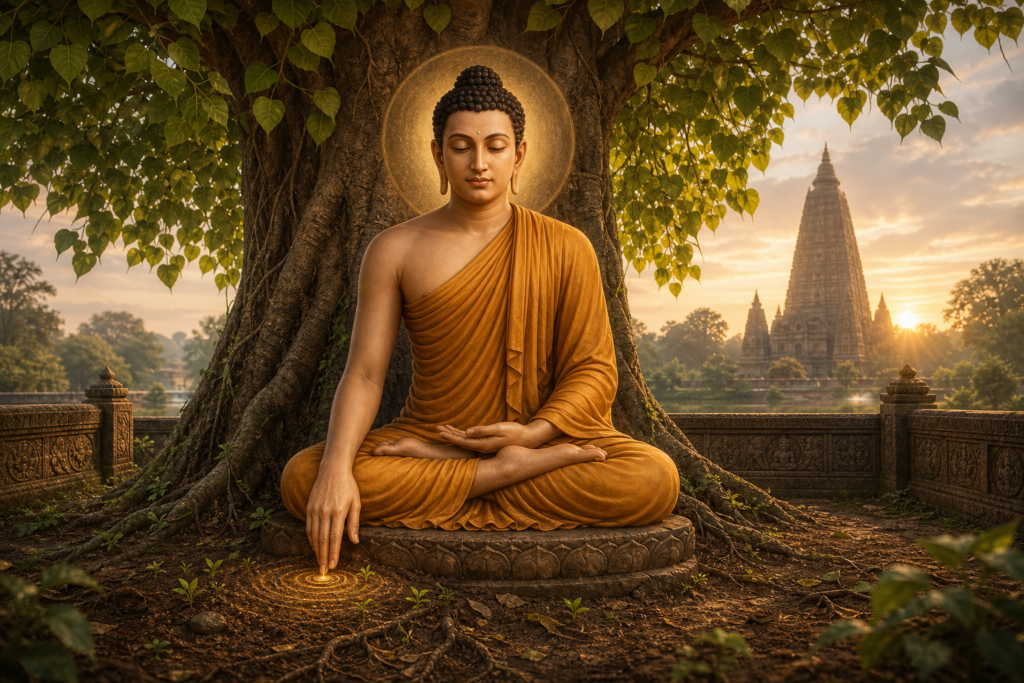
Across Dharmic traditionsHinduism, Buddhism, Jainism, and Sikhismenduring wisdom emphasizes that real power is not defined by physical form but by inner resilience, intuitive clarity, and compassionate love. When outward strength wanes, the cultivated spirit often rises, revealing a quiet power rooted in character, discernment, and service. This orientation reframes common anxieties about appearance or performance and redirects attention to the steady development of inner capacities.
Dharmic philosophy frequently describes the body as an instrument rather than the ultimate identity. In Hindu thought, the Pancha Kosha framework distinguishes the layers of embodiment and awareness, while the Bhagavad Gita underscores the enduring Self and the importance of steadiness in action. Comparable insights appear across Buddhist, Jain, and Sikh teachings, where discipline, equanimity, and remembrance (such as mindfulness, samayik, and simran) refine perception and guide ethical living.
Resilience in this context is not mere endurance; it is intelligent adaptation grounded in dharma, compassion, and clarity. Illness, aging, or setbacks can become fields of practice that deepen equanimity and empathy. Buddhist cultivation of mindful awareness, Jain samayik for inner steadiness, Sikh simran and seva for courageous compassion, and Hindu Yoga and meditation for integrated self-mastery all converge on a singular insight: adversity can train the heart to become both strong and gentle.
Intuition, likewise, is not guesswork but refined discernment emerging from a quiet mind. Through meditation, pranayama, japa, and mindfulness, attention is steadied and the intellect becomes lucid. This clarity supports wise choices in complex moments, aligning personal intention with ethical principles. As agitation settles, an inner guidance becomes more reliable, enabling responses that honor both truth and tenderness.
Love, expressed as ahimsa (non-harm) and karuna (compassion), is a disciplined strength rather than sentiment alone. Karma Yoga and seva translate inner devotion into action that uplifts others without attachment to outcomes. This love does not announce itself loudly; it works steadily, nourished by humility and responsibility. In all four Dharmic paths, compassion serves as a unifying force that transforms personal growth into social well-being.
Quiet power appears in the poise of equanimitycalm presence under pressure, firm values without aggression, and courage without harshness. The Bhagavad Gita’s vision of the sthita-prajna (one of steady wisdom) resonates with Buddhist upekkha (equanimity), Jain forbearance, and Sikh chardi kala (resilient optimism). Such power is not theatrical; it is recognizable as integrity that neither yields to fear nor hardens into pride.
Practical disciplines help embody these ideals. A brief daily sequencemindful breathing to stabilize attention, reflective study of scripture to orient values, compassionate service to dissolve self-centeredness, and gratitude to sustain perspectivebuilds resilience over time. Together, these practices strengthen intuition, expand love, and foster a quiet power that remains steady through change.
When bodies fail but spirits soar, Dharmic insights remind that identity is deeper than appearance and that enduring influence flows from inner cultivation. Resilience anchors purpose, intuition guides action, and love shapes serviceso quiet power becomes a natural consequence of living by wisdom. In honoring these shared principles, Hinduism, Buddhism, Jainism, and Sikhism illuminate a common path toward inner freedom and compassionate strength.
Inspired by this post on Hindu Blog.