The great Indian epics, Ramayana and Mahabharata, preserve enduring reflections on dharma, moral courage, and the cost of speaking truth in the face of kinship. Within these vast narratives, Vibhishana and Vikarna emerge as exemplary figures of conscientious dissent—voices that challenged the pull of blood and political allegiance to affirm righteousness. Their choices illuminate a shared dharmic ethic that resonates across Hinduism, Buddhism, Jainism, and Sikhism: the responsibility to align action with principle, even when it isolates the individual from familiar bonds.
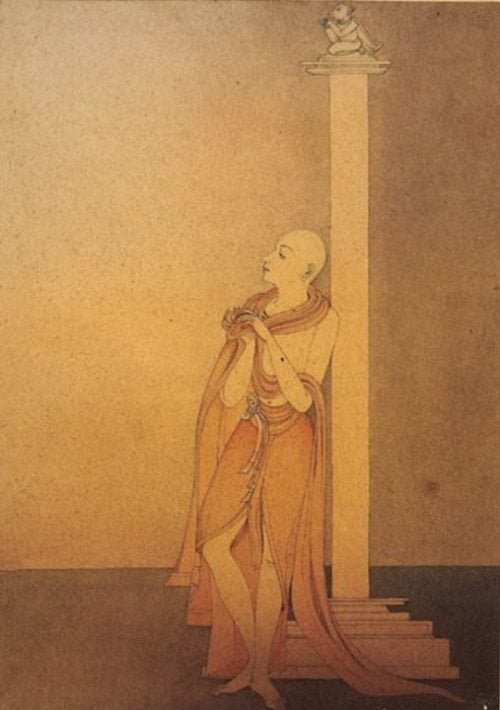
In the Ramayana, Vibhishana stands as the unwavering counselor who urges Ravana to restore Sita to Rama and avert adharma. His counsel reflects a disciplined understanding of rajadharma and the broader moral ecology that sustains society. When Ravana dismisses this truth, Vibhishana turns to Rama—not as an act of betrayal, but as fidelity to dharma itself. His crossing from Lanka to Rama’s camp symbolizes a profound ethical statement: loyalty to righteousness supersedes loyalty to lineage when the two stand in conflict.
Vibhishana’s stance is notable for its clarity and restraint. He neither abandons compassion for his kin nor mitigates the gravity of their wrongdoing. Instead, he anchors his speech in reasoned argument, the welfare of the realm, and the long-term consequences of adharma. The eventual enthronement of Vibhishana in Lanka serves not as a reward for defection but as an affirmation that righteous kingship rests on moral order rather than on conquest alone.
In the Mahabharata, Vikarna’s moral witness unfolds in a different register. Amid the humiliation of Draupadi in the dice hall, Vikarna challenges the legality and ethics of the proceedings. His protest exposes a stark truth: silence in the face of injustice implicates the witness. While bound by the complexities of familial duty and political hierarchy, Vikarna articulates an ethical standard that pierces the din of power—an insistence that dharma cannot be suspended for expedience or kinship.
Vikarna’s later choice to fight on the Kaurava side complicates any simplistic reading of moral action. His path reveals a tragic tension familiar to all who grapple with duty in imperfect worlds: one can recognize truth yet struggle to fully enact it under the weight of role, loyalty, and circumstance. Bhima’s lament after slaying Vikarna marks this tragedy with tenderness, acknowledging a righteous voice caught in a net of obligations. The Mahabharata thus frames dissent not only as heroic speech but also as a burdened practice—sometimes partial, sometimes thwarted, yet still invaluable.
Placed side by side, Vibhishana and Vikarna illuminate two modalities of ethical dissent within dharmic thought. Vibhishana embodies decisive realignment toward dharma when persuasion fails; Vikarna manifests public truth-telling within hostile structures, even at personal risk. One departs to serve righteousness; the other remains and bears witness. Together, they map a spectrum of dharmic responses to moral crisis—both legitimate, both costly, and both necessary.
Their legacies echo core principles shared across dharmic traditions. In Hindu philosophy, dharma anchors social harmony and personal conduct; in Buddhist dhamma, right speech and right action displace harm and confusion; in Jain ahimsa and satya, nonviolence and truth-telling form the bedrock of ethical life; in Sikh dharam and seva, courage in defense of justice is inseparable from service to all. Read in this wider civilizational context, Vibhishana and Vikarna are not merely epic characters; they are exemplars of a pan-dharmic ethic that values conscience over complicity and moral clarity over partisan triumph.
There is a recognizably human emotion at the heart of their choices. It is easy to imagine the hush before Vibhishana speaks in Ravana’s court or the cold silence that follows Vikarna’s protest in the dice hall—the loneliness of being right too soon, the fear of being misunderstood by one’s own. These scenes resonate with anyone who has questioned a harmful decision in family, community, or institution. The epics remind that ethical courage is rarely convenient; it is often quiet, reasoned, and resistant to spectacle, and it asks for an inner steadiness that does not confuse compassion with acquiescence.
For contemporary life, their examples offer practical guidance. First, dissent gains authority when it is anchored in universally intelligible principles—welfare, justice, and the prevention of harm—rather than in personal grievance. Second, dharma-oriented speech is most effective when shaped by empathy and clarity, not by anger or scorn. Third, real loyalty is measured by service to the common good: to challenge a loved one’s harmful choice can, paradoxically, be an act of deeper care. These are as relevant to civic debates and organizational ethics as they are to family conflicts.
Importantly, the epics advise against moral isolation. Rama hears Vibhishana; the Pandavas, through Bhima, honor Vikarna’s truth. Ethical communities do not merely reward winners; they make space for principled dissenters, even when outcomes are painful or unresolved. This ethos supports unity in diversity—across sects, schools, and traditions—by privileging dharma over dominance and dialogue over erasure.
Ultimately, Vibhishana and Vikarna stand as enduring reminders that dharma is not an abstraction; it is a disciplined practice of seeing clearly and acting courageously. By honoring such voices—across Hinduism, Buddhism, Jainism, and Sikhism—society strengthens a shared civilizational fabric rooted in compassion, truth, and responsibility. When righteousness conflicts with blood-ties or factional allegiance, these epics invite a simple question that cuts through noise: what serves dharma, here and now? The answer, as they show, may demand sacrifice—but it also sustains a just and integrated world.
Inspired by this post on Hindu Blog.