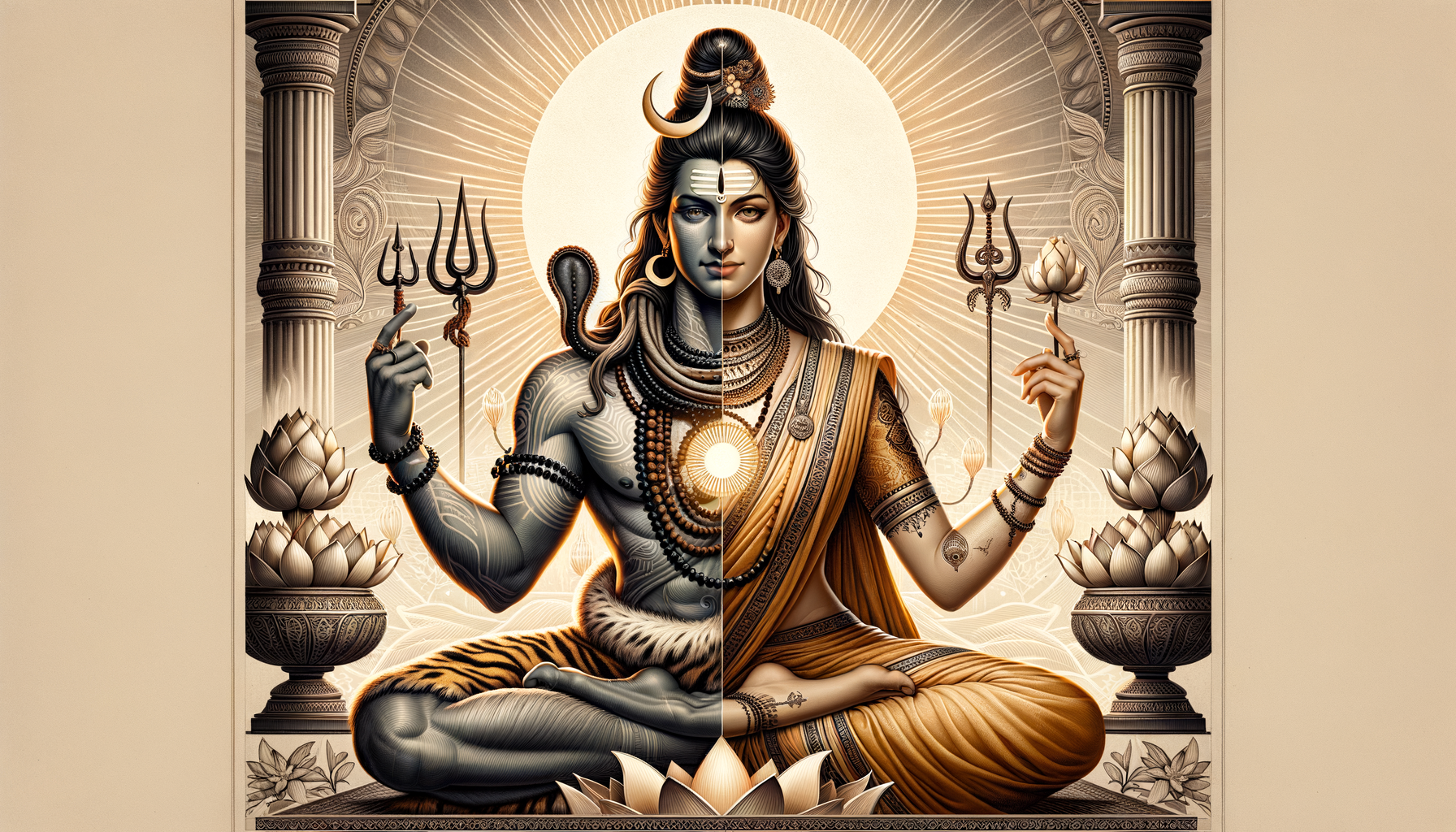
Ardhanareesvaraliterally “the Lord Who Is Half Woman”embodies one of the most profound theological insights in Hindu thought: the indivisible union of Shiva and Shakti. Celebrated in poetry, sculpture, and temple iconography across India, this composite form conveys that the masculine and feminine principles are inseparable, interdependent, and eternally co-creative. Within Tamil Shaiva literature, especially the devotional horizon shaped by Manickavasagar (Manikkavacakar), Ardhanareesvara becomes a luminous symbol of cosmic balance as well as inner harmony.
Manickavasagar’s devotional world, voiced in the Tiruvācakam, repeatedly evokes Shiva as both nurturing and majestic, intimate and infiniteexperienced as annai appan (mother and father). This devotional language captures the same truth that Ardhanareesvara makes visible: divinity transcends binaries while tenderly holding their gifts together. As a result, devotees recognize that strength and compassion, stillness and grace, renunciation and abundance all reside in a single, unified presence.
Temple iconography articulates this insight with precise visual grammar. The right half, identifying Shiva, often reveals the ascetic’s matted locks, the crescent moon, rudrāksha ornaments, and the tiger-skin garment, signifying tapas, transcendence, and unshakable inner steadiness. The left half, identifying Pārvatī, displays the flowing hair, sari, jeweled adornments, and the soft contours of maternal presence, signifying fertility, auspiciousness, and affectionate care. Together, the single body embodies difference without division and unity without uniformity.
Philosophically, Ardhanareesvara resonates across Shaiva Siddhānta and Advaita Vedānta as an emblem of non-duality. The form demonstrates that Purusha and Prakriticonsciousness and creative powerare not rivals but reflections. The sacred image thus functions as a living commentary on Hindu philosophy: it refutes reductionist oppositions and affirms the complementarity that sustains the cosmos and ethical life.
The experiential implications are immediate. Many devotees report that darśan of Ardhanareesvara softens internal polarities: assertiveness becomes kinder, gentleness gains courage, and contemplation flows naturally into service. Readers often find that this vision offers a relatable mirror for everyday lifeintegrating roles as caregivers and decision-makers, blending reason with empathy, and balancing personal boundaries with community care.
This unitive symbolism also harmonizes with insights across the broader dharmic family. Buddhism speaks of the integration of prajñā and karuṇā (wisdom and compassion); Jain philosophy seeks a synthesis of nonviolence and disciplined self-mastery; Sikh teachings on Miri–Piri hold temporal responsibility and spiritual sovereignty together. In each case, the path rejects one-sidedness and celebrates a balanced wholeness, reinforcing a shared civilizational commitment to unity in spiritual diversity.
The image also informs practice. In yoga, seekers may contemplate Ardhanareesvara to harmonize iḍā and piṅgalā nāḍīs at the anāhata (heart) center, cultivating inner poise that translates into ethical clarity. In devotion, the form becomes a daily reminder to honor diverse modes of worshipmantra, meditation, service, and studyrecognizing that varied temperaments rightly seek varied doors to the same truth.
In Tamil Shaiva tradition, Manickavasagar’s vision of the Divine as both motherly and fatherly tendernessnear enough to console, vast enough to transformdeepens the scriptural and poetic heritage that celebrates Ardhanareesvara. The hymnic cadence of the Tiruvācakam preserves a contemplative realism: divinity is not a remote abstraction but a felt presence that elevates human life through balance, reverence, and responsibility.
For contemporary seekers, Ardhanareesvara offers a resonant ethic: reconcile inner divides, welcome plurality in worship, and approach others with empathetic strength. Such integration nurtures harmony within families and communities, while strengthening unity across Hinduism, Buddhism, Jainism, and Sikhismdiverse paths converging on shared virtues. In this way, the radiant unity envisioned by Manickavasagar remains both philosophically rigorous and emotionally restorative.
Inspired by this post on Hindu Blog.