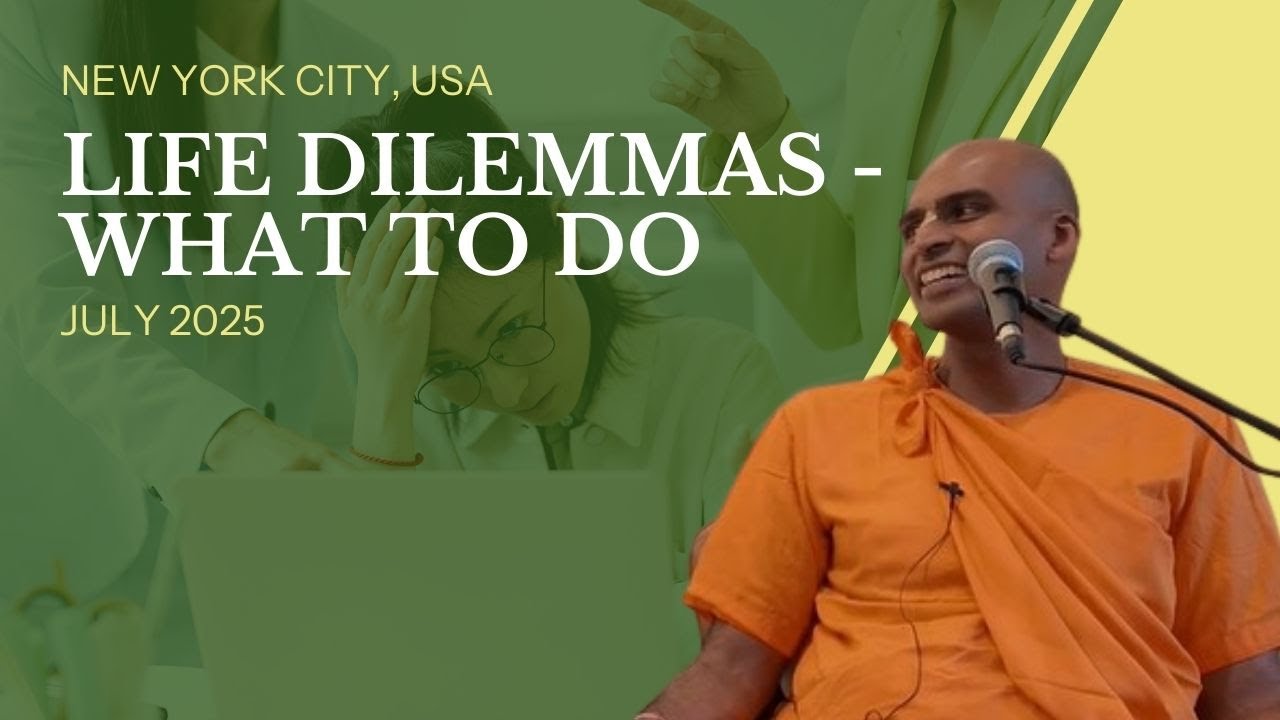
In contemporary urban life, especially in environments like New York City, the pressure to equate self-worth with long hours and constant productivity is pervasive. A more sustainable and humane perspective reframes work as a means to support life, not its sole purpose. This orientation does not diminish professional ambition; rather, it restores proportion, allowing career goals to serve broader aspirations of meaning, relationships, learning, and well-being.
Career remains important and worthy of focused time and energy, yet it is not the ultimate goal of life. Within a dharmic framework, artha (material means) supports dharma (duty and values), kama (wholesome fulfillment), and ultimately moksha (inner freedom). Seen through the Hindu way of life, as well as the shared ethical sensibilities of Buddhism, Jainism, and Sikhism, work becomes a disciplined practice that cultivates responsibility, compassion, and Inner peace rather than an identity that consumes the whole self.
A familiar scenario illustrates this shift in Work Attitudes: a professional advances rapidly, meets every deadline, and earns recognition, yet feels a lingering hollowness. When work is aligned with service (seva), mindfulness, and time for family and community, the same effort yields a different outcomeless exhaustion, more clarity, and a quiet sense of Spiritual well-being. The transformation lies not in abandoning ambition but in embedding purpose within it.
Across dharmic traditions, the unity of this insight is striking. Hindu thought emphasizes karma yogaacting with excellence while releasing attachment to outcomes. Buddhism highlights Right Livelihood and mindful presence, reducing harm and elevating awareness. Jainism cultivates aparigraha (non-grasping) and ahimsa (non-violence) to prevent work from becoming a source of inner agitation or outer conflict. Sikhism weaves honest labor (kirat karo), remembrance (simran), and seva into a coherent path of dignity and service. Together, these perspectives affirm Unity in spiritual diversity and encourage Spiritual coexistence through everyday choices.
Practical integration can be precise and disciplined. Clarify boundaries that protect time for Mindfulness, Yoga and meditation, rest, and relationships. Consider how current roles enable acts of service, mentorship, or community contribution. Assess success with broader metrics: integrity maintained, relationships strengthened, health preserved, and skills developed for the benefit of others. Regular reflectionasking what opportunities a role creates to do good, learn deeply, and grow ethicallyhelps align daily effort with Sanatan Dharma values.
This perspective resonates with guidance often associated with Svayam Bhagavan Keshava Maharaja: one does not live to work; one works to live. In fast-paced contexts, that simple clarity anchors decision-making, career transitions, and responses to life dilemmas. It supports choices that honor both personal responsibilities and collective well-being, as envisioned by the shared wisdom of Hinduism, Buddhism, Jainism, and Sikhism.
Ultimately, a career should open pathways to serve, to learn, and to growchannels through which dharma is lived and Inner peace is cultivated. When work is approached in this spirit, professional achievement and spiritual depth reinforce each other, creating a balanced life that is resilient, ethical, and quietly joyful.
Inspired by this post on Dandavats.