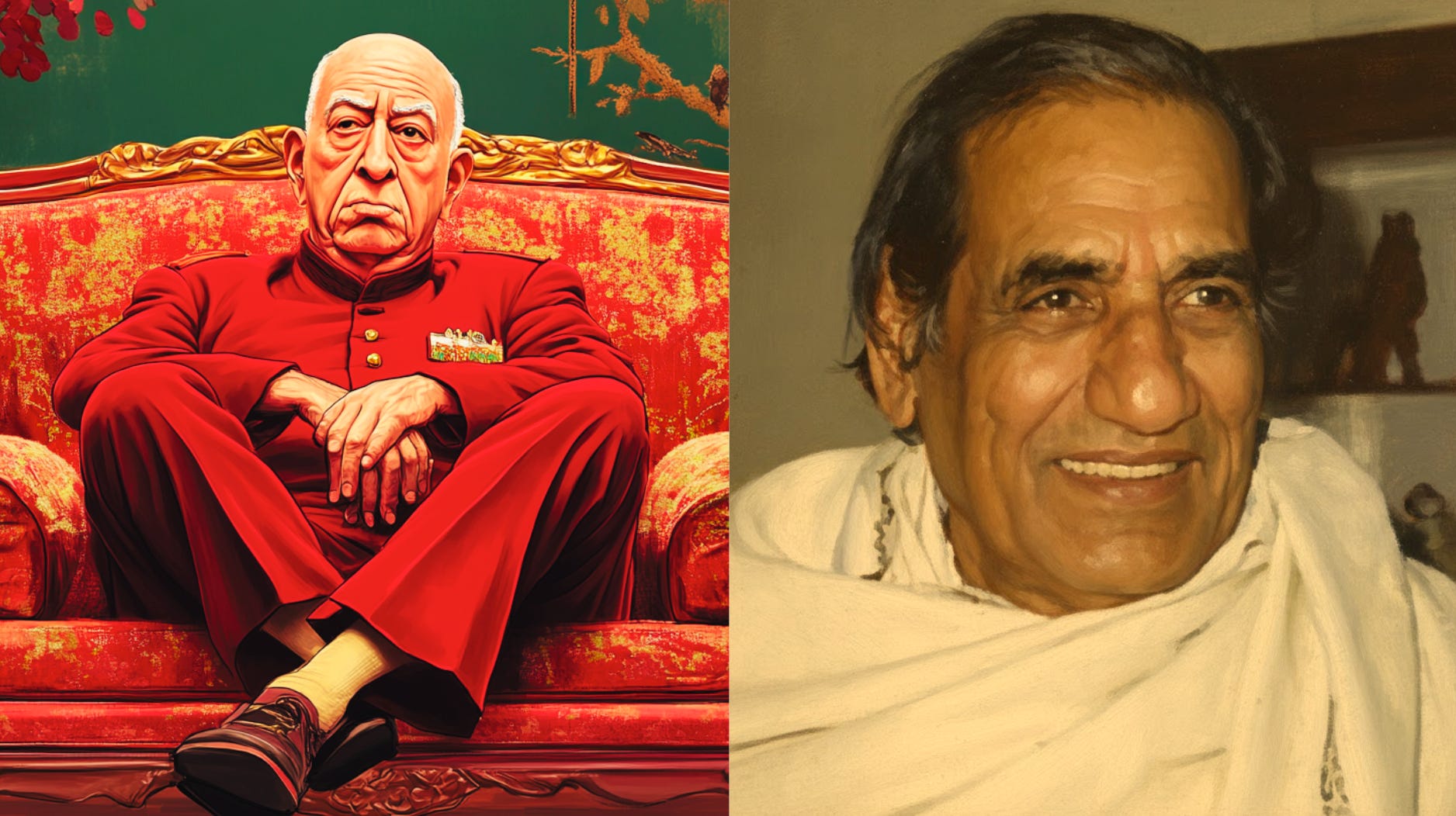
Over the past decade, the scholarship of Sita Ram Goel has steadily re-entered serious discussions on Indian history, yet his Hindi corpus remains insufficiently studied. Among these works, Shaktiputra Shivaji stands out as a luminous tribute to Chhatrapati Shivaji and a succinct treatise on history and historiography. The 1997 revised introduction, spanning roughly twenty-five pages, combines narrative elegance with methodological clarity. What follows offers an accessible English rendering of its central themes to encourage wider engagement across readers of Hindu, Buddhist, Jain, and Sikh backgrounds, with an emphasis on civilizational continuity and social harmony.
Shaktiputra Shivaji draws on Dennis Kincaid’s The Grand Rebel while departing from it in scope and emphasis. Kincaid wrote primarily for Western audiences and therefore dwelt on social details that Indian readers already recognize; Goel’s approach streamlines such passages and focuses attention on historical argument. The relationship between the two texts is thus one of inspiration rather than literal translation.
A key thrust of Kincaid’s work was to correct a widespread Western misconception that British expansion in India was chiefly a contest with the Mughals. In reality, early British campaigns encountered the Marathas far more directly. This recognition naturally revives interest in who the Marathas were: the power that decisively curtailed Mughal authority, contested European ambitions, and resurfaced as a formidable force during the Revolt of 1857 alongside figures such as Nana Sahib and the Rani of Jhansi. Read this way, the Marathas emerge not as peripheral “rebels,” but as architects of indigenous statecraft.
The misconception that positions Rajputs, Marathas, Jats, and Sikhs as mere “rebels” lingers in parts of modern discourse. A more accurate lens understands these polities as autonomous actors engaged in state-building and civilizational preservation in medieval India. This perspective matters for learners across dharmic traditions because it situates their shared heritage within a longer continuum of resistance to imperial domination and the creation of durable institutions.
Within this historiographical terrain, Goel examines Jawaharlal Nehru’s synthesis in Glimpses of World History. Nehru often emphasized intermarriage between Muslim dynasties and Hindu lineages to suggest a gradual indigenization of power and a diminishing conqueror–conquered divide by the fifteenth century. As a pedagogic device, the point is elegant; as an explanatory framework for political order, it is incomplete. Marital alliances alone cannot account for fiscal, administrative, and legal structures that governed social life across regions and centuries.
Goel’s critique calls for methodological consistency. If marriage were decisive in conferring “indigeneity,” similar logic would blur the foreign–native distinction in other imperial contexts, including British rulean implication most would reject. The issue, then, is not polemics but evidence: how sources from Persianate chronicles to regional records illuminate the continuity of power, revenue extraction, religious policy, and legal regimes. The invitation is to prefer documented structures and patterns over tidy generalizations.
The debate is not about indicting communities; it is about reading rulers, institutions, and policies with rigor. Goel challenges apologetic interpretations of figures such as Mahmud of Ghazni, Muhammad Ghori, and Alauddin Khalji that attribute violence solely to political compulsion. He argues that chronicled campaigns, temple desecrations, enslavements, and punitive taxation should be analyzed without euphemism, while firmly rejecting collective blame. Such a stance safeguards both historical honesty and contemporary social cohesion.
Many students of Indian history will recognize the feeling of encountering simplified textbook narratives that downplay complexity. Returning to sources with intellectual humility can be clarifying and even healing. It helps readers across Hindu, Buddhist, Jain, and Sikh communities cultivate pride in indigenous resiliencefrom the Marathas to the Sikhswithout animosity toward present-day neighbors. This approach upholds unity in diversity, a shared value across dharmic traditions.
In this frame, Shivaji is presented as a civilizational state-builder whose kshatra was anchored in dharma rather than animus. That ethical orientation offers fruitful parallels with Rajput, Jat, and Sikh assertions of autonomy, each drawing on distinct traditions yet converging on the protection of people, institutions, and sacred spaces. The result is a substantive, source-based understanding of Indian sovereignty that neither romanticizes nor erases the past.
This ongoing exploration will continue with careful, text-led discussions of the Maratha Empire, the Mughal Empire, the Delhi Sultanate, and the wider landscape of medieval India. The aim is clarity, not grievance; unity, not erasure; critical honesty, not antagonism. Such historiography invites readers to balance empathy with evidence, strengthening both scholarship and social trust.
Inspired by this post on Dharma Dispatch.