
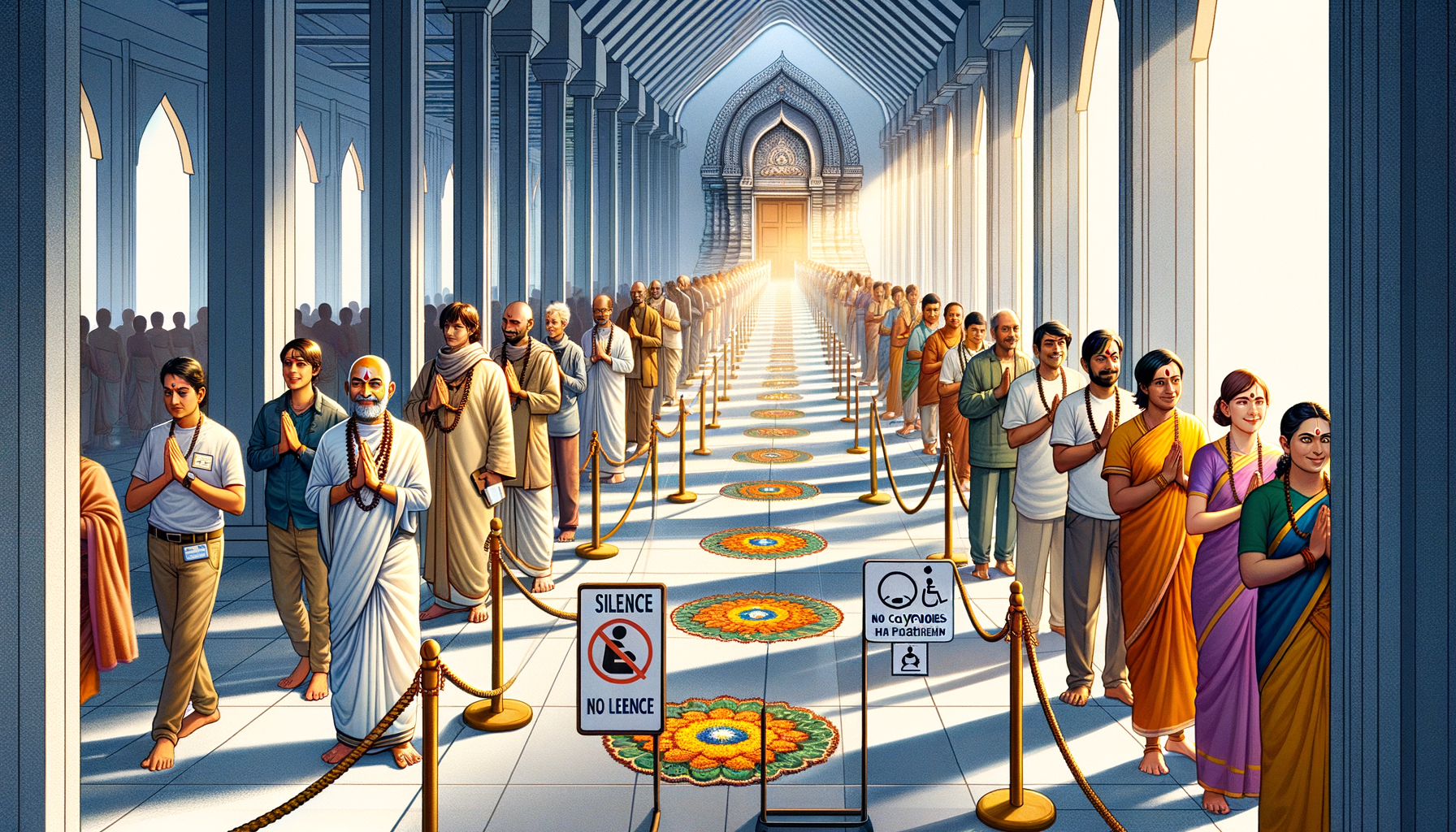
Across many popular Hindu temples, the visitor experience increasingly resembles a theater screening a blockbustertiered “tickets” for different darshan and sevas, VIP lines, and special passes. While these mechanisms intend to manage crowds and ensure safety, they can unintentionally shift focus from devotion to display, reducing sacred presence to logistical throughput. Reframing the pilgrimage from spectacle to sadhana can restore the simplicity and depth that bhakti has always promised.
Devotees come seeking darshan, not speed; sanctity, not status. The heart of bhakti tradition is stillness, humility, and one-pointedness, where inner quiet allows a genuine encounter with the murti and the sacred geography of the kshetra. When access is fragmented by multiple categories of passes, the atmosphere risks becoming transactional, diluting the shared spirit of Dharma that binds a community of seekers.
The reasons for tiered access are understandable: unprecedented footfall, heritage conservation, safety requirements, and the need for efficient temple functions. Yet the very tools devised to preserve orderVIP darshan, prioritized sevas, and special passescan produce social cues of inequality and distraction if not designed with equity and transparency. Without careful stewardship, long queues, noise, and hurried movement can limit the contemplative quality central to Hindu spirituality.
The impact is subtle but real. Queue anxiety replaces quiet japa, hurried motion replaces mindful pradakshina, and photo-ops compete with pranam. The cumulative effect is a thinning of the devotional atmosphere that traditionally nurtures sattvagentleness, clarity, and reverence. Restoring the ethic of shared sacred space can renew the transformative power of pilgrimage tradition.
Dharmic wisdom offers a common path back to simplicity. Within Hinduism, bhakti emphasizes humility and seva; in Buddhism, dana and mindfulness underscore inner composure; Jainism elevates ahimsa and aparigraha; Sikhism centers seva and the egalitarian spirit of langar. These resonant principles across dharmic traditions point to unity in spiritual diversity and remind visitors that sanctity arises from inner discipline more than proximity or privilege.
Constructive steps for devotees can be simple and powerful. Practicing silent japa or manasa-puja in the queue, choosing off-peak hours when possible, and observing considerate queue conduct foster a peaceful environment for all. Offering donations as anonymous dana rather than seeking preferential access aligns giving with Dharma. Small habitssoft speech, minimal phone use, and mindful movementcollectively preserve the temple’s ambience and enhance everyone’s darshan.
Temple administrations can balance crowd management with sacred calm through transparent policies and equity-centered design. Measures include single-queue systems with time-slot scheduling, clear caps on VIP categories, and priority only for the elderly, differently abled, and essential caregivers. Decoupling paid sevas from proximity, providing visible etiquette guidance, deploying trained volunteers for seva, and using fair digital booking systems can protect both sanctity and access. Regular audits and public reporting reinforce trust and accountability.
Community participation strengthens this shared vision. Local and diaspora sanghas can support volunteer seva, cleanliness drives, and heritage preservation. Satsang, kirtan, and study circles outside crowded hours deepen spiritual practices without adding logistic strain. Such collaborative stewardship aligns with the Hindu way of life and echoes the inclusive ethos found across Buddhist, Jain, and Sikh communities.
Measuring success calls for metrics that honor both safety and sanctity: average and variance of waiting times, accessibility for vulnerable groups, ambient noise levels, devotee satisfaction, and participation in seva. When a temple functions as a sanctuary rather than a stagecalm, equitable, and contemplativeit amplifies the purpose of darshan and sustains cultural heritage without succumbing to commercial or performative pressures.
Ultimately, the journey beyond the queue is a return to true bhakti. By centering devotion over display and unity over hierarchy, popular Hindu temples can offer an experience that is dignified, accessible, and spiritually nourishing. In this shared commitment, dharmic traditions converge: many paths, one reverence, and a renewed promise that sacred spaces remain spaces of grace for all.
Inspired by this post on Hindu Blog.










