-
Beyond Dates and Dynasties: Why Dharmic India Chose Timeless Truth over History

Ancient India developed a distinct historiography that privileged timeless truth over exhaustive chronologies. Rather than ignoring the past, Hinduism, Buddhism, Jainism, and Sikhism embedded history in genres like Itihāsa, Purāṇa, and Śāstra to illuminate Dharma and guide conduct. Epigraphy, coins, and temple records demonstrate rigorous documentation when it served justice, patronage, and community welfare. Examples…
-
Unmasking Medieval Indo-Persian Chronicles: How Propaganda and Piety Shaped India’s Memory

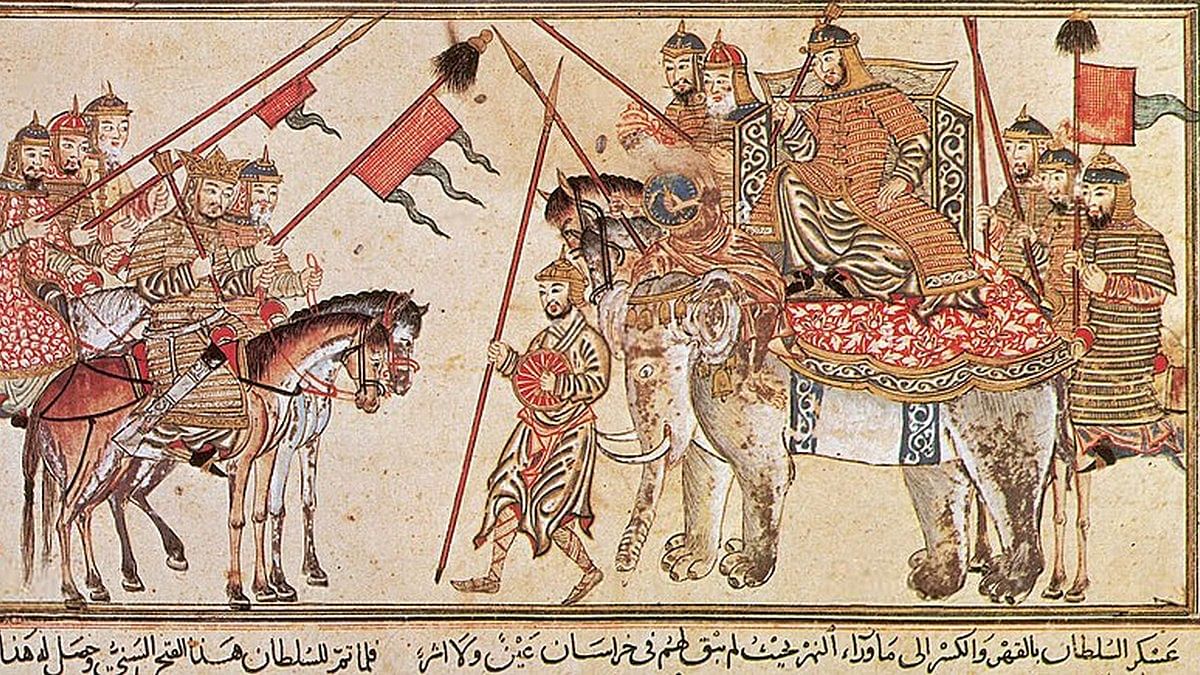
Medieval Arabic and Persian court chronicles in India did more than list battles and dates—they engineered collective memory by merging piety, patronage, and propaganda. This analysis maps their genres (Sirah, Tabaqat, Tarikh, Malfuzat, Maghazi, Maktubat), clarifies how narratives framed Darul Harb and the Ghazi ideal, and explains why panegyric conventions celebrated conquest as sanctity. It…
-
Decoding Medieval Islamicate Court Chronicles: Skills, Hijri Timekeeping, and How to Read Them Critically

This essay decodes how medieval Islamicate court chronicles in India were made, why they date events from the Hijri era, and how their theological vocabulary shaped historical writing. It details the rigorous training of chroniclers in Quran, Hadis, Fiqh, Persian adab, and calligraphy, and explains their overlapping roles as jurists, advisers, and scribes. Through examples—Amir…
-
The War They Could Not Win, Part 3: How Dharmic Pluralism Defied Empire and Ideology

This installment analyzes why attempts to homogenize the subcontinent’s diverse religious and cultural life repeatedly failed. It shows how dharmic pluralism—Ishta in Hindu Dharma, Anekantavada in Jainism, upāya in Buddhism, and seva in Sikhism—functioned as a civilizational architecture of resilience. The discussion traces colonial knowledge projects, legal codification, and endowment management, and explains how communities…
-
Reclaiming India’s Dharmic Sense of History: Evidence, Empathy, and Method

This essay offers a rigorous, empathetic roadmap to reclaim India’s Dharmic sense of history. It dismantles the colonial trope that Hindus lacked historical consciousness by surveying Itihasa, Puranas, caritras, inscriptions, and temple records across Ancient India and Medieval India. It explains why certain indigenous archives thinned during the medieval era and shows how to read…
-
Beneath the Conqueror’s Shadow: Unflinching South Asian History and Dharmic Resilience

This long-form analysis interprets South Asian history through five “folds” of the Conqueror’s Shadow—material, institutional, ritual, intellectual, and ethical—showing how Hindu, Buddhist, Jain, and Sikh communities adapted with resilience rather than rupture. It synthesizes inscriptions, archaeology, and historiography to avoid simplistic narratives while honoring lived memory. Readers gain clear frameworks for understanding revenue systems, sacred…
-
When Indore’s Bureaucracy Burned History: The Lost Holkar Archives and Parasnis’s Crusade

The near-total loss of the Holkar Archives at Indore, following years of official obstruction and a fire in a substandard repository, remains a defining lesson in how bureaucratic negligence can erase civilizational memory. This narrative situates D. B. Parasnis within that tragedy and highlights his lifelong effort to rescue, professionalize, and open Indian historical records…
-
Unsung Guardian of Maratha Archives: D.B. Parasnis and Acharya Jadunath Sarkar’s Salute

This essay examines Acharya Jadunath Sarkar’s tribute to D. B. Parasnis, highlighting the latter’s pivotal role in preserving primary sources central to Maratha history. It traces Parasnis’s early literary ventures, his collaborations around the Peshwas’ Daftar in Poona, and his Marathi publications that made crucial documents—sanads, kaifiyats, yadis, diaries, and despatches—available to scholars. The discussion…
-
Restore Historical Clarity: HJS urges NCERT to reinstate Maratha Empire map in Class 8 textbook

Hindu Janajagruti Samiti (HJS) has requested that NCERT reinstate the Maratha Empire expansion map in the Class 8 history textbook to improve historical accuracy and learning outcomes. Maps help Class 8 learners anchor timelines in geography, making complex eighteenth-century political formations intelligible. A carefully annotated Maratha map would depict core territories, confederal expansions, and key…
-
Bahadur Shah Zafar and 1857: Evidence-Driven Reassessment Beyond Heroics and Betrayal

Bahadur Shah Zafar’s role in the Revolt of 1857 defies simple labels. Rather than casting him as either a heroic liberator or a betrayer, this analysis situates the last Mughal emperor within the material constraints of siege warfare, fractured command, and colonial-era power asymmetries. It traces the uprising’s structural causes—from annexations and revenue extraction to…
-
Michel Danino: quiet giant of Indian history, NCERT reformer, facing Supreme Court censure

Michel Danino emerges here as a quiet giant of Indian historiography—unassuming yet formidable in method and integrity. His research spans the Sarasvati–Ghaggar–Hakra palaeochannels, Harappan urbanism, critiques of the Aryan Invasion Theory, and readings of the Puranas and epics, all undergirded by cross-disciplinary evidence. Professional roles at IIT Gandhinagar and leadership within NCERT’s textbook development reflect…
-
Transcend False Narratives: Sadguru Charudatta Pingale’s Ajmer Call to Reclaim Dharmic History

At a programme in Ajmer, HJS National Guide Sadguru Charudatta Pingale urged Hindus to move beyond false narratives and reconnect with Dharma’s historical and ethical foundations. This analysis places that appeal within Ajmer’s layered heritage and outlines a research-driven roadmap for decolonizing Indian historiography. It explains how inscriptions, archaeology, manuscripts, and community records correct distortions…
-
Debunking Siyar-ul-Mutakhkherin: Exposing False Allegations and Reclaiming Shared History

Siyar-ul-Mutakhkherin is frequently quoted to justify sweeping, divisive claims about the late Mughal era. This analysis explains how to read the chronicle critically by situating its authorship, context, and transmission through colonial translations. It shows why triangulating the text with Persian, Marathi, Sikh, and early British records corrects exaggerations and misunderstandings. The piece highlights shared…
-
Reclaiming Indian Historiography: Hindu Civilizational Memory, Foreign Rule, and Dharmic Unity

This essay reassesses Indian historiography through evidence-based analysis and the lived memory of Bharatavarsha. It explains why popular Hindu remembrance did not typically view certain medieval sultanates as indigenous while carefully separating critique of historical regimes from respect for present-day communities. It situates debates like Aryan Migration -vs- Out of India within an open, scholarly…
-
Inside Nehru’s Marxist Lens: Indo-Islamic Art, Mughal Decline, and India’s Enduring Vitality

This essay reassesses Jawaharlal Nehru’s Marxist interpretation of medieval India, including his claim that “Islam shook India to its very foundations” and his use of Indo-Islamic architecture as a marker of social renewal. It explains how Nehru links aesthetic change to broader historical progress and why critics caution against drawing civilizational conclusions from art alone.…
-
Kerala’s Forgotten Calculus: The Dharmic Knowledge Tradition that Preceded Newton by 200 Years

This essay examines how the Kerala School of Mathematics developed series expansions and methods akin to calculus centuries before their European articulation. It situates the debate within the politics of recognition, showing how Eurocentric narratives shaped the reception of Indian scientific achievements. It synthesizes George Gheverghese Joseph’s research on Madhava of Sangamagrama and his successors,…