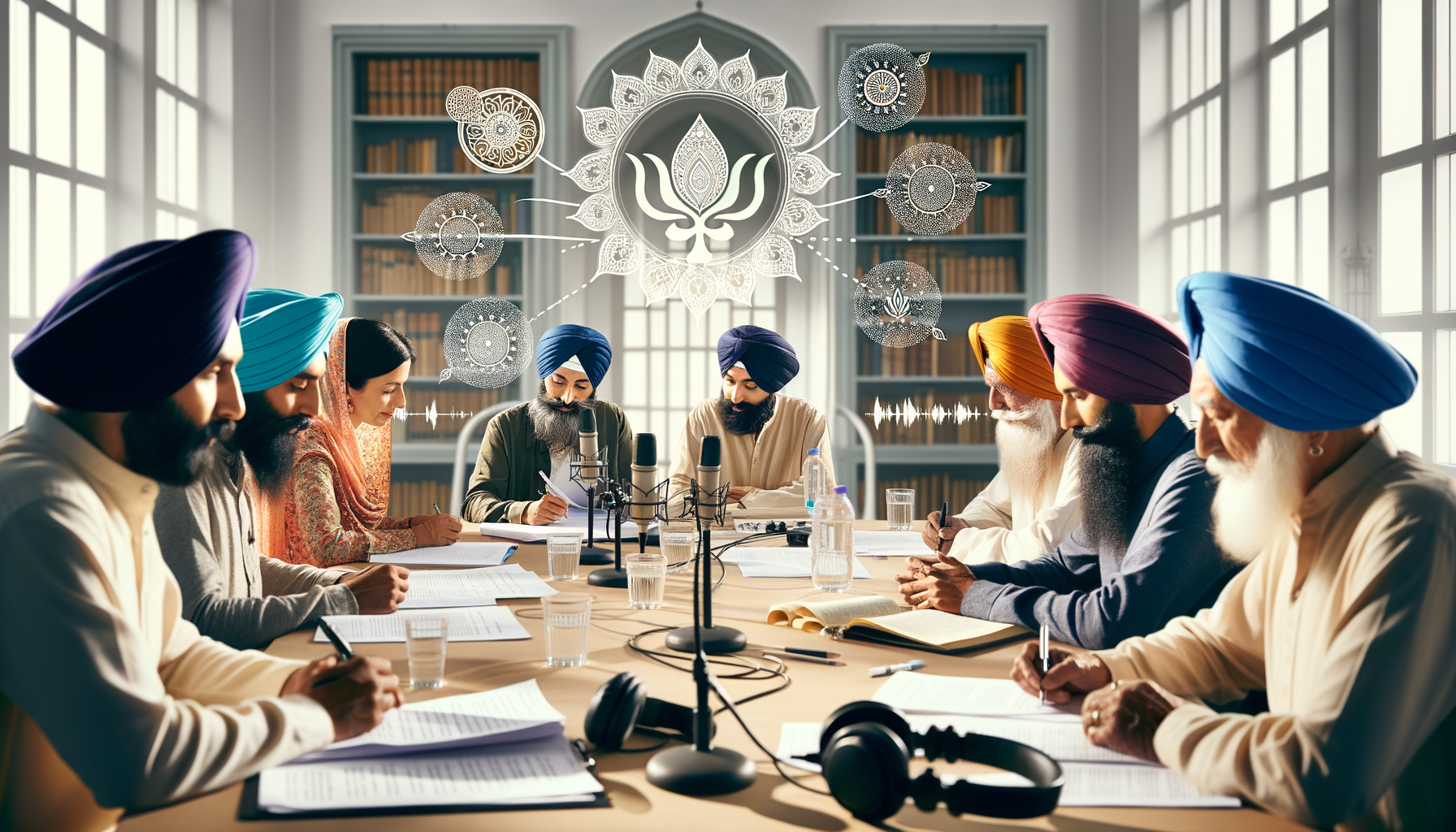
This interview with the winning entrants of the SikhNet Scriptwriting Contest 2024 offers a comprehensive view into contemporary Sikh storytelling and its living relationship with cultural heritage, community engagement, and spiritual insight. By foregrounding creative discipline and ethical purpose, the conversation illustrates how narrative craft can preserve memory, foster unity, and inspire the next generation of writers across the dharmic traditions.
Participants describe the research and writing practices that shaped their scriptsdrawing on Sikh history, sakhis, katha, and resonances from Gurbaniwhile aligning character arcs with universal themes of truth (satya), service (seva), and resilience (chardi kala). Their reflections examine narrative structure, scene design, and dialogue authenticity, demonstrating how well-paced storytelling can move audiences in both audio and visual formats and remain faithful to community experience.
The emotional texture of the interview is grounded in values shared across Hinduism, Buddhism, Jainism, and Sikhism: ahimsa, karuṇā, dharma, and sarbat da bhala. Winners emphasize how scripts that honor these principles can deepen interfaith dialogue, strengthen social cohesion, and model Unity in Diversity. This orientation toward harmony of faiths transforms creative work from entertainment into a form of cultural stewardship.
Practical insights include outlining strategies, voice and cadence for believable dialogue, sound design cues for audio narratives, pacing and transitions between scenes, and iterative feedback through sangat-led workshops. Entrants highlight the value of consulting archives, interviewing elders, and collaborating with mentors to align plot choices with historical accuracy and lived memorykey practices for writers focused on cultural authenticity and responsible representation.
Beyond craft, the interview underscores the role of storytelling in community development and education. Scripts are presented as adaptable resources for classrooms, youth groups, and gurdwara learning spacestools that can also resonate in temples, vihāras, and Jain community forums due to shared ethical frameworks. In this way, the work strengthens intergenerational bonds, supports cultural preservation, and advances a positive narrative of interfaith coexistence in India and the global diaspora.
Ultimately, the SikhNet Scriptwriting Contest 2024 emerges as a proven model for nurturing voices that unite aesthetics with purpose. The winners’ perspectives demonstrate how rigorous craft and rooted values can produce compelling narratives that enlighten, heal, and connect diverse audiences across the dharmic spectrum.
Inspired by this post on SikhNet – Children Stories.