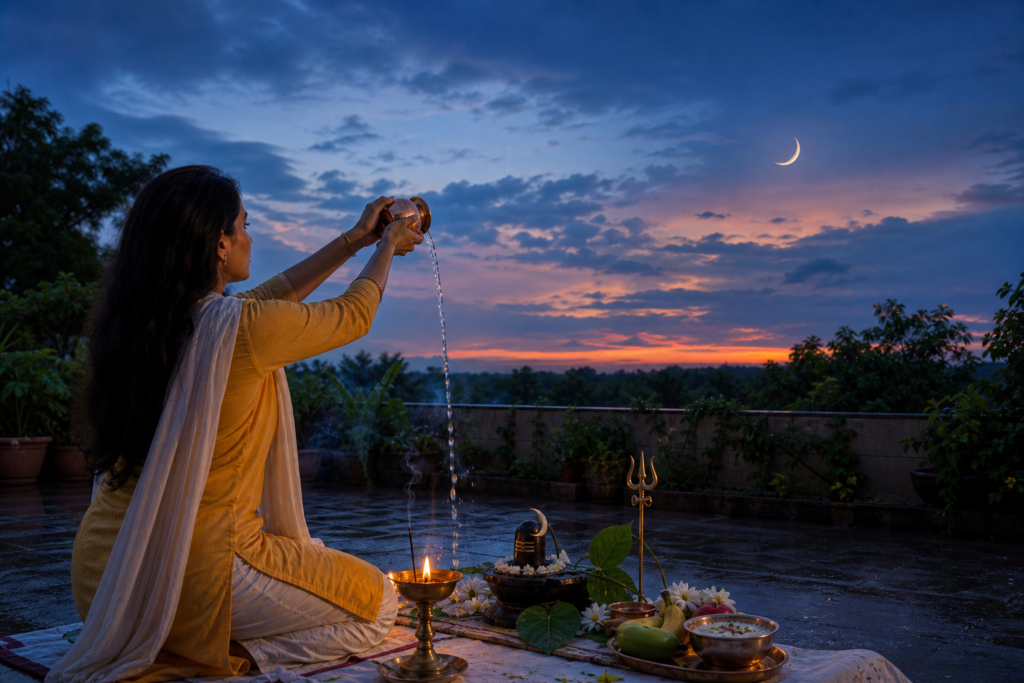
Navreh Mavas, observed primarily by Kashmiri Pandits, marks the concluding day of the Hindu year in the Saptarshi Panchang (Kashmiri Hindu Calendar). In 2026, Navreh Mavas falls on March 18, aligning with the 15th lunar day (Amavasya) of the dark fortnight of the Chaitra month. It directly precedes Navreh, the Kashmiri New Year celebrated on Chaitra Shukla Pratipada, underscoring the cyclic transition from closure to renewal within Kashmiri cultural heritage.
As a Chaitra Amavasya, Navreh Mavas carries a contemplative tone. The day is traditionally associated with inward reflection, purification of intent, and quiet preparation for the auspicious beginnings heralded by Navreh. These themes of closure, recollection, and mindful renewal are central to many observances in the broader Hindu calendar and resonate with the shared ethical and spiritual sensibilities across dharmic traditions.
Customary household practices on Navreh Mavas include simple prayer, remembrance of ancestors, and the setting of a restrained, reflective routine in anticipation of the new year. In many families, this day also serves as a period of readiness for the early-morning viewing associated with Navreh, when a carefully arranged thaal is seen at dawn as a symbol of clarity, prosperity, and auspicious intent for the year ahead. The atmosphere remains serene and preparatory, emphasizing gratitude, discipline, and collective well-being.
From a calendrical perspective, the Saptarshi Panchang anchors Navreh Mavas to the final Amavasya of the Hindu year, followed by the sunrise of Chaitra Shukla Pratipada. While the 2026 date corresponds to March 18 in the civil (Gregorian) calendar, local panchang detailssuch as tithi start and end timesmay vary by geography. For precise household observances, consultation of a region-specific Panchang helps align personal practice with the traditional muhurta.
Beyond calendar notation, Navreh Mavas functions as a living conduit of Kashmiri cultural identity, sustaining continuity through rites that affirm memory, resilience, and hope. Its emphasis on introspection before renewal supports an inclusive ethos that values unity in diversity, a principle widely celebrated across dharmic communities. In Kashmir and within the diaspora, the observance reinforces shared cultural bonds while welcoming mindful, community-centered participation.
Keywords for context and study: Navreh Mavas 2026 date (March 18, 2026), Chaitra Amavasya, Saptarshi Panchang, Kashmiri New Year (Navreh), Kashmiri Pandits, Hindu calendar, Panchang, tithi, cultural heritage of Kashmir.
Inspired by this post on Hindu Pad.