Navaratri Vratha mahatmyam, or the sanctity and transformative power of the Navratri vow, has been revered for centuries as a time-tested discipline that harmonizes spiritual aspiration with the rhythms of nature. The fortnight-long observance, centered on devotion to Devi as Shakti, is most widely practiced in two windows of the Hindu lunar calendar: Chaitra (Vasanta) and Ashwin (Sharad/Ashwayuja). The convergence of scriptural guidance, seasonal transitions, and community practice explains why these two months became the principal pillars of Navaratri vrat across regions.
Classical literature attributes profound efficacy to this vrata. Purāṇic narratives and Smṛti traditions repeatedly present vows aligned to Devi as conduits of inner purification, courage, and clarity. Sage Veda Vyasa, whose name is synonymous with the preservation of Vedic wisdom, frames the spirit of this vrata in the characteristic exhortation Shrunu raha spravakshami—“Listen; now it shall be explained.” In the Devi Mahatmya (within the Markandeya Purana), the three-fold triumphs of the Goddess are celebrated, and the path of worship during the nine nights is recommended for the restoration of dharmic balance within and without.
While there are four Navaratris in a lunar year (Chaitra, Ashadha, Ashwin, and Magha), the two most widely observed are Chaitra Navaratri (Vasanta Navaratri) and Ashwin Navaratri (Sharad or Ashwayuja Navaratri). Each begins on Shukla Pratipada and culminates on Navami, with Vijayadashami (Dashami) observed the next day. In the purnimanta and amanta month-reckoning systems used across regions, their civil dates may shift, but their tithis anchor the observance consistently.
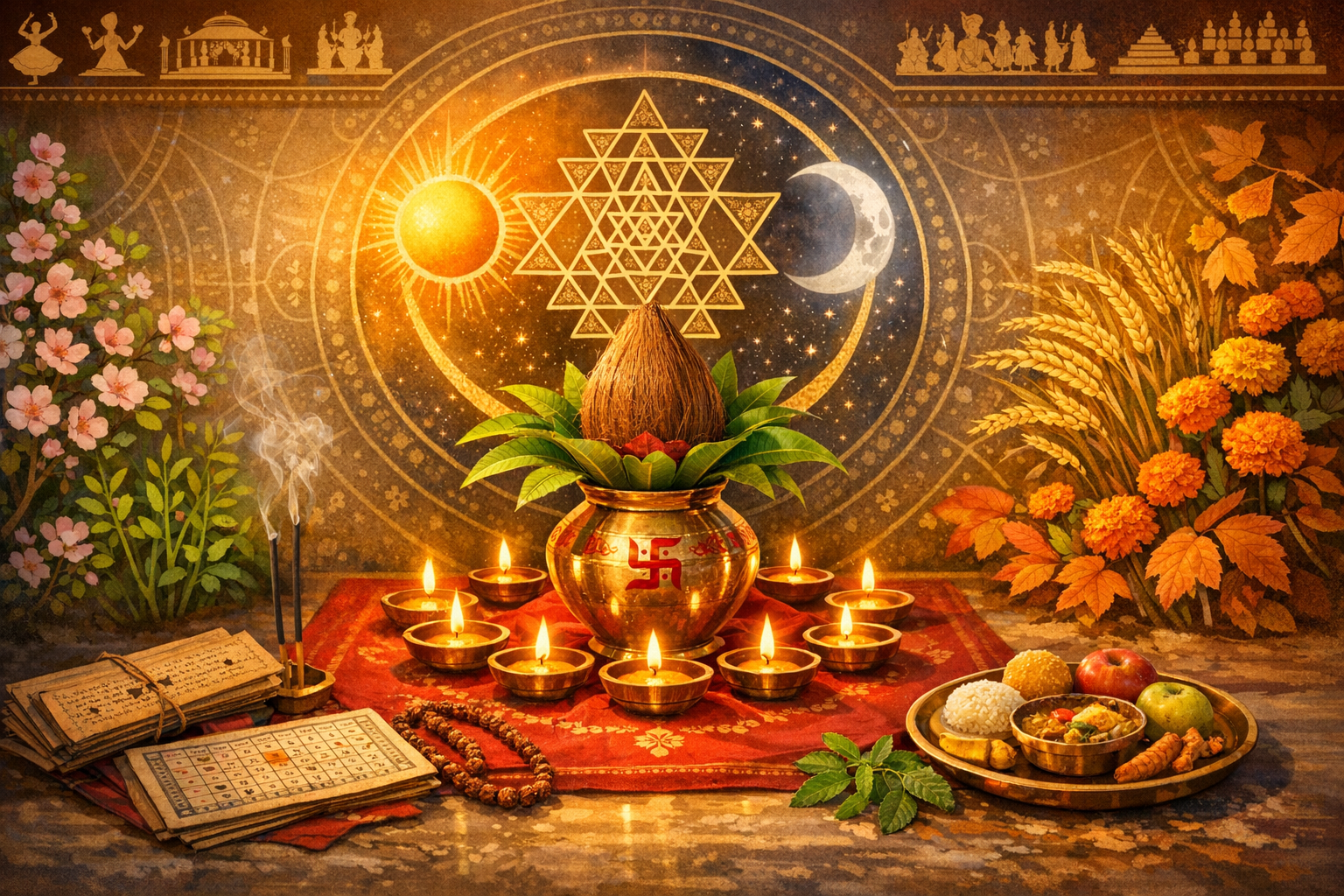
The primary reason Navratri vrat is centered in Chaitra and Ashwin is the profound environmental and cosmological significance of these periods. Both fall near the equinox transitions, when day-night balance and seasonal pivots are pronounced. Traditional jyotisha recognizes these “ritu-sandhi” junctions as moments of heightened subtle change—auspicious for renewed sankalpa, vrata, and inner reorientation. In many parts of India, Chaitra marks the new year (Ugadi, Gudi Padwa), making it naturally resonant for fresh spiritual beginnings, while Ashwin heralds the great harvest and the devotional climax of Shakti worship.
Scripturally, Navaratri is intimately bound with Devi’s charitra as narrated in the Devi Mahatmya (also known as Durga Saptashati or Chandi Path). The three sections—Prathama (Madhu-Kaitabha), Madhyama (Mahishasura), and Uttama (Shumbha-Nishumbha)—map the aspirant’s journey from confusion to courage and, finally, to comprehensive victory over inner foes. Aligned with these chapters, vrata practitioners often undertake daily recitation, homa, and dhyana, culminating in Kanya Puja and Vijayadashami.
Ritually, the vrata commonly begins with Ghatasthapana (Kalash Sthapana) during the designated muhurta on Shukla Pratipada, followed by daily worship of the Navadurga—Shailaputri, Brahmacharini, Chandraghanta, Kushmanda, Skandamata, Katyayani, Kalaratri, Mahagauri, and Siddhidatri. This progression is not merely devotional sequencing; it is a disciplined ascent from foundational steadiness to refined insight and siddhi, mirroring the move from tamas to sattva.
Fasting (upavasa) during Navratri operates on multiple levels. Devotees observe phalahara or laghu-sattvic diets, abstain from rajasic and tamasic foods, and cultivate mindful speech and action. The vrata integrates body, breath, and mind: fewer sensory disturbances, rhythmic prayer, mantra-japa, and simple meals together create conditions for subtle awareness and inner quietude.
Ayurveda helps explain why Chaitra and Ashwin fasts are both spiritually and physiologically effective. These ritu-sandhi junctures challenge agni and immunity as the body adapts to changing temperatures, daylight, and humidity. Gentle fasting, warm sattvic foods, light spices that kindle agni, regular sleep, and contemplative practice support seasonal adjustment, reduce accumulated ama (metabolic residues), and restore balance—an approach consistent with classical ritucharya.
Across India, Sharad Navaratri culminates in diverse regional expressions that deepen communal bonds. In Bengal and parts of the East, Durga Puja unfolds as an immersive celebration of art, theology, and community service. In the North, Ramlila and Dussehra highlight the triumph of dharma, while in the West, Garba and Dandiya carry dynamic bhakti through circular dance. In the South, Bommala Koluvu (Golu) curates sacred narratives through arranged dolls, inviting study, song, and shared reflection.
The agrarian cadence further clarifies why these months hold pride of place. Chaitra aligns with sowing hopes for the new agricultural cycle and, in many regions, with the civil new year; Ashwin aligns with the season of gratitude and thanksgiving for the harvest. In both, the Navratri vrat helps families and communities collectively realign intention, build resilience, and offer gratitude to the sustaining forces of nature understood as Devi Shakti.
Calendar science also plays a technical role. The lunisolar framework ensures that Shukla Pratipada to Navami falls after the equinox pivots within the relevant ritu. Variations in regional almanacs (panchangas) arise from distinct ayanamsa and nakshatra traditions, yet the foundational tithi-based observance preserves uniformity in spiritual timing.
Ghatasthapana is traditionally advised during the first third of the day while Pratipada prevails, avoiding late evening and night. Householders typically prepare a sanctified space, establish the kalasha with water, mango leaves, and coconut, and invoke the Goddess with mantras from Durga Saptashati or locally transmitted stotras. Daily arati, naivedya, and japa maintain the vrata’s momentum through the nine nights.
Kanya Puja (Kumari Puja)—commonly performed on Ashtami or Navami—honors the living embodiment of Devi in young girls, emphasizing reverence, protection, and the celebration of feminine divinity. This act reaffirms the dharmic ethic of honoring life and dignity, ensuring the vrata’s culmination is outward-looking and socially conscious.
Mythically, Ashwin Navaratri carries the memory of akal bodhan—Sri Rama’s worship of Devi out of season before the battle with Ravana—making the Sharad observance a powerful emblem of invoking Shakti in times of crisis. Chaitra Navaratri, linked to the auspicious launch of the year, symbolizes intentional beginnings and the steady cultivation of virtue.
Beyond the two major observances, the Gupta Navaratris of Magha and Ashadha remain important for many practitioners seeking quieter, inward sadhana. Their very name—“hidden”—suggests a more private rhythm of practice for those cultivating sustained discipline across the year.
Importantly, the spirit of Navratri aligns with the broader dharmic family’s emphasis on restraint, mindfulness, and compassion. Parallels exist in Buddhist Uposatha fasting and meditation cycles, the Jain focus on ahimsa and tapas (as in Paryushan and regular upavasas), and the Sikh emphasis on simran, kirtan, and seva. Honoring these resonances nurtures unity across dharmic traditions while allowing each path its unique liturgical language.
Choosing between Chaitra and Ashwin thus becomes a question of context and sankalpa. Those seeking renewal and study may favor Chaitra’s fresh-start ethos alongside Ugadi and Gudi Padwa; those seeking collective celebration and devotion often prefer the autumnal grandeur of Sharad Navaratri and Durga Puja. Both are scripturally sound, seasonally wise, and spiritually potent.
For householders and communities, a balanced Navratri plan typically includes: a clear sankalpa; Ghatasthapana; daily recitation (e.g., portions of Durga Saptashati); simple sattvic meals; limited screen-time and sensory inputs; japa of the chosen mantra; svadhyaya; Kanya Puja; and charitable acts (anna-dana, support for education or health) that express Devi’s compassion in society.
In terms of phala (fruits), texts and living tradition alike describe the vrata’s benefits as enhanced clarity (buddhi-prasadana), emotional steadiness, courage in adversity, and a tangible rise in sattva that benefits family and community life. Practitioners often report a distinct sense of renewal—an experience as psychological as it is spiritual—consistent with the intentional break from over-stimulation and the embrace of contemplative rhythm.
In sum, Navaratri Vratha mahatmyam rests on a profound triad: scriptural sanction, seasonal wisdom, and social-ethical practice. The focus on Chaitra and Ashwin arises from indigenous astronomical knowledge—akin to the time-science that guides Ugadi and Sankranti—and from lived civilizational experience. Observed with understanding and compassion, Navratri aligns body, mind, and society with Devi’s protective grace, fostering unity across dharmic traditions and strengthening the shared pursuit of dharma.
Inspired by this post on Hindu Pad.