Tag: Goddess Durga

  • Ugra Chandika’s Sacred Intoxication: Fierce Shakti, Dharma, and Inner Victory

    Ugra Chandika’s Sacred Intoxication: Fierce Shakti, Dharma, and Inner Victory

    Ugra Chandika’s act of drinking madhu in the Devi Mahatmya is a profound symbol of divine sovereignty, not ordinary indulgence. The famous line “Garj garj kshanam mudha madhu yavat pibamyaham.” shows the Goddess calmly limiting the roar of adharma before destroying it. This episode reveals Shakti as fearless, disciplined, and beyond the forces that usually…

  • Devi Upanishad Reveals Durga as Brahman: The Powerful Truth of Shakti

    Devi Upanishad Reveals Durga as Brahman: The Powerful Truth of Shakti

    The Devi Upanishad presents Durga not merely as a revered Goddess, but as Brahman itself through the profound declaration Aham Brahma Swaroopini. This interpretation deepens Shakta philosophy by showing how devotion, Vedanta, mantra, and metaphysics converge in the worship of Devi. The text reveals the sacred feminine as both transcendent and immanent, beyond form yet…

  • Powerful Navreh Traditions: How Kashmiri Pandits Celebrate Chaitra Navratri

    Powerful Navreh Traditions: How Kashmiri Pandits Celebrate Chaitra Navratri

    Chaitra Navratri, also called Vasant Navratri, has a distinctive meaning for Kashmiri Pandits because its first day is celebrated as Navreh, the Kashmiri Hindu New Year. In 2026, the festival was observed from March 19 to March 27 and culminated with Ram Navami. The observance combines Shakti worship, fasting, havans, temple visits, and the deeply…

  • Decoding Chamunda’s Unfillable Hunger: Why the Fierce Goddess Appears Skeletal and Gaunt

    Decoding Chamunda’s Unfillable Hunger: Why the Fierce Goddess Appears Skeletal and Gaunt

    Chamunda’s skeletal iconography is not grotesque but a precise Tantric and Shakta code that teaches fearlessness, non-attachment, and clarity. Grounded in the Devi Mahatmya of the Markandeya Purana, the goddess appears as an ugra devata whose gaunt body signifies the withdrawal of worldly rasa and the conquest of insatiable appetite. Each attributethe skull garland, kapala,…

  • Did Goddess Lakshmi Slay Demons? Scriptural Evidence on Kolhasura and Mahishasura

    Did Goddess Lakshmi Slay Demons? Scriptural Evidence on Kolhasura and Mahishasura

    Did Goddess Lakshmi slay demons? Scriptural and regional traditions answer yes in her fierce Mahalakshmi form. The Skanda Purana’s Karavira Mahatmya narrates Mahalakshmi (Ambabai) defeating Kolhasura at Kolhapur, while the Devi Mahatmya’s Mahishasuramardini cycleoften assimilated devotionally to Mahalakshmicaptures the goddess’s triumph over Mahishasura. This article clarifies how Śrī-Lakshmi’s benevolent identity and Mahalakshmi’s protective power coexist…

  • Alidhasana Unveiled: The Warrior Stance Powering Hindu Iconography and Yoga

    Alidhasana Unveiled: The Warrior Stance Powering Hindu Iconography and Yoga

    Alidhasana (Alīḍha/Ālīḍha) is the subcontinent’s signature warrior stance, a diagonal lunge that encodes heroic intent in Hindu iconography, dance, and yoga. Grounded in the Nāṭyaśāstra and Śilpa-śāstra, it appears in temple sculpture for Durgā, Bhairava, and Vīrabhadra to signal protective, dharmic power. The same geometry informs Bharatanatyam karaṇas, kalaripayattu lunges, and modern haṭha alignments akin…

  • Bel Tala and Akal Bodhan: Durga’s Sacred Awakening That Empowered Lord Rama

    Bel Tala and Akal Bodhan: Durga’s Sacred Awakening That Empowered Lord Rama

    Bel Talathe sacred space beneath the bel (wood-apple) treeanchors the Bodhan, the ceremonial awakening of Goddess Durga that inaugurates Sharadiya worship. Rooted in Bengal’s “Akal Bodhan” narrative linking Lord Rama’s victory to Durga’s boon, this rite integrates Vaishnava and Shakta currents while honoring nature as a living altar. The bel tree (Aegle marmelos) contributes both…

  • Shukla Devi Puja 2026 on Jyeshta Shukla Ashtami: Sacred Timings, Kheer Bhavani, Complete Vidhi

    Shukla Devi Puja 2026 on Jyeshta Shukla Ashtami: Sacred Timings, Kheer Bhavani, Complete Vidhi

    Shukla Devi Puja (Shukla Devi Aradhana) in 2026 falls on 22 June, coinciding with Jyeshta Shukla Ashtami in the Hindu calendar. The day venerates the luminous, sattvika dimension of the Divine Mother and aligns with the Khir Bhavani Mela in Kashmir, where devotees traditionally offer kheer. The article explains how Ashtami tithi is computed, why…

  • Aparajita, the Invincible: Ancient Hindu War Rites, Dharma-Yuddha Ethics, and Strategy

    Aparajita, the Invincible: Ancient Hindu War Rites, Dharma-Yuddha Ethics, and Strategy

    Aparajita“the unconquered”was venerated by kings, commanders, and communities as the victory-bestowing face of the Goddess in ancient India. The worship synchronized statecraft and spirituality, binding warfare to Dharma-Yuddha and Kshatra Dharma. Textual traditions linked Aparajita with Durga and embedded victory hymns from the Devi Mahatmya into pre-campaign rites. Rituals integrated muhurta selection, sankalpa, weapon consecration,…

  • Shoola vs Trishul: Decoding Sacred Weapons, Iconography, and the Timeless Power of Dharma

    Shoola vs Trishul: Decoding Sacred Weapons, Iconography, and the Timeless Power of Dharma

    Shoola (single-pointed spear) and Trishul (three-pronged trident) are often confused, yet they carry distinct forms and meanings in Hindu iconography. This article clarifies how a spear encodes one-pointed discernment while a trident integrates triadic powersiccha, jnana, kriya; the gunas; and the three dimensions of time. Readers learn to identify each implement swiftly at temples and…

  • Hargauri Durga in Bengal: Uma’s Tender Homecoming and Her Sacred Union with Shiva

    Hargauri Durga in Bengal: Uma’s Tender Homecoming and Her Sacred Union with Shiva

    Hargauri Durga reframes Bengal’s Sharadiya devotion as Uma’s tender homecoming, with Shiva’s serene presence completing the sacred tableau. The piece decodes the Hara–Gauri archetype, clarifies its relationship to Mahishasura Mardini, and situates the tradition within Devi Paksha, from Mahalaya to Vijayadashami. It explains core ritesbodhana, nabapatrika, Sandhi Puja, Kumari Puja, and visarjanwhile interpreting how they…

  • Chinnamasta Jayanti 2026: Fierce Shakti AwakeningDate, Tithi, Rituals, Deep Meaning

    Chinnamasta Jayanti 2026: Fierce Shakti AwakeningDate, Tithi, Rituals, Deep Meaning

    Chinnamasta Jayanti 2026 falls on 29 April and is observed on Vaishakh Shukla Trayodashi according to the Hindu calendar. This comprehensive guide explains the festival’s date–tithi alignment, its profound Mahavidya symbolism, and how householders can perform a sattvic, family-friendly puja at home. It connects Chinnamasta’s fierce wisdom to yogic themes of manipura chakra, kundalini, and…

  • Bhadrakali Amman Unveiled: Sacred Iconography, Rituals, and Time-Transcending Philosophy

    Bhadrakali Amman Unveiled: Sacred Iconography, Rituals, and Time-Transcending Philosophy

    Bhadrakali Amman is presented as fierce grace: a guardian who unites auspiciousness with the transformative power of time. The analysis explains the etymology from Kala, the iconography of weapons and mudrās, and the ritual ecosystem of Amman worship in Tamil Nadu and Kerala. It highlights key festivals such as Attukal Pongala and the ethical turn…

  • Chinnamasta Jayanti 2026: Fierce Shakti AwakeningDate, Tithi, Rituals, Deep Meaning

    Chinnamasta Jayanti 2026: Fierce Shakti AwakeningDate, Tithi, Rituals, Deep Meaning

    Chinnamasta Jayanti 2026 falls on 29 April and is observed on Vaishakh Shukla Trayodashi according to the Hindu calendar. This comprehensive guide explains the festival’s date–tithi alignment, its profound Mahavidya symbolism, and how householders can perform a sattvic, family-friendly puja at home. It connects Chinnamasta’s fierce wisdom to yogic themes of manipura chakra, kundalini, and…

  • Paralakhemundi’s Hidden Durga Temple: Sacred Seclusion and the Navratri-Only Opening

    Paralakhemundi’s Hidden Durga Temple: Sacred Seclusion and the Navratri-Only Opening

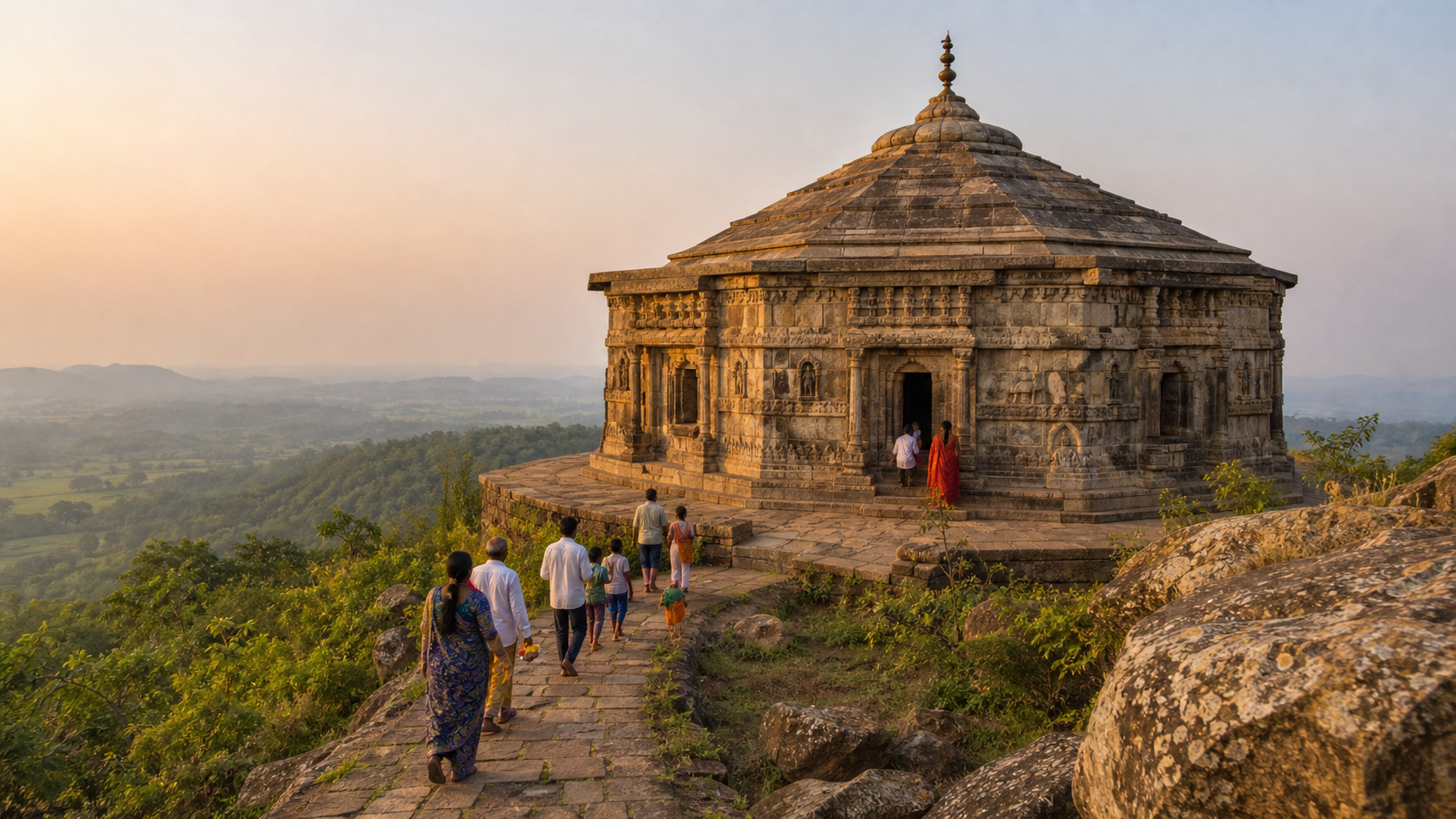
    The Paralakhemundi Durga Temple in Odisha’s Gajapati district practices a remarkable discipline: it opens to the public only during Navratri, preserving a Shakta tradition of sacred seclusion while intensifying the experience of darshan. Situated on Dandumala Street near Dola Tank Road, the shrine honors Dandu Maa (also known in Telugu as Goddess Dandu Maramma), reflecting…

  • Navratri Day 4, 22 March 2026: Definitive Kushmanda Puja Guide with Ritual Steps and Mantras

    Navratri Day 4, 22 March 2026: Definitive Kushmanda Puja Guide with Ritual Steps and Mantras

    The fourth day of Chaitra Navratri on 22 March 2026 honors Goddess Kushmanda, revered as the radiant source of warmth and the cosmic egg of creation. This definitive guide outlines accurate, region-sensitive practice: preparing the altar, making a clear sankalpa, installing the kalasha, and offering Panchopachara or Shodashopachara. It details mantrasincluding ॐ देवी कूष्माण्डायै नमः…

  • Durga Puja’s Spring Origins: King Suratha, Akal Bodhan, and the Purāṇic Timeline Explained

    Durga Puja’s Spring Origins: King Suratha, Akal Bodhan, and the Purāṇic Timeline Explained

    Durga Puja’s origin story is often anchored to the spring cycle (Basanti Puja) through the Purāṇic frame of King Suratha and a merchant in the Markandeya Purana’s Devi Mahatmya. The widely celebrated autumn festival (Sharad Navratri) is associated in regional retellings with Sri Rama’s Akal Bodhanan “untimely” awakening of Maa Durga before the war against…

  • Kumari Puja Unveiled: Encounter the Living Goddess of Navratri with Sacred Ritual Precision

    Kumari Puja Unveiled: Encounter the Living Goddess of Navratri with Sacred Ritual Precision

    Kumari Puja venerates the Divine Mother as a living presence in pre‑pubescent girls during Navratri and Durga Puja, translating Shakta philosophy into compassionate, ethical practice. This comprehensive guide explains historical lineages, scriptural foundations in the Devi Mahatmya and Vedanta, and the symbolism of honoring the Navadurga through Kanya Puja. It details a clear, respectful puja…

  • Navratri 2026 Day 5: Skandamata Puja, Lalita Panchami, and DashainTimings, Vidhi, Meaning

    Navratri 2026 Day 5: Skandamata Puja, Lalita Panchami, and DashainTimings, Vidhi, Meaning

    Navratri 2026 Day 5 arrives twice: 23 March (Chaitra Navratri, Skandamata Puja) and 15 October (Ashwin Navratri, Lalita Panchami/Upang Lalita Vrata), with Dashain Panchami in Nepal aligning to the latter cycle. This comprehensive guide clarifies dates and tithi nuances, explains the spiritual meaning of Skandamata, and outlines a practical, step-by-step home puja vidhi. It also…

  • Navratri 2026 Day 4 Guide: Kushmanda Pujan, Varad Vinayak Chaturthi, and Dashain Insights

    Navratri 2026 Day 4 Guide: Kushmanda Pujan, Varad Vinayak Chaturthi, and Dashain Insights

    Navratri 2026 features two interconnected observances around Day 4 that are determined by the lunar tithi at sunrise. The 4th day of Sharad Navratri falls on 14 October 2026 (Ashwin Shukla Chaturthi) and is devoted to Maa Kushmanda. In the spring cycle, 22 March 2026 aligns with the 3rd day of Chaitra Navratri in many…