
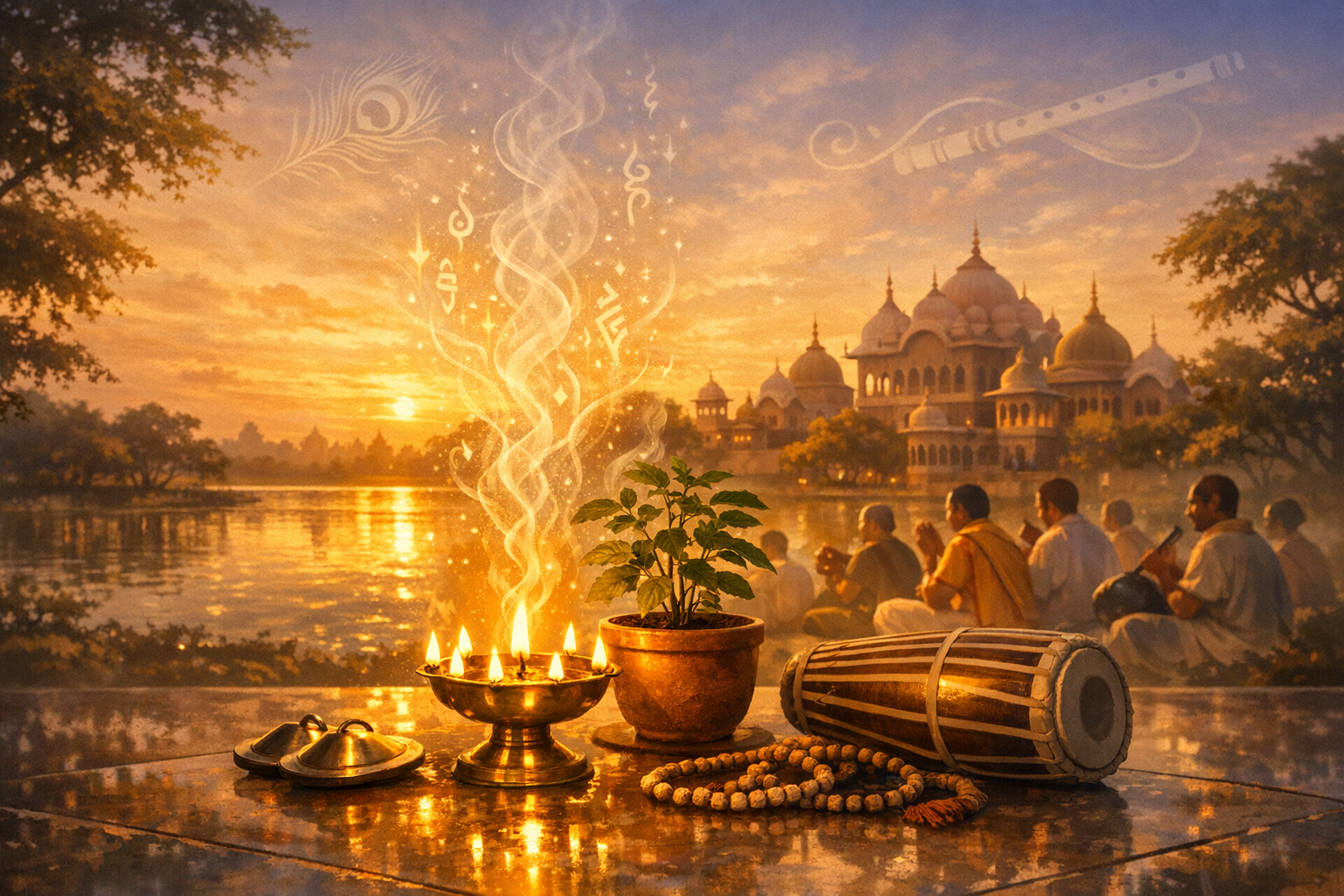
HG Deene Bandhu Prabhu conveyed that HG Kratu Prabhu has just left this world in Sri Vrindavan Dham, surrounded by loving disciples chanting the Holy Name, following several months of massive liver failure. The moment of departuremarked by kirtan and the communal recitation of the maha-mantrais profoundly meaningful within the Hare Krishna tradition and has drawn heartfelt prayers from devotees worldwide.
Within the Gaudiya Vaishnava lineage and the broader ISKCON (International Society For Krishna Consciousness) community, passing while hearing and participating in the chanting of the Holy Name is regarded as supremely auspicious. Scriptural teachings emphasize remembrance of the Divine at life’s end (anta-kāla-smaraṇa) as a culmination of lifelong bhakti-yoga practice. In this framework, the environment of sacred sound, the presence of the guru’s associates, and the devotee’s cultivated consciousness converge to confer spiritual grace and solace.
The setting of Sri Vrindavan Dham further underscores the spiritual significance. For Gaudiya Vaishnavas, Vrindavan is not merely a geographic location but a sacred dhama, understood to be nondifferent from the eternal realm of Sri Krishna’s pastimes. Theologically, dwelling in or departing from the holy dhama is considered especially auspicious because the space itself is treated as a living conduit of divine mercy, catalyzing remembrance, humility, and surrender.
HG Kratu Prabhu is widely recognized among devotees as a senior figure aligned with the mission of Srila Prabhupada, the Founder-Acharya of ISKCON. The announcement referenced him as a “very dear Godbrother,” a term denoting those who share the same guru and, thereby, a sacred kinship within the guru–shishya parampara. Such bonds embody the pedagogical and pastoral continuity central to bhakti-yoga, where spiritual friendship (sambandha) and service (seva) sustain practice across decades and generations.
The devotional practices present at the time of his departure reflect a well-established Vaishnava end-of-life ethos. Continuous kirtan, recitation of the maha-mantraHare Krishna Hare Krishna Krishna Krishna Hare Hare, Hare Rama Hare Rama Rama Rama Hare Hareand attentive care by disciples are integral components of pastoral support in this tradition. These practices aim to center the departing devotee’s awareness on Krishna, encourage equipoise, and transform grief into a prayerful offering.
Beyond the Gaudiya Vaishnava context, related patterns appear across other dharmic traditions, offering a unifying perspective. In Sikhism, simran and kirtan anchor consciousness in the Divine Name; in Buddhism, chanting and mindful awareness at life’s end cultivate clarity and compassion; in Jainism, practices such as samayik and pratikraman encourage equanimity, nonviolence in thought, and release from attachment. These shared emphasesremembrance, community presence, ethical clarity, and compassionate careaffirm a dharmic consensus on dignified, spiritually attentive transitions.
From a doctrinal angle, the Bhakti tradition’s focus on sacred sound (shabda-brahman) elucidates why devotees assemble to chant in such moments. Sound, understood as both aesthetic and ontological principle, is held to shape consciousness. In practical terms, communal kirtan can calm the mind, regulate breath, and gently anchor attention, serving as a devotional complement to clinical palliative measures. Many who have attended evening kirtans in Vrindavan’s temples recognize the steadying cadence of the maha-mantra and the way it transforms private grief into collective remembrance.
The relational language useddisciples, Godbrothers, and the community of devoteespoints to the living structure of guru–shishya transmission. This network functions not only as a scholastic lineage but also as a compassionate care system, providing spiritual counsel, emotional support, and ritual guidance across the life cycle. The solidarity seen at the bedside of a departing Vaishnava mirrors this interdependence: the individual is honored, the lineage is reaffirmed, and the community’s vows to continue service are renewed.
In mourning, communities within the Hare Krishna Movement often articulate loss through gratitudegratitude for teachings received, for selfless service witnessed, and for the lived example of steadiness in bhakti. Such gratitude does not diminish sorrow; rather, it reframes grief as a form of offering, consistent with the bhakti principle that all experiences may be spiritualized through remembrance and service. In this sense, the passing of a revered Vaishnava becomes both a moment of farewell and a pedagogy of hope.
The report of prolonged illnessmassive liver failurealso invites a humane reflection on how spiritual communities accompany devotees through suffering. While medical care addresses the body, practices such as kirtan, scriptural recitation, and satsanga respond to the heart’s need for meaning and assurance. Across Hinduism, Buddhism, Jainism, and Sikhism, this integrative approachaligning ethical care, contemplative practice, and communal presenceexpresses a shared dharmic commitment to compassion at life’s threshold.
In remembering HG Kratu Prabhu’s departure in Sri Vrindavan Dham, devotees acknowledge both the solemnity and the spiritual auspiciousness of the moment. The confluence of the holy dhama, the Holy Name, and the fellowship of disciples reflects the essence of bhakti-yoga and the enduring vitality of Srila Prabhupada’s mission. Prayers arise that his dedicated service in the lineage continue to inspire unity, humility, and loving devotion across all dharmic paths that honor the Divine through remembrance, compassion, and truth.
Inspired by this post on Dandavats.
