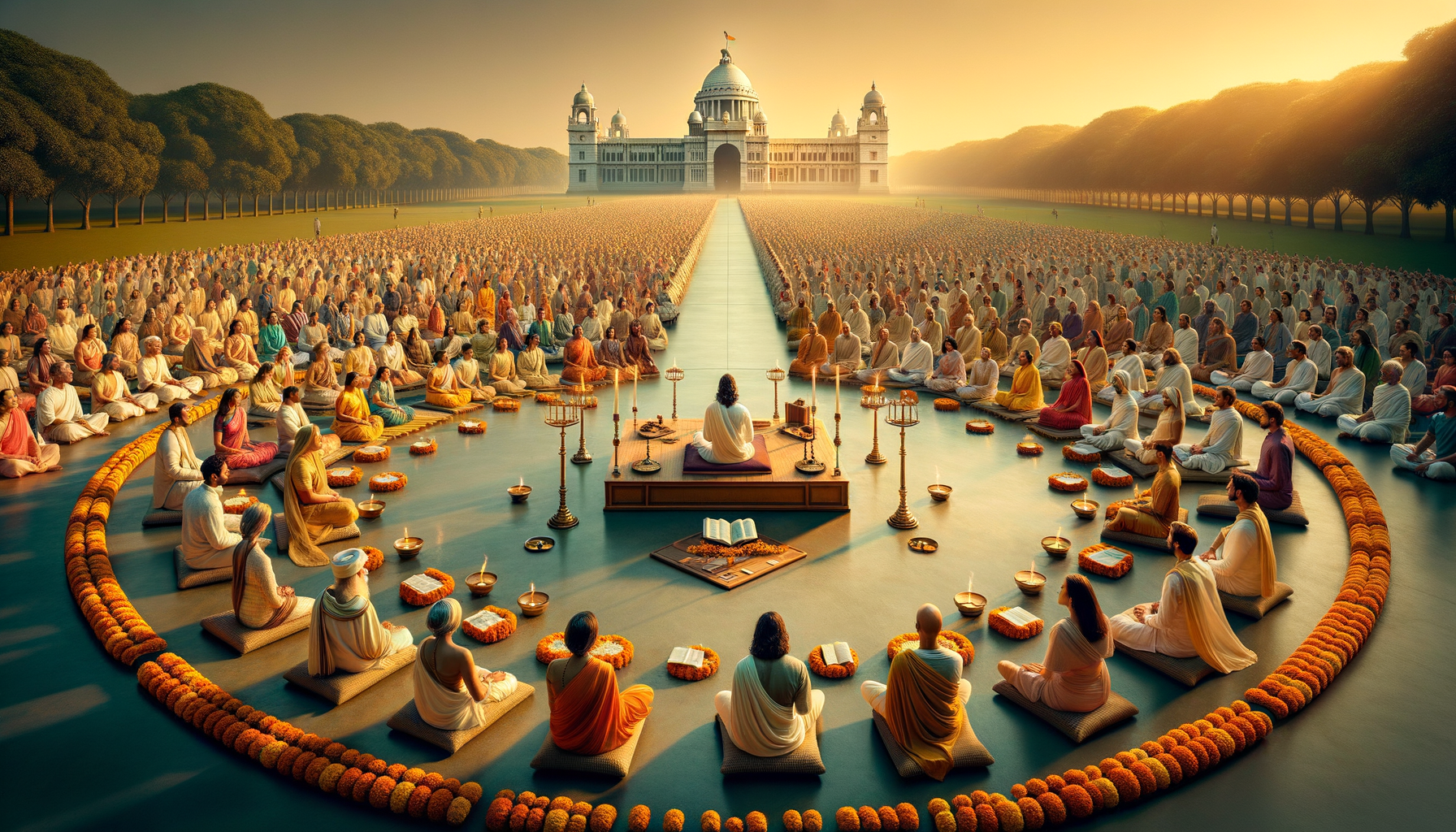
On 7 December 2025, Kolkata’s Brigade Parade Ground witnessed a massive gathering for a historic Bhagavad Gita recitation. The event unfolded as a unity rally that foregrounded shared civilizational values across Sanatan Dharma, emphasizing ethical conduct, compassion, and collective well-being. Participants described the atmosphere as disciplined yet deeply devotional, with chanting weaving together contemplation and community spirit.
Positioned within Bengal’s rich legacy of spiritual renaissance, the recitation highlighted how the Bhagavad Gita continues to serve as a moral compass for contemporary society. The program framed unity not as uniformity but as harmony across dharmic traditionsHinduism, Buddhism, Jainism, and Sikhismencouraging mutual respect, ahimsa, and seva as common threads.
Attendees arrived from districts across West Bengal and neighboring states, including families, students, professionals, and elders. Volunteers coordinated seating, translations, and accessibility arrangements to ensure an inclusive experience. The scale of participation underscored both cultural continuity and renewed civic solidarity rooted in shared philosophical ideals.
The recitation combined Sanskrit verses, responsive chanting (sankirtan), and succinct explanations that made key teachings accessible. Selected adhyayas on duty (dharma), equanimity (samatva), and disciplined action (karma-yoga) were presented with clarity, allowing first-time listeners and regular practitioners alike to reflect on personal responsibility and social harmony.
Observers noted a pronounced emotional resonance: many participants reported a sense of inner calm, gratitude, and belonging. The experience fostered a bond that was devotional without being divisive, anchoring identity in ethical action rather than political slogans. The message was clearunity in diversity strengthens community resilience and deepens cultural confidence.
Educationally, the program demonstrated how the Bhagavad Gita functions as a living text. In highlighting tolerance, dialogue, and the freedom of conscience, it affirmed a pluralistic ethos intrinsic to the broader dharmic family. By connecting timeless insights to everyday choices, the event encouraged practical applications of satya, daya, and shraddha in homes, institutions, and public life.
Organizers emphasized service-oriented outcomes: inter-community outreach among dharmic traditions, youth study circles on ethical leadership, and collaborative cultural events. Such initiatives aim to translate spiritual understanding into compassionate actioncleanliness drives, community kitchens, and educational supportthereby linking devotion with social responsibility.
Within the context of Bengal, the gathering echoed the region’s historical role in nurturing inclusive thought and reform. Rather than advocating exclusionary narratives, the program called for character formation, peaceful coexistence, and a shared commitment to national harmony grounded in Sanatan Dharma’s universal values.
Looking ahead, participants expressed interest in making this Gita Jayanti recitation an annual, pan-dharmic celebration. The envisaged path prioritizes dialogue, study, and sevacultivating a civic culture where diverse spiritual journeys flourish together and collective progress is anchored in wisdom, humility, and mutual respect.
Inspired by this post on Struggle for Hindu Existence.