
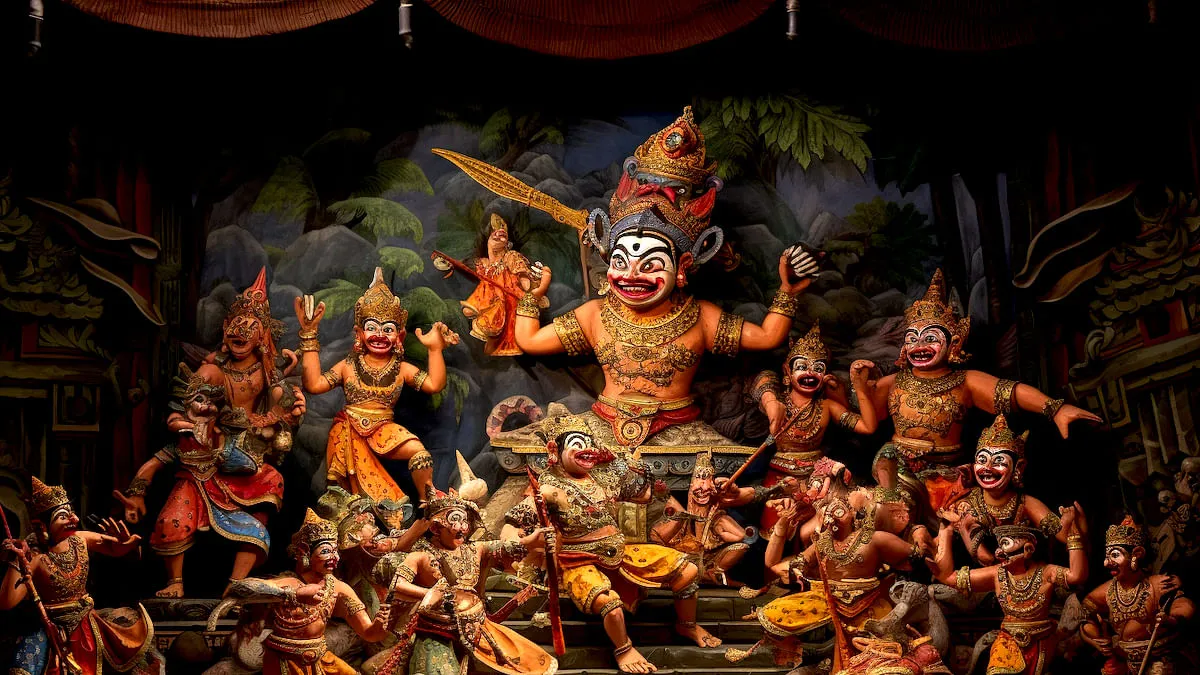
This article was originally posted on the Dharma Dispatch Substack.
Prologue
On March 18, 1946, Jawaharlal Nehru met Dickie Mountbatten for the first time at Government House, Singapore, which was then part of Malaya. Nehru was accompanied by his brother-in-law, Raja Hutheesing. After serving them tea, Mountbatten personally drove them to meet his wife, Edwina, who was heading relief work in the St John Ambulance canteen she had set up.
Along the route, the British administration had lined up lorry-loads of Indians to catch a glimpse of Nehru, who had been released from prison in India a few months prior. This arrangement was part of a pre-scripted drama by Viceroy Wavell, who was preparing for the British departure from India. His twofold task was to make the departure guilt-free for the British and to create the impression in the Indian mind that colonial British rule had been beneficial. The Anglicised and Westernised Nehru was seen as the perfect candidate for this narrative. In Singapore, as in India, Nehru was built up as a great hero and liberator.
The crowds fell for it. The moment Nehru entered the St John Ambulance canteen housed in the YMCA building, the crowds charged after him, wanting to see and touch him. They broke the windows and spilled inside. Raja Hutheesing and others in the building were pushed to the ground. A full-blown stampede erupted. Edwina Mountbatten found herself on the floor under a melee of feet. The next moment, she heard a male voice yelling over the crowd, “Your wife! your wife! we must go to her.” It was Nehru’s voice calling to Mountbatten.
And that was how one of the most infamous lust stories in the world of international politics began.
Over the next day or two, Nehru made full use of his newfound stardom in Malaya and enthralled and moved the crowds with his speeches calling for conciliation and a new glorious future. A week later, he visited Penang and made more speeches along the same lines. The unconditional love that people in Malaya showered on him matched what he received back home in India.
An Inglorious Chapter of the Great Nehruvian Betrayal
After becoming Prime Minister, Nehru betrayed not just Malaya but the whole of the Far East, just as he betrayed the trust of the Indian people.
The unforgivable axing of the ancient civilizational and cultural bonds that India had forged with Brihad-Bharata (Greater India) for 1300 years is a little-known chapter in the annals of Nehruvian misdeeds.
After independence, Nehru had an unprecedented opportunity and absolute freedom to chisel India’s Far Eastern policy to recover these ancient ties. Yet, his addiction to the Chinese Communist opium impelled him to throw the entire region to the Maoist wolves. Nehru had no way of knowing it, but his actions rekindled a very old hostility.
According to local traditions, the ancient Nan-Chao Empire (Nanzhao) had been established by the nine grandsons of Ashoka’s third son. The kings of this empire titled themselves Maharaja and were all Buddhists, worshipping Avalokiteshwara as their main deity. They zealously guarded themselves against any Chinese influence. When a Nan-Chao king in the eighth century CE attempted to align his fortunes with the Chinese civilization, he was “severely abused by seven religious persons from India.” This was during a period when even the notion of Communism was unknown to the world.
But twelve centuries later, Nehrua committed Communistdeliberately and consciously pushed the whole of Southeast Asia into the deathly embrace of Maoist China. An incensed DVG wrote acidly,
Thanks to Nehru, the great winner of independence… India stands tied to the apron-strings of the mother of Communism… Flirting with Russia and dreading China, India’s relations with America are ambiguous… And what gives poignancy to the reflection that we are so miserably incapable of going at least to the moral support of Cambodia is the recollection of the historical fact of our ancient kinship. Once upon a time perhaps about the time of the beginning of the Christian era – Cambodia was part of the cultural empire of Hinduism.
Nehru’s squandering of this “cultural empire of Hinduism” is precisely what happens if you learn Indian history from Muhammad and not Majumdar.
The Hindu Cultural Empire in Southeast Asia
Indeed, R.C. Majumdar characterized this Hindu cultural empire in Brihad-Bharata in memorable terms:
The Indian colonies in the Far East must ever remain as the high-water mark of maritime and colonial enterprise of the ancient Indians… It was the mission of Indian colonists to bring the heterogeneous mass … within the pale of civilization, a task which the Chinese, their next-door neighbor, had hitherto failed to accomplish… the political conquest of Farther India and the adjacent islands was rapidly followed by a complete cultural conquest. The local people readily assimilated the new civilization and adopted the religion, art, social manners and customs, alphabet, literature, laws and administrative systems of the conquerors.
The Hindu cultural conquest of Southeast Asia remains unprecedented and unique in the history of human civilization. Here is how another scholar describes the nature and impact of this conquest:
For nearly thirteen hundred years the Indian colonists had persevered in adorning these far-off lands with edifices almost unrivalled elsewhere of their class. But at the end of that time, as happened in India, they disappear as if at the touch of a magician’s wand.
The most glaring proof of cultural and social triumph is when the colonized country refashions its legal system on the model brought in by the alien invader.
In this sense, Bharatavarsha did not invade and conquer Southeast Asia as an imperialist seeking to uproot and annihilate its existing culture and society. Yet, what Hindu conquerors brought with them appealed to and resonated with the people of that region so profoundly that they wholeheartedly embraced it and modeled their culture, society, and lives after it.
The Hindu Legal System’s Impact
Beginning with this episode, we will explore the comprehensive and lasting impact of the Hindu legal system (Dharmasastra) chiefly in Bali and Java (now part of Indonesia).
It must be emphasized that Dharmasastra was not forced upon them, unlike how British jurisprudence was thrust upon India. A substantial portion of what masqueraded as British “laws” was a twofold device to exploit or oppress India: (1) each time the British found that India’s inherited legal system prevented exploitation, they conveniently “passed” a new “law” to circumvent it (2) each time the British encountered criticism from Indians against their brazen, strong-arm tactics.
The Hindu cultural colonization of Southeast India is conspicuous for the complete absence of this colonial-legal brutality.
Please consider supporting Dharma Dispatch on Substack and following their twitter account.