India’s civilisational inheritancerooted in pluralism, resilience, and Dharmic balancerequires clear judgment when navigating fast‑shifting geopolitics. That imperative becomes sharper when external actors exert coercive pressure in ways that undercut India’s security and the broader Dharmic ethos of satya, ahimsa, and viveka. The concern here is not Iran as a civilisation with a luminous Persian heritage; it is the ideological and military apparatus of the Islamic Revolutionary Guard Corps (IRGC) and the security paradigm it advances across the region.
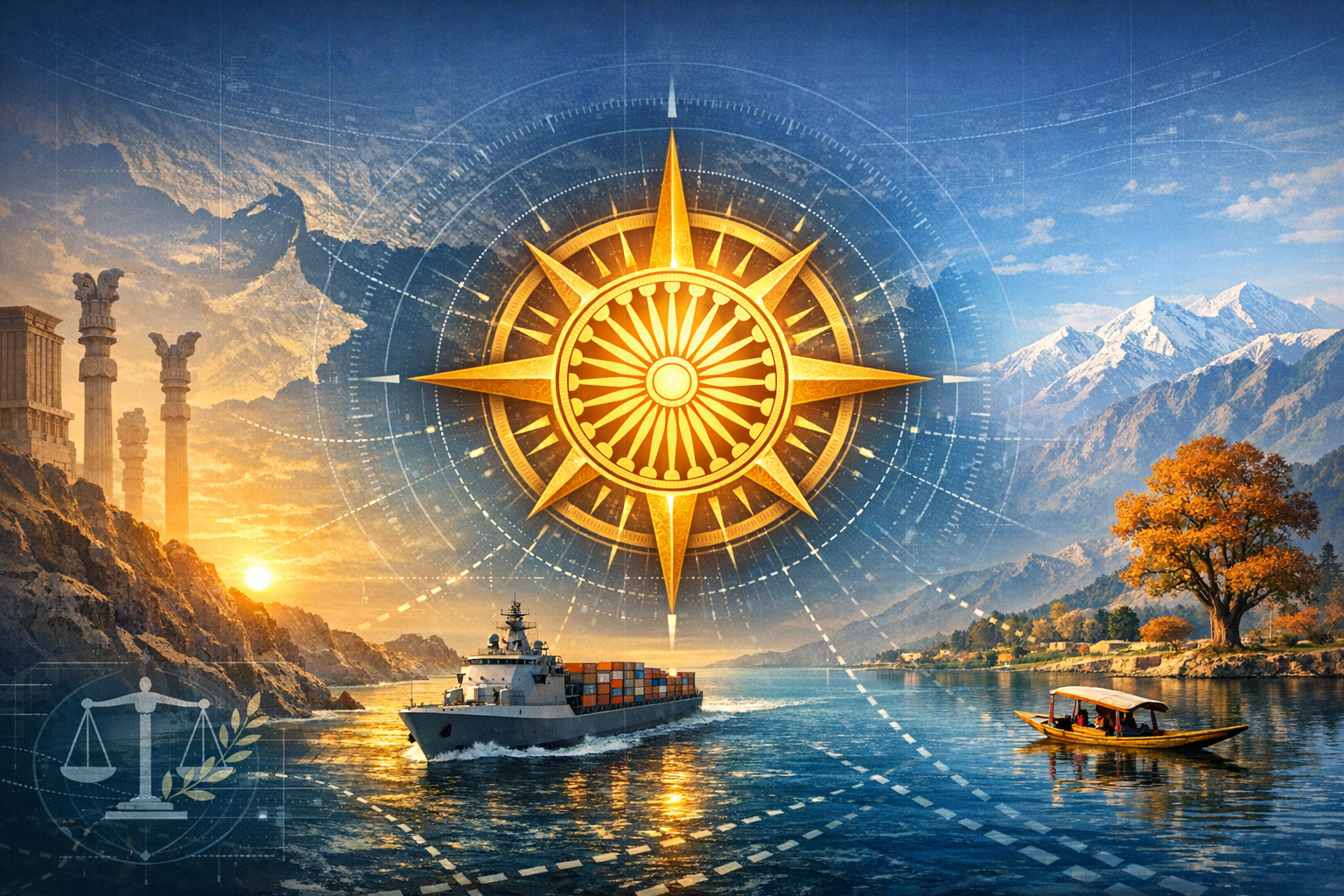
A reality check begins at sea. The Strait of Hormuz, through which roughly a fifth of the world’s seaborne crude flows, has witnessed repeated episodes of coercive interdictions and seizures. Indian‑linked commercial interests have been exposed through vessel detentions and the endangerment of crews, some of whom have been Indian nationals. Such incidents transform a global trade artery into a conditional passage, directly elevating India’s maritime risk, insurance premiums, and energy security exposure. This is not abstract geopolitics; it is real‑time pressure on India’s sea lanes, balance of payments, and supply chains.
This maritime vulnerability converges with a troubling information trend: narratives on social media that romanticise “anti‑Western resistance” without rigorous due diligence. These frames, amplified by disparate groups, can elide fundamental questions: What is the external actor’s stance toward India’s sovereignty? Toward pluralism and religious freedom? Toward the safety of Indian crews and commerce? Advocacy divorced from these tests is not informed solidarity; it is a misalignment with India’s interests and Dharmic responsibilities.
In Kashmir, geopolitics and ideology intersect with internal consequences. Since 1979, aspects of Iran’s revolutionary discourse have had resonance among some audiences beyond Iran’s borders. Where Kashmir is framed primarily as a theatre of “resistance,” external validation can inadvertently legitimise separatist rhetoric that marginalises India’s constitutional sovereignty and the lived trauma of Kashmiri Hindus. The 1990s exodus and continuing displacement of Kashmiri Hindus remain a grave injustice. A Dharmic perspective demands dignity, safety, and rights for all communities in Jammu & Kashmir and rejects any external narrative that undermines that balance.
Understanding the IRGC model is central to sober analysis. Domestically, the IRGC and its auxiliaries (including the Basij) are documented to have played leading roles in suppressing dissent, most notably during the 2019 protests and the 2022–2023 demonstrations following Mahsa Amini’s death. International human rights organisations and UN mechanisms have reported extensive restrictions on civil liberties, media, and expression. Externally, components such as the Quds Force have projected influence across the Middle East, shaping conflicts that destabilise maritime trade and energy markets upon which India depends.
From a Dharmic and human rights lens, freedom of conscience and worship is non‑negotiable. In Iran, the Baháʼís face systemic discriminationdocumented patterns include barriers to higher education, employment restrictions, property seizures, and pressure on community leadership. Zoroastriansheirs to Persia’s ancient spiritual traditionsremain a small, recognised minority with a cherished cultural legacy, yet one that endures bureaucratic and social constraints. India’s long tradition of sanctuary for Zoroastrians (Parsis) stands as a civilisational bridge worth strengthening through cultural, academic, and people‑to‑people exchanges.
History cautions against selective memory. The Muslim conquest of Persia precipitated the fall of the Sasanian Empire and catalysed a profound civilisational transition. Zoroastrian institutions waned as new religio‑political structures consolidated power, reshaping language, law, and culture. A nuanced appreciation recognises both the enduring Persian aestheticpoetry, art, ethicsand the costs borne by pre‑Islamic institutions under shifting hegemonies.
On the Indian subcontinent, trajectories diverged. Following the Umayyad conquest of Sindh, India encountered multiple waves of Islamic rule. Yet powerful Hindu politiesthe Gurjara‑Pratihara confederation, Chalukyas, and later the Marathaspreserved extensive zones of civilisational continuity. Languages, temple networks, local jurisprudence, and scholastic traditions adapted, survived, and in many places flourished. The point is not triumphalism; it is resilience. India was challenged, but never erased.
These historical insights carry strategic and moral implications for present policy. India’s interests vis‑à‑vis Iran are multidimensional: energy security, connectivity (including Chabahar), diaspora safety, and stability in the Persian Gulf. Balanced statecraft must uphold three non‑negotiables: maritime security for Indian shipping, non‑interference in India’s internal affairs (including Kashmir), and credible improvements in human rights conditions affecting minorities and protesters. Pursuing these aims does not preclude engagement; it requires firm lines, consistent diplomacy, and readiness to diversify risks.
A Dharmic lensshared across Hinduism, Buddhism, Jainism, and Sikhismanchors this approach. Ahimsa rejects the normalisation of coercion; satya insists on evidence‑based assessment over ideological passion; karuna demands empathy for all peoples, including Iranians who desire dignity and reform; and aparigraha warns against unhealthy dependencies, whether on contested sea lanes or politicised supply corridors. This shared ethos unites India’s Dharmic traditions in favour of principled pragmatism.
Practically, India can strengthen maritime resilience through a layered toolkit: enhanced naval presence in choke points; convoying when necessary; robust coordination with regional navies; expanded satellite and AIS monitoring; and calibrated engagement with Gulf littorals to standardise incident response. Insurers and shippers benefit from predictability; Indian seafarers deserve stronger consular protocols and pre‑deployment risk briefings tailored to Gulf and IndianOcean routes.
Energy Security requires dual hedging. First, diversify crude sourcing and logistics pathways to reduce dependence on chokepoints vulnerable to IRGC‑linked escalation. Second, expand strategic petroleum reserves and flexible term contracts to cushion shocks. Third, scale domestic refining optimisation and accelerate clean‑energy transitions where cost‑effective, lowering exposure to geopolitical volatility without compromising growth.
Parallel to sea‑lane security, information hygiene at home is essential. Media literacy initiatives should equip citizens to interrogate frames that valorise “resistance” while ignoring maritime coercion, hostage diplomacy, or the suppression of religious minorities. Universities and think tanks can model best practice: weigh claims against open‑source intelligence, legal designations, UN reporting, and corroborated human rights documentation. Geopolitics rewards clarity, not slogans.
Engagement with Iranian society should distinguish civilisation from coercive apparatus. Collaborative scholarship on Sanskrit–Persian exchanges, Avestan studies, shared scientific heritage, and the history of Zoroastrianism can deepen people‑to‑people trust. Cultural diplomacyexhibitions, translations, academic residencieshelps celebrate the Persian legacy India has helped preserve, while avoiding endorsement of repressive state behaviour.
In Kashmir, the strategic communication goal is balance rooted in law and compassion. Recognise the constitutional status and security imperatives; insist on the return, safety, and dignified rehabilitation of Kashmiri Hindus; and affirm the rights and aspirations of all residents to education, mobility, and opportunity. External ideological validation of separatismwhatever its sourceundermines these imperatives and harms civilians across identities.
A concise review of the IRGC’s footprint clarifies the stakes. Its hybrid designcombining military, intelligence, and economic armsenables rapid coercive leverage at sea and on land. Designations and sanctions by several countries reflect that assessment. For India, the operational question is straightforward: how to constrain risk transmission from IRGC‑related activities into Indian shipping, energy flows, and diaspora safety without foreclosing constructive state‑to‑state engagement where mutual interests exist.
Legal tools can complement diplomacy. India can press for transparent resolution mechanisms when Indian crew or cargo are impacted; advocate for uniform application of the law of the sea; and, when warranted, leverage international maritime forums to document and deter unsafe conduct. Clear, predictable redress channels reduce escalation incentives and protect commerce.
Economic planning should assume periodic Gulf disruptions as a baseline scenario. Enterprise risk management across refineries, logistics firms, and export consortia ought to include contingency routing, inventory buffers, and hedging strategies tuned to Gulf premiums. Government‑industry tabletop exercisessimulating Hormuz closures or escalatory interdictionscan compress response times and sustain trade throughput.
For domestic discourse, the Dharmic baseline offers a unifying message. Hindu, Buddhist, Jain, and Sikh traditions converge on compassionate realism: protect the innocent, refuse complicity in repression, and eschew romanticism about any actor that employs coercion. This stance supports solidarity with the Iranian people and respect for Iran’s civilisation, while remaining vigilant toward power structures that contravene fundamental freedoms.
None of this is an argument for isolation. It is an argument for principled engagement: maintain channels with Tehran on connectivity and trade; collaborate where interests genuinely align; and conveyprivately and publiclythat harassment of commercial shipping, suppression of peaceful protest, and discrimination against minorities such as the Baháʼís are incompatible with stable relations. Consistency deepens credibility.
The historical arcfrom the Sasanian transition to India’s Gurjara‑Pratihara and later Maratha resilienceteaches two durable lessons. Civilisations endure through adaptation, not denial. And the most durable power blends moral clarity with strategic dexterity. For India, that means defending sea lanes, insulating the economy from shocks, and aligning foreign policy with Dharmic values that honour all faiths and peoples.
At a human level, the choices are simple even when the policies are complex. Indian sailors deserve safe passage. Iranian citizens deserve dignity and voice. Kashmiri familiesof every communitydeserve security and opportunity. India’s calling is to convert these moral intuitions into coherent statecraft.
India’s best path forward is neither naïveté nor hostility. It is a clear‑eyed middle way: engage Iran’s civilisation, stand with its people, minimise exposure to militarised risk, and speak plainly about rights. In doing so, India serves both national interest and the shared Dharmic aspiration for a world anchored in truth, compassion, and balance.
Inspired by this post on Hindu Human Rights Blog.