From a single flower placed with care to elaborate temple liturgies, the practice of puja in Hinduism crystallizes a profound idea: worship can be at once intimate, embodied, and philosophically deep. The linguistic link often drawn to the Dravidian term ‘pu,’ meaning flower, highlights the primacy of a simple bloom in mediating the human–divine relationship. Over centuries, that simplicity has at times been overshadowed by complexity, yet the timeless essence of puja remains accessible through intention, restraint, and reverence.
Etymology and philology illuminate how meanings accrue in ritual terms. Many philologists trace the Sanskrit pūjā to the verbal root pūj, “to honor, revere.” At the same time, a complementary line of interpretation emphasizes Dravidian influence: Tamil pū (flower) and pūjai/pūcai (worship) reflect a longstanding semantic bond between flowers and veneration across South Asia. Rather than a single-source derivation, the history of usage suggests a confluenceSanskrit honorific semantics meeting Dravidian floral symbolismconverging in the ritual grammar that foregrounds the flower as an archetypal offering.
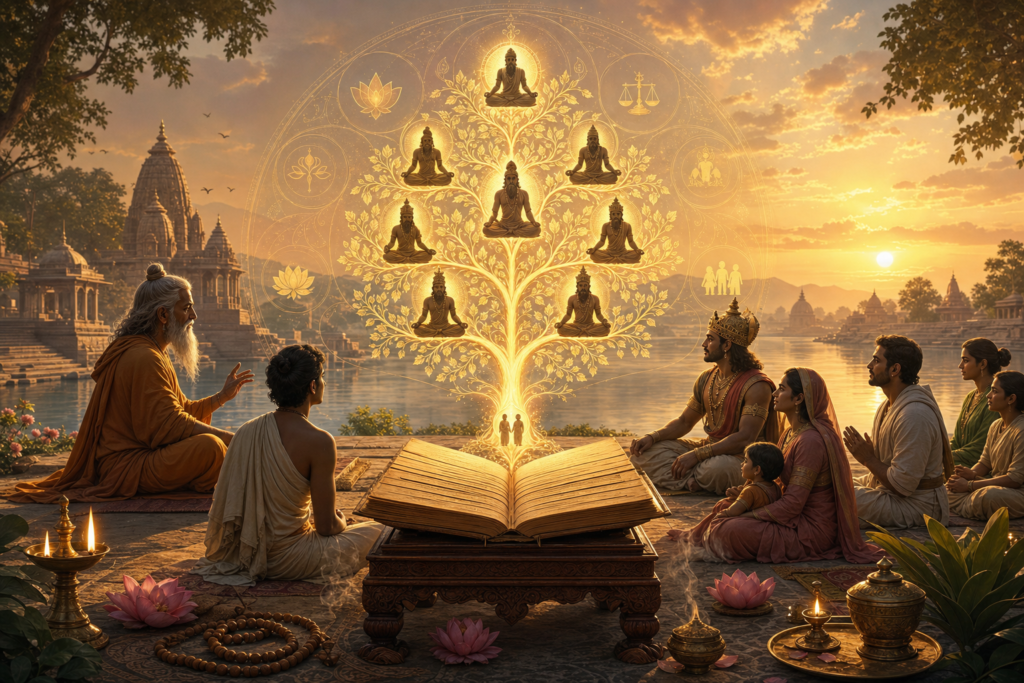
Textual history reinforces this evolution. Early Vedic literature centers on yajña (sacrifice), while terms like upāsanā (attentive sitting, inward worship) and archana (honorific offering) gain prominence from the late Vedic and early classical periods. The Gṛhya Sūtras, Dharmaśāstras, Purāṇas, and Agamas progressively codify pūjā for household and temple contexts. Vaikhānasa and Pāñcarātra traditions systematize Vaiṣṇava rituals; Śaiva Agamas prescribe parallel frameworks; Śākta tantras elaborate goddess-centered modes. Across these corpora, the offering of flowerspuṣpaappears as a recurring, structuring act of devotion.
The flower’s ritual power lies in its qualities: beauty, fragrance, freshness, and ephemerality. As a gift that must be plucked at the right moment, handled gently, and offered promptly, the flower honors life’s transience and channels gratitude for its fleeting perfection. Philosophically, the bloom mirrors principles treasured across Dharmic traditionsimpermanence (anicca/anitya), non-possessiveness (aparigraha), and the call to perceive the subtle (sūkṣma) within the gross (sthūla). In this sense, the flower is not a mere object but a disciplined way of seeing and feeling.
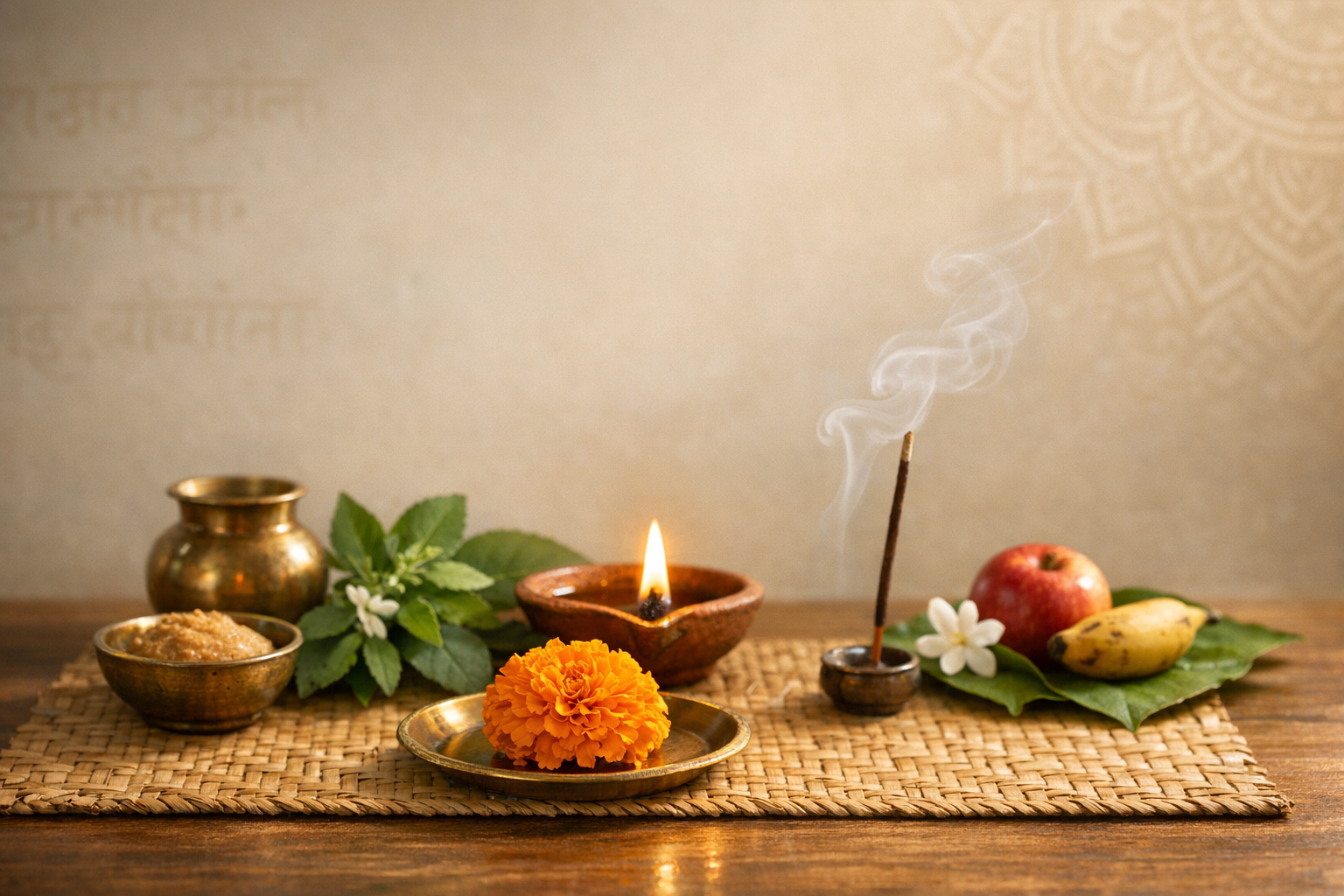
The canonical structure of pūjā expresses this insight through sensory offerings (upacāras). In the pañcopacāra template, five essentials engage smell, sight, touch, taste, and sound: gandha (sandal or fragrance), puṣpa (flowers), dhūpa (incense), dīpa (lamp), and naivedya (edible offering). Each element invites a mindful recognition that all faculties and the entire environment are reoriented toward the sacred presence.
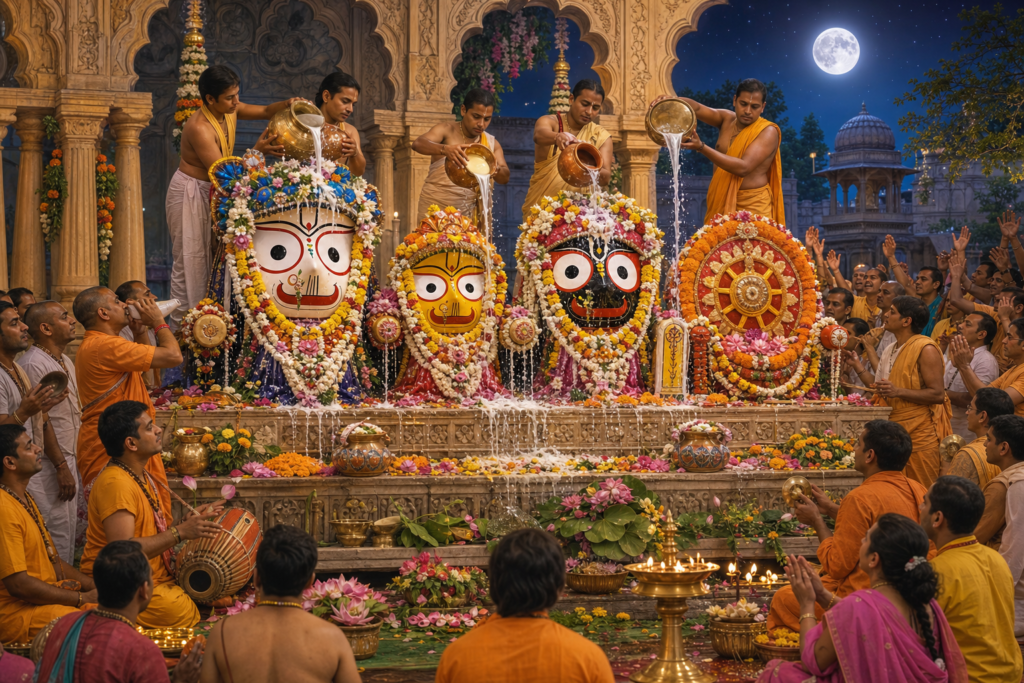
Expanded sequences such as daśopacāra (ten offerings) and śoḍaśopacāra (sixteen offerings) add nuance and hospitality: āvāhana (invitation), āsana (seating), pādya (water for feet), arghya (honorific water), ācamanīya (sipping water), snāna/abhiṣeka (bathing), vastra/ālaṅkāra (garments and adornment), gandha (fragrance), akṣata (unbroken grains), puṣpa (flowers), dhūpa (incense), dīpa (lamp), naivedya (food), tāmbūla (betel), pradakṣiṇā–namaskāra (circumambulation–prostration), and visarjana (ceremonial send-off). Whether five or sixteen, the ritual grammar remains coherent: to honor the divine through care, attention, and beauty.
These patterns resonate across the wider Dharmic family. In Buddhist contexts, pūjāespecially flower and lamp offeringspervades Theravāda and Mahāyāna practice, with the seven-limb pūjā articulating confession, rejoicing, offering, and dedication as interior liturgies. Jain worship formalizes the aṣṭaprakāri pūjā (eightfold worship), which includes puṣpa alongside jala, candana, dhūpa, dīpa, naivedya, phala, and arghya; crucially, ahimsa guides how and when flowers are obtained or replaced by non-harmful substitutes. Sikh practice centers seva, kīrtan, and the primacy of śabda (divine word) rather than image-oriented ritual; where flowers appear, they function as respectful adornment of space and service, while the emphasis remains on inner devotion. Across these traditions, the shared ethic is unmistakable: sincerity eclipses spectacle, and the heart of worship outlives its forms.
Botanical symbolism further integrates philosophy and practice. Tulasi leaves, cherished in Vaiṣṇava traditions, embody satva and loving devotion; bilva leaves, with their tripartite form, honor Śiva and recall the union of knowledge, action, and will; lotus, opening from mire to light, images spiritual ascent and purity across Hindu, Buddhist, and Jain art; hibiscus, vivid and energetic, is dear to Devī. Regional liturgies and Purāṇic narratives also record careful prohibitionssuch as ketakī for Śivaunderscoring that ritual ecology and mythic memory co-shape what is offered, when, and to whom.
The anthropology of offering casts the flower as a refined gesture within a sacred gift economy. In giving what is fragrant and fresh, the devotee participates in a cycle of grace and reciprocity: the deity is honored; the offering returns as prasāda; and the community is nourished in body and spirit. The ritual thus yokes aesthetics to ethics, and personal devotion to shared well-being.
Ethical and ecological discernment are integral to this vision. Eco-conscious choicesseasonal, locally grown flowers; non-invasive species; avoidance of plastics and chemical dyes; and responsible immersion or compostingalign pūjā with ahiṁsā and stewardship. Jain guidance on minimizing harm, Buddhist reflections on interdependence, Sikh seva for community and environment, and Hindu dharmaśāstra’s concern for purity and restraint converge here: worship that honors the divine must also honor the earth.
Modernity has diversified the forms of pūjā. Temple liturgies have grown intricate under Agamic frameworks, festival “eventization” has multiplied materials and logistics, and digital media enable remote darśana and livestreamed rituals. While these expansions can democratize access and sustain heritage, they sometimes eclipse the elemental simplicity that once defined daily worship. The corrective does not require abandonment of tradition; it calls for recollection of first principles: clarity of intent (śraddhā), steadiness of attention (ekāgratā), and beauty expressed without excess.
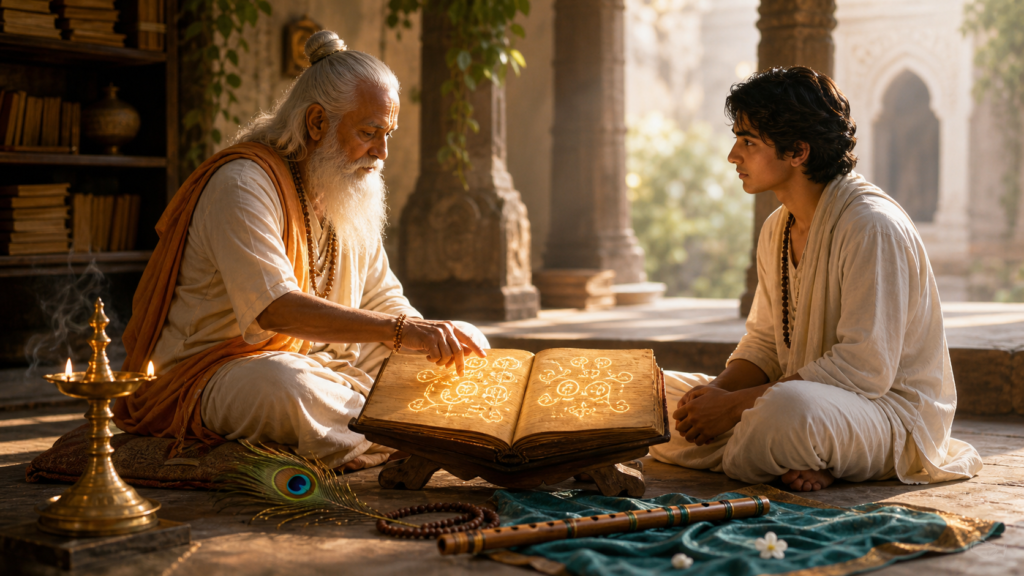
A minimalist home practice demonstrates how essence precedes elaboration. A clean space, a lamp (dīpa), water in a small vessel, a flower (or symbolic substitute if needed), and a brief mantra or verse can constitute a complete rite. One concise pattern might be: silent centering; āvāhana with folded hands; offering of gandha, puṣpa, dīpa, and naivedya; a short stotra; and a closing dedication of merit for family, community, and all beings. In this frame, even a single flower offered with care becomes a doorway to the sacred.
Read philosophically, the flower in pūjā trains perception. It invites recognition that value is not measured by duration or price but by attentiveness, fit, and harmony. In Hinduism’s Bhakti Tradition, love is the metric; in Buddhism, clarity and compassion; in Jainism, non-harm and self-discipline; in Sikhism, remembrance of the Divine Name through seva and song. The outward act remains humble; the inner transformation is profound.
Returning to the etymological threadwhether one emphasizes Sanskrit honorific roots or Dravidian floral resonancethe historical arc points to the same center: from flower to faith. Re-centering worship on this essence counters needless complexity, fosters unity across Dharmic traditions, and anchors practice in ethical, ecological, and aesthetic integrity. In that remembered simplicity, a bloom becomes both an offering and a teaching.
Inspired by this post on Hindu Blog.