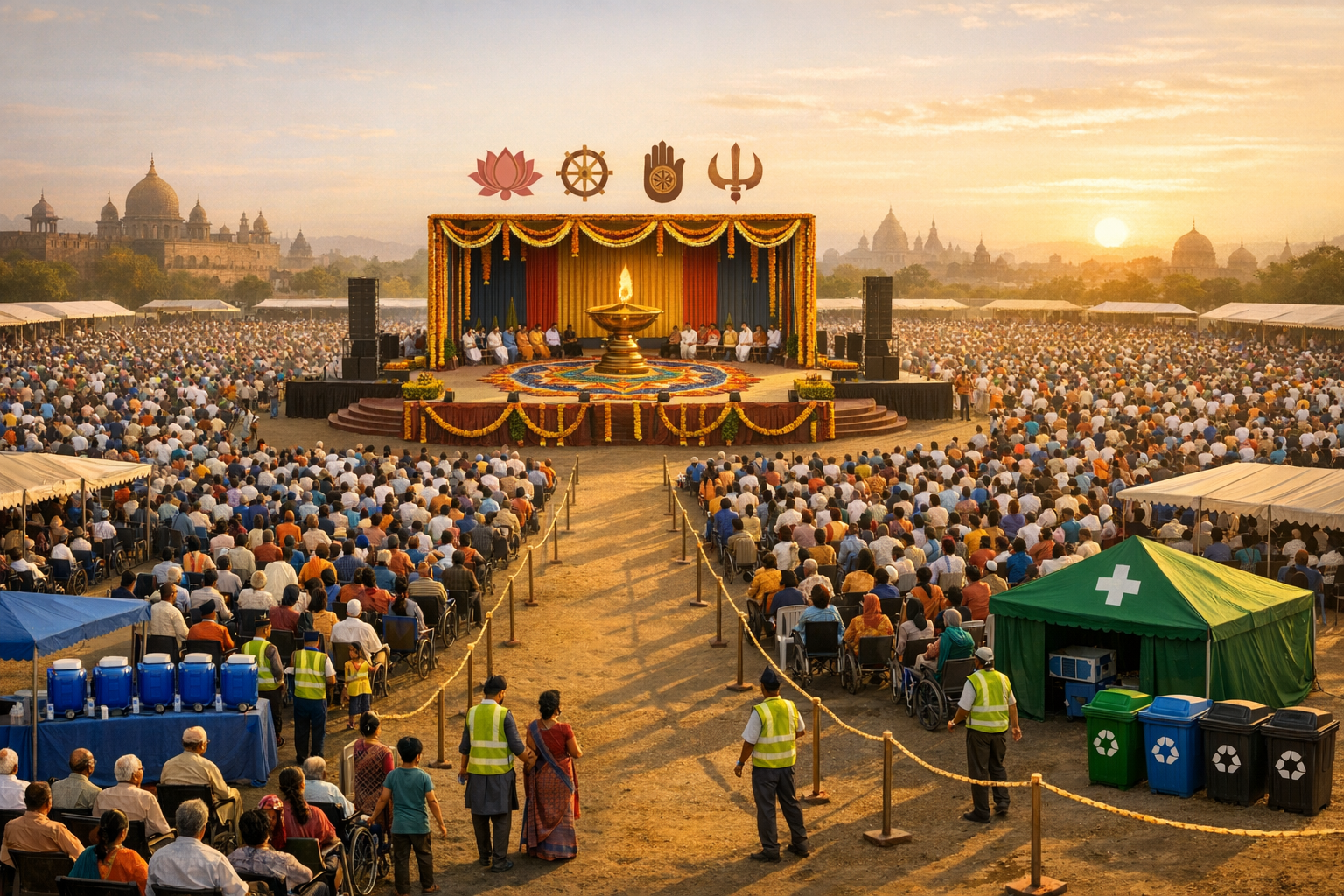
More than 4,000 devout Hindus gathered in Chhatrapati Sambhajinagar for a Hindu Rashtra-Jagruti Sabha, a peaceful public assembly focused on cultural awareness (jagruti), civic responsibility, and dharmic unity. The turnout reflected disciplined participation, community solidarity, and a shared commitment to safeguarding India’s plural civilizational heritage under the umbrella of Sanatana Dharma.
Located in Maharashtra, Chhatrapati Sambhajinagar (formerly Aurangabad) is a historically layered urban center where diverse communities, temples, dargahs, monasteries, and gurudwaras coexist. Hosting a large-scale sabha in this setting underscored a constructive civic message: cultural affirmation can proceed hand in hand with interfaith respect, public order, and constitutional propriety.
As a community format, a Hindu Rashtra-Jagruti Sabha typically emphasizes awareness about dharma-informed living, heritage preservation, community seva, and lawful activism. Rather than political agitation, the operative thrust in such gatherings is educationalexplaining rights and duties, encouraging ethical conduct, and inspiring participants to contribute to social welfare in ways that strengthen local institutions and neighborhood harmony.
In alignment with the principle of Unity in Diversity, the sabha’s framing is inclusive of the broader dharmic familyHindu, Buddhist, Jain, and Sikh traditionswhose shared ethos of compassion, self-discipline, and service can anchor social cohesion. This cross-dharmic lens is not merely symbolic; it offers a practical framework for cooperative projects such as cleanliness drives, food distribution, heritage documentation, and youth mentorship across communities.
Managing a congregation exceeding 4,000 attendees demands methodical planning. Standard operating procedures typically include segmented entry and exit lanes, volunteer-led wayfinding, public-address announcements, potable water and sanitation points, and first-aid stations integrated with local emergency services. Crowd-science normssuch as maintaining comfortable densities near or below two persons per square meter in key zones, monitoring bottlenecks, and scheduling staggered program moduleshelp ensure safety and accessibility for elders, children, and persons with disabilities.
Program architecture at sabhas of this nature generally blends cultural performance and knowledge transmission. Recitations, bhajans, and short dharma discourses are often paired with practical sessions on civic duties, digital hygiene (countering misinformation without hostility), legal literacy, and pathways for structured community engagement. The balance of inspiration and instruction is central to sustained impact, turning a single evening into a year-long calendar of seva.
From a constitutional perspective, peaceful assembly is protected under Article 19(1)(b) of the Constitution of India, subject to reasonable restrictions in the interests of public order and morality. Organizers therefore typically coordinate with municipal authorities and law enforcement, observing time, sound, and safety regulations. Such compliance not only safeguards the event but also models civically responsible conduct for youth volunteers who often form the operational backbone of these gatherings.
Impact is best assessed beyond attendance figures. Indicative metrics include sign-ups for volunteer networks, initiation of weekly study circles, temple and monastery maintenance drives, blood donation camps, disaster-relief training, and neighborhood mediation initiatives. Structured feedback mechanismspre/post-event surveys and digital follow-upsallow organizers to calibrate future sessions toward the most urgent local needs, from environmental stewardship to heritage conservation.
Inclusivity and sustainability are increasingly embedded into sabha planning. Typical good practices include multilingual announcements, women- and youth-led facilitation teams, accessible seating, shade and hydration stations, and green protocols such as minimizing single-use plastics and ensuring post-event cleanups. These measures translate the ethics of ahimsa and seva into concrete, measurable outcomes.
Large public gatherings can attract heightened media and social-media attention. Responsible communicationtimely advisories, transparent schedules, verified imagery, and content moderation policieshelps reduce rumor cascades and maintains trust. In a climate where narratives travel quickly, clarity and restraint are strategic assets, protecting both participants and the wider community.
Across Maharashtra and India, sabhas akin to this one have been convened by a range of civil-society platforms. The format is commonly associated with initiatives of Hindu Janajagruti Samiti (HJS) and allied community groups, which emphasize cultural advocacy, legal awareness, and community engagement. While formats vary, the shared throughline is constructive citizenship rooted in dharma, not antagonism toward other faiths.
Against the backdrop of Chhatrapati Sambhajinagar’s layered heritage, the peaceful assembly of more than 4,000 devout Hindus assumed a broader significance: it demonstrated how cultural affirmation can build bridges rather than walls. Grounded in Sanatana values and open to collaboration with the wider dharmic family, such sabhas can serve as repeatable models for unity, resilience, and service across India’s cities and towns.
Viewed through this lens, the Hindu Rashtra-Jagruti Sabha in Chhatrapati Sambhajinagar was less an endpoint than a catalystprompting participants to transform awareness into action, and reverence into responsible public life. When cultural identity is coupled with empathy, legality, and interfaith respect, community gatherings become engines of common good.
Inspired by this post on Hindu Jagruti Samiti.