

Adhika Jyeshta Masam 2026 in the Telugu Chandramana Panchangam begins on 17 May 2026 and concludes on 15 June 2026, falling within the 2026–2027 cycle known as Parabhava Nama Samvatsaram. This intercalary period—widely called Adhika Masam, Adhik Maas, or Purushottama Maas—carries a distinct spiritual focus dedicated to Lord Krishna (Purushottama), emphasizing devotion, reflection, and ethical conduct.
Within the broader Hindu lunisolar framework followed in the Telugu calendar (amanta system: new moon to new moon), months are regulated by lunar tithis and anchored to the solar year by saṅkrānti (the Sun’s ingress into a new zodiac sign). When a lunar month unfolds without any saṅkrānti, that entire lunar month is designated as Adhika Masam to maintain long-term alignment of lunar months with the solar year.
Technically, Adhika Masam arises because 12 synodic lunar months total about 354 days, approximately 11 days shorter than the solar year. Periodic intercalation—roughly every 32 months (seven times in a 19-year span)—prevents progressive drift of seasons and festivals. In the computational logic of the Chandramana Panchangam, the absence of saṅkrānti between two consecutive amāvasyās (new moons) triggers the designation of an Adhika month; conversely, the exceedingly rare kṣaya māsa phenomenon occurs when two saṅkrāntis fall within a single lunar month.
Because the Sun does not enter a new rāśi during this specific lunar cycle, the intercalary month inherits the name of the following standard month—hence “Adhika Jyeshta Masam” in 2026. After it ends, the next regular Jyeshta is often termed “Nija Jyeshta” (or “Śuddha Jyeshta”) in almanacs to distinguish it from the intercalary period.
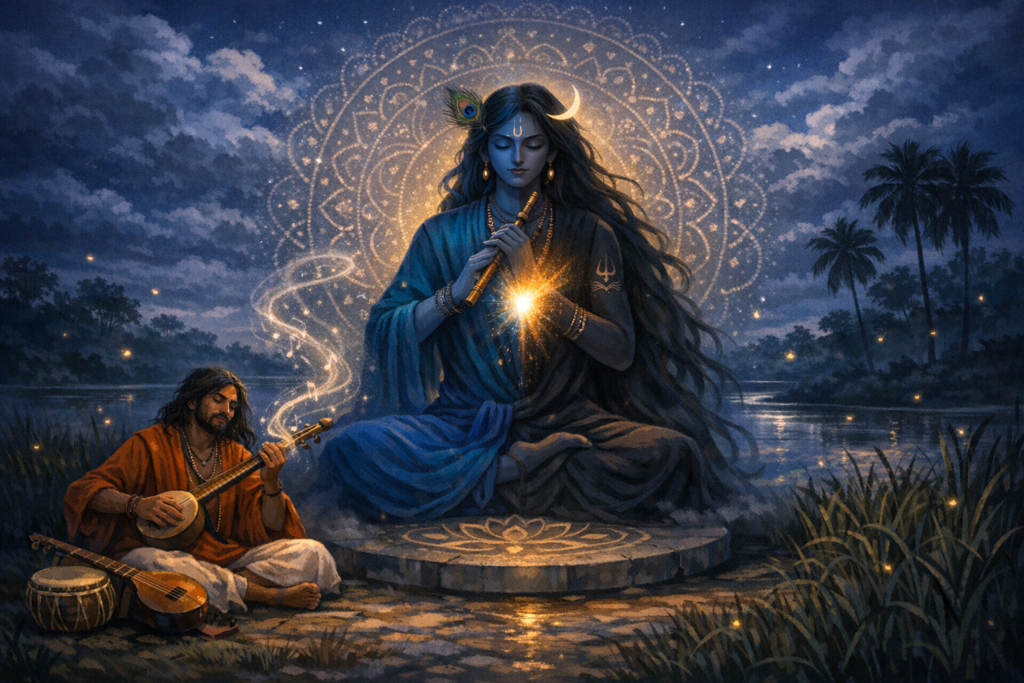
In the Telugu cultural sphere (Andhra Pradesh and Telangana) and across the broader Vaishnava world, Adhika Masam is held to be Purushottama’s own month, foregrounding Krishna-bhakti and self-purification. Puranic literature—especially narrative sections popularly known as Māhātmyas in the Padma Purana and Skanda Purana—portrays this month as uniquely powerful for spiritual merit earned through righteous intent (bhāva), vrata, and sustained remembrance of the Divine.
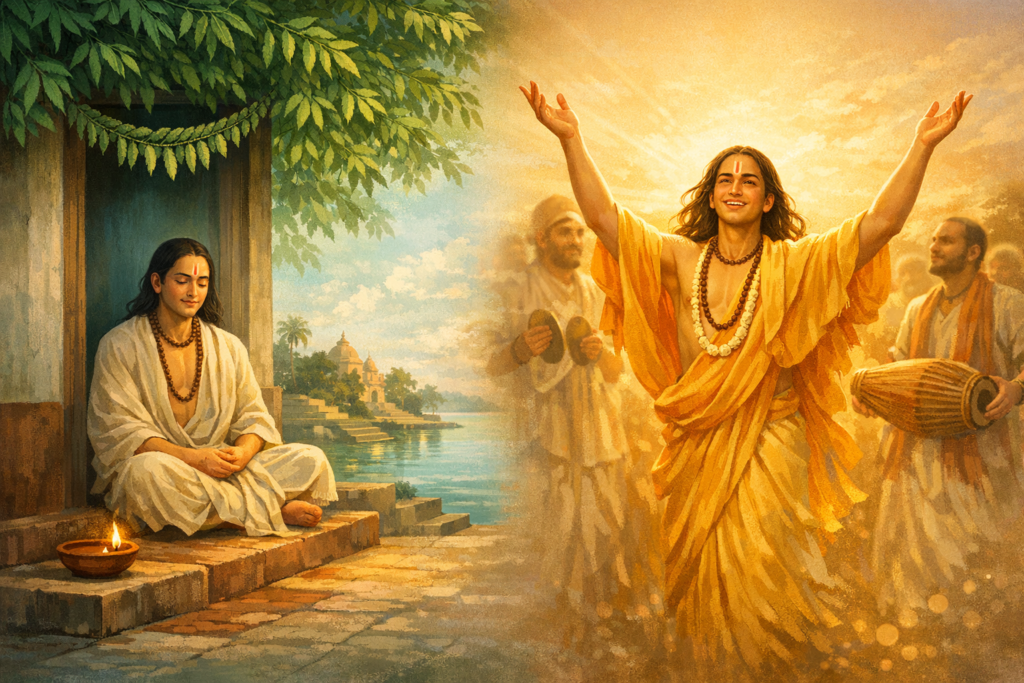
Recommended observances align with time-tested Vaishnava and pan-dharmic ethics: daily japa of the Divine Name, parāyana of Bhagavad-Gita and select cantos of Srimad Bhagavatam, recitation of Vishnu Sahasranama, listening to satsaṅga discourses, and heightened commitments to dāna (charity), annadāna (feeding), cleanliness, and truthfulness. Devotees of Lord Krishna often undertake specific Purushottama-vratas for all or part of the month, prioritizing ahimsa, seva, and śraddhā in personal conduct.
From a calendrical perspective, the month contains both Krishna Paksha and Shukla Paksha phases, with the customary Ekadashi fasts in each half. Many households choose to observe both Ekadashis, given the special emphasis on ananya-bhakti to Purushottama. As always, exact sunrise-based tithi transitions and festival timings may vary by location; consulting a reliable local Panchang ensures precision.
While auspicious for spiritual disciplines, many regional panchang traditions advise postponing major worldly initiations—such as weddings, griha pravesh, and large-scale commercial launches—until after Adhika Masam. This guidance is practical rather than prohibitive: the intercalary month is framed as a period to rebalance one’s inner life through study, service, and devotion, so that subsequent worldly undertakings begin with clarity and grace.
The Telugu calendar’s amanta convention (new moon to new moon) contrasts with the purnimanta convention (full moon to full moon) seen in parts of North India. Both systems, however, utilize the same astronomical backbone of tithi computation and solar ingress. In either system, the core rule for Adhika Masam remains grounded in the absence of saṅkrānti within a lunar month.
Shared dharmic values provide a unifying ethos throughout Adhika Masam. In many Jain communities, the period inspires intensified pratikraman, tapas, and structured dāna. Buddhist practitioners may deepen meditation, compassion (karuṇā), and mindful giving. Sikh saṅgats frequently emphasize seva, kirtan, and community meals (langar). These convergences reflect a common commitment to inner refinement, compassion, and service across Hinduism, Buddhism, Jainism, and Sikhism—fortifying unity in spiritual diversity.
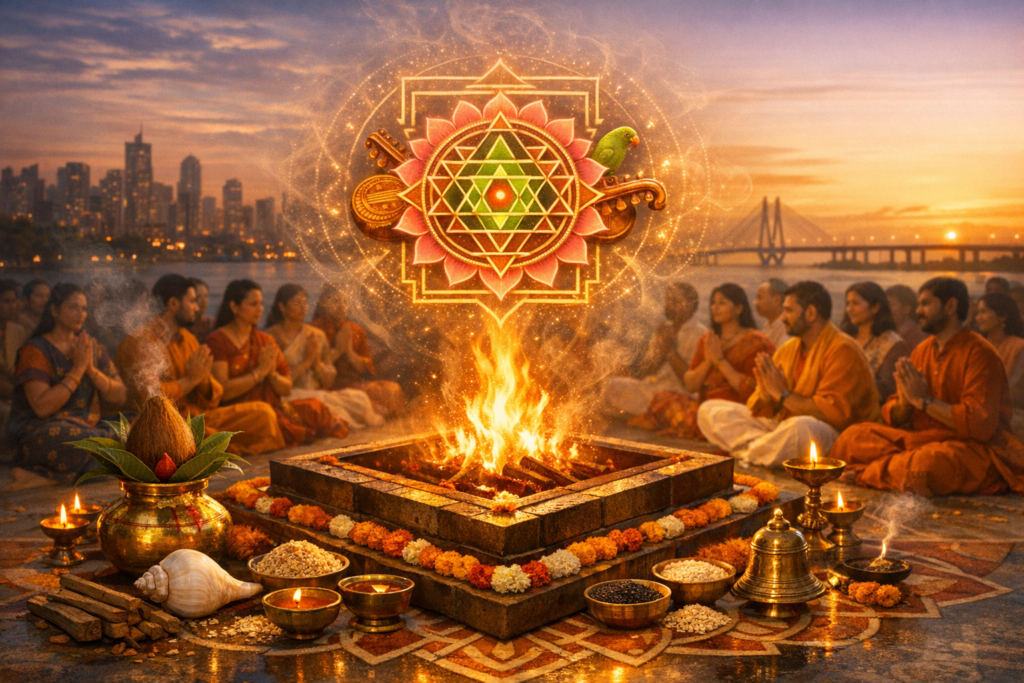
In Andhra Pradesh and Telangana, temples commonly host Gita and Bhagavata parayanas, bhajan and kirtan saptahas, special Krishna archana, and annadāna. Families report an atmosphere of quiet joy and collective purpose, with children learning shlokas and elders guiding simple daily disciplines like early rising, lamp lighting (deepa), and scriptural reading.
Devotees often ask how frequently Adhika Masam appears and whether its name always aligns with a specific month. In practice, Adhika Masam cycles through different month-names based on when the no-saṅkrānti condition occurs; the 2026 instance is “Adhika Jyeshta Masam.” Over decades, such intercalations distribute evenly enough to keep lunar observances seasonally coherent without altering the essential rhythm of sacred festivals.
A final note on accuracy: panchang calculations depend on local sunrise, longitude, and latitude. For ritual muhurta, Ekadashi parana, and precise tithi boundaries, a trusted regional Panchang (or temple advisory) should be followed. The broad observances and ethical focus described here apply universally; timing specifics are best confirmed locally.
In summary, Adhika Jyeshta Masam 2026 (17 May–15 June) offers a rare spiritual reset within Parabhava Nama Samvatsaram. By foregrounding Krishna-bhakti, disciplined study, generosity, and seva, households and communities can transform everyday routines into luminous practice. Honoring this month as Purushottama Maas cultivates steadiness, gratitude, and shared purpose—values cherished across all dharmic traditions and vital to collective well-being.
Inspired by this post on Hindu Pad.








Leave a Reply
You must be logged in to post a comment.