The figure of Aruna, the charioteer of Surya, occupies a distinctive place in Hindu symbolism and iconography. Frequently depicted with an incomplete lower body, Aruna embodies layered meanings rooted in Ancient Hindu Texts, Puranic genealogy, and the Mahabharata tradition. Read as an allegory, this form gestures to the ethical disciplines of patience, right timing, humility, and the dharma of servicevalues that resonate across dharmic traditions.
The narrative begins in the lineage of Daksha Prajapati, where Kadru and Vinata, daughters of Daksha, married the sage Kashyapa. Granted boons for their devotion, Kadru asked for a thousand serpent sons (Nāgas), whereas Vinata requested only two sons. What followed forms a foundational episode in Hindu mythology: the story of maternal impatience, cosmic roles, and consequences that become moral instruction.
According to the Mahabharata and Puranic retellings, Vinata laid two eggs and waited long for their maturation. In a moment of haste, she prematurely broke one egg. From it emerged Arunabrilliant yet not fully formed, often described as lacking a complete lower body. Aruna explained that his partial development resulted from this premature act, and he urged that the second egg be allowed to mature fully, thereby affirming patience as a cardinal virtue in the unfolding of life’s processes.
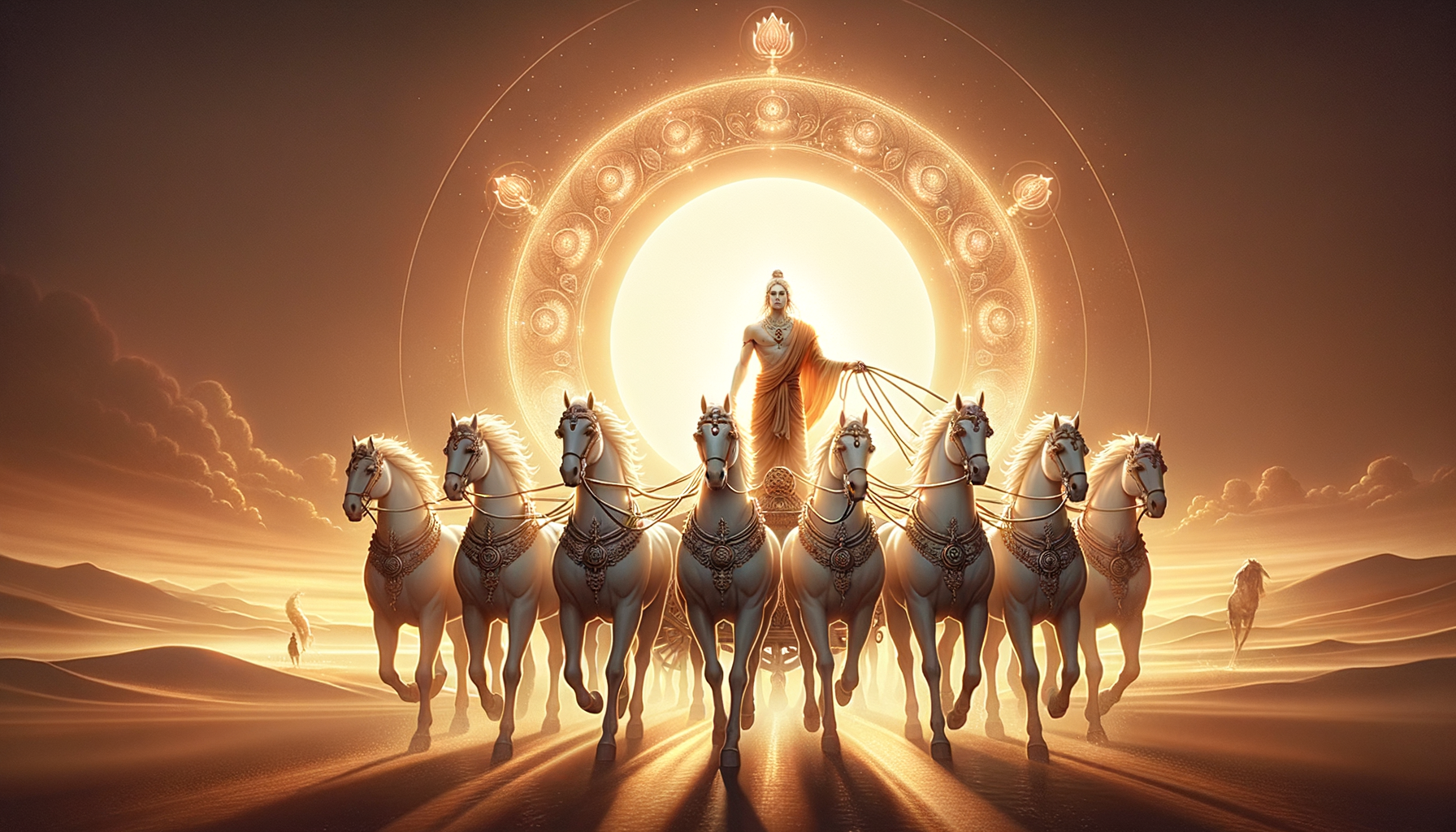
Aruna is thereafter established as the charioteer of Surya (Aditya), and in many traditions, is closely associated with the ruddy glow of dawn (aruna). In Hindu cosmology and daily praxis, dawn functions as a liminal threshold: it moderates the transition from night to the full brilliance of daylight. Likewise, Aruna’s role symbolically “mediates” the Sun’s overwhelming power, making it life-sustaining rather than destructive. This mediating principle reflects the dharma of channeling great energies responsibly.
Iconographically, sculptures and paintings sometimes portray Aruna with a pronounced upper body guiding the reins of Surya’s chariot, but without fully articulated legs. This visual language expresses several interrelated lessons in Hindu symbols: haste yields incompleteness; ethical action requires ripeness of time; and service, when rightly performed, does not seek center stage. In this way, Aruna becomes a philosophical figure as much as a mythic onean embodiment of patience, restraint, and purposeful stewardship.
Aruna’s narrative is inseparable from that of his family. The second egg, allowed to mature, later produced Garuḍa, who would become the mighty vehicle (vahana) of Viṣṇu. Textual traditions also relate that Vinata would undergo a period of servitude to Kadru as a consequence of earlier actions, and that Garuḍa would eventually secure her freedom. Taken together, the destinies of Aruna and Garuḍa reveal a complementary design in Puranic genealogy: dawn and flight, mediation and power, service and liberation.
Read as ethics-in-action, Aruna’s incomplete form instructs that moral excellence depends on kramā (sequence), kāla (timing), and dharma (duty). The symbolism aligns with a broader dharmic understanding shared across traditions: the Buddhist pāramitā of kṣānti (forbearance), the Jain ideal of kṣamā (forgiveness and restraint), and Sikh teachings on patience and seva (selfless service). Such unity in values underscores a common civilizational emphasis on thoughtful action, compassionate strength, and disciplined waiting.
For Hindu iconography and ritual consciousness, Aruna’s presence at daybreak also invites contemplation of thresholds: beginnings are powerful yet delicate, and their success depends on measured emergence. The dawn does not rush; it reveals. This cadence speaks to leadership as stewardship and to knowledge as illumination moderated by humilityan interpretive lens consistent with the Mahabharata’s emphasis on ethical discernment.
In contemporary life, where outcomes are often pressed before their time, Aruna’s story offers a practical guide. Projects, relationships, education, and spiritual practice mature through patient cultivation. The narrative warns that haste can deform what might otherwise arrive whole. Conversely, when vision is yoked to patience and duty, even overwhelming forceslike the radiance of Suryacan be guided for the well-being of all.
Thus, the symbolism of Aruna’s incomplete lower body becomes a profound teaching within Hindu mythology and Ancient Hindu Texts: a reminder that true strength is tempered, that service is noble, and that wisdom is often found in the gentle light of dawnwhere insight expands without blinding, and dharma moves the world forward with grace.
Inspired by this post on Hindu Blog.