
-
Why Hindu Gods Ride Animals: The Profound Symbolism Behind Ganesha’s Mouse and Skanda’s Peacock

Why do Hindu gods ride animals such as Ganesha’s mouse and Skanda’s peacock? In Hindu iconography, vāhanas are a precise symbolic language codified in Purāṇas, Āgamas, and śilpa-śāstra that maps each deity’s ethical and cosmological function. Animals personify instincts and forces that the deity harmonizes, teaching that spiritual mastery begins with taming subtle habits. Case…
-
Lotus in Hand vs. Lotus Throne: Revealing Sacred Power and Meaning in Hindu Sculptures

The lotus in Hindu iconography carries two distinct messages: as a throne it signifies transcendence and cosmic sovereignty, while in the hand it becomes an active emblem of purity, abundance, and compassion. This guide decodes how pedestal, posture, color, and the lotus-as-attribute work together to form a visual grammar in sculptures of Lakshmi, Saraswati, Brahma,…
-
Kabandha as Kali’s Vahana: Tantric Symbolism of Ego-Transcendence and Inner Liberation
This exploration unpacks the esoteric image of Kabandha as Kali’s vahana as found in certain Shakta-tantric interpretations. It clarifies how headlessness symbolizes cutting through ego, aligning the body-mind as the disciplined “vehicle” of Shakti. Readers discover how this symbolism resonates with shared dharmic insights across Hindu, Buddhist, Jain, and Sikh traditions, emphasizing humility, fearlessness, and…
-
Aruna’s Incomplete Form: Hindu Symbolism of Patience and Dharma in Surya’s Charioteer
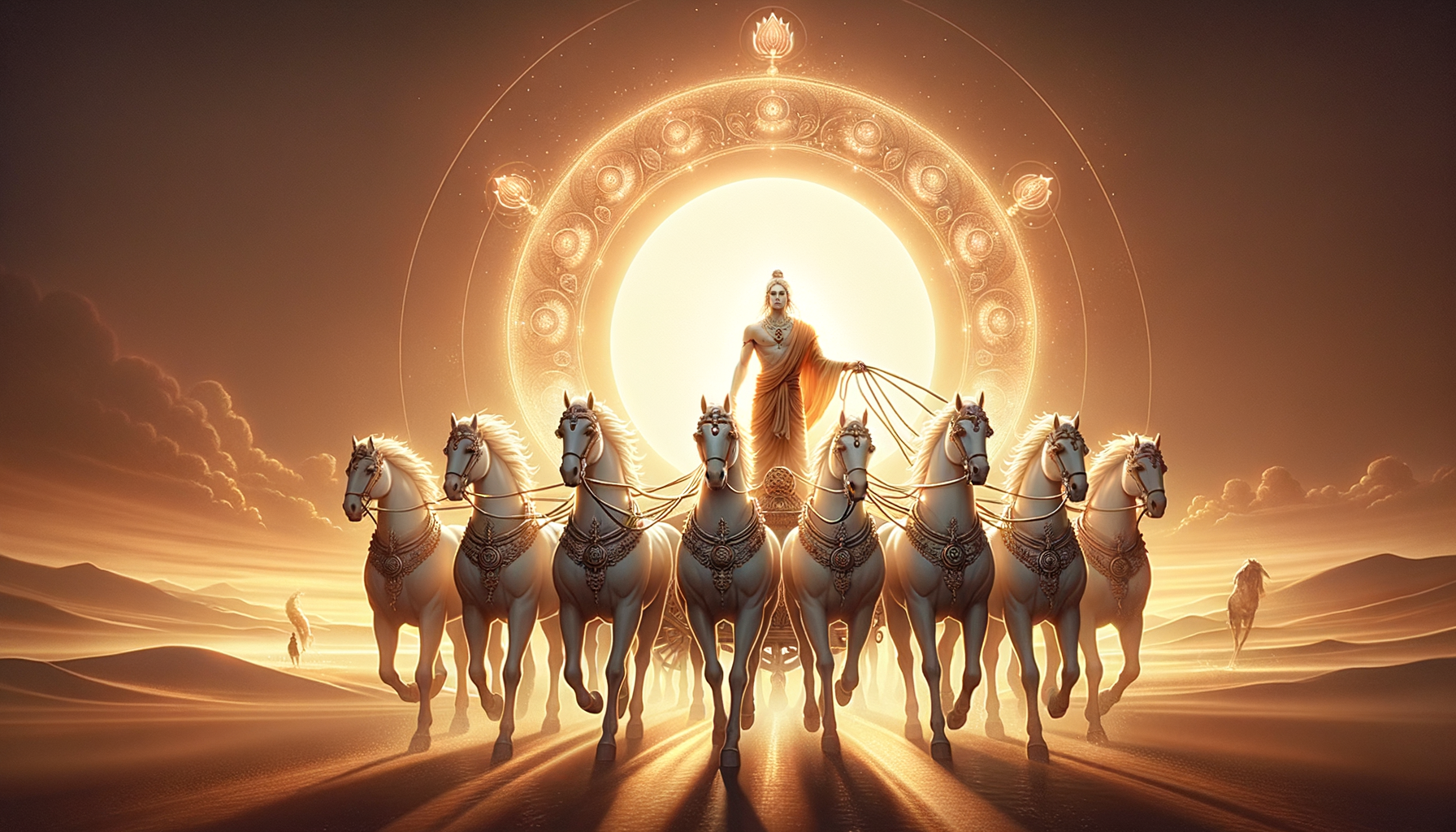
Aruna, the charioteer of Surya, is portrayed with an incomplete lower body to convey a precise ethical message: impatience deforms outcomes, while patience enables wholeness. Rooted in Ancient Hindu Texts and the Mahabharata, the narrative of Vinata’s premature act and Aruna’s emergence becomes a timeless lesson in timing, restraint, and service. As the personification of…
-
Decoding Dakshinakali: The Powerful Tantric Meaning of Jackals in Cremation-Ground Iconography

Tantric depictions of Dakshinakali with jackals in the cremation ground form a precise symbolic language that teaches fearlessness, compassion, and inner integration. The jackals signify liminality, time’s change, and the recycling of what is discardednothing lies outside the Goddess’s compassionate gaze. This iconography affirms ecological and ethical interdependence by revering even life’s overlooked processes. Parallels…
-
Parliament Of The World’s Religions Features Discussion On Distinguishing The Sacred Swastika From Hitler’s Hakenkreuz

The panel at the Parliament of the World’s Religions in Chicago focused on distinguishing the sacred Swastika from Hitler’s Hakenkreuz, featuring representatives from various faiths who highlighted the historical, cultural, and spiritual disparities between these symbols. Emphasizing the Swastika’s ancient origins and positive connotations across Hindu, Buddhist, Jain, and Native American traditions, the discussion clarified…