Many devotees pause before the sanctum and wonder about the sitting posture of Lord Ayyappa. At first glance it resembles a yogasana, yet it conveys far more than a meditation pose: it is a visual scripture of discipline, compassion, and inner steadiness that continues to guide seekers in everyday life.
In traditional iconography, Lord Ayyappa is often depicted in a compact meditative seat with the knees drawn up and secured by a yogapatta (meditation band), a posture frequently referred to as Yogapattasana. The band stabilizes the torso and spine, supporting effortless breath and attention. This carefully composed stillness signals mastery over body and mind, inviting contemplation rather than mere admiration.
Symbolically, the yogapatta is read as a visible metaphor for vratavows that focus the senses and steady the will. For pilgrims to Sabarimala, it resonates with the 41-day vratham of restraint, simplicity, and service. The posture, in this sense, becomes a teaching: commitment anchors the seeker, and measured restraint opens the door to freedom.
Iconographic details often include hands resting on the knees in a contemplative mudra, underscoring knowledge (jnana), serenity, and equanimity. The composed expression conveys karuna (compassion) and inclusion, reassuring devotees that inner effort, not outer identity, shapes spiritual progress. In this way, the image of Lord Ayyappa serves as a living reminder that devotion and discipline can co-exist without strain.
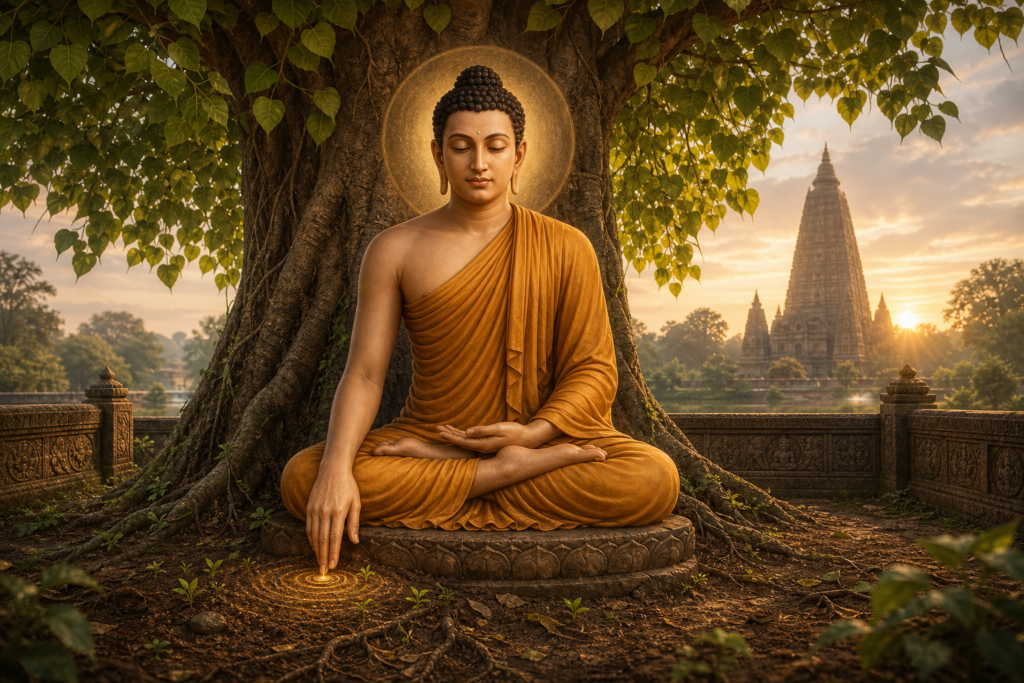
These themes resonate across the broader dharmic family. The steady seat recalls Buddhist meditative postures that cultivate mindfulness and compassion; Jain tradition emphasizes unwavering self-restraint in kayotsarga; Sikh practice centers the mind through Naam Simran. Across these paths, the message aligns: sit well, breathe well, and act wellunity in purpose, diversity in practice.
As Dharma Shasta, Lord Ayyappa embodies harmonyhistorically revered as a bridge between Saiva and Vaishnava lineages. The serene balance in the posture subtly reflects the harmonization of dualities: effort and grace, inward focus and outward service, stillness and strength. For many, it also gestures toward the yogic ideal of balancing energies to rest awareness in a quiet, centered state.
For countless pilgrims, the posture functions as a daily sadhana in image-form. The chant “Swamiye Saranam Ayyappa” naturally syncs with the breath, and the sight of the deity seated in disciplined ease helps devotees cultivate calm attention, ethical clarity, and compassionate actionqualities that travel back with them into home, workplace, and community.
In contemporary life, where restlessness often replaces reflection, Lord Ayyappa’s seated form offers a precise, practical message: ground the body, refine the breath, steady the mind, and let compassion guide action. It is a blueprint for inner stability that supports outer responsibilityyoga and bhakti, philosophy and practice, held together without contradiction.
Thus, what some call a “strange” posture is in fact an elegant teaching in stone and sanctum. It encodes restraint, resolve, and universal goodwillvalues that sustain the unity of Hinduism, Buddhism, Jainism, and Sikhism in their shared pursuit of wisdom, service, and peace.
Inspired by this post on Hindu Pad.