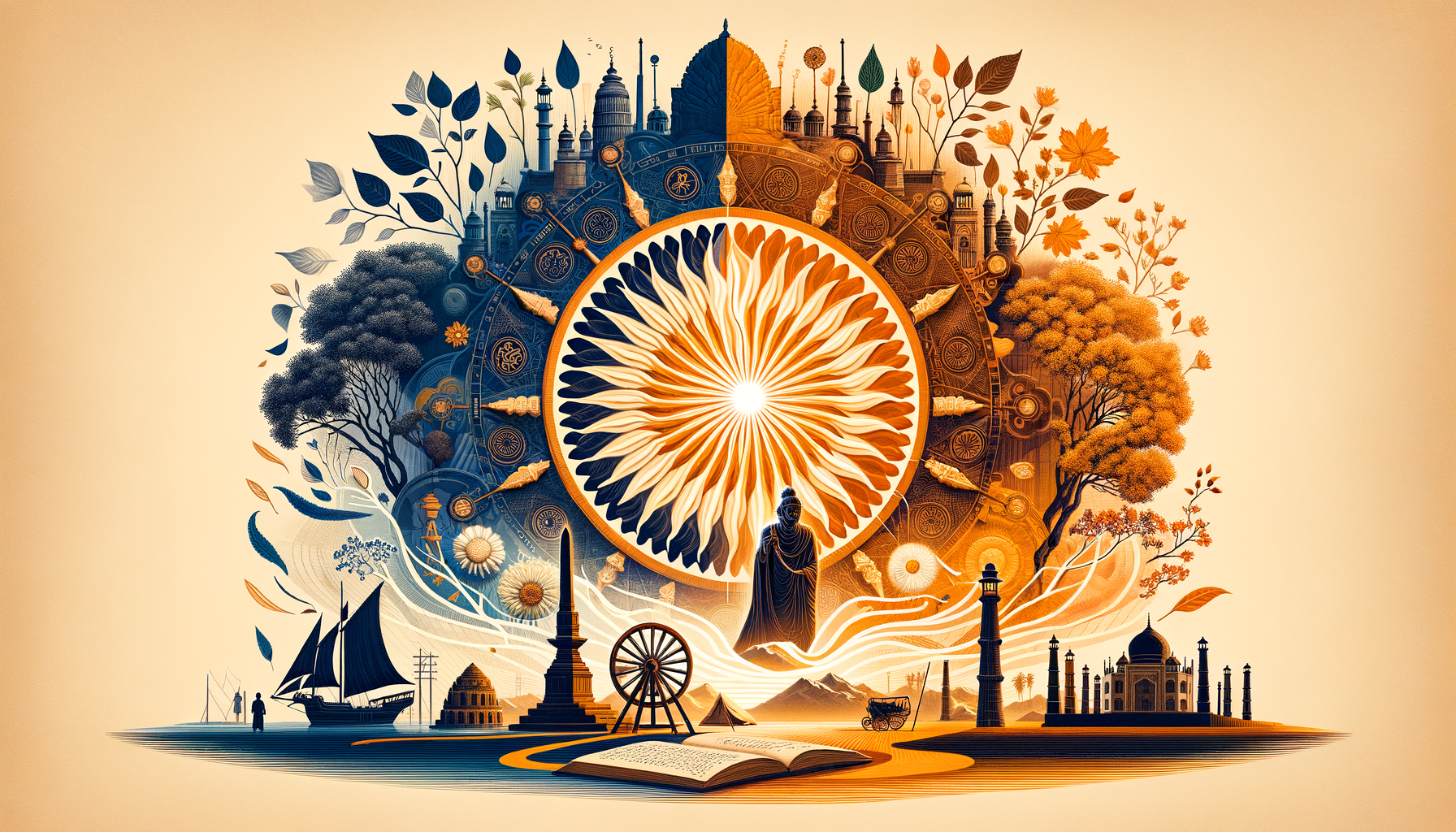
Why could a spiritually wealthy civilization like India be subjugated by British rule for nearly two centuries? In a Satsang, Sri Sri Ravi Shankar evoked the “wheel of change,” likening history to the seasons—autumn’s fading leaves and winter’s starkness—before the inevitable spring. This cyclical insight, deeply resonant with dharmic worldviews, offers a contemplative frame for a complex historical reality: spiritual abundance can coexist with political vulnerability, and resilience can germinate precisely in periods of trial.
Viewed through a civilizational lens shared across Hinduism, Buddhism, Jainism, and Sikhism, cyclical time does not imply fatalism. Rather, it illuminates how societies evolve through recurring phases of consolidation, dispersion, and renewal. Such a perspective helps explain how India—rich in Dharma, learning, and cultural heritage—could experience colonial conquest while preserving an inner continuity that later nourished national resurgence.
Historically, structural asymmetries shaped outcomes. The East India Company capitalized on maritime supremacy, gunpowder-era artillery, financial networks, and industrial-era logistics to establish control. British Colonial Rule grew from a commercial foothold into a military-fiscal system that leveraged revenue extraction, fortified supply chains, and legal-administrative codifications to stabilize authority. These factors, well documented in Indian history and global historiography on Colonialism, underscore the strategic advantage of centralized institutions paired with technological and naval power.
Internal dynamics within the subcontinent compounded these pressures. The post-Mughal landscape featured fragmented polities, fluctuating alliances, and uneven revenue regimes, which the Company adroitly navigated and later amplified through “divide and rule.” Yet across the period, dharmic traditions fostered ethical community life—seva, dana, ahimsa, and karuna—anchoring social cohesion amid political flux. This shared moral vocabulary enabled cross-community solidarity that would later strengthen national integration.
Economic incentives were decisive. India’s famed textiles, crafts, and agrarian surplus drew European powers into Indian Ocean trade. Under Company monopolies and later the British Raj, extractive policies tightened: revenue settlements reoriented agrarian incentives, artisan sectors faced deindustrialization, and trade structures were redesigned for imperial priorities. Even then, temples, viharas, mathas, and gurdwaras served as enduring institutions of service, learning, and cultural preservation—demonstrating that spiritual capital can stabilize society when material systems are stressed.
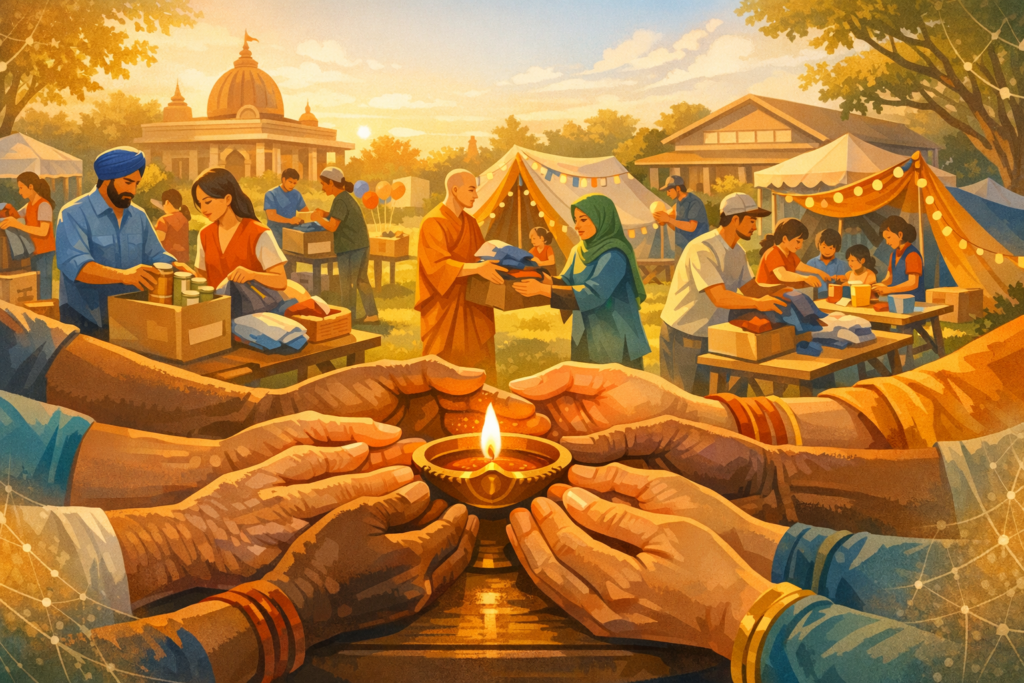
Cultural resilience was never the monopoly of a single sect. Hindu, Buddhist, Jain, and Sikh traditions offered complementary frameworks for ethical living and social service—langar, ahimsa, dana-dharma, karuna—each reinforcing Unity in spiritual diversity. During the freedom struggle, these convergent values informed non-violent resistance, community mobilization, and a shared vision of civilizational renewal without erasing the distinctiveness of each path.
Several lessons follow. Spiritual wealth thrives when paired with robust institutions: high-quality education, civic unity across regions and traditions, accountable governance, and economic self-reliance. Strengthening inter-tradition respect within the dharmic family, investing in knowledge systems, and safeguarding Cultural Heritage are not only acts of remembrance but strategies for resilience. In this sense, Dharma and statecraft must be viewed as complementary—inner ethics guiding outer capacity.
Sri Sri Ravi Shankar’s seasonal metaphor ultimately points to renewal. The winter of Colonial British Rule yielded to the spring of Swaraj, and the deeper continuity of India’s spiritual traditions sustained that transition. By aligning inner wisdom with effective institutions, and by nurturing unity across Hinduism, Buddhism, Jainism, and Sikhism, the civilization that once endured subjugation can continue to flourish with clarity, compassion, and confidence.
Inspired by this post on Hindu Pad.