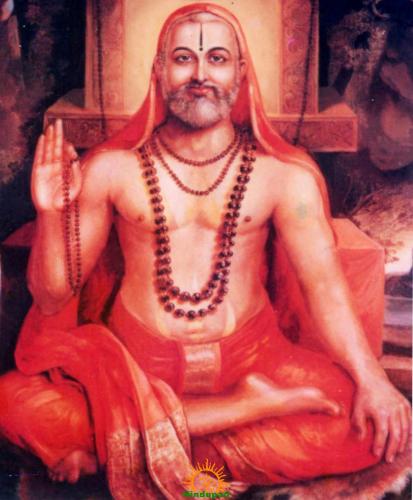
Jnana Karma Samuccaya Vada, literally the doctrine of the combination of knowledge (jnana) and action (karma), addresses a foundational question in Hindu philosophy: can liberating insight and prescribed action coexist not merely in sequence but in a principled synthesis on the path to moksha? Within Vedanta, this question is both textual and practical, touching the Brahma Sutra debates, Bhagavad Gita hermeneutics, and lived sadhana across the ashramas.
The doctrine is not a narrow scholastic thesis; it is a framework for integrating wisdom and ethical responsibility, aligning with dharma while moving toward freedom from avidya. It brings together strands of Hindu philosophy and resonates with broader dharmic traditions, encouraging a harmonized pursuit in which clarity of understanding and dedication to duty reinforce each other rather than compete.
In the Vedic corpus, a conceptual polarity appears between karma-kanda (ritual action and duty) and jnana-kanda (insight into the ultimate), which later crystallizes as the Purva Mimamsa and Vedanta orientations. Jnana Karma Samuccaya Vada arises at the point where this polarity is re-read as complementarity: action disciplines and purifies, knowledge illumines and liberates, and their principled conjunction can shape an integrated path.
Operationally, jnana refers to discriminative insight into atman-brahman identity or, in qualified and dualist theologies, to clear knowledge of the Supreme and the soul’s relation to it. Karma denotes dharmic action, including Vedic rites, yajnas, daily and occasional duties, and in the Gita’s idiom, nishkama karma undertaken as an offering without attachment to outcomes. The question, then, is whether moksha requires a strict priority of one, or whether a structured samuccaya (combination) best expresses the scriptural intent.
The Bhagavad Gita is the classic locus for a synthetic reading. It valorizes both karma-yoga and jnana-yoga, portraying action without attachment as a ladder to steadiness of mind and, ultimately, to liberating understanding. Verses such as na karmaṇām anārambhān naiṣkarmyaṃ puruṣo’śnute (3.4) and karmaṇy eva adhikāras te (2.47) defend responsible action, while insights into the Self and the renunciation of doership culminate in the teaching of freedom. The Gita’s arc suggests a pedagogical fusion rather than an either-or.
Advaita Vedanta, in Adi Sankara’s reading, resists any claim that karma, as an independent means, can directly produce moksha. Karma yields finite results within causality, whereas jnana alone removes avidya. Nevertheless, Adi Sankara emphasizes nishkama karma and the performance of one’s svadharma for chitta-shuddhi (purification of mind), qualifying the aspirant for sravana, manana, and nididhyasana. Thus, while rejecting jnana-karma samuccaya as a co-final means to liberation, Advaita affirms a functional synergy in which karma prepares and jnana liberates.
The Brahma Sutra (notably 3.4) stages this debate methodically by examining whether vidya (knowledge/upasana) may be combined with karma. Adi Sankara’s Bhasya argues that for nirguna brahman knowledge, karma is neither co-equal nor co-final; by contrast, mental upasanas associated with saguna brahman can accompany duties as auxiliary means for gradual ascent. The exegetical nuance is that some meditative knowledge is intentionally paired with ritual contexts, whereas liberating knowledge, strictly speaking, remains independent.
Bhaskara’s Bhedabheda Vedanta provides the classical articulation of Jnana Karma Samuccaya Vada, insisting that scriptural injunctions and knowledge are intended to operate together for spiritual fruition. In this lineage, the doctrine found a stronghold: action, rightly oriented and illumined by knowledge, is not merely preparatory but constitutive of the path. This early medieval perspective sought to reconcile robust ritual orthopraxy with vision into the ultimate, without collapsing one into the other.
Vishishtadvaita, as developed by Ramanujacharya, advances a complementary synthesis. Here, jnana and karma mature into bhakti, which is the direct sadhana for moksha, supported by divine grace (prasada). Duties performed in a spirit of surrender (prapatti) refine the heart; knowledge clarifies the nature of the Supreme and the jiva; devotion intensifies and culminates in liberation. While not phrased as a strict co-finality of jnana and karma, the tradition preserves their integration as indispensable supports of an engaged, grace-centered path.
In Dvaita Vedanta, Madhva emphasizes the primacy of bhakti grounded in correct knowledge (tattva-jnana) and unwavering devotion to Vishnu, with karma as dutiful service. Knowledge and action are meaningful in proportion to their theistic orientation; thus, their combination is real but hierarchically ordered. The synthesis remains ethical and devotional rather than metaphysically co-final.
Purva Mimamsa, especially in Kumārila and Prabhākara schools, powerfully upholds the authority of Vedic injunctions and the autonomy of dharma realized through action. From this angle, combining informed intention with precise karmic observance is central; knowledge in this frame is primarily knowledge-of-duty rather than liberating self-knowledge. The Mimamsa-Vedanta dialogue around the Mimamsa Ishwara debate thus supplies critical background for understanding how samuccaya proposals could be framed from ritualist commitments.
It is crucial to distinguish external ritual (karma) from internal meditative upasana (often called vidya in the Upanishads). The latter may be intentionally woven into ritual contexts to cultivate concentration, devotion, and subtle grasp of symbolism. This pairing permits an authentic samuccaya at the level of spiritual formation without obscuring the distinct function of liberating knowledge in the non-dual or qualified-non-dual soteriologies.
Across the ashrama framework, the householder path legitimizes and sanctifies meaningful action. The Gita repeatedly affirms lokasangrahathe sustenance and cohesion of the social orderas an ethical horizon for duty. In this light, Jnana Karma Samuccaya Vada supports a mature householder spirituality: carrying out responsibilities with equanimity while cultivating insight, one avoids the false binary of retreat versus engagement.
A contemporary practitioner who tends family, community, and profession can embody this doctrine: dedicating work as worship, steadily practicing self-inquiry and scriptural contemplation, and allowing devotion to deepen through service. The resulting transformation is both interior (reduction of ahamkara and raga-dvesha) and exterior (reliability, compassion, and fairness in action). This lived synthesis mirrors the Gita’s pedagogy and honors the Vedantic insight that clarity flowers best in a purified, steady mind.
Technically, chitta-shuddhi is a key bridge from karma to jnana. Nishkama karma erodes binding vasanas by attenuating attachment to outcomes, while the sadhana-chatushtaya (viveka, vairagya, shat-sampat, mumukshutva) ripens eligibility for Vedantic inquiry. When these foundations are firm, sravana (listening), manana (reasoned assimilation), and nididhyasana (deep contemplation) can disclose what action, by its nature as a karyam, cannot itself produce: the immediate recognition of reality.
The Gita reinterprets sannyasa without disdaining duty. It praises internal renunciationthe relinquishing of doership and cravingeven while advocating dedicated action performed as yajna. In this reframing, sannyasa becomes a quality of mind accessible in every ashrama, and samuccaya becomes the practical method: cultivate knowledge and perform duty, both aligned to the same inner renunciation.
Bhakti adds an affective-intuitive dimension that deepens the synthesis. In many Vaishnava presentations, knowledge clarifies the nature of Bhagavan and the self, karma expresses devoted service, and bhakti becomes both means and end under grace. The triadic interplay of jnana, karma, and bhakti thus offers a capacious paradigm wherein each modality corrects the limits of the others.
Parallels across dharmic traditions reinforce this integrative vision. In Buddhism, the Noble Eightfold Path binds right view (prajna) with right intention, speech, action, livelihood, effort, mindfulness, and concentration. The Bodhisattva ideal integrates prajna and karuna, ensuring that insight does not sever communal responsibility.
Jainism articulates the Triratna of samyak darshana, samyak jnana, and samyak charitra (right faith, right knowledge, right conduct). Here too, conduct without knowledge is blind, and knowledge without conduct is sterile. Anekantavada, the doctrine of non-one-sidedness, philosophically endorses a balanced synthesis, resonating with the spirit of samuccaya.
Sikh traditions likewise join knowledge with action through simran and seva, complemented by the ethic of kirat karo. The miri-piri vision integrates worldly responsibility with spiritual sovereignty, illustrating that dharmic life naturally unites wisdom and dedicated service. Such convergences affirm a shared civilizational ethos of harmony between insight and embodied duty.
The perceived opposition between knowledge and action often stems from category confusion. If karma is expected to yield what only knowledge can reveal, or if knowledge is misconstrued as intellectualism detached from transformation, a false dilemma arises. Jnana Karma Samuccaya Vada dispels this by assigning to each a precise role in a unified soteriological economy.
Ethically, the doctrine safeguards lokasangraha. Insight that neglects social responsibility risks quietism; activism without insight can breed agitation and attachment. By joining them, the path remains peaceful yet potent, principled yet flexible, benefiting both the seeker and society.
From a psychological perspective, dutiful action re-patterns samskaras, stabilizing attention and affect; meditative inquiry deconditions the root ignorance that warps perception. Their integration thus works across layers: karma refines the instrument; jnana corrects the lens. Over time, the mind becomes a reliable ally rather than an obstacle.
Common pitfalls are twofold. One is ritualism without inwardness, where action accumulates merit but fails to dissolve possessiveness and craving. The other is conceptual Vedanta without praxis, where ideas about non-duality mask unresolved patterns. The remedy is the disciplined pairing of inward assimilation and outward excellence.
A practical arc can be described without rigid sequencing. Daily duties are performed as yajna, consciously relinquishing doership; regular scriptural study and contemplative practice are maintained; devotional remembrance saturates work and rest; ethical vigilance addresses subtle egoic claims as they arise. Over time, this steady synthesis makes the mind transparent to truth.
The role of guru and shastra remains central. Competent guidance ensures that action truly becomes yoga rather than accumulation, and that knowledge matures beyond concept into direct recognition. Under guidance, samuccaya avoids syncretism and stays faithful to scriptural intent and lineage insight.
Texts that appear to prioritize renunciation, such as instructions to relinquish all dharmas, are read with hermeneutic care. Many commentators clarify that what is relinquished is the egoic appropriation of duty and the notion of oneself as doer-enjoyer, not the ethical fabric that sustains communal life. This preserves both the liberating force of knowledge and the stabilizing force of action.
Historically, the strongest defenses of Jnana Karma Samuccaya Vada arise in Bhedabheda Vedanta (e.g., Bhaskara) and in ritualist circles shaped by Mimamsa. Advaita curates a preparatory synergy culminating in knowledge; Vishishtadvaita and allied Vaishnava traditions foreground devotion, supported by knowledge and duty; Dvaita hierarchizes the same elements under the sovereignty of Bhagavan. Each system, while distinct, affirms a meaningful coordination of insight and responsible action.
When read alongside Buddhism, Jainism, and Sikhism, the doctrine aligns with a larger dharmic consensus: liberation and flourishing require both inner luminosity and outward rectitude. This convergence encourages mutual respect and shared practice across communities, strengthening unity while honoring doctrinal particularities.
In contemporary life, where complexity and speed can fragment attention, the doctrine offers a holistic antidote. Work becomes worship; ethics become lived non-attachment; contemplation becomes the unifying center. Such integration is not only spiritually sound; it is existentially stabilizing and socially beneficial.
Ultimately, Jnana Karma Samuccaya Vada invites a mature spirituality that neither idolizes action nor abstracts knowledge. It asks that understanding be tested in conduct, and that conduct be illumined by understanding. In this harmony, dharma is upheld, the mind is purified, and the highest truth is realized without remainder.
Inspired by this post on Hindu Blog.