
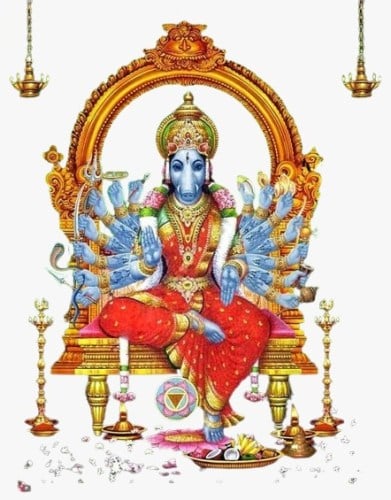
Varahi in Tamil Nadu: a living sacred landscape
Tamil Nadu’s Varahi temples introduce visitors to one of the most distinctive expressions of the Sacred Feminine in South India. Recognized by her boar-like face and divine female body, Goddess Varahi unites maternal authority, disciplined power, protection, and transformative wisdom. Her shrines range from compact neighborhood sanctuaries to sacred spaces embedded within historically layered temple complexes. A visit may therefore become several journeys at once: a devotional encounter, an examination of Hindu iconography, and an exploration of the communities that keep Tamil temple traditions alive.
This guide expands upon the temples identified in the detailed HinduPad overview of Varahi temples in Tamil Nadu. It examines the theology and iconography behind the goddess, profiles the named shrines, explains their principal rituals, and offers practical guidance for responsible pilgrimage. The list is not an exhaustive gazetteer. Varahi may be worshipped in a dedicated temple, a separate sannidhi within a larger complex, a Sapta Matrika ensemble, or a recently established devotional center that does not appear in conventional heritage directories.
How sacred tradition and historical evidence are distinguished
An academically responsible account must distinguish several kinds of information. An inscription may document a donation or renovation without revealing when worship first began. Architectural analysis may date surviving masonry but not an earlier shrine that once occupied the site. Oral tradition may preserve a community’s sacred memory without supplying an independently verifiable calendar date. Devotee testimony records lived religious experience, while a statement that a blessing is guaranteed belongs to faith rather than historical or medical evidence. Each type of knowledge has value when it is identified clearly.
Names also vary across maps and publications. Suyambu and Swayambhu both represent the idea of a self-manifested deity; Uthirakosamangai may appear as Uttarakosamangai; Tiruchirappalli is commonly shortened to Trichy; and Karimangalam is sometimes written as Kariamangalam. Such variation does not necessarily indicate different temples, but pilgrims should match the locality, district, postal address, and presiding deity before beginning a journey.
Who is Goddess Varahi?
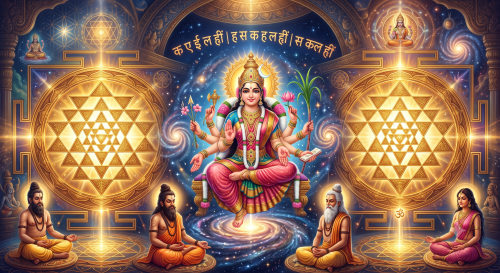
Varahi, more precisely Vārāhī in Sanskrit transliteration, is a powerful goddess associated with the Matrikas, or Divine Mothers. Her characteristic boar face visually connects her with Varaha, the boar manifestation of Vishnu, while her identity and worship develop within wider Shakta, Shaiva, Vaishnava, and Sri Vidya contexts. She should not be reduced to a merely female copy of another deity. Hindu theological language describes a shakti as active divine power, allowing Varahi to possess an identity, ritual field, and devotional significance of her own.
Varahi and Varaha are related but are not interchangeable. Varaha is generally represented as the male boar incarnation of Vishnu who raises Bhumi, the Earth, from the cosmic waters. Varahi is the boar-faced goddess and the shakti associated with that form. This distinction matters when evaluating temple lists: the Varaha Cave at Mamallapuram and the Bhu Varaha Swamy Temple at Srimushnam are important Varaha sites, but they are not dedicated primarily to Goddess Varahi.
In a widely recognized Sapta Matrika sequence, the seven mothers are Brahmani, Maheshvari, Kaumari, Vaishnavi, Varahi, Indrani, and Chamunda. The order and membership can vary across texts and regional images, and some ensembles include an eighth goddess such as Narasimhi. Varahi’s common position as the fifth mother helps explain the title Panchami, meaning the fifth. The Bihar Museum’s Varahi record and the University of Michigan Museum of Art both identify her as a member of the Seven Mothers and as the female counterpart or power of Varaha.
The Matrika framework also demonstrates the interconnected character of temple Hinduism. Brahmani evokes Brahma, Maheshvari evokes Shiva, Vaishnavi evokes Vishnu, Kaumari evokes Skanda, and Varahi evokes Varaha, yet the mothers are worshipped together as a coordinated field of divine power. Their ensemble resists rigid sectarian boundaries and helps explain why Varahi can appear meaningfully within a Shaiva complex, a Shakta sanctuary, or a devotional environment shaped by Sri Vidya.
Varahi in scripture and sacred narrative
A central textual reference occurs in Chapter 8 of the Devī Māhātmya. As divine powers gather to assist Chandika in battle, the shakti associated with the form of Yajna Varaha appears in a Varahi body. The relevant Sanskrit passage can be consulted in the Devī Māhātmya text hosted by Sanskrit Documents. The episode places Varahi within the collective action of the Matrikas during the conflict involving Raktabija and the forces of Shumbha and Nishumbha.
This narrative communicates more than martial force. The goddesses emerge as differentiated powers and ultimately remain expressions of the one Goddess. Varahi is therefore both an individual deity and a manifestation within a larger unity of Shakti. Her apparent fierceness serves a protective and restorative purpose: destructive energy is directed against disorder so that dharma can be re-established.
Within the Lalitopākhyāna tradition associated with the Brahmāṇḍa Purāṇa, Varahi appears as Daṇḍanāthā, the commander of Lalita Tripurasundari’s forces. She is linked with the Kiricakra chariot and the disciplined organization of divine power during the conflict with Bhandasura’s forces. A surviving South Indian manuscript of the text is catalogued by the Royal Asiatic Society, while published outlines of the narrative identify Daṇḍanāthā as its boar-faced commander.
Some popular summaries connect Varahi with a demon named Pandasura. That formulation should not be treated as the only standard account. The more securely identifiable narrative settings are the Matrika episode of the Devī Māhātmya and the Bhandasura cycle of the Lalitopākhyāna. Regional temple traditions may preserve additional stories, but local narratives, Puranic passages, and later devotional retellings should be labeled separately rather than blended into a single chronology.
How to read Varahi’s iconography
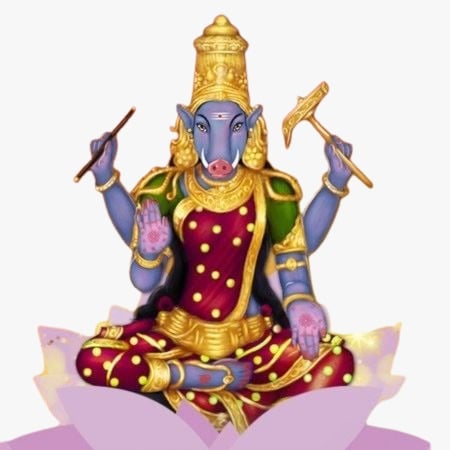
Varahi’s boar face is her most immediately recognizable feature, although its treatment varies considerably. A sculptor may emphasize a long snout, small tusks, alert ears, or a more humanized expression. The body may be standing, seated, dancing, or arranged in a formal posture of royal composure. Some images convey a full maternal form, while others are slender and martial. These differences reflect textual prescriptions, regional workshops, the intended ritual function of an image, and later restoration or ornamentation.
There is no universally applicable inventory of objects in her hands. Depending on the tradition, Varahi may carry a hala or plough, musala or pestle, danda or staff, sword, shield, noose, goad, conch, discus, mace, lotus, bell, or ritual vessel. The plough and pestle are especially important in several descriptions because they evoke disciplined force, cultivation, and the breaking of resistance. Conch, discus, and mace strengthen the connection with Vishnu and Varaha, while the staff contributes to her Daṇḍanāthā identity.
Hand gestures can be as significant as weapons. Abhaya mudra communicates reassurance or freedom from fear, while varada mudra conveys generosity and the granting of blessings. A Varahi image can consequently combine a weapon in one hand with a protective gesture in another. The apparent tension between ferocity and compassion is deliberate: force is governed by wisdom, and protection is active rather than passive.
Descriptions of Varahi’s vahana or vehicle are similarly diverse. The buffalo is prominent in many accounts, but boar, horse, lion, Garuda, and other supports occur in textual or regional traditions. A lotus pedestal may replace an animal mount, and some esoteric forms employ still other seats. The vehicle should therefore be studied alongside the image’s hands, crown, posture, attendant figures, and placement rather than used as the sole basis for identification.
Temple decoration can conceal original iconographic details. A kavaca, or fitted metal covering, may protect and honor the murti while hiding its underlying material and carving. Garlands, textiles, turmeric, sandal paste, vermilion, and flower arrangements can transform the visible form from one ritual occasion to another. A photograph of an ornamented deity is therefore evidence of a particular alankara, not necessarily a complete record of the sculpture beneath it.
The boar symbolism is sometimes interpreted through the animal’s ability to penetrate the earth and bring what is hidden to the surface. Devotional teaching consequently associates Varahi with the removal of deeply rooted obstacles, the recovery of courage, and the protection of ordered life. Such interpretations can be spiritually meaningful, but they should be presented as theological readings rather than universal translations of every ancient image.
Varahi in Tamil temple history
The history of Varahi worship in Tamil Nadu cannot be reconstructed solely from today’s dedicated temples. Matrika sculptures, subsidiary shrines, ritual manuals, museum objects, and images preserved within larger temple compounds all contribute evidence. The tradition may be old even when a particular building is recent, while an ancient stone image may have acquired a new shrine after relocation. Cult history, sculpture history, institutional history, and architectural history are related but distinct subjects.
The Brihadisvara Temple at Thanjavur offers an important historical frame. Built under Rajaraja Chola I and consecrated in the early eleventh century, its enclosure was designed as a coordinated sacred environment containing numerous subsidiary shrines. IGNCA documentation of the Brihadisvara enclosure records thirty-six subshrines and specifically includes the Saptamātā among its secondary deities. This demonstrates how the Divine Mothers were integrated into the architecture of a monumental Shaiva temple rather than confined to isolated goddess sanctuaries.
Material evidence also survives outside active temples. The Government Museum at Erode documents a stone image of Varahi brought from Karungalpalayam and described as approximately two centuries old. A museum object is no longer encountered in the same ritual setting as a living murti, but it helps establish the continuity of recognizable Varahi imagery in Tamil society.
Claims of great antiquity require careful wording. A traditional age may express the perceived sacred depth of a place, but an exact construction date normally requires inscriptions, archaeological context, or securely dated art-historical evidence. Even then, the oldest surviving component may not represent the beginning of worship. Renovations, rebuilding, kumbhabhishekam ceremonies, and the replacement or relocation of images are normal features of living temple history rather than evidence that a tradition lacks continuity.
Notable Varahi temples and shrines in Tamil Nadu
The following profiles retain the principal sites named in the source article while clarifying the strength and limits of the available information. Temple schedules, routes, ritual permissions, and administrative boundaries can change. A devotee should verify the exact location and current arrangements directly with the temple or through the Tamil Nadu Hindu Religious and Charitable Endowments Department temple guide when the institution falls within its listings.
1. Suyambu Varahi Amman Temple, Uthirakosamangai
The best-known site in the source list is the Suyambu Varahi Amman Temple at Uthirakosamangai in Ramanathapuram District. The village already occupies an important place in Tamil sacred geography through the Mangalanatha Swamy Temple and its associated traditions. Within this setting, Varahi is revered in a swayambhu or self-manifested form. The source describes the deity as covered with silver armour, a feature that places the visible image within the ritual tradition of kavaca adornment.
Local tradition assigns the shrine an age of approximately 3,200 years. That statement should be reported as sacred tradition rather than as an independently established architectural date. The sources reviewed for this guide do not provide an inscription or archaeological report that verifies the exact number. This qualification does not diminish the temple’s devotional importance; it simply prevents oral chronology from being mistaken for an epigraphic conclusion.
A distinctive practice involves devotees grinding turmeric into a paste near the sanctum and applying it according to temple custom. Worshippers associate the rite with auspiciousness and with prayers concerning marriage, conception, family well-being, and the removal of obstacles. The physical action gives the pilgrimage an unusually tactile quality: patience, effort, fragrance, color, and prayer are joined in a single offering. Participation must nevertheless follow the priest’s instructions, because rules governing contact with a murti can change.
The source page, updated in October 2025, reported opening hours of 7:00 a.m. to 12:30 p.m. and 4:00 p.m. to 8:00 p.m. Published schedules elsewhere are not fully consistent, so these hours should be treated as a dated reference rather than a permanent timetable. Festival days, maintenance, special pujas, and local circumstances may alter access. Confirmation shortly before travel is particularly important for visitors arriving from Madurai or making a longer Ramanathapuram pilgrimage.
The shrine’s emotional force lies partly in the meeting of intimacy and grandeur. The physical space may be smaller than Tamil Nadu’s monumental temple complexes, yet the concentrated rhythm of turmeric preparation, lamp light, bells, and personal petitions can make the encounter feel immediate. An academic description can identify these ritual components, but the lived significance emerges through the community that repeatedly performs them.
2. Saptha Matha Varahi Amman Temple, Woraiyur, Tiruchirappalli
This temple is located in Mangal Nagar in the Woraiyur area of Tiruchirappalli. Published descriptions associate its foundation with Sri Varahi Daasar Boopathi Swami and identify the presiding deity as Saptha Matha Varahi Amman. The name places the shrine explicitly within the theology of the Seven Mothers, even though Varahi receives focused worship as the principal divine presence.
The Woraiyur temple is significant because it illustrates how an ancient iconographic and theological tradition can support a comparatively recent devotional institution. Historical importance should not be measured only by the age of masonry. A modern center can preserve Matrika concepts, organize recurring puja, transmit ritual vocabulary, and create a stable community around a form of the Goddess that once appeared mainly in group panels or subsidiary sanctuaries.
Its urban location makes it a practical point on a Tiruchirappalli itinerary. Visitors can approach it as a focused Varahi shrine rather than expecting the extensive precincts of Srirangam or another monumental complex. Current hours, Panchami observances, abhishekam arrangements, and festival crowd controls should be confirmed locally. The quieter scale can reward slow observation of the murti, altar arrangement, ritual sound, and patterns of community participation.
3. Haridhra Varahi Amman Temple, Vengadamangalam
The Haridhra Varahi Amman Temple is identified at Vengadamangalam near Rathinamangalam, in the Chengalpattu region on the southern side of metropolitan Chennai. The source emphasizes living worship and the belief that the goddess grants protection and prosperity. Its location makes it particularly relevant to devotees seeking a Varahi temple accessible from the Chennai area without undertaking an immediate journey to central or southern Tamil Nadu.
The name Haridhra closely resembles the Sanskrit haridrā, meaning turmeric. That linguistic association resonates with the yellow substance’s wider place in auspicious Hindu ritual, although the temple’s own priests remain the proper authority on the meaning of the local name and the offerings used there. Etymology can suggest a symbolic field, but it should not be converted automatically into a claim about the shrine’s foundation or ritual history.
Publicly accessible historical documentation for this temple is more limited than devotional and location information. Visitors should therefore avoid repeating an ancient date unless the temple can identify a supporting record. The most useful approach is to observe the current ritual institution on its own terms: its daily worship, festival calendar, community stewardship, and manner of presenting Varahi’s protective identity.
4. Varahi Temple, Karimangalam, Dharmapuri District
The source places a Varahi temple at Karimangalam in Dharmapuri District and describes it as a locally respected center with regular worship. Some listings use the spelling Kariamangalam. The distinction is worth noting because generic map searches for Varahi Amman can return small shrines in several districts, sometimes with incomplete addresses or user-generated labels.
Independent public documentation was limited in the sources reviewed for this guide. That makes local verification essential rather than optional. A visitor should confirm the village, nearby landmark, presiding deity, current temple name, and opening arrangements before traveling. The shortage of online records should not be confused with a shortage of local significance; many small Tamil temples depend primarily on oral directions, neighborhood networks, and festival announcements.
5. Sri Kottai Varahi Amman Temple, Arumparuthi near Katpadi
The source identifies Kottai Varahi in the Katpadi area of Vellore District. The institution’s own website identifies it as Jai Varahi Peedam and Sri Kottai Varahi Amman Temple at Arumparuthi, Katpadi, Vellore. This more precise locality is valuable because Katpadi refers to a broader transport and urban area, while Arumparuthi identifies the actual community in which the temple operates.
Kottai means fort in Tamil, and the name naturally evokes Varahi’s protective character. That symbolic reading should not be mistaken for proof that the temple was historically part of a military fortification. The current center presents Varahi through regular puja, homa, festival observance, and community activity. Pilgrims interested in a northern Tamil Nadu Varahi circuit can place it alongside the Vengadamangalam and Sholinghur areas, while allowing sufficient time for road travel and schedule verification.
6. Sri Maha Varahi Amman Temple associated with Sholinghur
The source’s historical overview mentions a Sri Maha Varahi Amman Temple in Sholinghur, but it does not provide the same address-level detail offered for the five principal entries. Independent online information was also limited during research for this guide. The site should therefore be treated as a promising lead requiring direct confirmation, not as a fully documented destination with guaranteed hours or facilities.
Modern administrative descriptions should also be used carefully. Sholinghur is now within Ranipet District, which was formed from the former Vellore District in 2019; the Ranipet district administration lists Sholinghur among its taluks and local bodies. Older articles may consequently describe a genuine Sholinghur location as being in Vellore District. Matching the temple name with a current map reference and local contact is the safest procedure.
7. The Saptamatrika setting at Brihadisvara, Thanjavur
Brihadisvara is not primarily a Varahi temple, yet it is essential to understanding Varahi’s place in Tamil religious history. Its documented Saptamātā presence shows how the Divine Mothers could be integrated within the enclosure of one of the Chola period’s most important Shaiva temples. A visitor who studies Varahi only in modern dedicated shrines may miss this architectural evidence of her participation in a much wider sacred system.
Thanjavur can therefore serve as an art-historical complement to focused worship at Woraiyur or another Varahi sanctuary. The comparison reveals two modes of sacred presence: Varahi as one power within an ordered Matrika group, and Varahi as the principal deity around whom an entire institution is organized. Neither mode is inherently more authentic; they answer different theological, architectural, and community needs.
Ritual practices associated with Varahi worship
Public worship may include abhishekam, the ceremonial bathing of the image; alankara, its adornment; archana, the recitation of names with offerings; naivedya, the presentation of food; and deepa aradhana or arati with lamps. The sequence, frequency, and eligibility to sponsor or witness these rites vary by temple. A visitor should not assume that practices observed at Uthirakosamangai are automatically permitted at Woraiyur, Vengadamangalam, or Katpadi.
Turmeric is especially prominent in descriptions of Uthirakosamangai and is widely associated with auspiciousness, purification, prosperity, and household well-being. Flowers, fruits, coconuts, lamps, and temple-approved cloth may also be offered. Only items accepted by the shrine should be brought into the ritual area. Unrequested substances can damage stone, metal, paint, textiles, and drainage systems even when the intention is devotional.
Panchami, the fifth lunar tithi, receives special attention in many Varahi communities because of her Panchami identity. Some traditions also emphasize Ashadha Navaratri or other Navaratri observances. Lunar dates change from month to month and can differ slightly between regional panchangas, so a fixed civil-date assumption is unreliable. The temple calendar should take precedence over a generic festival website.
Varahi is frequently associated with night worship and tantric traditions, but those associations require nuance. A public temple may conduct entirely accessible evening pujas without disclosing or performing restricted rites. Tantra is not a synonym for superstition, spectacle, or unrestricted experimentation; it comprises disciplined ritual systems with their own texts, qualifications, and lineages.
Esoteric mantras, nyasa procedures, yantra worship, and complex homa methods should not be improvised from fragments circulating online. Traditional practice commonly places advanced upasana under a competent guru or trained priest. Visitors seeking a simple devotional connection can usually rely on darshan, respectful prayer, a temple-approved archana, or the recitation of broadly public hymns without claiming initiation into a restricted practice.
Claims that Varahi worship removes curses, guarantees victory in litigation, produces wealth, secures marriage, or ensures pregnancy belong to devotional belief and testimony. They should not be presented as predictable mechanisms. Prayer can offer meaning, courage, discipline, and community support, but it does not replace medical treatment, mental-health care, legal counsel, or responsible financial decisions.
A technical vocabulary for reading the temple
A larger Tamil temple may be approached through the gopuram or gateway tower and organized by one or more prakaras, or enclosures. A mandapa serves as a pillared hall, while an antarala may form a vestibule leading toward the garbhagriha, the sanctum containing the principal murti. The vimana rises above the sanctum. A bali-pitha, dhvaja-stambha, and subsidiary sannidhis may structure movement through the precinct. Small Varahi temples may use only some of these components.
The principal immovable image is distinct from an utsava murti used for processions. A kavaca may cover the image, while abhishekam and alankara alter its ritual appearance. These categories help prevent a common misunderstanding: a photograph taken on one festival day may show the deity in a temporary adornment that differs dramatically from ordinary darshan.
Historical interpretation begins with disciplined observation. Stone type, masonry joints, sculptural style, inscriptions, paint layers, metal coverings, and the relation between a shrine and its surrounding enclosure can reveal different construction phases. A newly painted facade does not prove a new cult, just as an old loose sculpture does not prove that the present building is equally old. Temple history is often cumulative rather than the product of a single date.
Planning a Varahi pilgrimage across Tamil Nadu
A practical northern circuit can connect Vengadamangalam on Chennai’s southern side with Kottai Varahi near Katpadi and, after verification, the Sholinghur area. These sites should not be compressed into an unrealistically short schedule. Metropolitan congestion, road conditions, festival traffic, and split temple hours can consume more time than a map estimate suggests.
A central circuit can place the Woraiyur Varahi Amman Temple in conversation with Thanjavur’s Brihadisvara complex. The first foregrounds a focused living devotion to Saptha Matha Varahi, while the second supplies monumental evidence for the Matrikas within Chola sacred architecture. This combination benefits both pilgrims and students of temple history.
The southern journey to Uthirakosamangai is most naturally planned through Ramanathapuram, with Madurai serving as a major regional gateway for many travelers. Adequate time should be reserved for the wider sacred landscape rather than treating the Varahi shrine as a brief roadside stop. The distinctive turmeric rite may also involve waiting, preparation, and local instructions that cannot be scheduled with mechanical precision.
Karimangalam belongs to a western or northwestern Tamil Nadu route through Dharmapuri. Because public documentation is limited, this journey requires the strongest advance verification. A locally confirmed landmark, a current telephone contact, and the temple’s name in Tamil can be more useful than a broad English-language map search.
Before every visit, a pilgrim should confirm the day’s opening periods, special puja schedule, festival crowds, dress expectations, rules for offerings, photography policy, accessibility, and availability of drinking water or nearby meals. It is also wise to ask whether a shrine closes after the morning puja and whether an announced evening time refers to the opening of the gate or the beginning of a specific ritual.
Tamil Nadu can be intensely hot, and coastal districts may also be humid. Lightweight modest clothing, hydration, sun protection outside the temple, and a simple bag for footwear can make the experience safer. Since shoes are removed before entering sacred areas, stone surfaces may become hot or slippery. Visitors with diabetes, limited mobility, or heat sensitivity should plan conservatively.
Accessibility varies widely. A modern neighborhood temple may have a short approach but limited parking, while an older complex may contain steps, uneven stone, narrow thresholds, or long walking distances. A companion or temple volunteer can be helpful, but assistance should be arranged in advance rather than assumed. Quiet inquiry often produces better information than generic travel listings.
Photography should never be presumed permissible inside a sanctum. Even where exterior photography is allowed, worshippers deserve privacy during vulnerable moments of prayer. Flash, tripods, and attempts to photograph around a closed screen can be disruptive. The most respectful record may sometimes be written notes made after leaving the ritual area.
Families can prepare children by explaining why footwear is removed, why voices are lowered, why queues move slowly, and why the murti may appear fierce. Varahi’s imagery need not be presented as frightening. Her weapons can be explained as signs of protection and disciplined resistance to disorder, while her blessing gestures express reassurance and care.
A first visit often becomes memorable through small details rather than grand claims: the coolness of stone before sunrise, the fragrance of turmeric and flowers, the measured movement of a lamp, or the way a neighborhood gathers for a recurring puja. Such experiences create emotional connection without requiring every personal interpretation to be treated as objective evidence.
Dharmic unity without erasing difference
Varahi’s Hindu identity should be described clearly, while comparative study can acknowledge related imagery elsewhere. Vajravārāhī is an important boar-associated female deity in Vajrayana Buddhism, documented in Buddhist iconographic literature, but similarity of name or appearance does not make every Varahi and Vajravārāhī image identical. Respectful comparison recognizes historical interaction and shared artistic vocabulary while preserving the distinct scriptures, lineages, and ritual purposes of each tradition.
The same principle supports unity among Hindu, Buddhist, Jain, and Sikh communities. Unity does not require collapsing separate doctrines into one deity or one ritual. Hospitality, ahimsa, seva, truthful scholarship, care for sacred spaces, and respect for another community’s discipline provide a more durable basis for dharmic solidarity than forced equivalence.
Responsible pilgrimage can itself become seva. Visitors can reduce plastic waste, avoid damaging inscriptions, support authorized conservation, respect queue systems, and refrain from spreading sensational claims. Temples remain living institutions because priests, artisans, musicians, cleaners, flower sellers, donors, administrators, and local families sustain them across generations.
Frequently asked questions about Varahi temples in Tamil Nadu
Is Varahi the same deity as Varaha? No. Varaha is Vishnu’s male boar manifestation, while Varahi is the boar-faced goddess associated with his shakti and with the Matrikas. Their iconography and narratives overlap, but their temples should not be classified interchangeably.
Why is Varahi called Panchami? She commonly occupies the fifth position in the standard Sapta Matrika sequence. Panchami also means the fifth lunar tithi, which helps explain the devotional importance of Panchami observances at many Varahi shrines.
Are all Varahi temples in Tamil Nadu ancient? No. The tradition and iconography have deep historical roots, but individual institutions may be ancient, rebuilt, relocated, or modern. A temple’s devotional importance does not depend entirely on the age of its current structure.
Is the Uthirakosamangai shrine proven to be 3,200 years old? The age is reported as local sacred tradition. The reviewed sources did not supply an inscription or archaeological report establishing that exact date, so it should not be presented as a verified architectural chronology.
Which offerings are appropriate? Turmeric is especially associated with Uthirakosamangai, while flowers, fruit, coconuts, lamps, and archana materials may be accepted elsewhere. The temple’s current rules and the priest’s instructions should always determine what is offered.
Can every visitor perform the turmeric rite? Not necessarily. Access, timing, materials, and the method of application are governed by local custom. Permission should be obtained rather than inferred from an online account or another devotee’s earlier experience.
Does Varahi worship require tantric initiation? Public darshan and ordinary temple puja are generally distinct from restricted tantric practice. Advanced mantra, nyasa, yantra, or homa disciplines may require initiation and qualified guidance. A visitor can participate respectfully in public worship without claiming esoteric authority.
Can worship guarantee marriage, pregnancy, legal victory, or protection from illness? Such outcomes belong to devotional hope and personal testimony, not guaranteed causation. Religious practice may provide strength and meaning, but medical, legal, psychological, and financial concerns still require competent professional care.
What is the best day to visit? An ordinary day may offer a quieter experience, while Panchami, Navaratri, and temple festivals may provide elaborate ritual and larger crowds. There is no universal best day; the choice depends on whether the visitor values contemplative access or major collective worship.
Is this list exhaustive? No. Tamil Nadu contains additional dedicated shrines, Matrika panels, private peedams, and Varahi sannidhis within larger temples. The sites profiled here are a carefully qualified expansion of the source list rather than a claim to catalogue every sacred location.
Conclusion: encountering Varahi with devotion and discernment
Varahi temples in Tamil Nadu reveal a tradition that is simultaneously intimate, intellectually complex, and historically layered. Uthirakosamangai preserves a powerful turmeric-centered sacred practice; Woraiyur foregrounds Varahi within the Sapta Matrika theology; Vengadamangalam, Karimangalam, Katpadi, and Sholinghur demonstrate the reach of contemporary devotion; and Thanjavur supplies an architectural frame for the Mothers within Chola temple culture.
The most rewarding pilgrimage combines reverence with careful inquiry. It distinguishes Varahi from Varaha, scripture from later retelling, sacred chronology from archaeological dating, and devotional testimony from guaranteed outcome. That discipline does not weaken faith. It permits the goddess, the temple, and the worshipping community to be encountered without exaggeration, while preserving the sense of wonder that draws pilgrims toward Varahi’s formidable and compassionate presence.
Inspired by this post on Hindu Pad.


Leave a Reply
You must be logged in to post a comment.