

Will Durant observed in The Story of Philosophy that human knowledge had become too vast for human mastery. Specialized disciplines had grown so large, so technical, and so internally complex that civilization required acts of synthesis to recover meaning from accumulated learning. That insight remains deeply relevant to Indian Knowledge Systems, where the sheer range of Vedas, Upanishads, Itihasas, Puranas, Darshanas, Dharmashastras, Upavedas, Vedangas, and regional traditions can inspire reverence and hesitation at the same time.
Ami Ganatra’s Why are We This Way: A Guide to Hindu Shastras enters precisely this space. It does not merely list Hindu texts or reduce them to a catalogue of religious literature. It attempts a civilizational synthesis, presenting the Shastras as a living knowledge tradition through which questions of dharma, conduct, memory, social order, spiritual pursuit, and cultural continuity may be examined. Its importance lies in making a vast textual inheritance approachable without making it shallow.
The central strength of the book is its refusal to treat Hindu scriptures as frozen commandments. Hindu texts are presented as dynamic instruments of reflection, not as closed manuals demanding mechanical obedience. Dharma, in this framework, cannot be understood only through definitions. It must be encountered through lived situations, moral dilemmas, narrative examples, and the subtle tensions of human life. This is why the Itihasas and Puranas occupy such an important place in Hindu civilization. They translate metaphysical principles into recognizable human choices.
This approach also explains why the book is particularly useful for contemporary readers. Modern education often separates philosophy from ritual, text from practice, and history from living memory. Hindu Knowledge Systems resist such separation. Ritual, metaphysics, ethics, social practice, aesthetics, and spiritual aspiration are interwoven. A reader approaching the Shastras for the first time may feel intimidated by their scale, but Ganatra’s method shows that the tradition becomes intelligible when read as a living conversation rather than a dead archive.
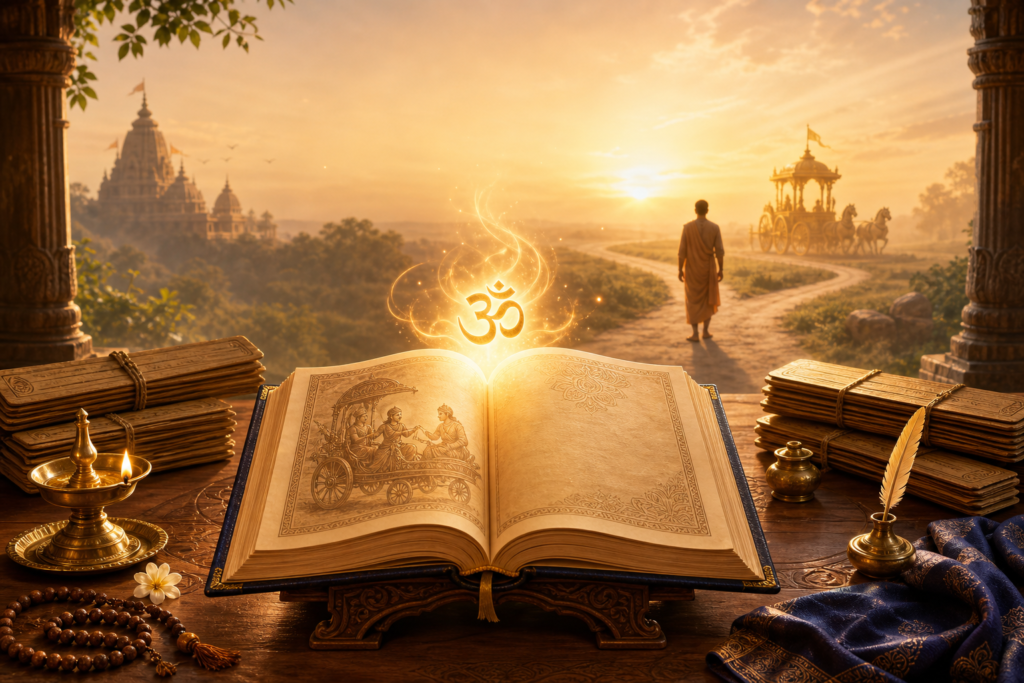
The book is broadly organized around Shruti and Smriti literature. The Shruti section explains the Vedas not as distant relics but as foundational expressions of a continuing civilizational consciousness. The discussion of the Vivaha Sukta is especially significant because it shows how ancient Vedic formulations continue to shape Hindu marriage vows and domestic rites. Such examples are not merely ritual details; they reveal the remarkable continuity of Hindu civilization across centuries of political change, social disruption, and cultural pressure.
One of the most valuable insights in the treatment of the Vedas is the relationship between ritual and philosophy. The Vedas do not force a choice between worldly life and liberation. They contain sacrificial, liturgical, poetic, cosmological, and philosophical dimensions. This balance challenges two common misreadings: the claim that Hindu civilization is only other-worldly and indifferent to material life, and the opposite claim that it is merely ritualistic or materialistic. The Vedic worldview, as presented here, accommodates artha, kama, dharma, and moksha within a graded and integrated vision of life.
The discussion of moksha is therefore not detached from daily conduct. Liberation is treated as the highest aspiration, but not as an excuse to neglect human duties, family life, social responsibility, or cultural transmission. This is a crucial point for understanding Sanatana Dharma. The tradition does not demand abandonment of the world as the only legitimate spiritual path. It recognizes the household, the community, the teacher, the student, the ritual act, the contemplative life, and the philosophical inquiry as parts of a larger pursuit of truth.
The book also pays attention to the question of historical and ahistorical readings. It does not insist on one narrow interpretive lens. Instead, it allows readers to see how concepts, deities, symbols, and cosmological structures may appear across Vedic and Puranic contexts while retaining continuity of meaning. This is an important academic point. Hindu textual traditions often preserve continuity through transformation. Names, forms, and narrative settings may shift, but core principles continue to travel through memory, practice, and interpretation.
This cumulative mode of change is one of the book’s most persuasive themes. Sanatana Dharma is not presented as iconoclastic rupture, nor as rigid preservation without renewal. The phrase “The new is built upon the foundations of the old” captures the civilizational logic at work. New expressions arise, but they do not require contempt for what came before. In this sense, Hindu tradition offers a model of cultural evolution that is neither antiquarian nor rootless.
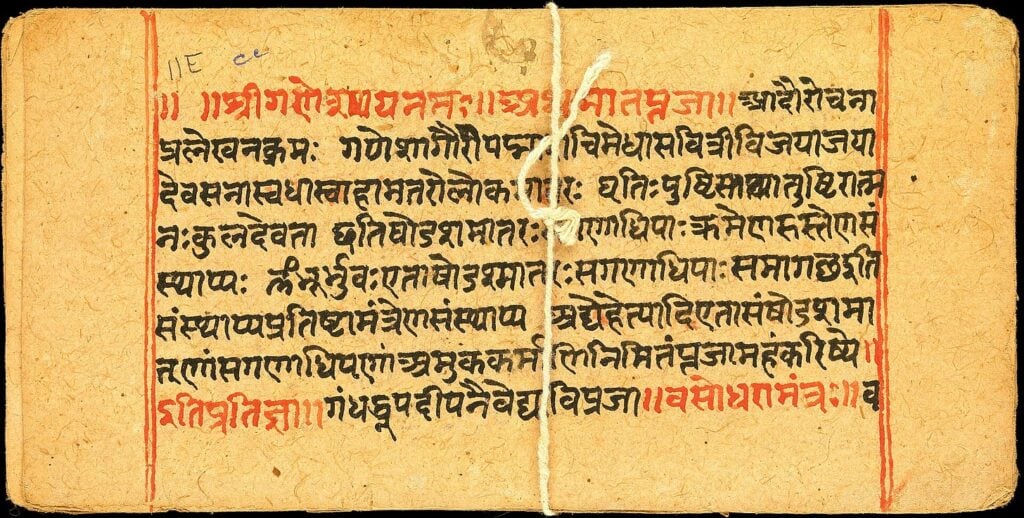
The preservation of knowledge receives careful attention. The book describes the oral disciplines, mnemonic techniques, and guru-shishya tradition through which vast bodies of Vedic knowledge were transmitted with extraordinary precision. This dimension is essential because Indian Knowledge Systems cannot be understood only through manuscripts or printed editions. They survived through embodied discipline: recitation, correction, repetition, memory, lineage, and reverence for learning. Such preservation required communities that treated knowledge as sacred responsibility.
Ganatra’s observation that knowledge survives through “a few luminous custodians” after centuries of disruption is emotionally powerful because it connects textual history with human devotion. Behind every preserved chant, commentary, ritual manual, and philosophical school stand generations of teachers and students who carried the tradition forward. For readers shaped by modern institutions, this can be a humbling reminder that intellectual inheritance is not automatic. It must be protected, practiced, and renewed.
The Smriti section broadens the discussion beyond the texts popularly known as Smritis. It includes Upavedas, Vedangas, Darshanas, and related knowledge systems. This is useful because it prevents a narrow understanding of Hindu textual culture. The tradition includes grammar, astronomy, phonetics, ritual science, medicine, statecraft, logic, aesthetics, metaphysics, law, and ethics. Such breadth demonstrates why Indian Knowledge Systems should not be reduced to mythology or devotional literature alone.
The use of charts and comparative frameworks makes the book especially accessible. Mapping Darshanas through their core concerns and modern parallels helps readers understand that Hindu philosophy was never intellectually passive. Nyaya, Vaisheshika, Samkhya, Yoga, Mimamsa, Vedanta, and other systems developed rigorous methods of inquiry into knowledge, causality, perception, matter, consciousness, liberation, and valid reasoning. These systems deserve to be studied not only as religious inheritances but as contributions to global philosophy.
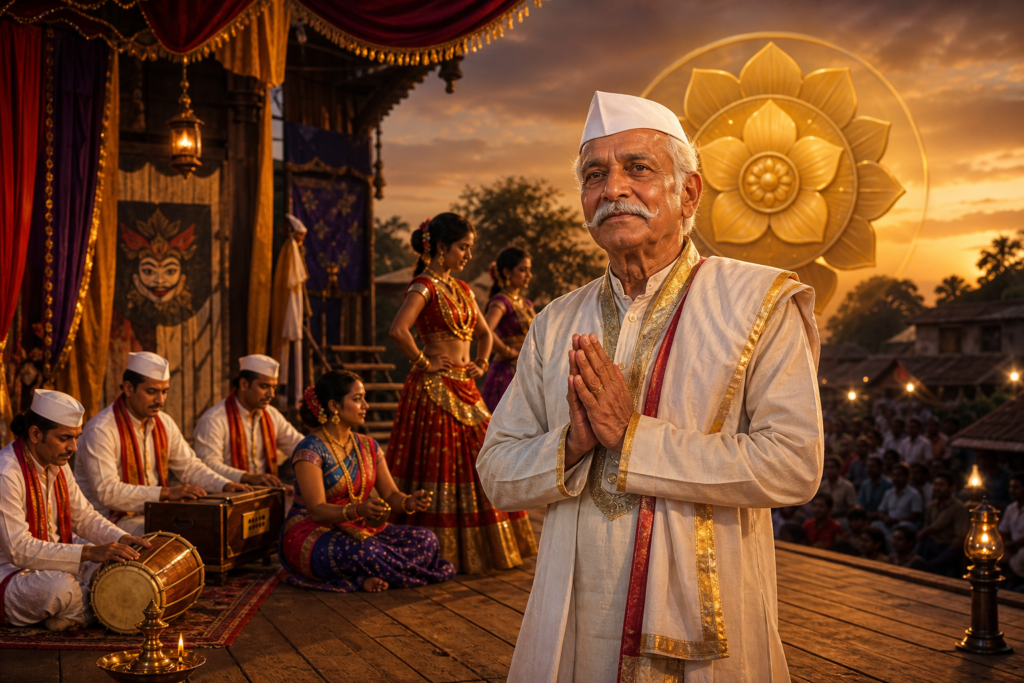
The treatment of Itihasas and Puranas is another significant contribution. These texts are shown as vehicles for democratizing knowledge. While Vedic recitation historically remained governed by strict disciplines of lineage and training, Itihasas and Puranas carried Vedic ideas into wider society through story, memory, performance, pilgrimage, and regional narration. This helped preserve excellence in specialized practice while expanding access to civilizational wisdom. It is a sophisticated social model, not a simple opposition between exclusion and inclusion.
For a blog committed to unity among dharmic traditions, this point has broader significance. Hinduism, Buddhism, Jainism, and Sikhism each preserve distinct paths, practices, and philosophical vocabularies, yet they also share a civilizational respect for discipline, inquiry, ethical conduct, liberation, compassion, and the teacher-student relationship. A mature reading of Shastras should deepen this shared dharmic understanding rather than turn textual learning into sectarian pride. Knowledge becomes most fruitful when it generates humility, clarity, and responsibility.
The book also invites disagreement, and that is part of its value. Some readers may find certain historical analyses more prominent than necessary. Others may differ on the amount of attention given to Charvaka darshan or to particular interpretive choices. Yet disagreement within a framework of respect is not a weakness of Hindu intellectual culture. It is one of its defining strengths. The Shastric world has long accommodated debate, commentary, refutation, refinement, and plurality of viewpoints.
This is where Why are We This Way becomes more than a guidebook. It demonstrates that Hindu texts are not trapped in textual literalism. They are shaped by life, and they in turn shape life. Human experience, public reasoning, changing contexts, and the pursuit of eternal principles interact continuously. The line “Living experiences shaped texts, texts shaped minds. Minds reshaped texts. A living feedback loop of thought, practice, memory and renewal” captures this process with unusual clarity.
The book’s larger message is that Hindu civilization remains alive because it knows how to remember without becoming motionless. Its continuity does not depend on refusing change. Its renewal does not require severing roots. This balance is especially important in the present moment, when many young readers are rediscovering Hindu scriptures, Sanskrit literature, dharma, Vedanta, Yoga philosophy, and Indian Knowledge Systems after generations of educational neglect.
The lasting value of Ganatra’s work lies in its invitation to study. It encourages readers to approach the Vedas, Upanishads, Itihasas, Puranas, Darshanas, and Dharmashastras with seriousness rather than insecurity. It also cautions against reducing the tradition to slogans, identity markers, or fragmented quotations. A civilization with such a vast knowledge inheritance deserves careful reading, disciplined inquiry, and living practice.
Why are We This Way is therefore best understood as a bridge between inherited knowledge and contemporary curiosity. It helps readers see Hindu Shastras as living sources of insight into dharma, society, philosophy, ritual, memory, and liberation. Its deepest contribution is not only that it explains what the texts contain, but that it shows why returning to them can strengthen civilizational confidence without abandoning intellectual openness.
Inspired by this post on Indica Today.



Leave a Reply
You must be logged in to post a comment.